Last Updated on 4 June 2025 by Vanessa
Do you have a soft spot for cats? Are you craving a unique and unforgettable adventure? If so, look no further than Nga Phe Kyaung Monastery on Inle Lake in Myanmar.
There’s a good reason why tourists nicknamed it “Jumping Cat Monastery.”
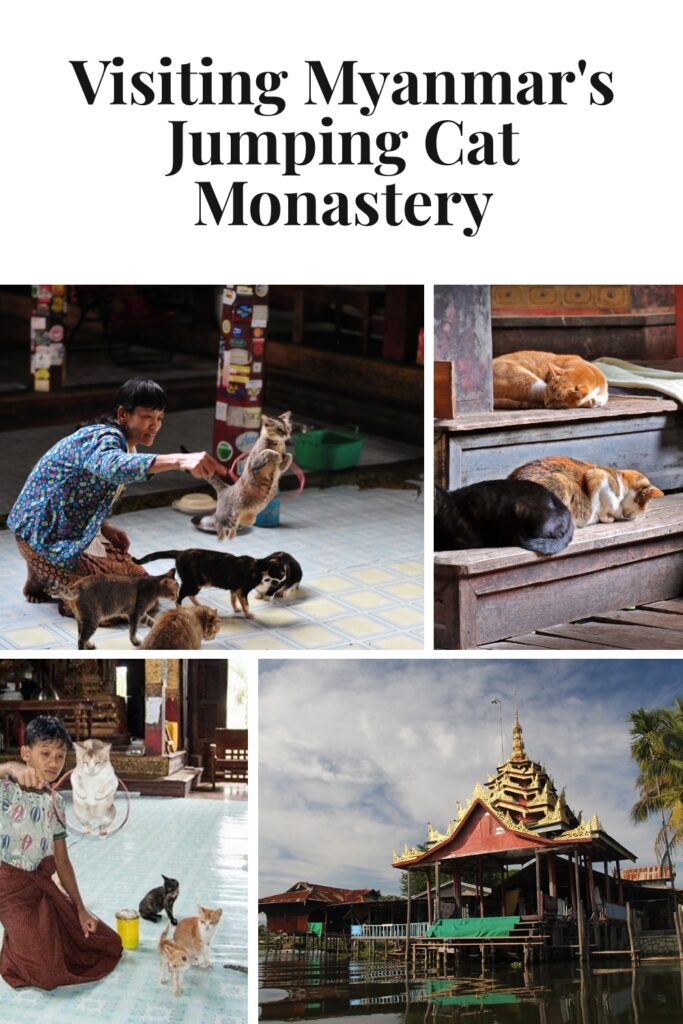
Monks here have trained cats to leap through hoops and perform acrobatic feats. It’s like a feline circus in the most unexpected place.
Here’s everything you need to know about the Jumping Cat Monastery and the fascinating bond between the monks and their seasoned feline performers.

Ultimate guide to the Jumping Cat Monastery (Nga Phe Kyaung Monastery) of Inle Lake in Myanmar
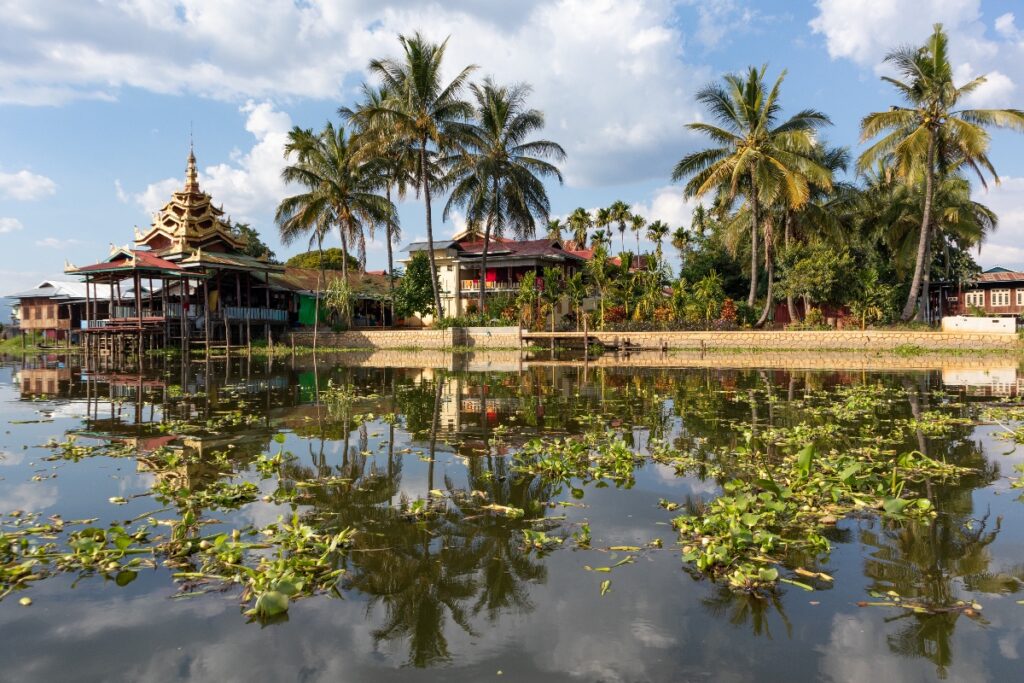
As you arrive at Inle Lake in Myanmar, you’ll find Nga Phe Kyaung Monastery on wooden stilts above the water. It’s a serene oasis and a far cry from the bustling world of nearby Taunggyi.
As Myanmar slowly opened up to more tourism in the 1990s and 2000s, backpackers and travelers began sharing stories of monks training cats to jump through hoops. Publications like Lonely Planet and the book Chats author du monde picked up the story and called it one of the most unusual attractions in Myanmar.
The idea of cats trained by monks in a remote overwater monastery had strong visual and emotional appeal. Photos and anecdotes spread online, especially as travel content on the internet grew.
From stray cats to acrobatic stars
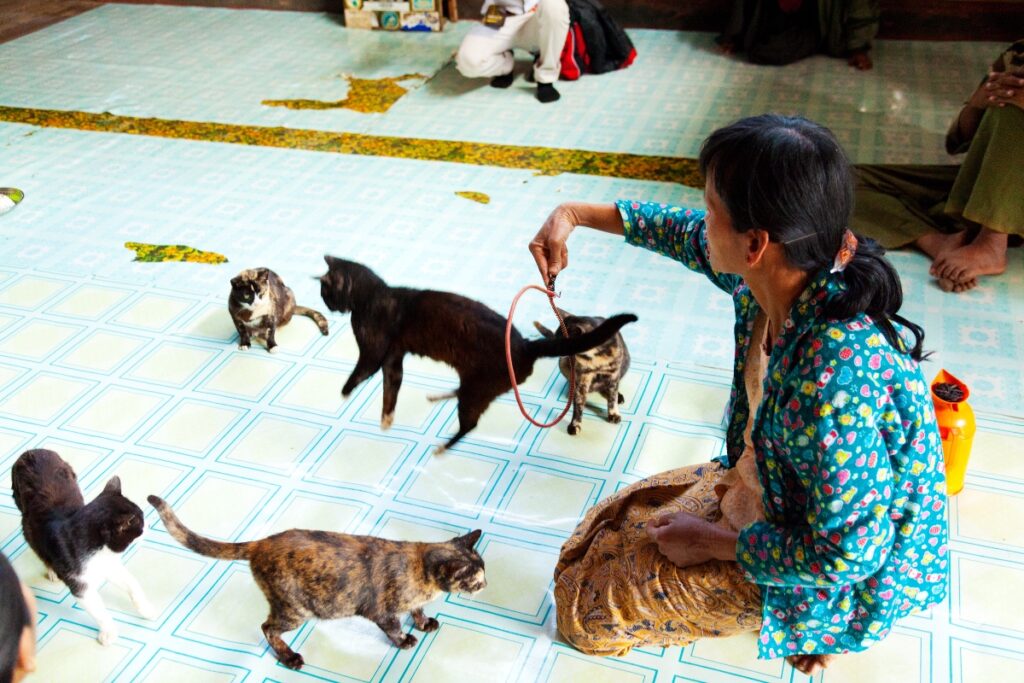
Years ago, a group of stray cats sought shelter on the monastery grounds. The monks took them in, providing food, care, and shelter. However, what started as a simple act of kindness gradually evolved into a unique spectacle that would attract visitors from all corners of the globe.
Noticing the cats’ agility, the monks began training them to perform simple acrobatic tricks—most famously, jumping through hoops. With consistent, gentle training, the cats became proficient in their performances, and the monastery soon became known as the “Jumping Cat Monastery.”
To add a playful element, the monks gave the cats names inspired by Hollywood celebrities—like Demi Moore, Leonardo DiCaprio, and Marilyn Monroe.
Over the years, the performances have become less frequent though. However, the monastery still draws visitors interested in daily monastic life, and the tradition remains a curious and memorable part of the monastery’s story.

A short history of the Nga Phe Kyaung Monastery
Early origins and foundation
While the exact founding date of Nga Phe Kyaung Monastery remains unclear, historical records and local stories place its construction in the early to mid-18th century. Originally, monks built the monastery on solid ground, away from the lake. But over time, the shifting boundaries of Inle Lake caused water levels to rise, eventually surrounding the structure.
Transition to stilts
As the lake expanded and reclaimed nearby land, the monks faced a choice: relocate or adapt. Instead of abandoning their spiritual home, they raised the monastery on stilts, allowing it to remain above water. This move preserved the building and kept the monks connected to the lake and its natural resources.
Influence of Shan architecture
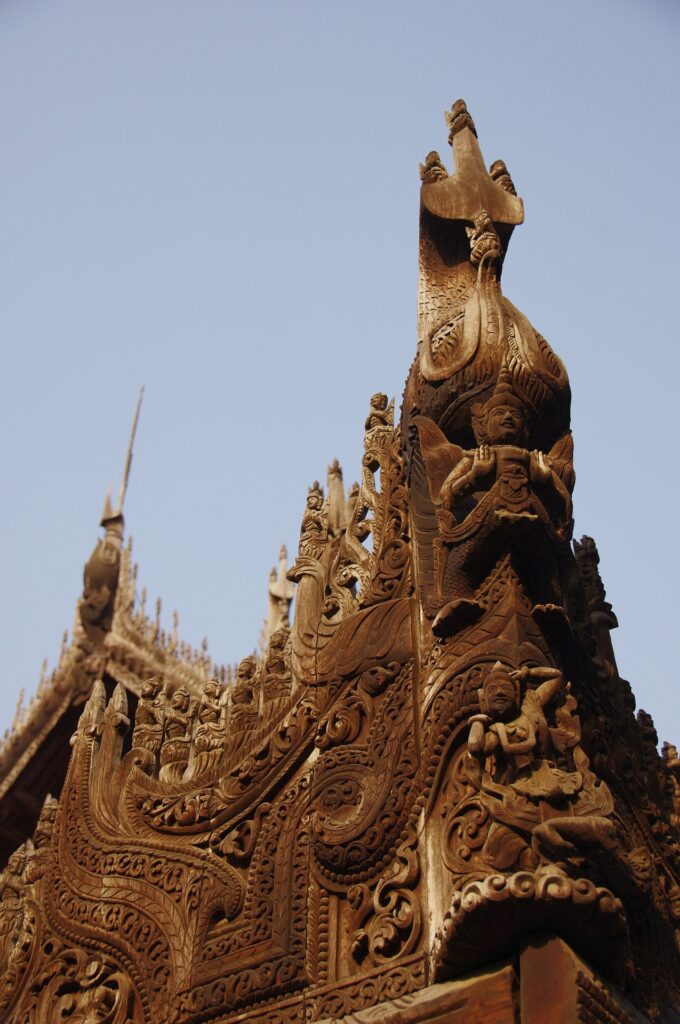
The monastery reflects Shan architectural traditions, common in Myanmar’s Shan State. You’ll see these influences in its wooden construction, carved ornamentation, and gently sloping roofs.
A center for Buddhist learning
Nga Phe Kyaung has long served as a hub for Buddhist study and spiritual practice. Monks and novices living here follow a daily routine of meditation, scripture study, and community life, helping preserve and pass on Buddhist teachings to future generations.
Cultural impact and tourism
In recent decades, the monastery became more known for its jumping cats than for its monastic life. It’s become a tourist attraction that draws visitors from around the world.
Preserving tradition and fostering love for cats
Despite the rise in tourism, the monks have remained focused on their spiritual mission. They’ve managed to share their lives—and their cats—with a global audience without losing their core values. The attention has also helped raise awareness about animal welfare, encouraging kindness and responsible pet care.
Getting to the Nga Phe Kyaung Monastery aka Jumping Cat Monastery
Fly to Heho Airport
To reach Inle Lake, you first have to fly into Heho Airport. Daily domestic flights connect Heho with major cities like Yangon and Mandalay.
Getting there by road (from Yangon or Mandalay)
From Yangon or Mandalay, you can take a taxi or private car to Nyaungshwe, the main gateway town to Inle lake.
Taking the bus is also an option. Several bus companies run this route.
Once in Nyaungshwe, you’ll need to hire a boat to reach the Jumping Cat Monastery and other lake attractions.
Guided boat tour
If you want to get the most out of your trip to Inle Lake, book a full-day guided boat trip which starts from Nyaungshwe.
This guided tour starts with a 07:30 pick-up from your hotel in Nyaungshwe.
You’ll visit:
-
A rotating Five Day Market (on market days) where ethnic groups like the Pa-O, Danu, and Intha sell local goods
-
Floating gardens and see the famous leg-rowing fishermen
-
The revered Phaung Daw Oo Pagoda
-
Traditional workshops at Inn Paw Khone village (weaving, silversmithing, etc.)
-
Nga Phe Kyaung Monastery, home of the “jumping cats” and historic Buddha statues
-
And finally, the ancient Indein pagoda complex, with a mix of boat and walking segments
Traditional long-tail boats
If you prefer to go at your own pace, you can hire a traditional long-tail boat with a local boatman in Nyaungshwe. These rides are scenic and customizable.
You’ll pass floating villages, stilt houses, and farmers tending to floating gardens. You’ll also see the Intha fishermen using their unique one-legged rowing technique.
The boat ride ends at Nga Phe Kyaung Monastery.
Important tips
Respect local customs
When you visit the monastery, dress modestly and follow local traditions. This is an active place of worship for Buddhist monks and devotees, so be mindful of your behavior and surroundings.
Support local communities
Hire a local guide or choose responsible tourism options that help protect Inle Lake’s environment and support nearby villages. Your visit can make a positive impact.
Be realistic
If you’re coming for the cats, remember that the “jumping cat” shows are no longer guaranteed. Their performances may also vary from what you’ve seen online in videos or pictures.
Plan ahead
The monastery can get crowded during peak travel seasons. For a quieter visit, try to go early in the morning or during the off-season. More on that below.

Where to stay when visiting the Nga Phe Kyaung Monastery?
Nyaungshwe is the main base for exploring Inle Lake and the Jumping Cat Monastery. It offers a wide range of places to stay, from budget guesthouses to upscale resorts. Here’s a quick breakdown to help you choose what suits you best:
Hotels and resorts
-
Lake View Resort & Spa – Right by the lake with a relaxing atmosphere, spa services, and great views.
-
Sanctum Inle Resort – Combines luxury and traditional design with spacious rooms and a lakeside pool.
-
Inle Princess Resort – Wooden cottages, lakeside dining, and a cultural touch.
-
Novotel Inle Lake Myat Min – Modern resort with great facilities, a lakefront location, and family-friendly activities.
-
Amata Garden Resort – Surrounded by greenery, ideal for those wanting peace and proximity to nature.
Guesthouses and inns
-
Joy Hotel – Central location, clean rooms, and helpful staff.
-
Nanda Wunn Hotel – Simple, practical, and centrally located.
-
Teakwood Guesthouse – Cozy atmosphere with personalized service.
-
Golden Dream Hotel – Comfortable rooms and good amenities for the price.
-
Teakwood Inn – Warm hospitality with a homely vibe.
Bed and Breakfasts
-
Song of Travel Hostel – Social and budget-friendly with a strong backpacker vibe.
-
The Inle Sanctuary – Peaceful, scenic, and great for relaxing.
-
Remember Inn – Simple, clean, and reliable for short stays.
-
Inle Star Motel – Basic but convenient with essential amenities.
-
Cherry Queen Guest House – Friendly staff and a quiet atmosphere.
Eco-lodges and boutique hotels
-
Aureum Palace Hotel & Resort – High-end experience in a lush setting.
-
Inle Heritage Stilt Houses – Traditional stilt houses with cultural experiences.
-
ViewPoint Ecolodge – Sustainable design with scenic surroundings.
-
Villa Inle Resort & Spa – Luxurious and serene, perfect for a relaxing break.
-
ViewPoint Lodge & Fine Cuisines – Great food and upscale lodging in a beautiful location.
Hostels
-
Song of Travel Hostel – Great for meeting other travelers, with regular events and tours.
-
Ostello Bello Nyaungshwe – Popular with backpackers, offers a lively and welcoming vibe.
-
Mingalar Inn Hostel – Affordable and practical for short stays.
-
Inle Heart View Hostel – Budget option with great views and a relaxed feel.
-
Pyi Guesthouse & Hostel – Simple, clean, and wallet-friendly.

Where to eat?
Nyaungshwe town
Nyaungshwe is the main town near Inle Lake. It has everything from cheap local eateries to international restaurants. Many places offer lake views, so you can enjoy your meal with a scenic backdrop. Options range from Burmese curry houses to pizza spots and vegetarian cafés.
Floating restaurants
While exploring Inle Lake, stop at one of the floating restaurants. They mainly serve up local dishes, often featuring freshly caught lake fish.
Lakefront hotels and resorts
Staying at a lakefront resort? Most offer in-house dining with menus that include both Myanmar and international dishes. It’s a convenient option, especially for a relaxing dinner after a full day on the lake.
Local markets and street food
Head to local markets in Nyaungshwe or surrounding villages for authentic Myanmar street food. Grab snacks like samosas, noodle soups, or sticky rice treats while mingling with locals. It’s cheap, fast, and full of flavor.
Bonus tip
Don’t miss out on Shan food, a regional specialty. Look for restaurants serving Shan noodles, fish rice, and tangy local salads. The dishes are fresh, mildly spiced, and typically made with local ingredients.

What is the best time to visit the monastery?
The best time to visit the Jumping Cat Monastery is during the dry season, from November to February.
During these months, you’ll enjoy comfortable temperatures and less rainfall—ideal for boat rides, sightseeing, and exploring Inle Lake. Higher water levels also make the lake more scenic and accessible, and the floating gardens and stilt villages look their best. If your visit coincides with a local festival, expect colorful processions and traditional performances.
Keep in mind: This is also peak tourist season, especially in December and January. Attractions like the monastery can get crowded, and accommodation prices may rise.
If you prefer fewer tourists, consider coming in early November or late February, when the weather is still pleasant but the crowds are lighter. You can also visit during the wet season (June to September) for lush green scenery and a quieter atmosphere—just be ready for occasional rain.

What else is there to do near Inle Lake?
Inle Lake is full of things to see and do—whether you’re into culture, nature, or simply relaxing. Here are some top experiences to add to your trip:
Inle Lake boat tours
Boat tours provide access to floating villages, stilt houses, and the floating gardens that define the Inle region. These tours often highlight the traditional lifestyle of the Intha people, including their distinctive leg-rowing technique and fishing methods. (Info & tickets)
Phaung Daw Oo Pagoda
This important Buddhist site on Inle Lake houses five small Buddha images that have been covered in gold leaf over the years. During the Phaung Daw Oo Pagoda Festival (September or October), the images are transported in a ceremonial procession around the lake.
Indein Village and Pagoda Complex
Situated on the western shore of Inle Lake, Indein features hundreds of ancient stupas in various states of preservation.
Red Mountain Estate Vineyards & Winery
Set in the hills near Nyaungshwe, this vineyard offers panoramic views and a tasting room where you can try locally produced wines. It is one of the few operational wineries in Myanmar.
Kayaking on Inle Lake
The kayaking routes around the lake allow for closer access to narrow canals and quieter parts of the region. It can offer a more personal perspective of village life and local ecosystems.
Shwe Yan Pyay Monastery
This small monastery near Nyaungshwe is known for its teakwood structure, oval windows, and red-painted exterior. The building houses young novice monks and includes a small museum with Buddhist relics and texts.
Hiking and biking trails
Several trails around Inle Lake lead through surrounding hills, rice paddies, and traditional villages. These routes vary in length and difficulty, and many offer elevated views of the lake and valley.
Rotating five-day markets
The Inle region hosts rotating markets that move between lakeside villages every five days. These markets attract vendors and shoppers from various hill tribes, creating an opportunity to see traditional dress, trade, and food preparation.
Paukpar Hot Springs
Located a short distance from Nyaungshwe, the Paukpar hot springs feature thermal pools that are popular for their relaxing properties. Basic facilities are available, and the site is set in a quiet, natural environment.

Conclusion
Feeling inspired to visit Nga Phe Kyaung Monastery—the Jumping Cat Monastery—at Inle Lake in Myanmar?
Share this article with your fellow cat lovers on social media—you might just convince someone to join you on your next adventure!
Have you already been to the monastery? We’d love to hear about your experience—drop a comment below and tell us what it was like.
Curious about other monasteries with resident cats? Don’t miss these feline-friendly spots:

English version / version française
Pin this guide to the Jumping Cat Monastery of Myanmar!