Last Updated on 28 November 2026 by Vanessa
Ever dreamed of joining a cat-themed escape game? Meowing your favorite songs at karaoke? Or learning more about our feline friends and how their relationship with humans has evolved over the years?
If that sounds like a good time, you’re going to love Catland.
Located on the beautifully restored historic farm complex De Morette in Asse, just outside Brussels, it is unlike any other museum you’ve visited. Spread across two floors and more than 43,000 square feet (around 4,000 square meters), it combines exhibits, interactive experiences, themed games, and… 33 real-life cats.
And that’s just the beginning. With two escape rooms, an enormous cat garden, and the world’s largest cat tree, there’s enough here to keep you entertained for hours.
In this guide, you’ll find everything you need to know before visiting: what to expect, ticket information, opening hours, directions, and more. I’ve also interviewed Catland‘s founder, Kevy Van Belle, to learn more about the inspiration behind this unusual attraction.
You’re going to want to book a trip to Belgium for this one.
🐾 Tip: Is one cat museum not enough? We’ve also put together a guide to cat museums around the world. Because you can never see too many cats, right?
Catland: a unique cat museum and sanctuary near Brussels, Belgium
Catland opened in November 2026 and is now the largest of its kind, taking over the title from the Kuching Cat Museum in Sarawak, Malaysia, which spans only 11,150 square feet (1,035.9 square meters).
But size isn’t the only thing that sets Catland apart.
Instead of focusing mainly on its collection of 200+ artifacts, it puts just as much emphasis on interactive experiences, games, and activities.
“I didn’t even feel the need to visit other cat museums,” Kevy Van Belle explains. “I’d read about KattenKabinet in Amsterdam, El Museo del Gato in Mexico City, Cat Museum Budapest, and others, but most focus on paintings and traditional exhibits. I wanted to create something unique, educational, and fun: an immersive experience that brings together everything I love about cats.”
In fact, calling Catland just a museum doesn’t quite do it justice. The exhibits are only one part of the experience, and there’s so much more to discover. You can easily spend 4 to 6 hours exploring everything the attraction offers.
How it all started
Kevy Van Belle’s love of cats goes back to his childhood. “I wanted to buy an island, rescue all the cats in the world, and live among them,” he recalls. “I soon realized that wasn’t realistic, but I found another way to combine my passion with work.”
His family had already started building a museum empire. His father and brother opened their first chocolate museum in Bruges in 2004, when Kevy Van Belle was just 14. He started helping out as a student and later joined the family business full-time.
Since then, the Van Belles have built an international network of 18 museums across six countries, taking visitors from Bruges, Brussels, and Paris to Colmar, Prague, and Turin.
In Belgium, their museums include Choco-Story Brussels, Frietmuseum Bruges, Frietmuseum Brussels, and Lumina Domestica.
They have also made a name for themselves in Mexico, where they run chocolate museums in Mexico City, Uxmal, Valladolid, and Playa del Carmen. There’s even a Choco-Story in Beirut, Lebanon.
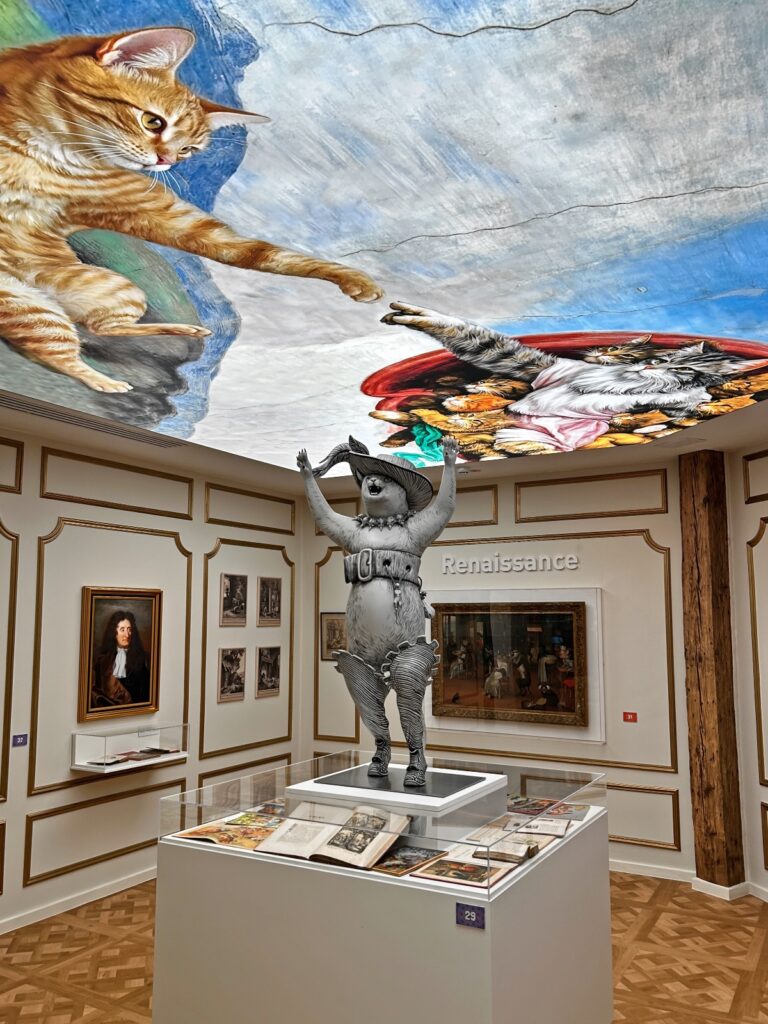
But Kevy Van Belle still wanted to create something of his own. “I really wanted to combine my love of cats with my experience in the museum world,” he explains.
The idea took shape during his regular drives between Brussels and Bruges, which gave him plenty of time to think. He started taking notes, putting together a detailed plan, and reading everything he could find about cats. Once he had a solid proposal, he presented it to his parents and brother in a 3-hour presentation. “After that, my family said they would back me.”
What’s inside Catland?
Cat museum
The museum is the heart of Catland. It has 22 rooms, each with its own theme and atmosphere.
Founder Kevy Van Belle spent more than ten years developing the project. “I wanted to create a place where people could learn about everything related to cats, from their history and behavior to their place in art and popular culture.”
The exhibition is divided into three main sections:
The history of cats
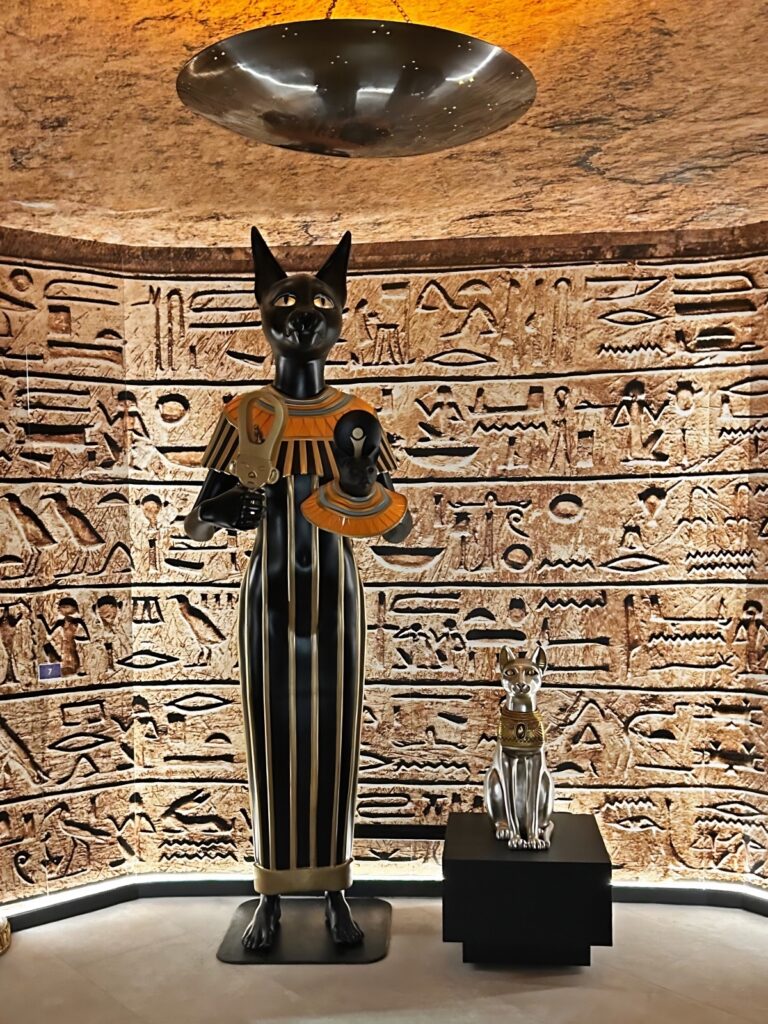
The first section takes you on a journey through the history of cats and their relationship with people. You’ll learn about their role in ancient Egypt, Greece, and Rome, before moving on to the Middle Ages, when they became associated with superstition and witchcraft.
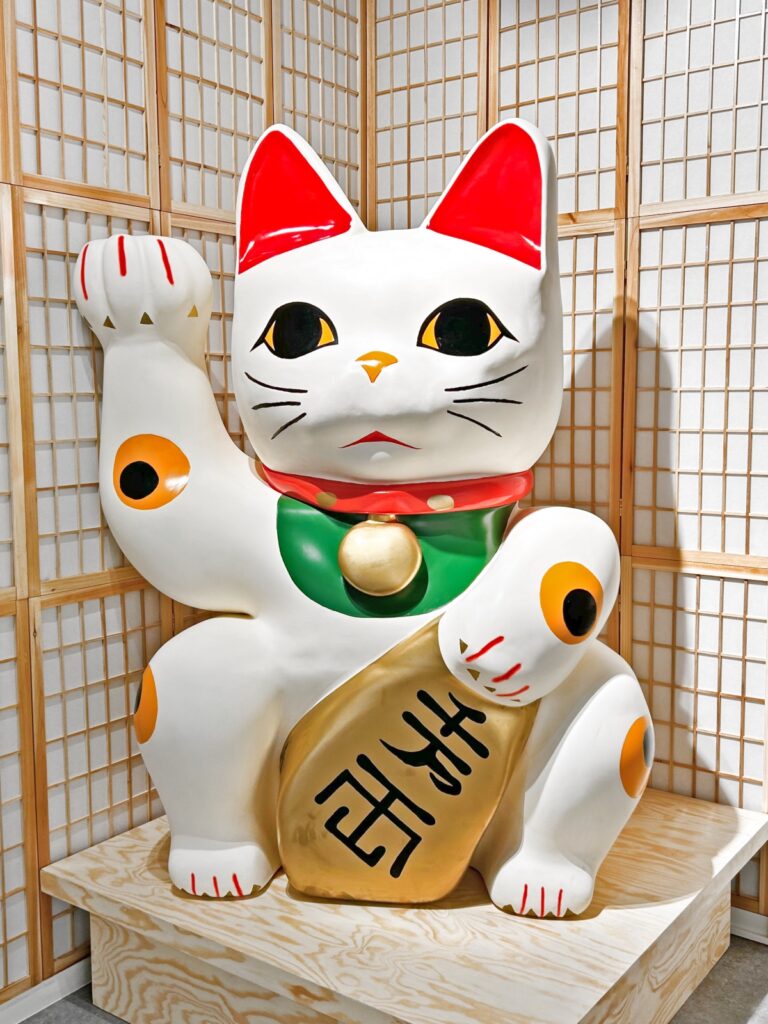
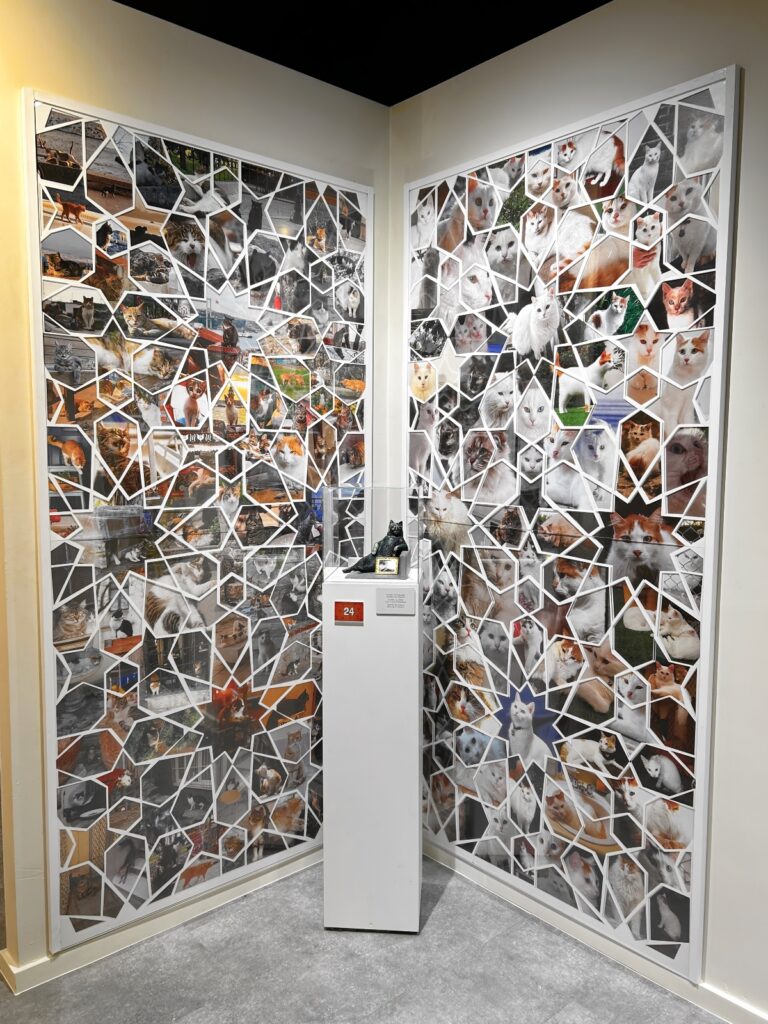
The exhibition also looks at how their image changed during the Renaissance and how cats are viewed in different parts of the world today – from the famous street cats of Istanbul to Japan’s obsession with cats. Even Iceland gets a mention, with its legendary Yule Cat!
Understanding cats: from instincts to everyday care
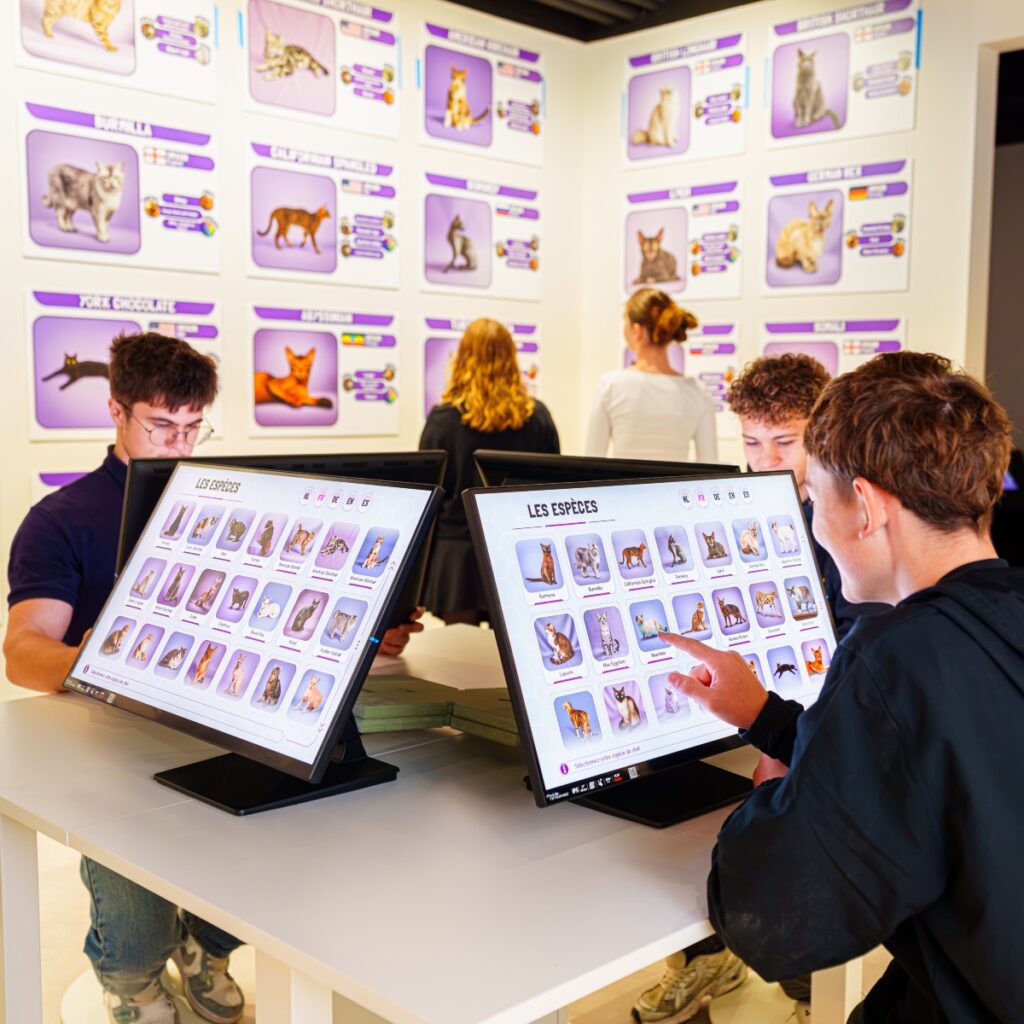
The second section is about cats themselves. It starts with a room dedicated to different breeds, complete with games that let you test how much you know about them.
From there, you’ll learn about their senses, behavior, territorial instincts, and physical characteristics. Ever wondered why some white cats are deaf? What polydactyly is and how it connects to the Ernest Hemingway Home and Museum in Florida? Or why cats purr? You’ll find the answers here.
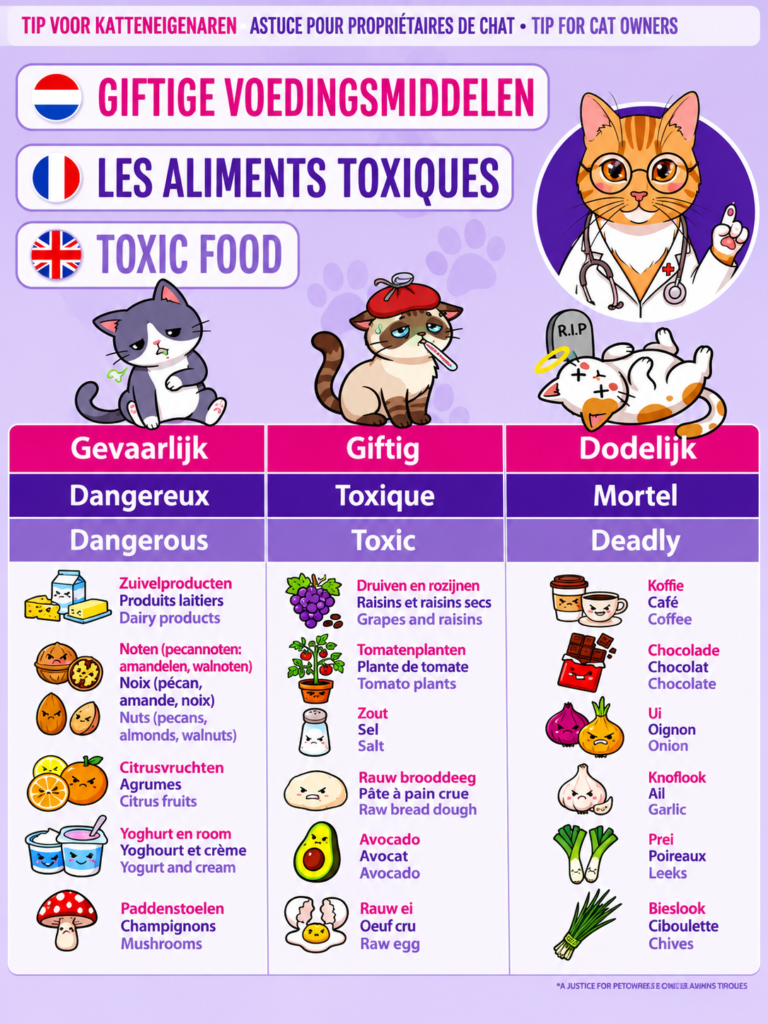
There’s also plenty of useful information for cat owners. Topics include choosing the right scratching post, feeding your cat, the benefits of spaying and neutering, teaching good behavior, and identifying foods that are toxic to cats.
Cats in art and popular culture
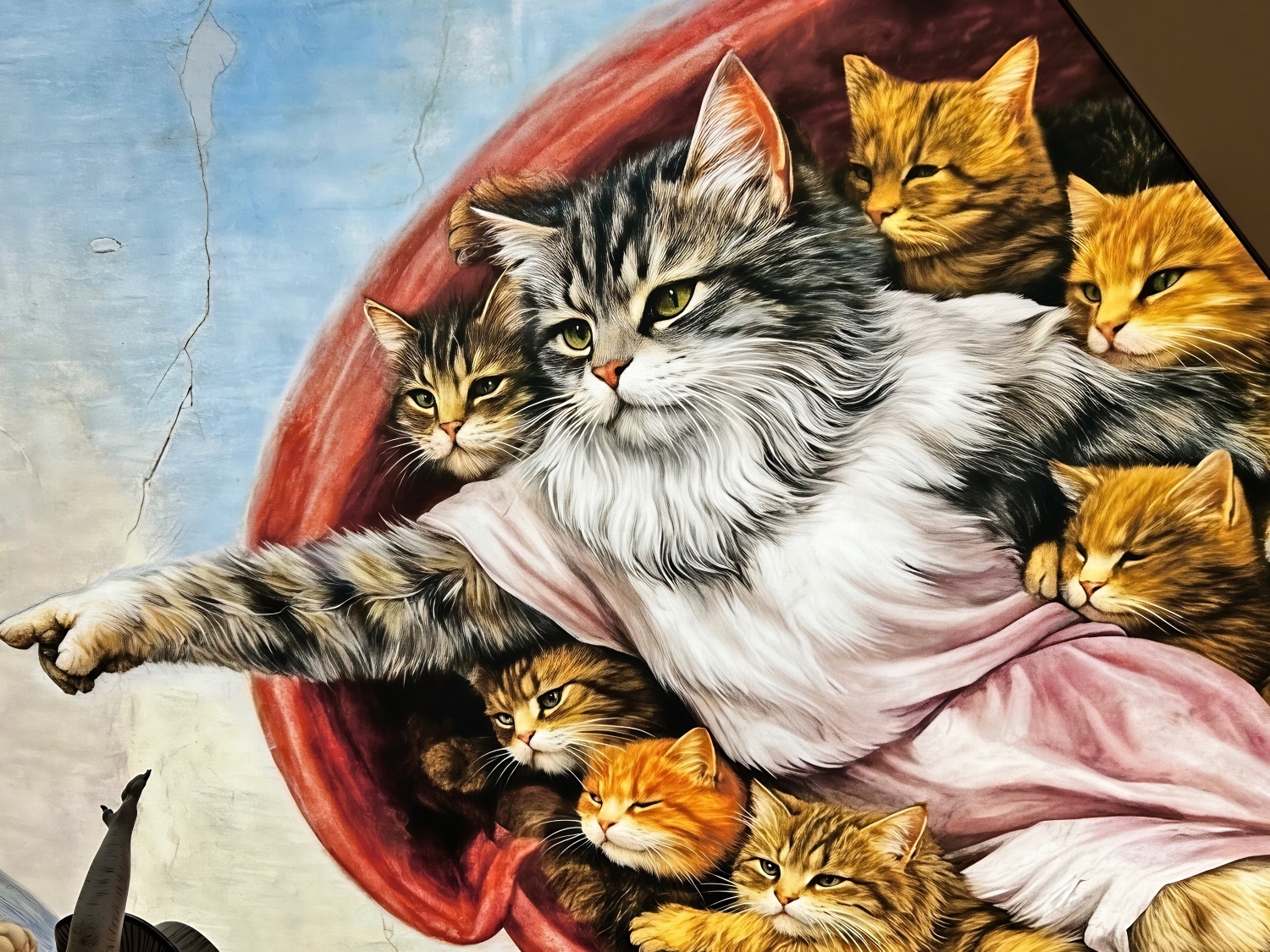
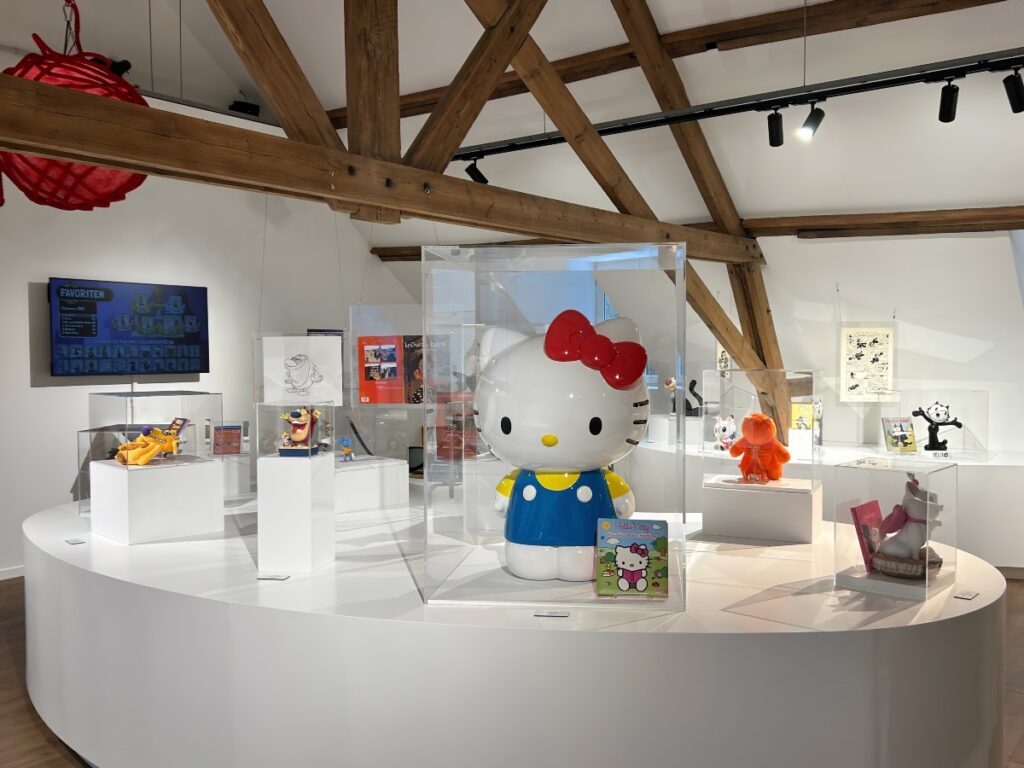
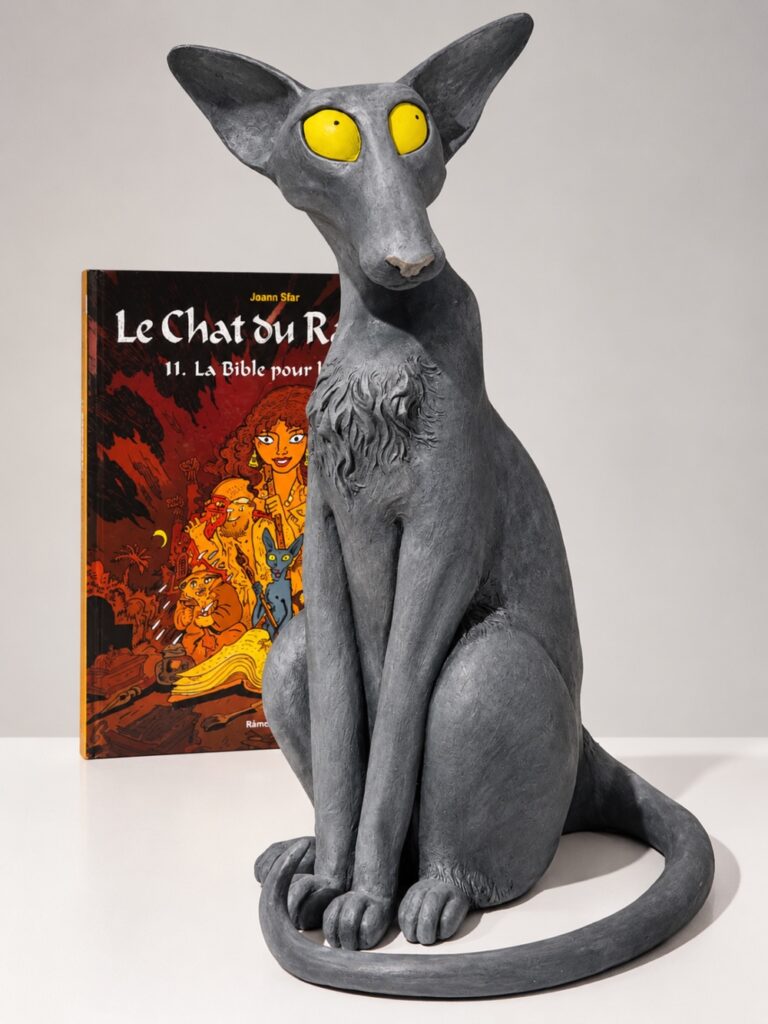
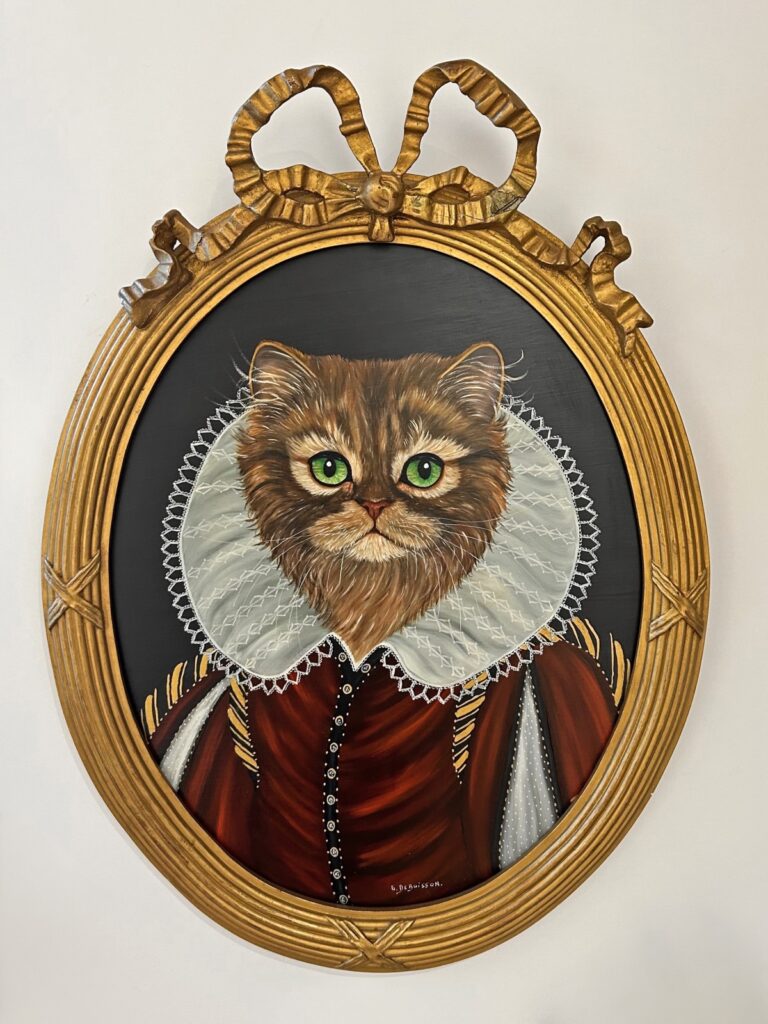
The final section explores the many ways cats have made their way into art and popular culture. Alongside paintings and books, you’ll find references to familiar favorites such as Kiki’s Delivery Service, Garfield, Chi’s Sweet Home, The Rabbi’s Cat, The Aristocats, and many more.
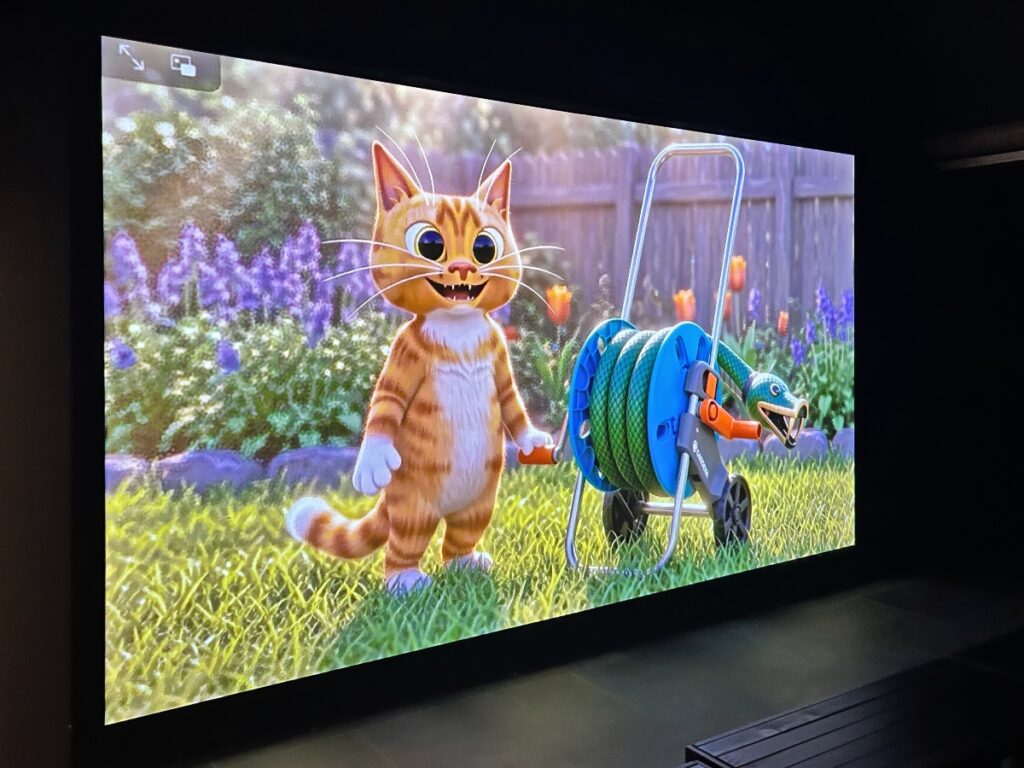
There’s also a whole room dedicated to LOLcats, a karaoke space where you have to meow along to songs such as “Dancing Queen” and ‘Espresso,” and even a small movie theater showing a cute animated film starring Happy, Kevy Van Belle’s own cat.
✔️ Tip: Use the museum’s audio guide. It’s available in eight languages: English, Dutch, French, Spanish, Italian, German, Chinese, and Japanese.
Cat sanctuary and garden
After the cat museum, you’ll find the cats’ living quarters.
“It’s really a cat paradise,” Kevy Van Belle says. “I thought about what I would want if I were a cat, and this is the result.”
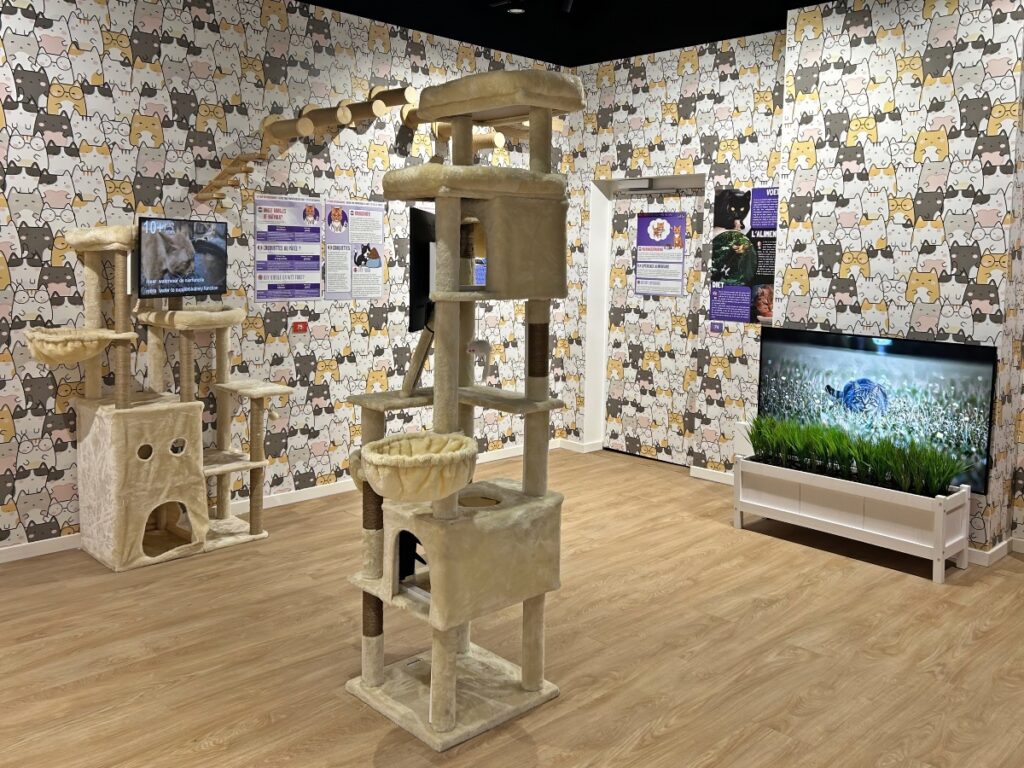
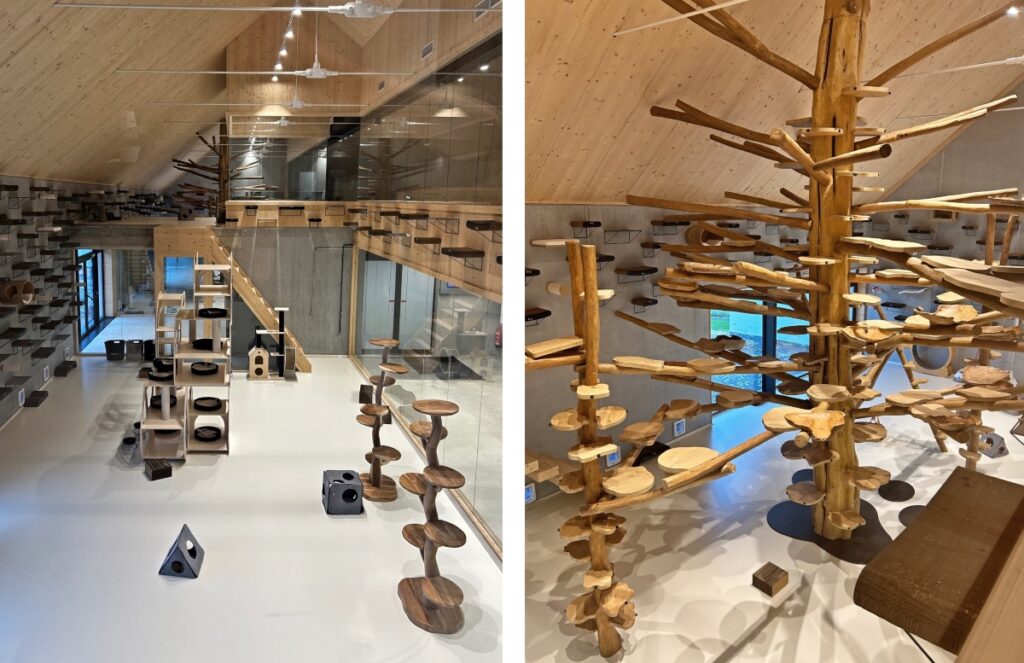
The indoor area, which contains the world’s biggest cat tree and lots of hiding and climbing furniture, belongs exclusively to the 33 former shelter cats who live there.
You can only observe them through the glass. “That’s because the real cats are just the icing on the cake at Catland,” Kevy Van Belle explains. “They’re not here to entertain visitors. If they want to stay inside and sleep, they can. They decide whether they want to come out and interact with people or not, but inside is their safe place.”
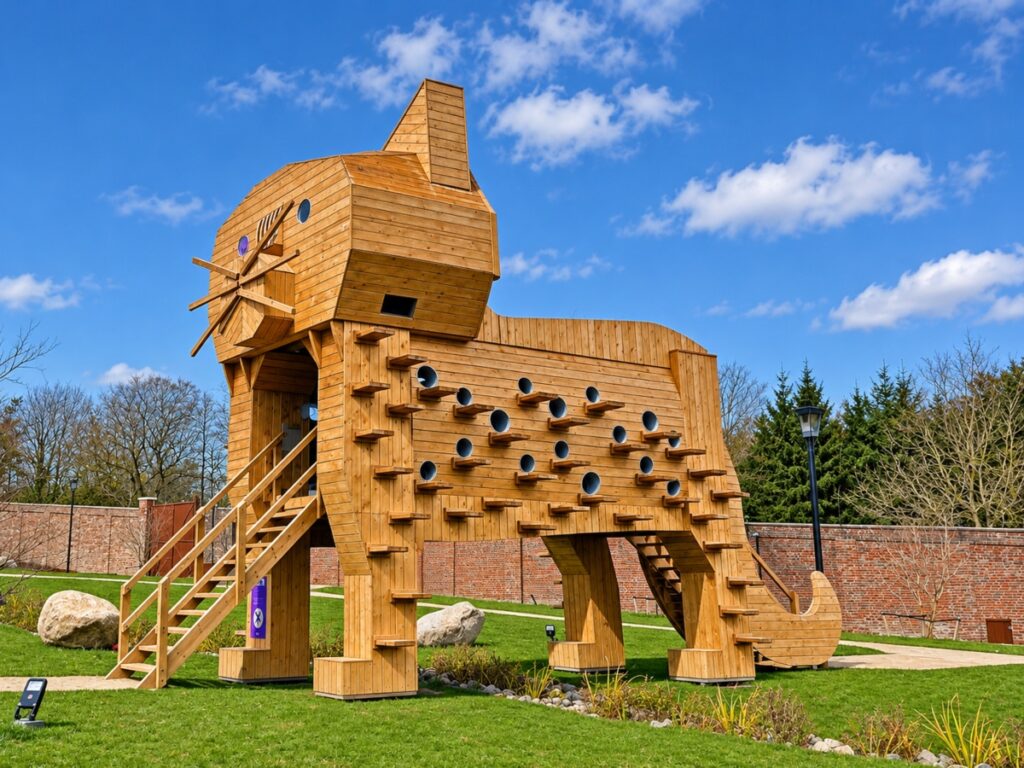
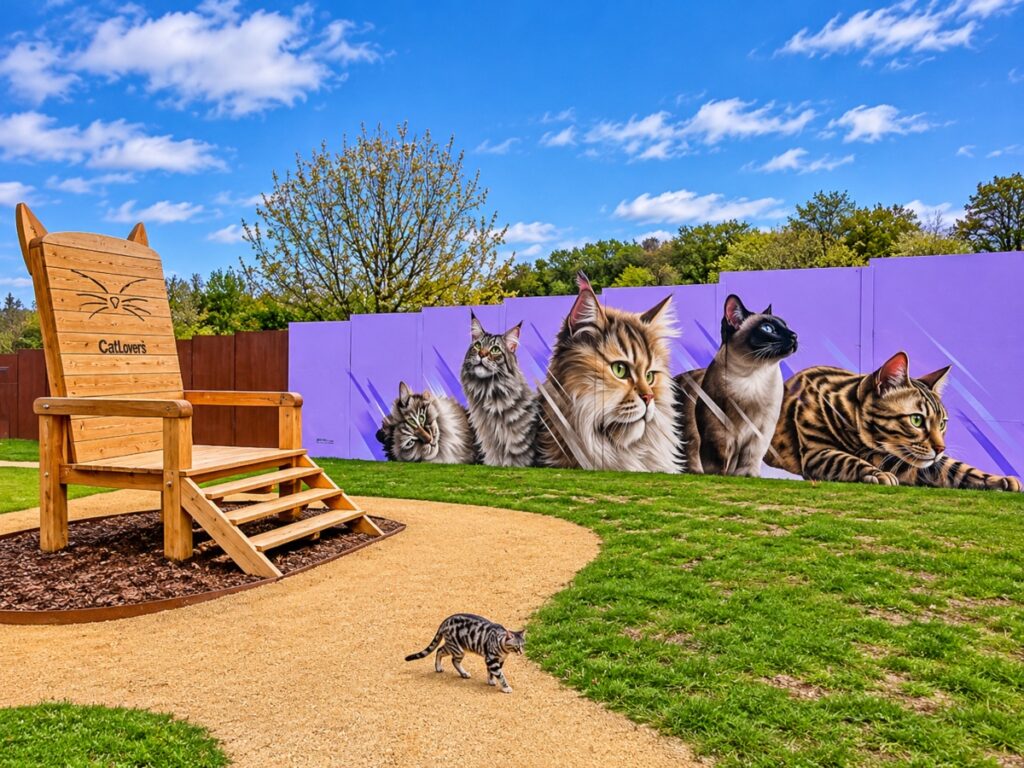
If you want to meet the feline residents up close, you can head out into the 64,500-square-feet (6000 square meters) cat garden, provided you follow the hygiene and safety protocols: wash your hands, disinfect your shoes, and learn how to handle interactions with the cats.
Staff members keep an eye on things throughout the day, and cameras provide an extra layer of supervision.
The aim is simple: visitors get to enjoy the cats’ company without disturbing their routines or compromising their safety.
Catland has also earned the support of GAIA, Belgium’s animal welfare organization, which has visited several times. “They’ve recognized that we’ve done everything possible to respect the cats’ well-being,” Kevy Van Belle says.
Cat-themed escape rooms
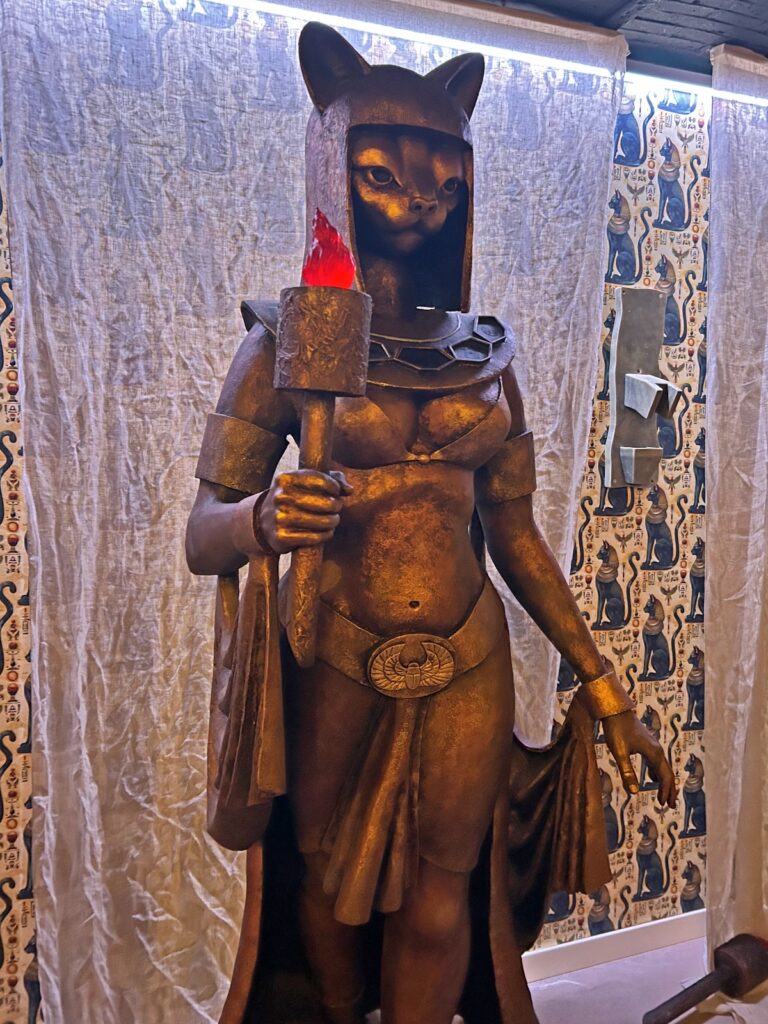
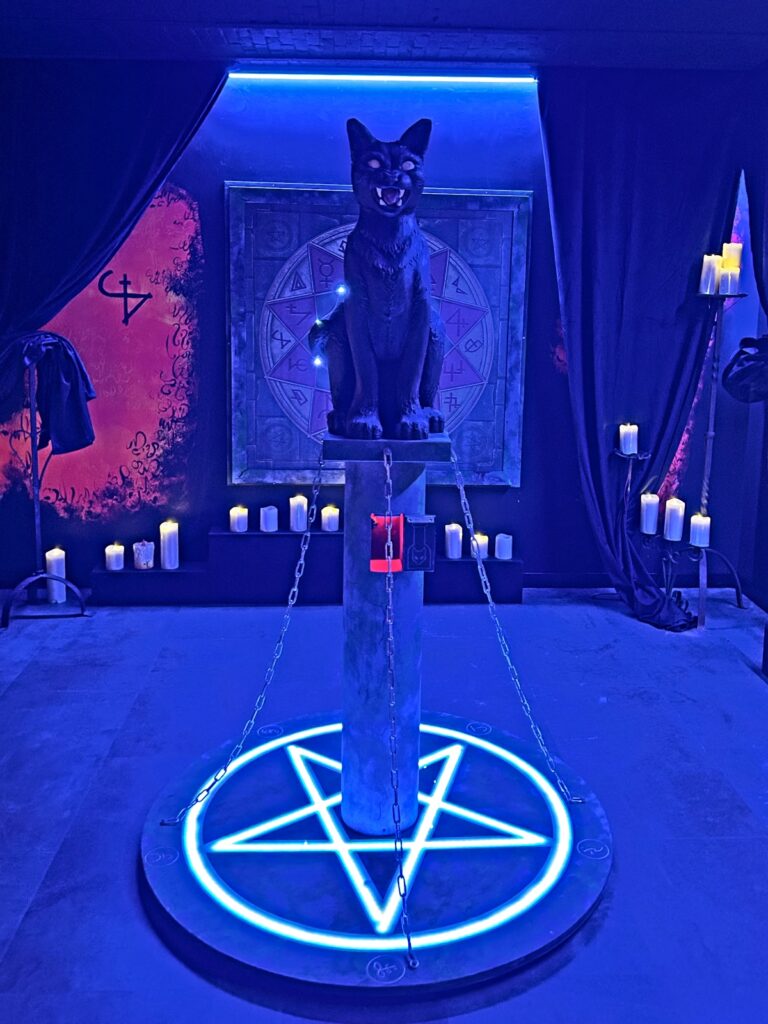
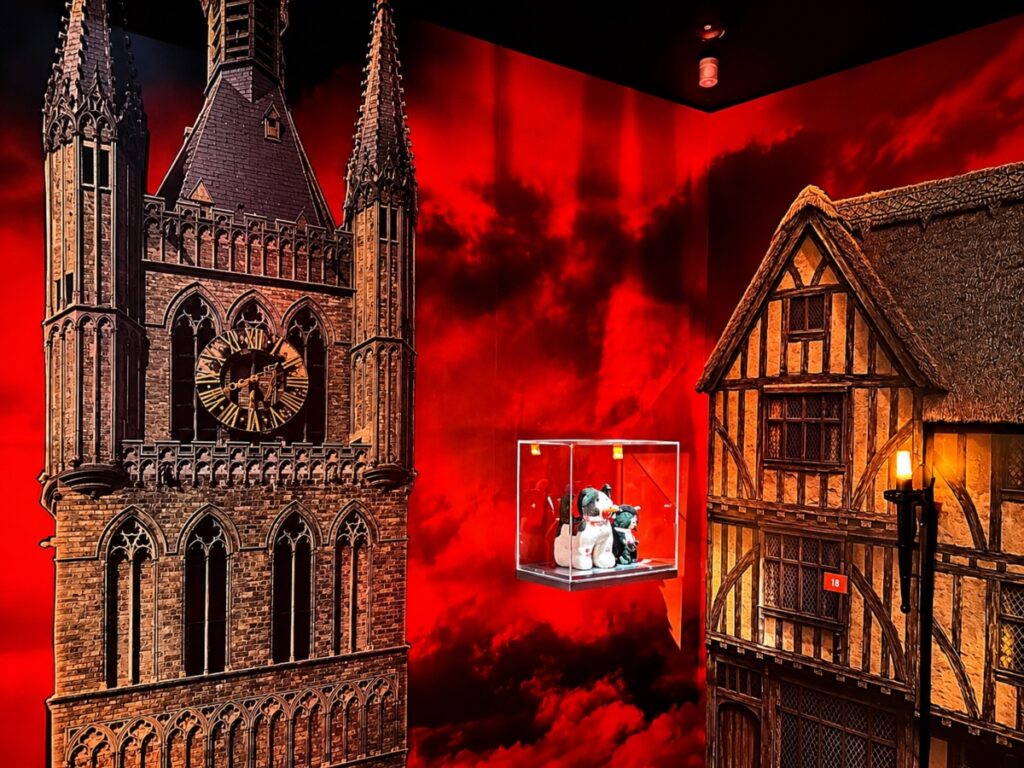
If you’re into puzzles and escape rooms, you’ll have two cat-themed adventures to choose from: The Tomb of Bastet, inspired by ancient Egypt, and The Curse of the Black Cat, which takes you back to the Middle Ages.
Are the escape rooms suitable for beginners?
Absolutely! Both are suitable for beginners and experienced players, so don’t worry if you’ve never tried an escape game before. You can play with friends or family, and there’s no particular physical effort involved.
Can you play on your own?
No. You’ll need at least one other person to join you. Each escape room accommodates up to six people.
Can children participate?
Yes. Children can participate from age six, but anyone under 16 must be accompanied by an adult. Very young children may find it too scary, though, especially The Curse of the Black Cat.
How long does an escape game take?
That depends on how familiar you are with escape games. Experienced players usually finish in around 45 minutes. But if you’re new to escape rooms, you can easily spend up to 90 minutes to 2 hours on a single challenge.
Which escape room should you choose?
I visited both rooms, and my favorite was The Curse of the Black Cat, but the decorations of both are fantastic, and the whole setting really adds to the experience.
The Egyptian-themed adventure is a better choice if you’re visiting with little ones.
Do you need a separate ticket to play an escape game?
Yes! The escape games aren’t included in regular museum admission. You’ll need to purchase an admission ticket separately and reserve your chosen game in advance.
Cat-feteria
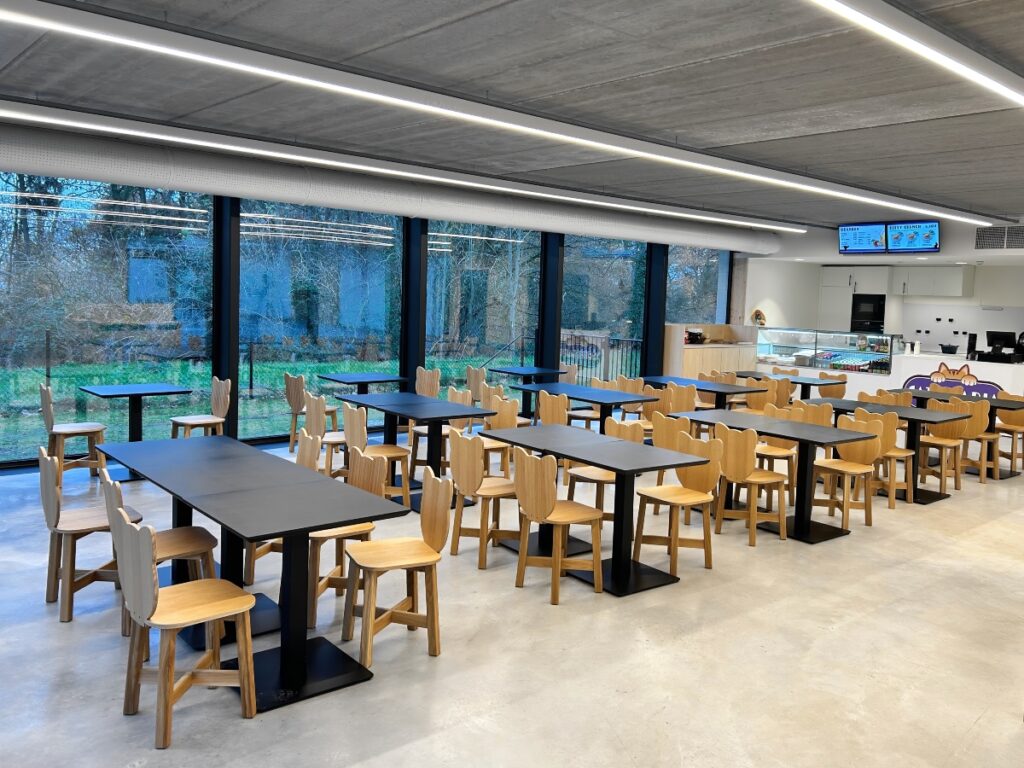
All that exploring can work up an appetite, so it’s nice to know you can stop for a bite or a drink at Catland‘s cat-feteria.
There are three cat-shaped puff pastries to choose from, with different fillings and served with salad:
- Camembert and ham
- Bolognese sauce and cheese
- Camembert and Quorn
Unfortunately, there’s nothing vegan at the moment.
As for drinks, you have the choice between water, soda, cat-themed beer, and artisanal apple juice (made with apples grown right on the De Morette estate, which is home to around 500 fruit trees).
Souvenir shop
Before heading home, you can stop by the gift shop to pick up a little something to remember your visit.
There’s quite a bit to browse, from Catland merchandise such as tote bags, umbrellas, and pens to cat-themed books, figurines, coloring books, and plenty more.
Meet Happy, the cat that inspired Catland
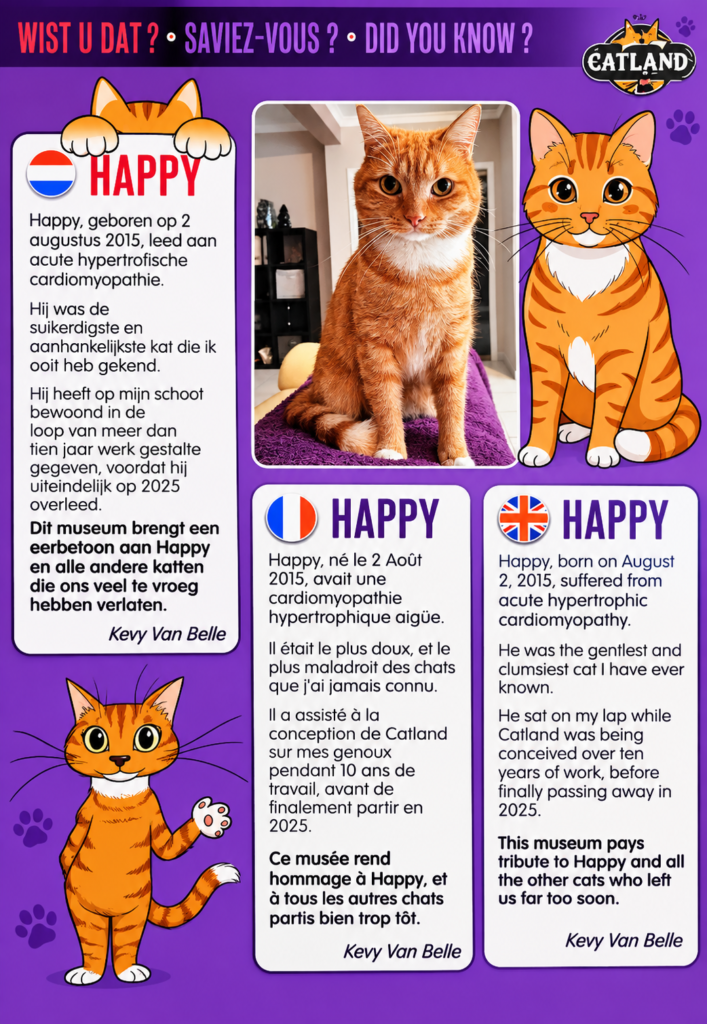
One of the museum’s most touching details is its ginger mascot, Happy. His face appears on every information panel explaining the exhibits, but his connection to Catland goes much deeper than that.
He was Kevy Van Belle’s feline companion and accompanied him from the very beginning of the project. Through the first ideas, the planning, and the more than ten years it took to bring the museum to life, he was always there.
Although Happy is no longer around, he remains very much part of Catland.
You can see Kevy Van Belle grow emotional when he talks about his former friend, and it’s clear just how much he meant to him. In a way, the museum itself has become a lasting tribute to the cat that inspired it all.
Practical information for visiting Catland
Opening hours
Catland is open daily from 10:00 am to 06:00 pm.
Address
Catland, Edingsesteenweg 208, 1730 Asse, Belgium.
How to get there
Visiting Catland during a city trip to Brussels? You can get there by public transportation, but it takes a little planning.
By train + bus
First, take a train from one of Brussels’ main stations (Brussels-North, Central, or South) to Asse.
From there, catch De Lijn bus 213 toward Ternat and get off at the stop “Ternat Industrie.”
The journey takes at least an hour from central Brussels, and you’ll need two separate tickets: one for the train (NMBS/SNCB) and another for the bus (De Lijn), as they are operated by different companies.
Alternatively, you can take the metro (MIVB/STIB) toward Simonis, then catch De Lijn bus 65 toward Ternat Industrie. This route takes a little longer. Both buses stop within a short walk of Catland.
By car
Traveling by car is much easier! From Brussels, take the E40 toward Ghent, then follow the signs for Asse/Ternat. You’ll be at Catland in around 30 minutes. If you still need to rent a car, you can find the most affordable options here.
There’s more than enough parking available at the museum.
Ticket prices
- Museum: 25 euros per person
- Museum + escape game: 73 euros
Reservations
Advance online booking is compulsory; you can’t simply turn up and expect to enter. That’s because the staff tries to manage visitor numbers to protect the cats’ wellbeing.
You can currently only book tickets through the Catland website. Bookings are non-refundable.
Time needed
You should allow at least 3 hours for a museum visit.
If you add an escape room or want to spend time with the cats, the combined experience takes around 4 to 6 hours.
Minimum age
Catland welcomes children from 3 years old. Keep in mind, though, that the audioguide involves quite a bit of listening, which may become tiring for the youngest visitors.
Accessibility
Catland is wheelchair- and pram accessible.
Things to do after Catland
If you still have some time and energy after your visit, there are a few nice ways to round off your day.
Nature lovers can explore the countryside around Ternat on the Kastelenwandeling, an 8.8-kilometer walking route that takes you past several castles, a historic watermill, and picturesque country lanes.
Prefer a longer walk? The Drie Dorpenwandeling covers 10.2 kilometers through three small villages and the surrounding fields.
You could also head into Brussels for some sightseeing. And since you’re already discovering the Van Belle family’s museums, why not visit their other projects?
Final thoughts
Catland is off to a great start. Just weeks after opening, the museum is already attracting thousands of national and international visitors, who want to immerse themselves in the world of cats.
And Kevy Van Belle has even bigger ambitions. He has already secured the Catland and Catworld names across Europe and Japan, and hopes to bring the concept to other countries.
He also has plenty of ideas for the estate itself: turning the tower into an observation deck, opening the old mill to visitors, organizing exhibitions, and eventually opening the entire 50-acre (20-hectare) grounds to the public.
But you don’t have to wait for any of that. Catland is already open, and there’s a whole world of cats waiting to be discovered. Will you be making the trip?
Have you visited Catland yet? I’d love to hear what you thought. And if you’re planning a trip to this unusual museum in Belgium, which of its attractions are you most excited to do? Let me know in the comments.
Know someone who would love this place? Share this article with them, and start planning a visit together!
🐾 Read next: Not quite done with your cat-themed adventures? There are also over 20 cat cafés in Belgium worth checking out!
Pin Catland museum in Belgium!