 Skip to content

Last Updated on 29 September 2026 by Vanessa
Planning a visit to the Meteora Monasteries in Greece? These centuries-old religious sites perched atop towering rock pillars are among the most unique destinations on the Greek mainland.
However, Meteora does take some planning if you want to make the most of your visit. Get certain things wrong, and you could end up wasting a lot of time and seeing hardly any monasteries at all. In this complete guide, you’ll find everything you need to know before you go, along with plenty of useful tips from my own experience.
Meteora Monasteries in Greece: complete guide for first-time visitors
Meteora Monasteries at a glance
- Location: Thessaly, mainland Greece
- Nearest towns: Kalambaka and Kastraki
- Number of active monasteries: 6
- Entrance fee: €5 per monastery
- Recommended time: 2 days
- Best time to visit: April–May and September–October
- Best place to stay: Kalambaka or Kastraki
- Car needed: No
- Dress code: Yes
- UNESCO World Heritage Site: Yes
What are the Meteora Monasteries?
Meteora is a group of Eastern Orthodox monasteries built atop enormous rock pillars. Some look like they have been dropped onto completely inaccessible cliffs with nothing but hundreds of meters of rock beneath them.
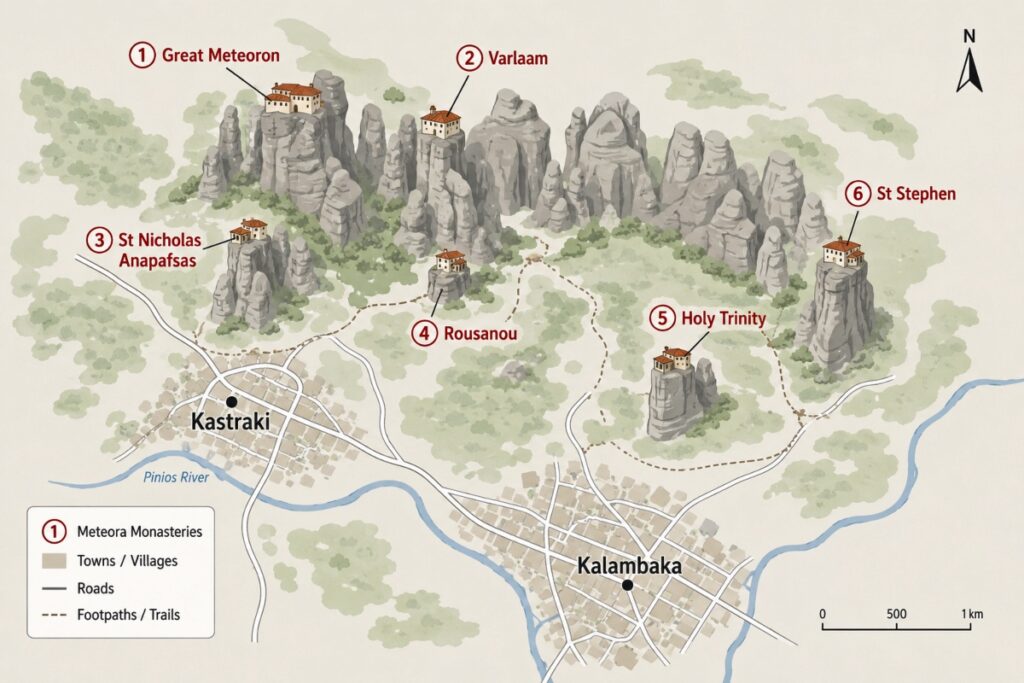
At its peak, Meteora was home to 24 monasteries. Today, six remain open to visitors: Great Meteoron, Varlaam, Holy Trinity, Rousanou, St. Stephen’s, and St. Nicholas Anapafsas. Together with the surrounding landscape, they have been a UNESCO World Heritage Site since 1988.
The setting is just as unusual as the buildings themselves. Hundreds of massive rock formations rise almost vertically from the plains of Thessaly, with some reaching around 300 meters (984 feet) high. The name Meteora fittingly means “suspended in the air.”
Do they look familiar?
Holy Trinity Monastery appeared in the 1981 James Bond movie For Your Eyes Only, where it became the villain’s mountaintop hideout. Meteora also appeared in Boy on a Dolphin (1957) and Tintin and the Golden Fleece (1961). The landscape has inspired fictional worlds too, including Michina Town in Pokémon: Arceus and the Jewel of Life (2009) and the Eyrie and its sky cells in the 5th episode of the first season of Game of Thrones.
What makes Meteora truly special, though, is that this isn’t simply an archaeological site. Monastic communities still live here today.
As for how anyone managed to build monasteries in such seemingly impossible locations in the first place? That’s where the story gets really interesting.
How were the Meteora Monasteries built?
Looking at the monasteries from below, it’s hard enough to understand how anyone managed to live up there, let alone build entire churches, living quarters, and courtyards hundreds of feet above the ground.
No roads or convenient staircases existed. Building materials, supplies, and even people had to make their way up using long ladders, ropes, baskets, and nets suspended from above. The difficult access wasn’t exactly a downside either — isolation was part of the appeal, and ladders could be pulled up when necessary.
Thankfully, you won’t have to put quite that much faith in a rope today. People eventually carved steps into the rocks and enhanced access considerably, though you’ll still get a great workout at some of the monasteries.

A short history of the Meteora Monasteries
The hermits who lived in Meteora’s caves
Long before the monasteries appeared, hermits were already living in Meteora’s caves and rock shelters. From around the 11th century, monks climbed into natural openings in the cliffs, where they prayed, fasted, and lived with very little contact with the outside world.
Most lived alone, but they gathered for worship at the foot of the rocks. By the late 12th century, Panagia Doupiani became the center of this small monastic community.
You can still spot some of these caves in the cliffs today.
Building the monasteries in the sky
Things changed during the 14th century, when political instability made Meteora’s almost inaccessible rock pillars an especially attractive place to retreat.
One of the most important figures was Saint Athanasios the Meteorite, a monk from Mount Athos who established a community on the Platys Lithos or Broad Rock. This eventually became Great Meteoron, the largest and oldest monastery you can visit today.
More communities followed, and by the end of the 15th century, 24 monasteries stood at Meteora.
Meteora’s golden age
The 15th and 16th centuries marked the height of monastic life here. Meteora became not only an important religious center, but also a place of art and learning. Churches were decorated with elaborate frescoes, manuscripts, and religious treasures were collected, and some of the era’s most important painters worked here.
One of them was Theophanes the Cretan, whose 1527 frescoes inside St. Nicholas Anapafsas became influential in the development of post-Byzantine art.
From decline to UNESCO World Heritage Site
Meteora continued to flourish until the 17th century, after which its monastic population gradually declined. Buildings were abandoned, damaged, or left to fall into ruin. Meanwhile, the remaining communities became much smaller.
Today, you can still see six of the original monasteries, while ruins and traces of many others remain scattered among the rocks.
In 1988, Meteora was added to the UNESCO World Heritage List for both its cultural importance and extraordinary natural setting.
And while Meteora attracts visitors from all over the world these days, it isn’t an abandoned historical site turned into a tourist attraction. Monastic life continues here, which is something worth remembering when you step through those gates.
The six Meteora Monasteries you can visit
Of the 24 monasteries that once existed at Meteora, only six remain active and open to visitors today. You definitely don’t need to see all six to get a good feel for the place — in fact, after visiting several, you’ll notice quite a few similarities between them. Here’s what to expect from each one.
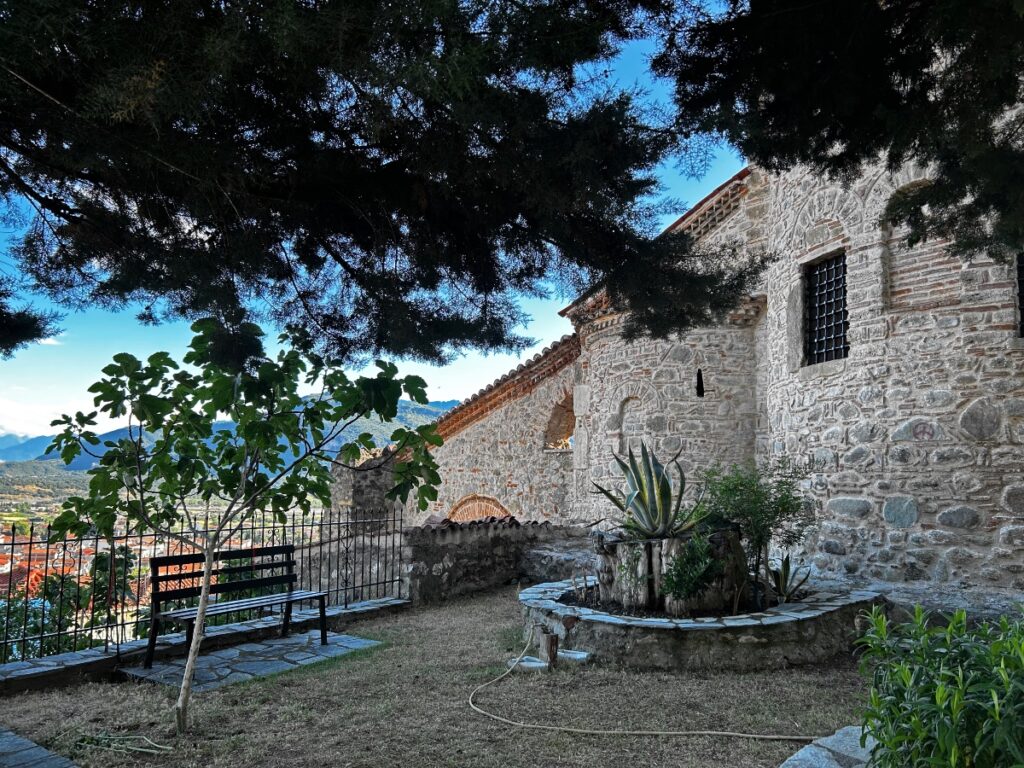
St. Stephen’s Monastery
St. Stephen’s is a great one to start with since it’s by far the easiest of the six to access. You cross a bridge from the road, and you’re pretty much inside. This makes it a great choice if you have limited mobility, don’t cope well with stairs, or want to start with something easy.
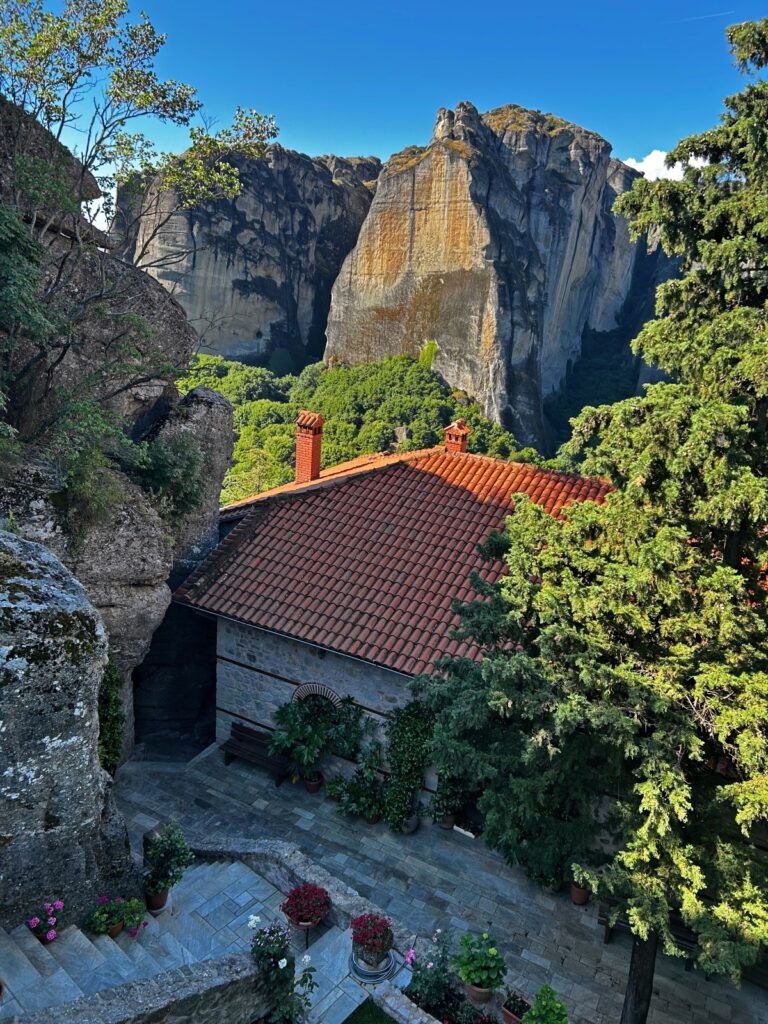
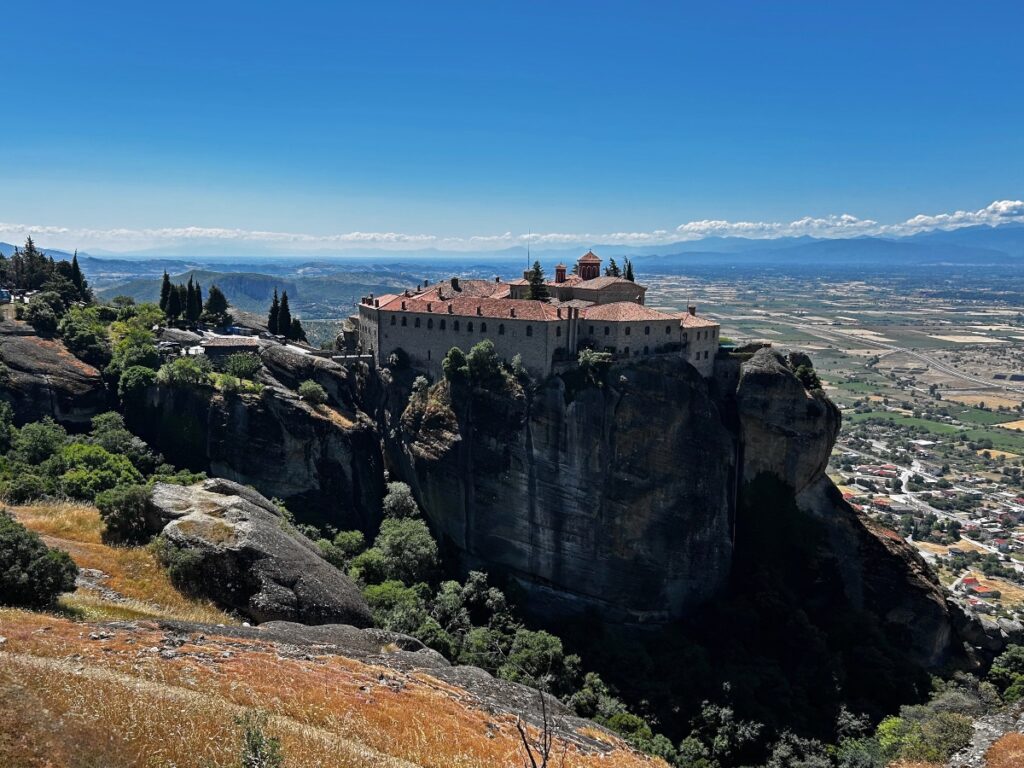
St. Stephen’s is still a working nunnery with two churches, a small museum, and beautiful views over Kalambaka and the Thessalian plain.
Many frescoes show martyrdom, punishment, and other biblical scenes in surprisingly graphic detail. You’ll come across similar religious imagery elsewhere in Meteora, so St. Stephen’s makes a great introduction to what you’ll find inside the others as well.
Allow around 30–45 minutes, or a little longer if you want to spend time looking at the frescoes and museum exhibits.
Varlaam Monastery
Varlaam is the second largest of the six and gives you a particularly interesting look at how people once lived in such an unlikely location.
You can still see the old tower with its winch and hoisting system, once used to pull supplies and people up the rock. There’s also a huge wooden barrel, a museum housed in the former refectory, and a richly decorated church.
Getting there involves around 140 steps, but the climb is perfectly manageable.
Allow 45 minutes to an hour to visit.
Great Meteoron Monastery
The Great Meteoron is the oldest and largest of the six. It houses several museums and historic rooms alongside the main church.
You can see the old kitchen, refectory, and an ossuary containing the skulls and bones of former monks. If you’re interested in Meteora’s history and how the monks lived, you’ll find more here than at the smaller monasteries.
This is usually the one that gets all the buzz, but I found the Great Meteoron the least impressive of the ones I visited. However, the views alone are worth the 300-step climb.
Allow at least an hour, especially if you want to see the museums as well.
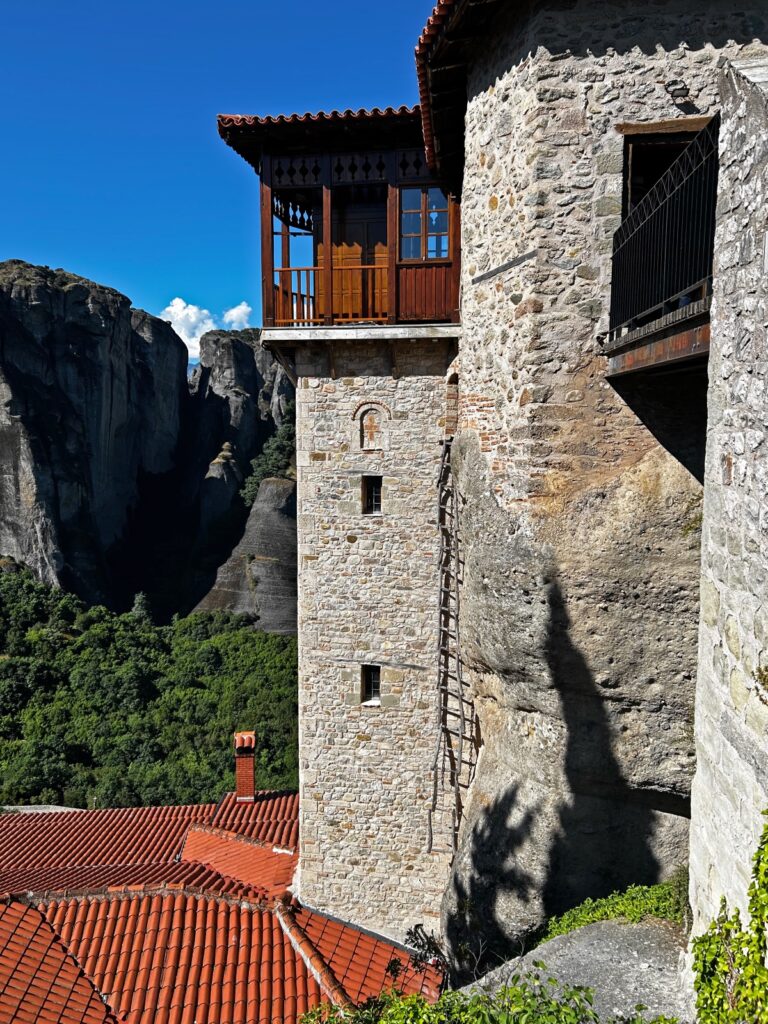
Rousanou Monastery
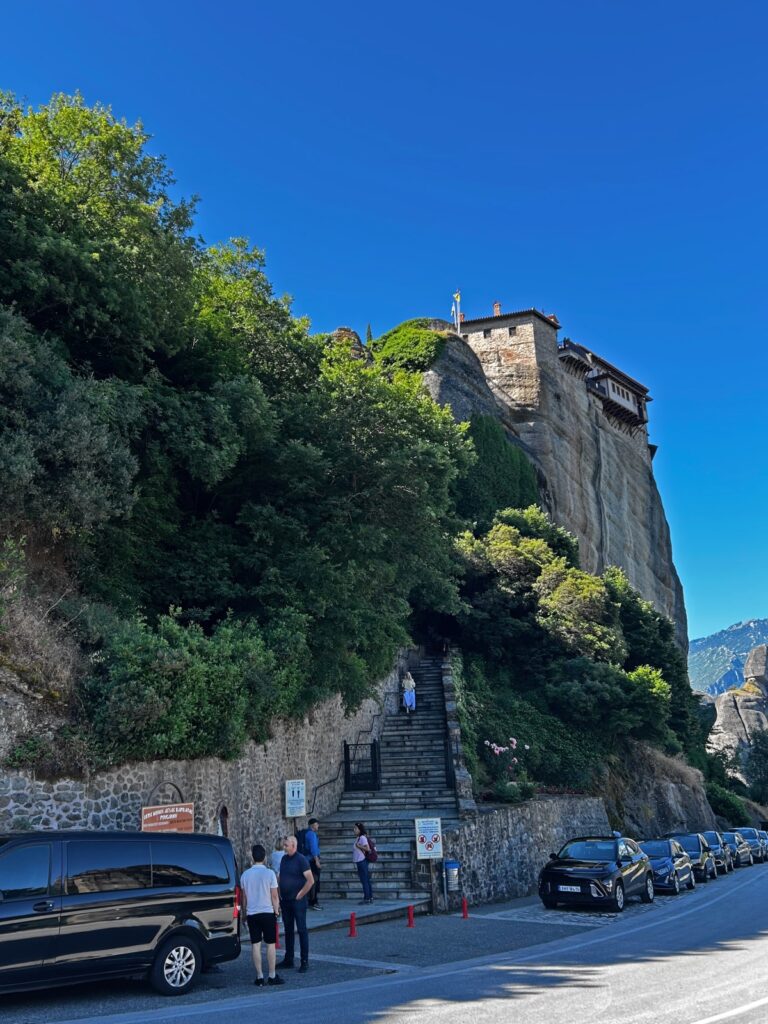
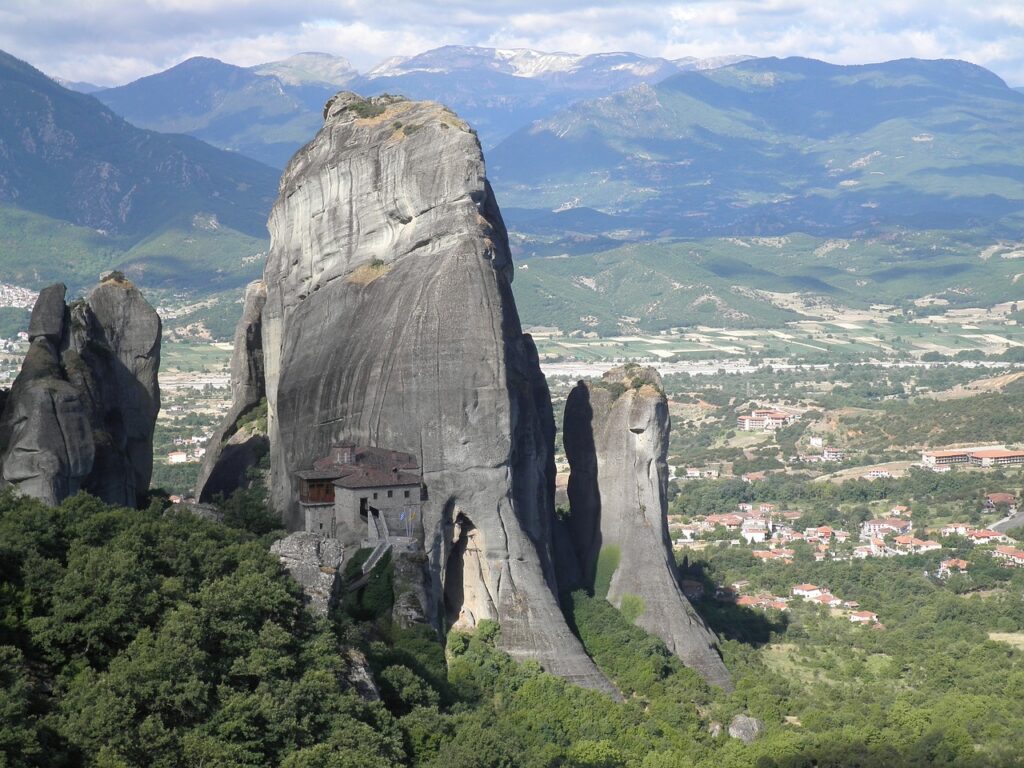
This monastery covers much of the narrow rock beneath it, and you get an especially good view from the road above.
Today, Rousanou is a nunnery, and its 16th-century church contains well-preserved frescoes.
Getting there involves roughly 140 steps, followed by two small bridges.
As Rousanou is quite small, 30–45 minutes should be enough once you’re inside.
Holy Trinity Monastery
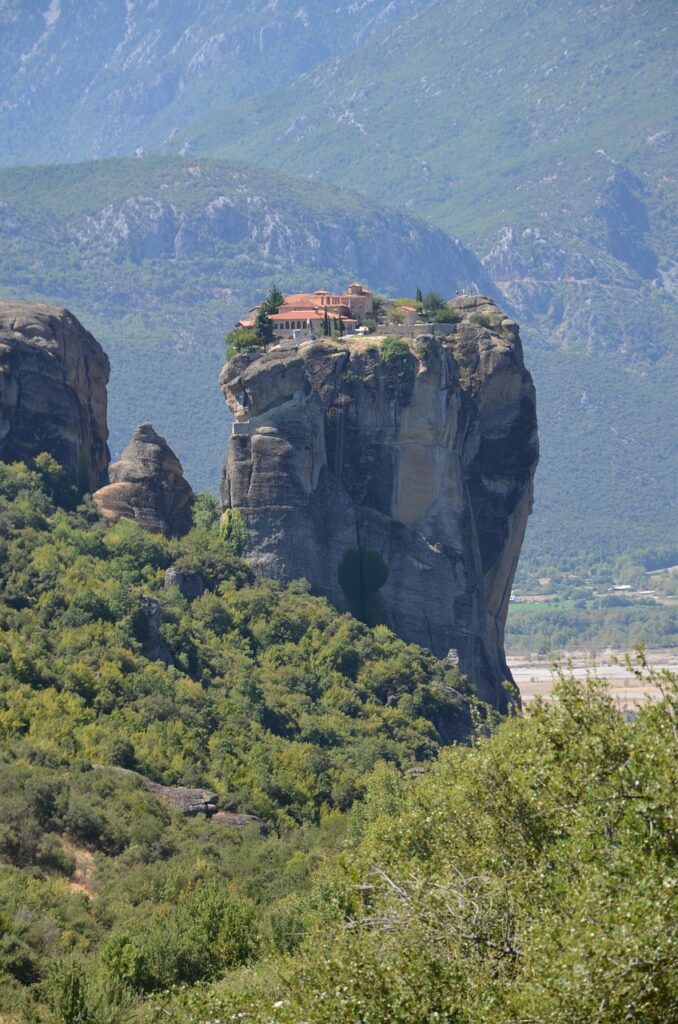
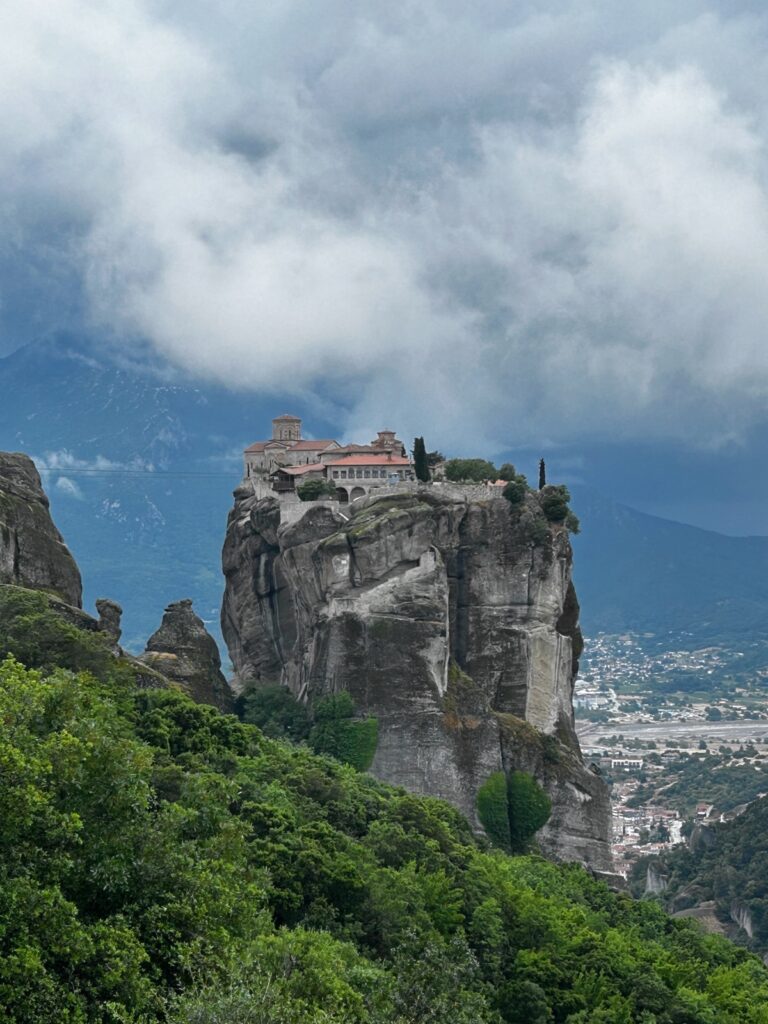
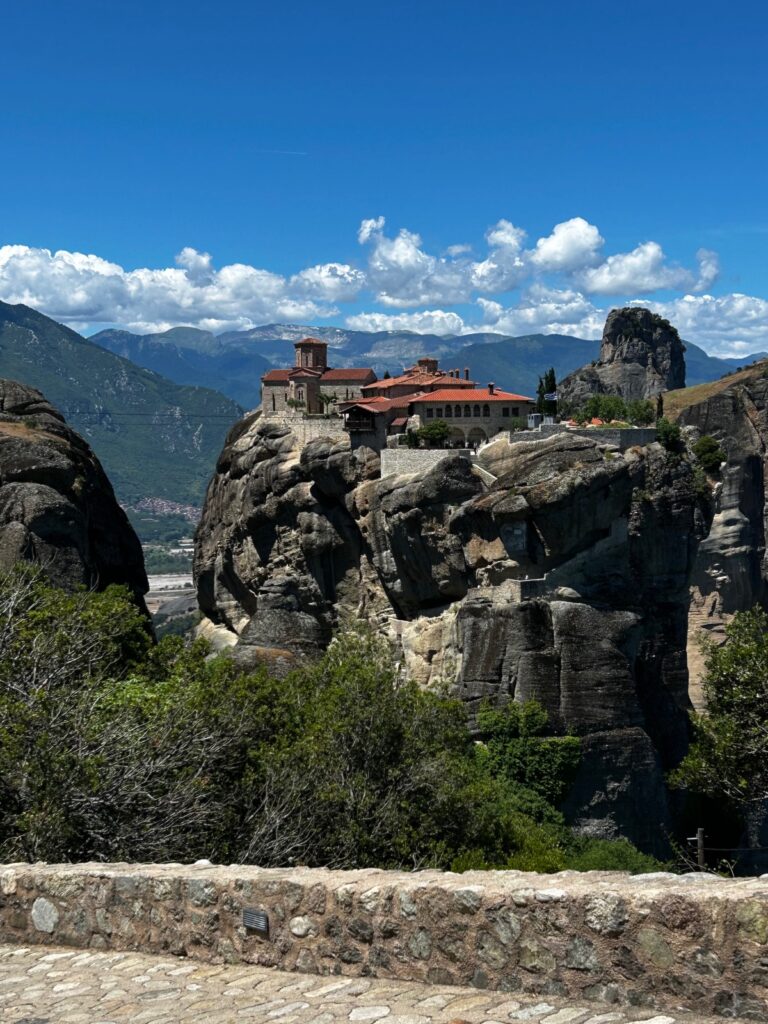
Holy Trinity has one of the most striking locations in Meteora. You might recognize it from the 1981 James Bond film For Your Eyes Only.
Reaching it takes a bit more effort. From the road, you first walk downhill before climbing through a passage cut into the rock and continuing up the stairs.
Allow around 45 minutes to an hour.
St. Nicholas Anapafsas Monastery
St. Nicholas Anapafsas is the smallest of the six monasteries, but you’ll love it if you care about Byzantine art.
The church contains frescoes painted by Theophanes the Cretan in 1527, who became one of the most important painters associated with the Cretan School. The building itself also differs from the larger monasteries. With very little space available on top of the rock, the monks built upwards, placing different rooms on separate levels.
Getting there involves a steep uphill approach and plenty of stairs, so its small size doesn’t make it an easy stop.
Allow around 30–45 minutes for the monastery itself.
Which Meteora Monasteries are worth visiting?
Best Meteora monastery if you only visit one
If I could visit only one, I would choose Varlaam for its beautiful architecture and old hoisting equipment, or Holy Trinity for its incredible setting and views.
Great Meteoron tends to be the most recommended choice among other visitors and travel guides since it has the most extensive museums and historical exhibits
Best monastery for views
Definitely Great Meteoron and Holy Trinity, but for different reasons.
Great Meteoron has better views of Meteora itself, especially of Varlaam sitting on the neighboring rock.
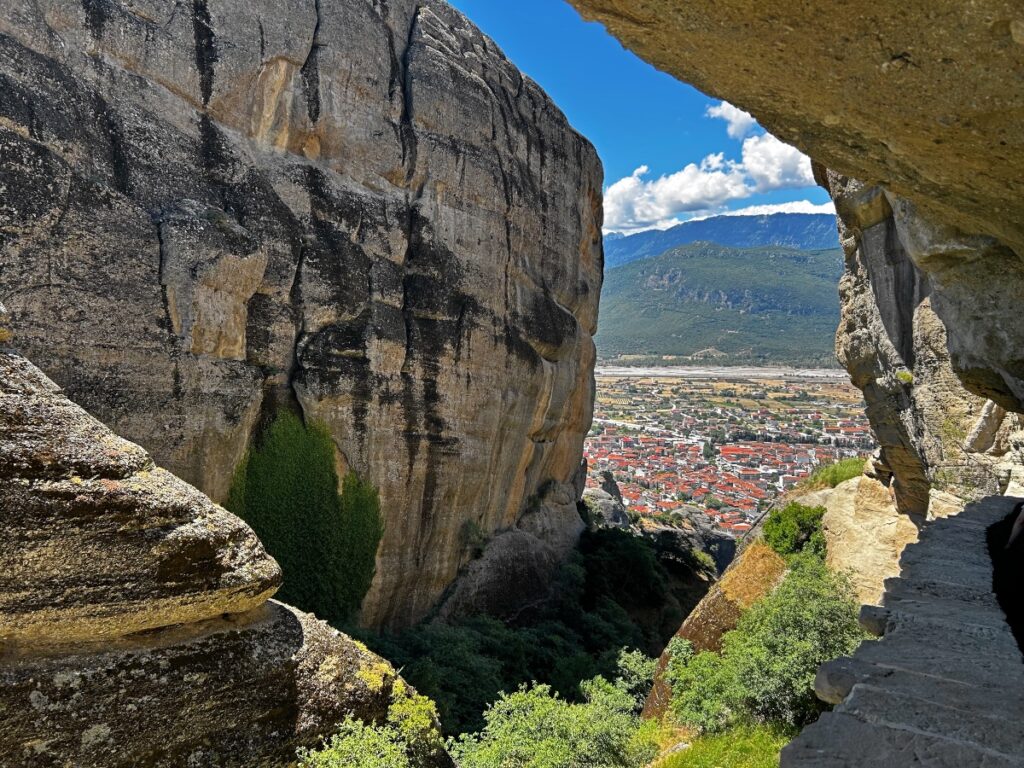
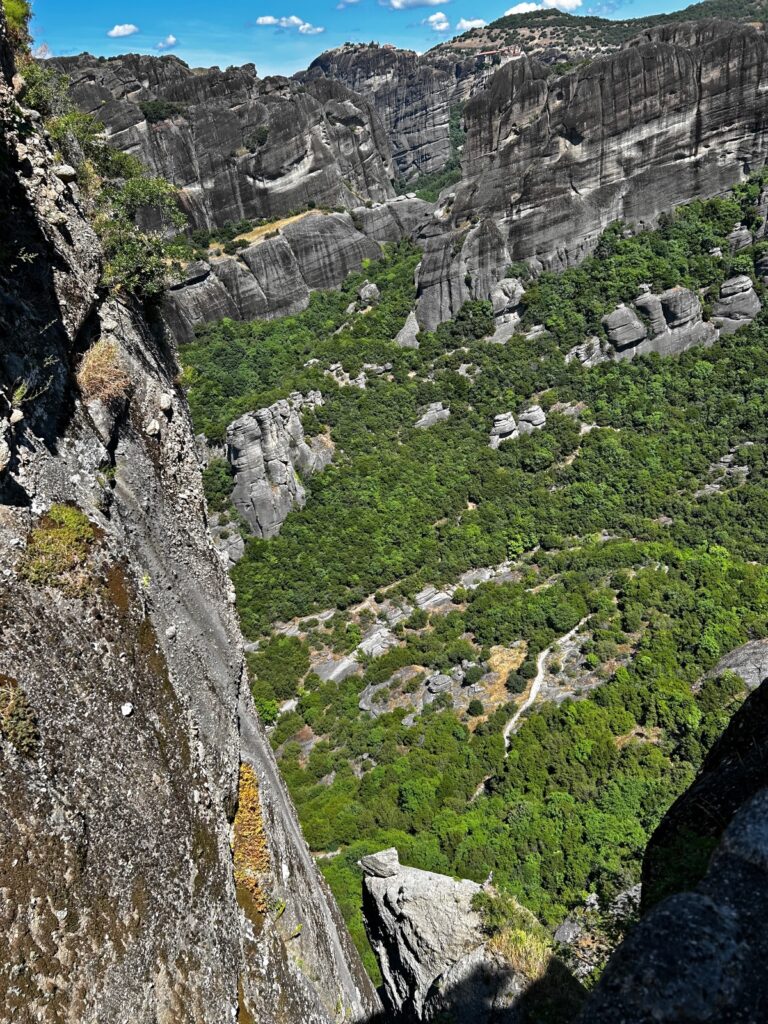
Holy Trinity stands almost alone atop a huge rock pillar, and its elevated position give you beautiful panoramas of the rock formations and the Thessalian plain. The town directly below makes the elevation particularly noticeable.
Best monastery for frescoes
St. Stephen’s was my favorite for frescoes. Its church is covered in detailed religious paintings, including some surprisingly graphic scenes of martyrdom that are difficult to forget.
For Byzantine art, St. Nicholas Anapafsas is another great choice since Theophanes the Cretan, one of the leading painters of the Cretan School, created its frescoes.
Easiest monastery to visit
St. Stephen’s wins this one easily. A short bridge connects the entrance to the road so that you can skip the lengthy climb required elsewhere.
This makes it the best option for anyone with limited mobility or who wants to avoid lots of stairs. I’d also recommend it as your first monastery. You can see quite a lot in a relatively short visit before moving on to the more demanding ones.
Which monasteries would I skip if I’m short on time?
This really comes down to your interests. St. Nicholas Anapafsas is small and easy to leave off a short itinerary, unless Byzantine frescoes are high on your list.
My more controversial choice would be Great Meteoron. Most guides put it at the top of the list because it’s the oldest and largest, but of the four I entered, I found it the least impressive. I loved the views, but with limited time, I wouldn’t visit purely because it’s the most famous.
How many monasteries can you visit in one day?
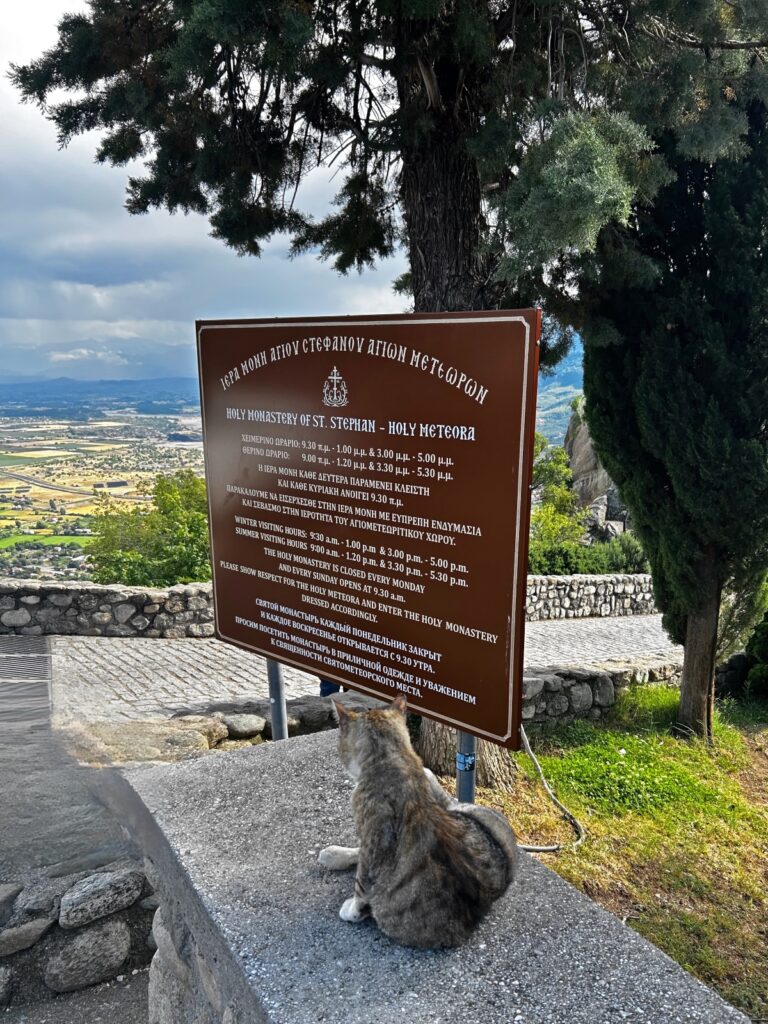
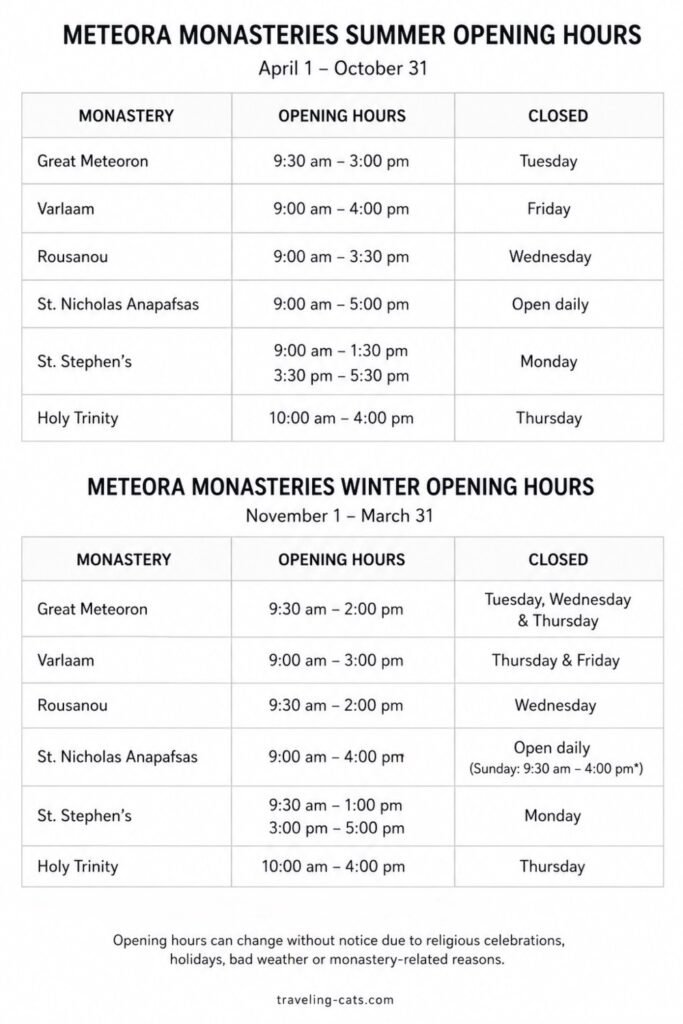
Because each monastery follows its own opening schedule, you can’t visit all in one day. Check the opening times further down in this guide before deciding on your itinerary.
With a full day, I’d pick two or three to explore inside and use the rest of the time for the scenic drive, viewpoints, or a hike. You’ll still get to see the other monasteries along the way without spending your entire day going from one church to the next.
Personally, I don’t think entering all six adds that much. The interiors share many similarities, but the location and architecture of each monastery really set them apart.
How many days do you need in Meteora?
Whether a day trip to Meteora is worth it really depends on where you’re coming from and how much you want to see.
Many people visit Meteora on a day trip from Athens, but I wouldn’t recommend it. You’ll spend around 10 hours of your day on the road, leaving you with surprisingly little time to experience Meteora.
If you’re coming from Athens, I would plan two days and stay one night in Kastraki or Kalambaka. Also, accommodation is generally much cheaper than in Athens, which is a nice bonus.
A day trip from Thessaloniki makes much more sense, as the trip is shorter and you’ll have considerably more time once you arrive. You can visit several monasteries and still have some time to enjoy the surrounding landscape.
That said, I would still consider staying for two days. Since the monasteries have different closing days, the ones you most want to visit might not all be open on the same day.
Ultimately, though, it comes down to which monasteries are on your must-see list and whether you want to do some hiking on top.
Meteora Monasteries opening hours and closing days
Meteora Monasteries entrance fees
As of 2026, all six Meteora monasteries charge the same entrance fee: €5 per person, per monastery. These are separate from guided-tour prices.
So if you enter all six monasteries, you’ll pay €30 per person in total.
You pay separately at each monastery. Cash only!
Children up to 12 years old enter free.
Meteora Monasteries dress code
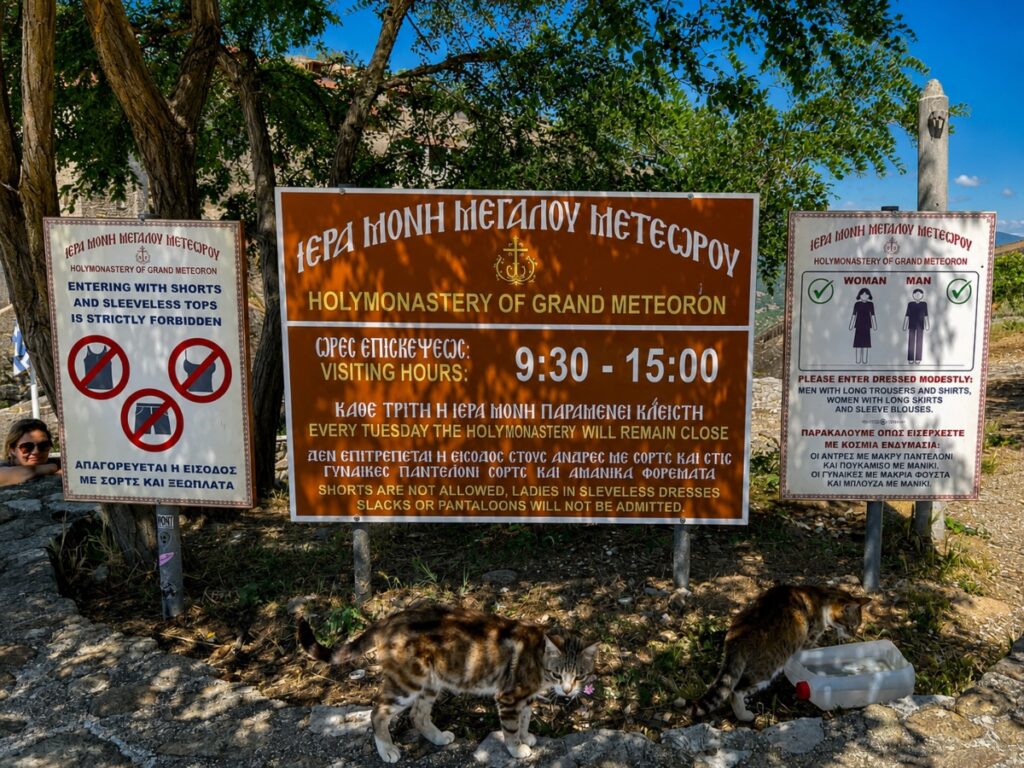
The Meteora Monasteries have a strict dress code, so make sure you wear the right clothes before you go. I knew there were rules beforehand and thought I had prepared well by wearing long pants and a sweater. What I didn’t realize was that women aren’t supposed to wear pants either.
What should women wear at Meteora?
Women should wear a long skirt or dress that covers the knees, and tops that cover the shoulders. Long pants don’t meet the traditional dress code.
Luckily, there’s an easy solution if you show up wearing the wrong clothes: you can use a large wrap to cover either your legs or your shoulders before entering. You can borrow or buy one at the monastery entrances for only a few euros.
I bought mine at a shop in Kalambaka for €10 and carried it with me while exploring Meteora.
What should men wear at Meteora?
Men should wear long pants and a T-shirt or shirt that covers the shoulders. Avoid shorts above the knee and sleeveless tops.
What happens if you’re not dressed appropriately?
The monasteries enforce their dress code and can refuse entry if your outfit doesn’t meet the requirements. Considering you’ve potentially just climbed a few hundred stairs to get there, this is one rule you don’t want to discover at the entrance.
How to get to Meteora
Chances are you’ll be traveling to Meteora from either Athens or Thessaloniki. Both are possible, but Thessaloniki is considerably closer and therefore much easier.
From Athens to Meteora
Athens is around 350 km from Meteora. Driving is by far the easiest option and takes between four and five hours. It also means you’ll have your own car once you arrive, which is useful for exploring the monasteries and viewpoints. (If you still need to rent a car, you can check out the most affordable options here.)
KTEL also runs bus services from Athens to Kalambaka, including an early direct departure. You can also take a bus to Trikala and change there for Kalambaka. The final stretch takes roughly 30 minutes, and there are regular connections throughout the day.
Before the severe floods in Thessaly in 2023, you could travel directly from Athens to Kalambaka by train. However, flood damage interrupted the railway beyond Paleofarsalos, and that section has not yet reopened. So while trains still leave Athens, they don’t currently take you all the way to Meteora. You’ll need to change at Paleofarsalos and continue to Kalambaka on a Hellenic Train replacement bus.
From Thessaloniki to Meteora
Thessaloniki is the easier starting point. It’s around 230 km from Meteora, and the drive takes approximately 2.5 to 3 hours.
If you don’t have a car, you can take a KTEL bus from Thessaloniki’s Macedonia Intercity Bus Station to Trikala. From there, change to a local bus for Kalambaka. Allow around four hours for the entire journey, depending on the connection.
You can also travel part of the way by train and connect with the replacement service toward Kalambaka, but again, I’d choose the bus as long as the railway to Meteora remains interrupted.
Getting from Kalambaka to the monasteries
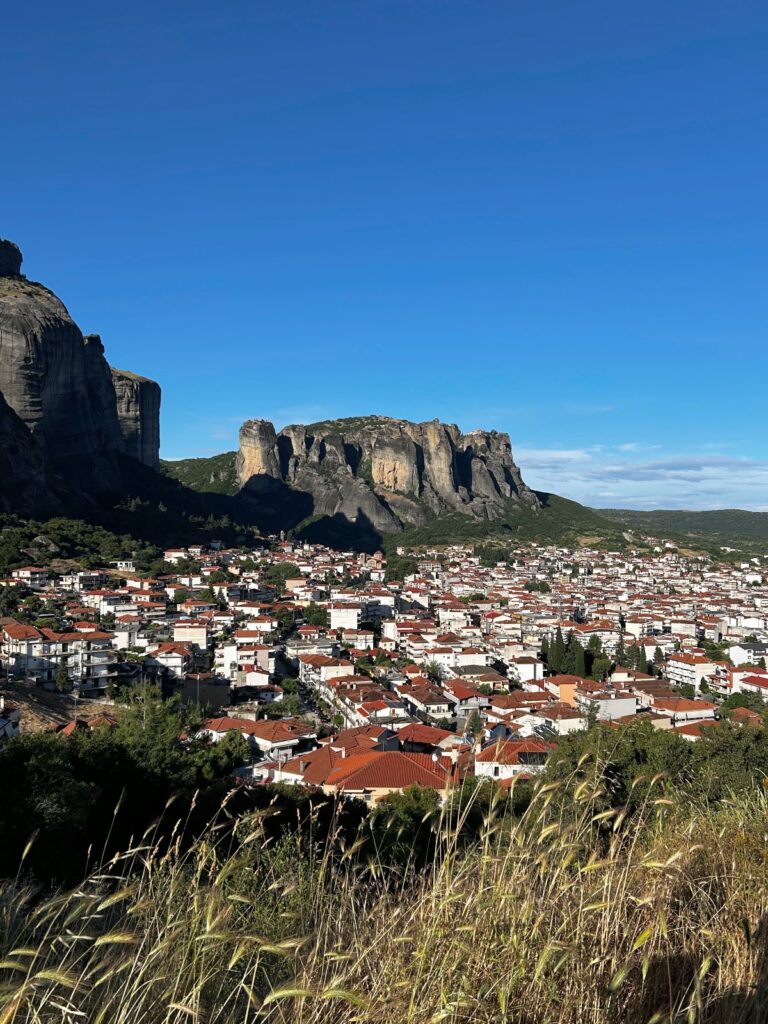
This is where Google Maps can fool you. The monasteries are not far from Kalambaka, but the winding roads and elevation add a lot of time on foot.
You can hike from Kalambaka to Holy Trinity, but Kastraki is a better starting point for St. Nicholas Anapafsas and several of the trails through the rocks.
Walking between all six is another matter. It’s certainly possible, but don’t think of it as an easy walk from one attraction to the next.
Of course, with a car, you can follow the monastery loop and stop at the viewpoints whenever you like.
Parking at the Meteora Monasteries
Parking at the Meteora Monasteries is free, but there isn’t much space available. Most monasteries have small parking areas nearby, with additional spots along the road.
You should be fine outside the peak tourist season. During summer, however, spaces fill up quickly, especially around Great Meteoron and Varlaam. Tour buses take up quite a bit of room too, which doesn’t exactly help. If you’re coming in July or August, I’d start early and allow extra time to find a spot.
Parking at the viewpoints is even more limited. In many places, you’ll only find enough room for a few cars along the road. The popular sunset spots get particularly crowded as well.
If everything closest to a monastery is full, keep driving until you find a safe place to park. You may have an uphill walk afterward, but distances are manageable.
Taking a guided tour from Kalambaka
You can also book a tour once you’re in Kalambaka. Morning tours cover either the monasteries and viewpoints or the hiking trails. There are also separate sunset excursions. Many people do both.
Tip: Many organized trips from Athens and Thessaloniki use these same local tours once they reach Meteora. The main difference is that you’re also paying for transport from the city and for accommodation.
Our two-day Meteora itinerary from Athens
We visited Meteora on a fully organized two-day tour from Athens, and I’m glad we did.
Normally, there’s quite a bit to organize yourself: getting to Kalambaka or Kastraki, figuring out the opening days, booking a hotel, getting around once you’re there, etc. With the tour, we didn’t have to plan any of that. Everything came together in one booking. It also cost surprisingly little more than arranging everything separately.
To give you an idea of exactly what you get, here’s how our two days looked:
Day 1
Our tour bus picked us up outside Larissa Station (Athens Railway Station) at 07:45 am, with departure at exactly 08:00 am.
One important tip: be careful when you arrive at Larissa Station, because ALL the guided Meteora tours leave from here. Several buses were waiting around, and it was surprisingly easy to get confused about where we were supposed to go. Recheck the name of your tour before getting on.
From Athens, the drive to Meteora took almost five hours. We made only one short stop along the way at Makedonía Estiatório Kafé in Agios Konstantinos, a roadside service stop where you can use the bathroom, stretch your legs, and grab food or a drink.
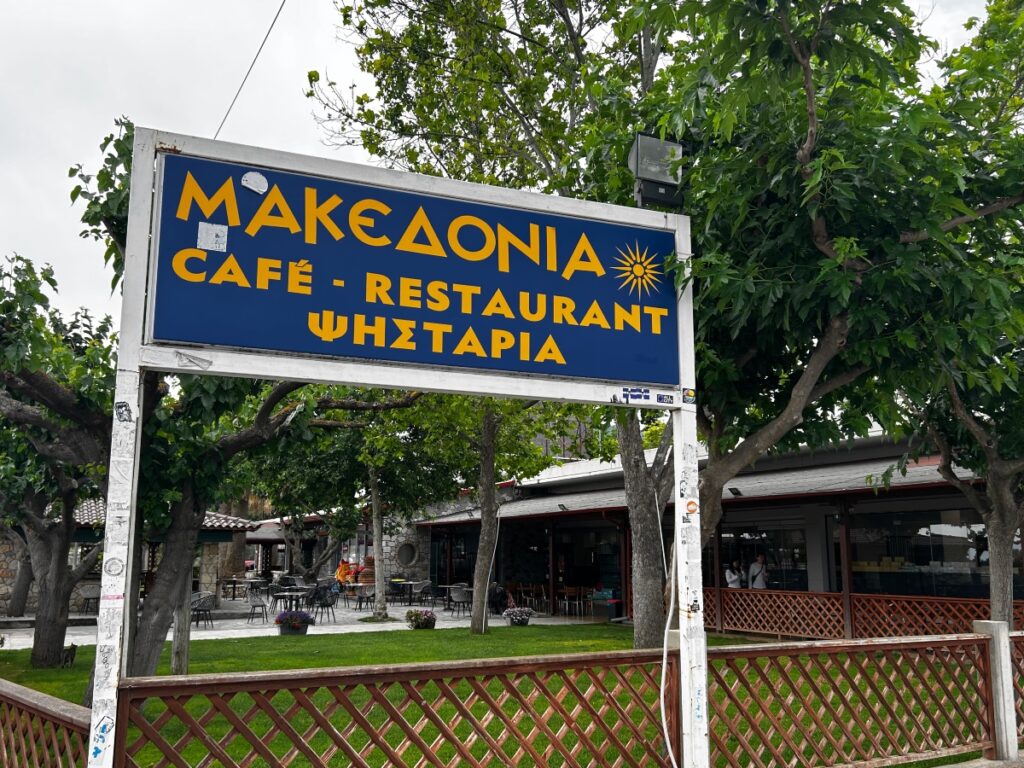
There’s honestly not much to see during the drive either. The landscape is quite barren, so I’d definitely bring a book (I read this one), download a movie, or have something else ready to keep you entertained.
We arrived at the Kalambaka meeting point at around 12:30 pm. From there, we had a few hours to grab lunch, check into our hotel, and rest before heading out again.
We decided to book our hotel ourselves, but you can also choose a tour package that includes accommodation if you want everything in one booking.
At 04:30 pm, we met our guide again for the Sunset Tour. We first visited St. Stephen’s Monastery, then drove around Meteora to see some of its most interesting viewpoints, rock formations, and caves.
Along the way, our guide told us more about the monks who once lived in the caves and the films shot around Meteora.
We also visited the Byzantine Church of the Virgin Mary in Kalambaka, which seemed like an unnecessary stop. I would have much rather spent that time somewhere among the rocks.
Of course, the main event came at the end: sunset!
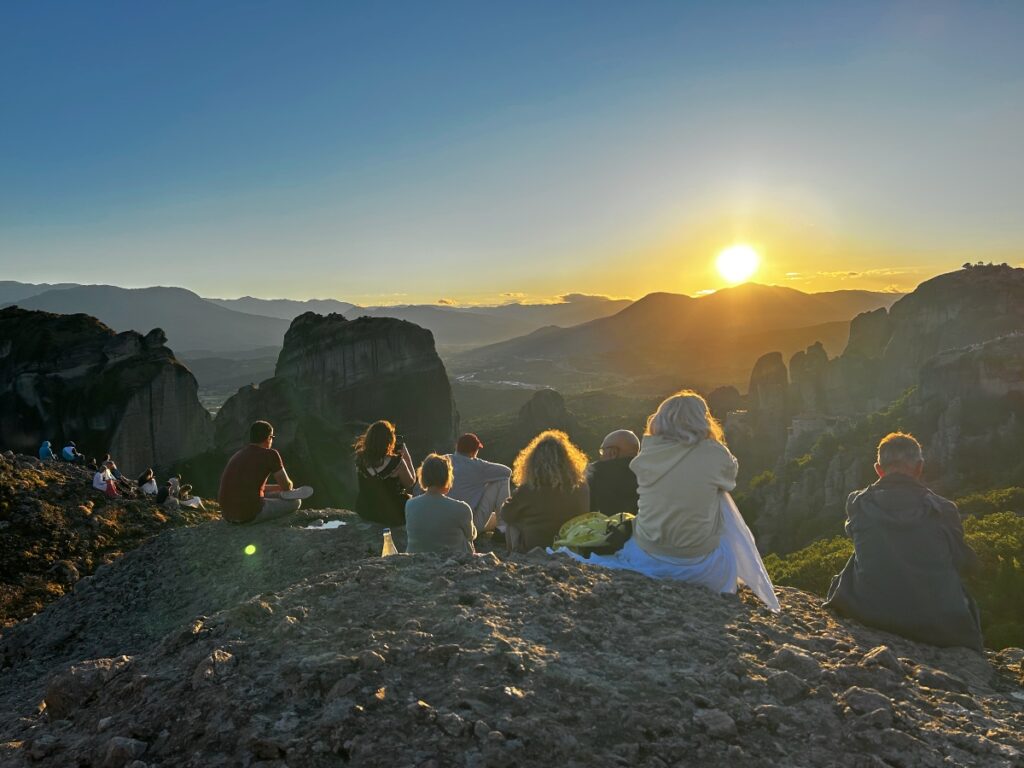
We drove to one of Meteora’s most famous sunset viewpoints and joined what seemed like half of Greece’s tourists on the rocks. We visited in early June, and it was already incredibly crowded, so don’t expect a peaceful sunset with the place all to yourself.
By around 08:30 pm, we were back in Kalambaka and ready for dinner.
Day 2
The next morning, our Panoramic Morning Meteora Tour started at 09:00 am. This time, we drove around the main monastery route and visited three more monasteries along the way.
You can also swap the panoramic tour for a Meteora hiking tour. I would definitely consider this if hiking is more your thing, but keep in mind that you’ll only visit either Varlaam or Great Meteoron inside.
We returned to Kalambaka at around 01:00 pm, but our bus back to Athens didn’t leave until approximately 05:30 pm. Four and a half hours is quite a lot of time to kill in such a small town, although it does give you a good opportunity to have lunch and properly explore.
Then came another almost five-hour bus ride back to Athens. We finally arrived at around 10:30 pm, just in time for a very late dinner.
Best Meteora tours
There are plenty of Meteora tours to choose from, including quick monastery trips, hiking adventures, sunset excursions, and multi-day tours from Athens. Prices also vary quite a bit, so it’s worth checking what you actually get before booking.
Best Meteora monastery tour from Athens
We paid €210 per person for our two-day trip with Meteora Thrones (hotel not included). We booked quite last minute, and I later discovered we could have done the same trip for much less. Annoying, but at least you can learn from my mistake.
This 2-day Meteora tour from Athens with hotel included covers transport from Athens, one night in Kalambaka, and two guided excursions around Meteora for almost half the price. You can also choose between the same panoramic and hiking options I mentioned above.
If I were booking today, this is the two-day Meteora tour from Athens I’d choose.
Best Meteora tour from Thessaloniki
Thessaloniki sits much closer to Meteora, so a day trip from here is far more doable.
This full-day Meteora tour from Thessaloniki includes the bus journey, visits to two monasteries, and time for lunch at a traditional village taverna.
Best Meteora hiking tour
Want to leave the roads behind for a few hours? The Easy Hiking Adventure in Meteora follows paths through the rocks and greenery, passing places you’d otherwise not see. One such place is Ypapanti, the small monastery built in 1367 inside a large natural rock cavity.
For something a lot more adventurous, there’s the Meteora Via Cordata Hiking Tour to the Great Saint. You’ll scramble across the sandstone, follow a route carved into the rock by monks, and use a Via Cordata system to reach the Great Saint.
Best Meteora sunset tour
The Meteora Guided Sunset Tour with Monasteries & Caves costs €35 per person and includes hotel pickup from Kalambaka or Kastraki.
You’ll stop at caves, religious sites and panoramic spots before watching the sun go down among the rocks.
More Meteora tours
There’s a lot more to do at Meteora. You can ride through the landscape on a sunset e-bike tour, go truffle hunting, or explore the area on horseback.
Best viewpoints in Meteora
Some of the best views in Meteora aren’t from the monasteries at all. You’ll find several lookouts along the main road that loops around the rocks, and most are free and accessible at any time of day.
If you have a car, you can drive the full monastery circuit and pull over at the designated areas that catch your eye. Still, a few viewpoints are worth specifically looking out for.
Best Meteora sunset viewpoint
Psaropetra Viewpoint, often called Sunset Rock, is one of the most popular places to watch the sun go down in Meteora. You’ll find it beside the main monastery road, between Rousanou and the turn towards Varlaam and Great Meteoron.
You can drive directly there, and leave your car beside the road. Parking is limited, though, so arrive at least 30–45 minutes before sunset during the busy summer months. From there, it’s only a very short walk onto the rocks.
Walking from Kastraki is possible, but don’t expect a quick evening stroll. The route climbs steadily from the village, so I’d choose a car or taxi if your only goal is catching the sunset.
Don’t have transport? Many sunset tours from Kalambaka and Kastraki include a stop here.
Best viewpoints for photographing the monasteries
Holy Trinity is one of the easiest monasteries to photograph from a distance. Drive past it towards St. Stephen’s and look back from the road across the valley. From here, you get the entire monastery on top of its narrow pillar, with Kalambaka far below. For a wider shot, continue farther along the road towards St. Stephen’s. Morning light works particularly well here.
Rousanou also has several great angles. My favorite is from the road above it, a few hundred meters from Psaropetra. There’s a tiny pull-off with space for only three or four cars. If you look down toward Rousanou, you’ll see the entire building squeezed onto the rock, with St. Nicholas visible in the background.
For Varlaam, head towards Great Meteoron. The road between the two looks directly across the gorge towards Varlaam, and the Great Meteoron side gives you one of the clearest views of the complex.
There’s also an unsigned panoramic lookout between Great Meteoron and Rousanou where you can see five of the six monasteries at once. Drive about 1.2 km downhill from the Great Meteoron parking area towards Rousanou. Just after a sharp right-hand bend, look for a small gravel pull-off on your right. From here, you can see Great Meteoron, Varlaam, Rousanou, St. Nicholas, and Holy Trinity.
St. Stephen’s is trickier to photograph with its rock underneath it because of its position at the eastern end of the complex. You’ll get better photos of the landscape from St. Stephen’s than of the building itself.
Best sunrise viewpoint
For wide morning panoramas, head toward the upper road around Varlaam and Great Meteoron.
You can also stay closer to Kastraki. From the outskirts of the village, the enormous rock towers rise directly behind the houses, creating a very different composition from the sweeping panoramas higher up.
Viewpoints you can easily reach by car
The Main Observation Deck of Meteora (39.71928, 21.63701) sits directly beside the road that connects the monasteries. You can drive right up, leave your car nearby, and walk to the viewing area in a couple of minutes. It offers a broad panorama across several rock formations and makes an easy stop while driving the loop.
Psaropetra, the Sunset Rock (39.72102, 21.63412), is also convenient, as are the roadside photo stops above Rousanou. You’ll also find smaller pull-offs as you continue towards Varlaam, Great Meteoron, Holy Trinity, and St. Stephen’s.
Just keep in mind that many of these aren’t large, purpose-built parking lots. Some only have room for a handful of vehicles. If there’s nowhere safe to stop, continue driving rather than squeezing onto the side of the road. You won’t have to wait long for another beautiful angle.
Hiking in Meteora
You can easily spend an entire day hiking in Meteora without entering a single monastery. Old footpaths connect Kalambaka and Kastraki with the rocks, hidden religious sites, and the six active monasteries.
You don’t need hiking experience for many of the routes, but don’t underestimate the elevation. Even relatively short distances can involve a fair amount of uphill walking.
Best hiking trails in Meteora
Kastraki to Ypapanti
For a relatively easy hike, try the Doupiani–Ypapanti trail from Kastraki. The route covers around 2.4 km and climbs through oak forest to Ypapanti, a lesser-known monastery built into a large opening in the rock. Allow around 1–1.5 hours one way.
Ypapanti to Varlaam
From Ypapanti, you can continue towards Varlaam if you want a longer walk. This extra section measures around 1.4 km, but the terrain becomes considerably steeper.
Kalambaka to Holy Trinity
Another good option starts in Kalambaka and climbs to Holy Trinity. The old footpath begins in the upper part of town and takes you directly beneath the monastery. It’s a short route, but you’ll gain around 200 meters in elevation before tackling the final monastery steps. Allow roughly 45–60 minutes for the climb itself.
Kastraki to Adrachti
For something even shorter, walk from Kastraki to the Adrachti rock. The trail starts near the central square and takes around 30 minutes, with views back toward Kastraki, Kalambaka, and the surrounding formations.
Hiking between Kalambaka, Kastraki, and the monasteries
Both Kalambaka and Kastraki work as starting points, but Kastraki sits closer to the main cluster of rocks. From here, you can walk towards St. Nicholas Anapafsas and connect with paths leading deeper into Meteora.
Kalambaka works particularly well for Holy Trinity. Instead of following the winding road used by cars, you can take the old footpath directly uphill from town. From the monastery area, other trails lead towards Kastraki or back down into Kalambaka.
You can also walk between Kalambaka and Kastraki, although I’d only do this if you genuinely want to spend the day on foot. Otherwise, save your energy for the trails among the rocks.
A good compromise is to take a bus or taxi uphill and hike back down. You’ll still experience Meteora on foot without spending half the day climbing.
What to know before hiking in Meteora
Start early
If you’re visiting in summer, start early. Temperatures can get high, and not every section has shade. Carry more water than you think you’ll need, especially on routes where you won’t find anywhere to refill.
Wear shoes with a good grip
Wear shoes with decent grip. The terrain ranges from forest paths and dirt tracks to loose stones and old paved sections, and rain can make the rocks slippery.
Download your route
I would download your route before leaving. Meteora has marked trails, but the signs and colored markings aren’t equally obvious everywhere. An offline map or GPX file makes exploring much easier, particularly when several smaller paths meet.
(
Watch for snakes
There are venomous snakes in the area. I wouldn’t be overly worried about them, but avoid stepping or putting your hands into gaps between rocks or tall vegetation where they are hiding.

Where to stay in Meteora: Kalambaka or Kastraki?
The two main places to stay in Meteora are Kalambaka and Kastraki. Both make good bases, but they offer slightly different experiences.
Kastraki sits closer to the Meteora rocks, several monasteries, and hiking trails.
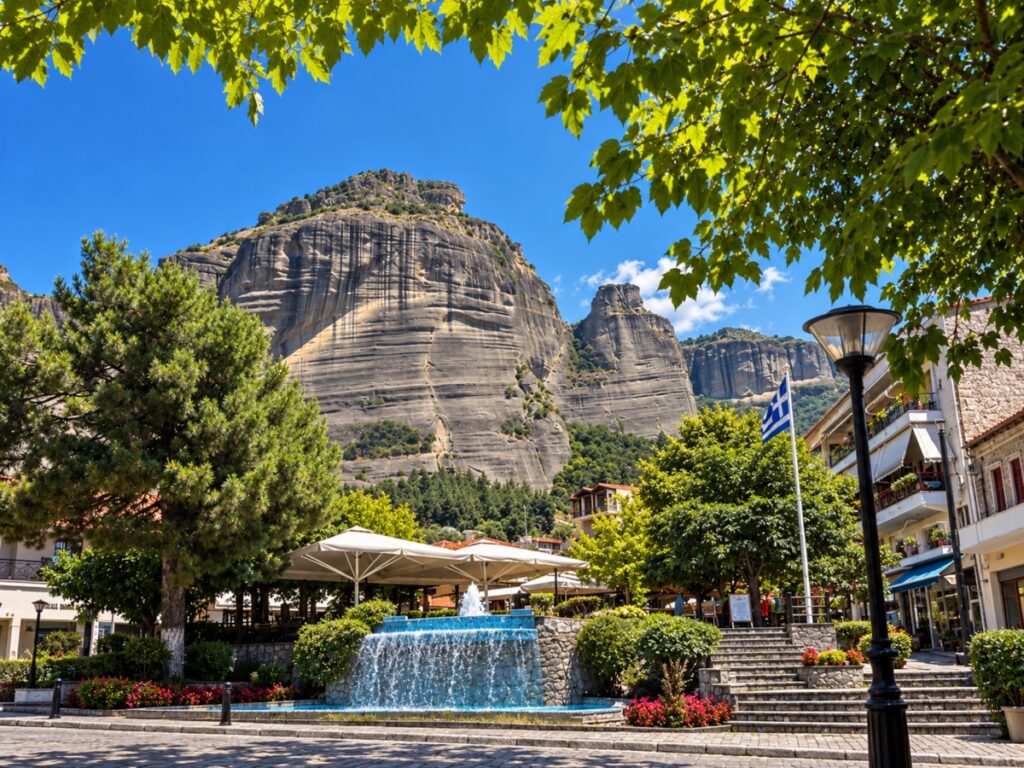
Kalambaka is the larger town and has more restaurants, cafés, and shops. You’ll also find a wider choice of accommodation here, but it’s a little farther from the monasteries.
We stayed in Kalambaka at Toti Boutique Rooms for one night and paid €42 for two people. Like most hotels in the area, it’s old-fashioned but charming. The location is great too, right underneath the towering rocks.
Whichever you pick, accommodation around Meteora is extremely affordable, so staying overnight doesn’t have to add to your budget.
📍You’ll sometimes see Kalambaka spelled Kalambaka or Kalampaka online. They all refer to the same town.
Where to eat in Meteora
You won’t find restaurants or cafés around the monasteries themselves. The only option we came across was a small stall near the entrance to Great Meteoron selling canned drinks and a limited selection of packaged snacks. Don’t count on getting lunch up there.
For a proper meal, head to Kalambaka or Kastraki. If you’re joining a guided tour, you may get a short break in Kastraki between monastery visits to buy something to eat or drink.
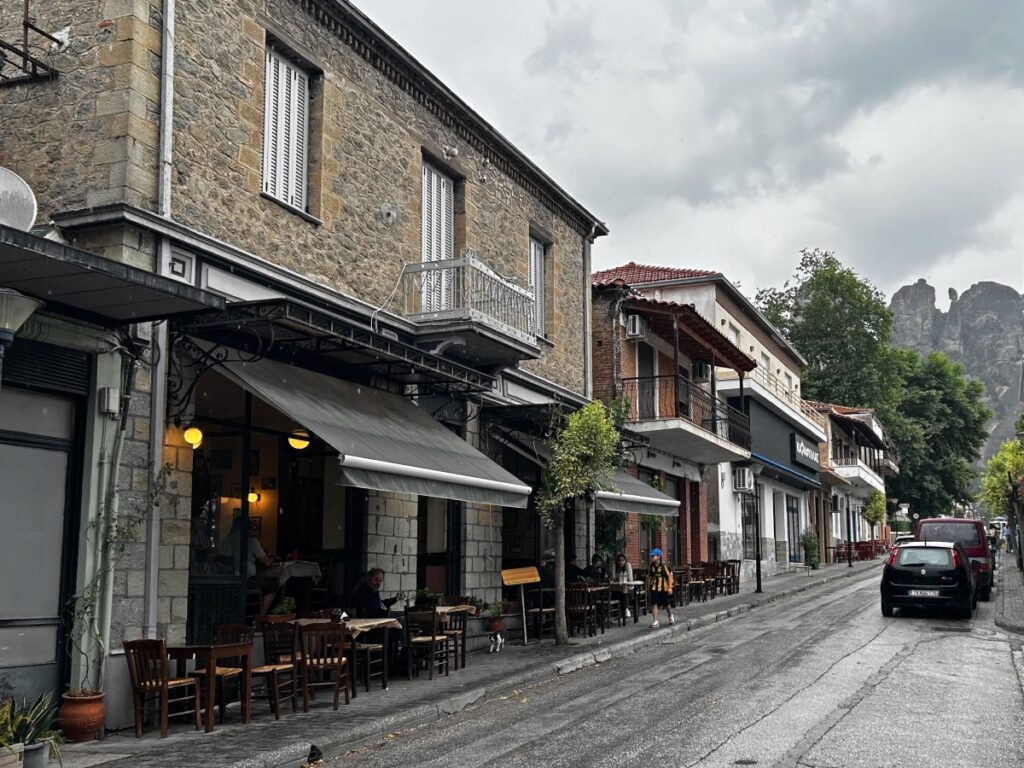
Kastraki has several tavernas and cafés and works well for a quick lunch while exploring Meteora. For dinner and a wider choice, you better head to Kalambaka. You’ll find everything from tiny family-run tavernas to more modern Greek restaurants, and prices are generally reasonable.
These are the three restaurants we tried in Kalambaka:
21 Olive
21 Olive was my favorite of the three. It’s a tiny traditional taverna run by an older woman who both serves the guests and prepares the food.
Every meal is made with love, and the portions are enormous, so come hungry. What I loved most was the atmosphere. Eating here feels a little like your Greek grandmother has invited you over for dinner — assuming you have a Greek grandmother, of course.
🍽️ Address: 21 Olive, Vlachava 21, Kalambaka 422 00, Greece.
Archontariki Taberna
Archontariki sits on the main square in Kalambaka and serves classic Greek dishes such as moussaka, roasted meats, and soups.
We really enjoyed the food here. Compared with 21 Olive, the interior is more modern and restaurant-like, and there’s plenty of outdoor seating if you prefer to eat on the square.
🍽️ Address: Archontariki Taberna, Trikalon 13, Kalambaka 422 00, Greece.
Restaurant Meteora Gkertsou Family
Of the three restaurants we tried, Restaurant Meteora Gkertsou Family was my least favorite. That’s not to say the food was bad — we still ate well — but I’d return to the other two first.
The beautiful interior is actually one of the main reasons to visit. Although there’s lots of outdoor seating, I’d choose a table inside for the more traditional atmosphere.
🍽️ Address: Restaurant Meteora Gkertsou Family, Trikalon 2, Kalambaka 422 00, Greece.
Best time to visit Meteora
You can visit Meteora year-round. From November 1 to March 31, however, the monasteries follow shorter winter schedules, with some closing on additional weekdays.
I wouldn’t choose the busiest summer months. Temperatures can make hiking and climbing all those stairs exhausting, while the crowds can seriously affect the experience.
We visited on June 4 and 5, and it was already incredibly busy; tour buses were full and booked days in advance. I can only imagine what July and August are like.
For that reason, I’d aim for late spring or early autumn. You’ll have a better chance of pleasant hiking weather without the peak summer crowds.
Winter is a completely different experience. Visitor numbers drop considerably, making this an interesting time to come if you’d rather have Meteora largely to yourself.
It does occasionally snow, which can be both a blessing and a curse. The monasteries and rock formations look spectacular covered in white, but slippery paths make hiking much more challenging. Snow isn’t guaranteed either; it comes and goes, and conditions vary considerably from one winter to another.
If you visit after heavy snowfall, I’d skip the more demanding trails. A scenic tour can take you between the main viewpoints, while St. Stephen’s remains the easiest monastery to reach because you don’t have to climb a long, slippery staircase.
Keep in mind that severe winter weather can temporarily disrupt access, so leave some flexibility in your plans.
What to pack for Meteora
You don’t need much special equipment for Meteora, but a few things will make exploring the monasteries considerably easier:
- Cash: You’ll need it to pay the entrance fee at each monastery. There is no ATM in the area.
- Appropriate clothing: Follow the monastery dress code or carry a lightweight wrap that you can use to cover your legs or shoulders.
- Comfortable hiking shoes: Even without doing a proper hike, expect plenty of stairs, slopes, and uneven surfaces.
- SPF 50 sunscreen: Much of the area is exposed, and the Greek sun can be strong even outside peak summer.
- Portable charger: Between navigation and taking approximately a million photos, your phone battery can disappear surprisingly quickly.
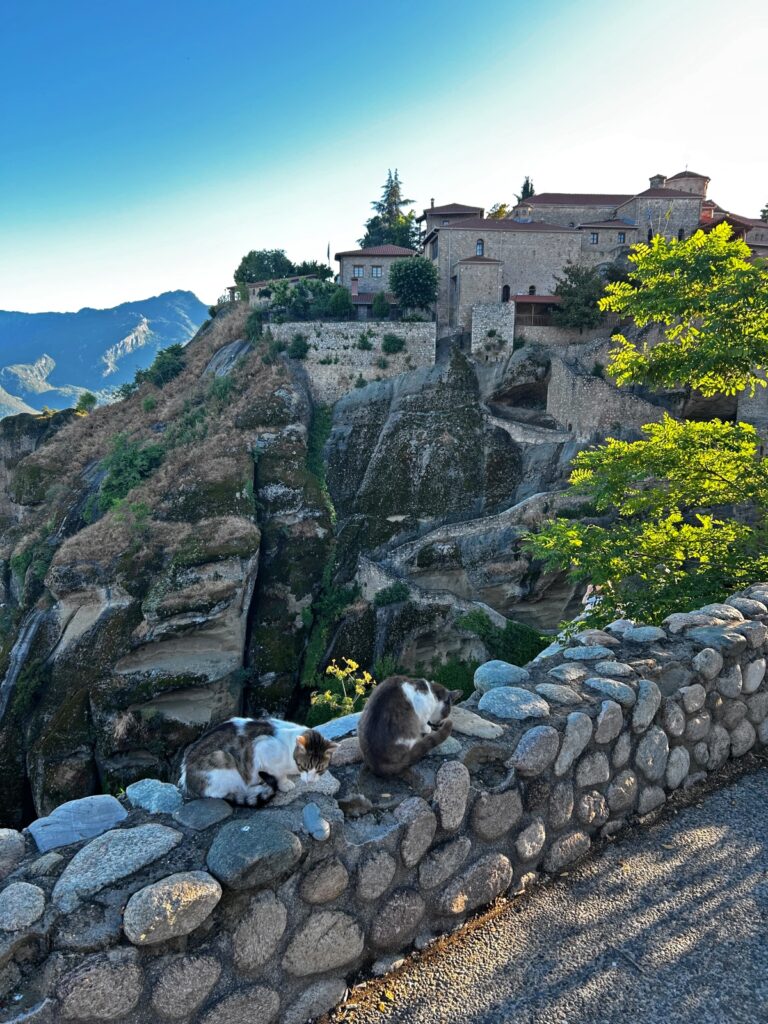
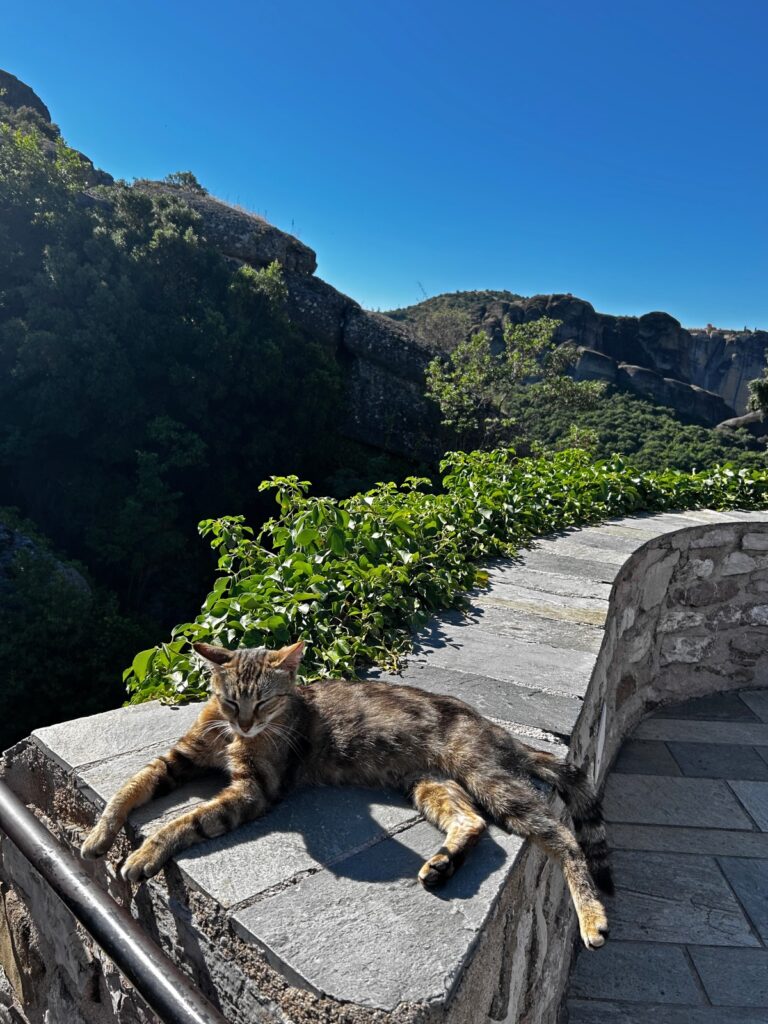
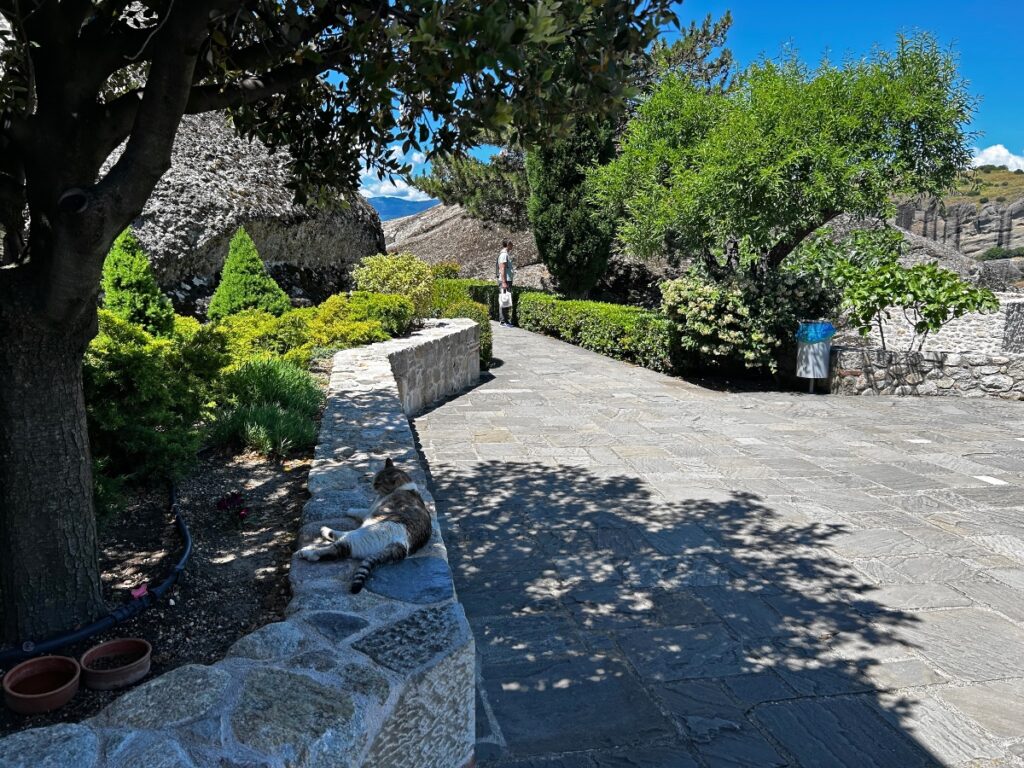
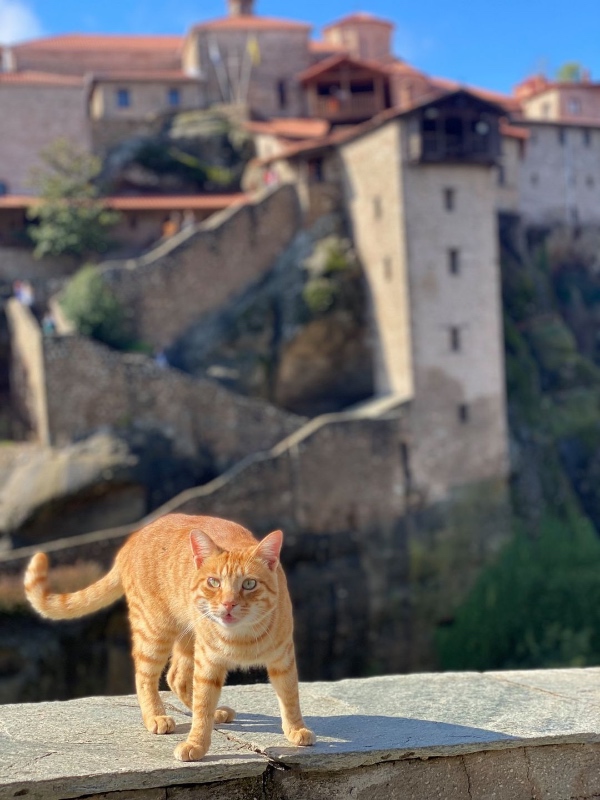
- Cat food and water: Bring a small bag of kibble, fresh water, and a collapsable bowl if you’d like to help the many stray cats living around the monasteries. Avoid leaving food behind if no cats are around.
Mistakes to avoid when visiting Meteora
Meteora is fairly easy to explore once you know how everything works. A little planning goes a long way, especially when monastery opening days and travel times come into play.
Not checking which monasteries are closed
It’s easy to assume all six monasteries open every day. They don’t. Each follows its own schedule, and closing days also change between summer and winter.
Trying to visit all six monasteries in one day
Even if the schedules made this possible, you don’t need to enter all six anyway.
The interiors start to feel quite similar after you’ve seen a few. What really distinguishes each monastery is its location, architecture, and surrounding rock formations.
Underestimating the driving and walking time
Meteora isn’t exactly close to Greece’s main tourist cities. You’ll often read that the drive from Athens takes around four hours, but in reality, it’s much closer to five. From Thessaloniki, expect roughly 2.5–3 hours.
This makes a day trip from Athens particularly long, with close to ten hours spent traveling there and back. And once you arrive, you’ll still need time to drive between the monasteries, find parking, and climb all those stairs.
Arriving at the most popular monasteries too late
Great Meteoron and Varlaam attract plenty of tour groups, particularly during the warmer months. Arriving earlier gives you a better chance of finding parking and exploring before the biggest buses roll in.
It also helps to visit your must-see monastery first. Don’t save your favorite until the end of the day only to discover that you’ve missed the last admission.
Forgetting about the dress code
Don’t show up in the wrong clothes because you won’t get in.
Not carrying cash
Bring euros with you. You need cash for the €5 entrance fee at each monastery, so don’t rely on card payments.
I’d also carry smaller notes rather than turning up at every entrance with a €50 bill.
Visiting only the monasteries and missing the landscape
The monasteries are only part of what makes the area so special, so leave enough time to drive the full scenic route, stop at different viewpoints and, if possible, do at least one hike.
Visiting Meteora as a day trip from Athens
Yes, you can book a day trip from Athens. I wouldn’t recommend it.
You’ll spend more than 10 hours of the day traveling there and back, only to squeeze Meteora itself into a relatively short visit. After coming all that way, it seems a shame to experience such a unique place through a rushed itinerary.
Stay at least one night in Kalambaka or Kastraki instead. You’ll have time for the monasteries, viewpoints, and sunset without spending most of your day on a bus.

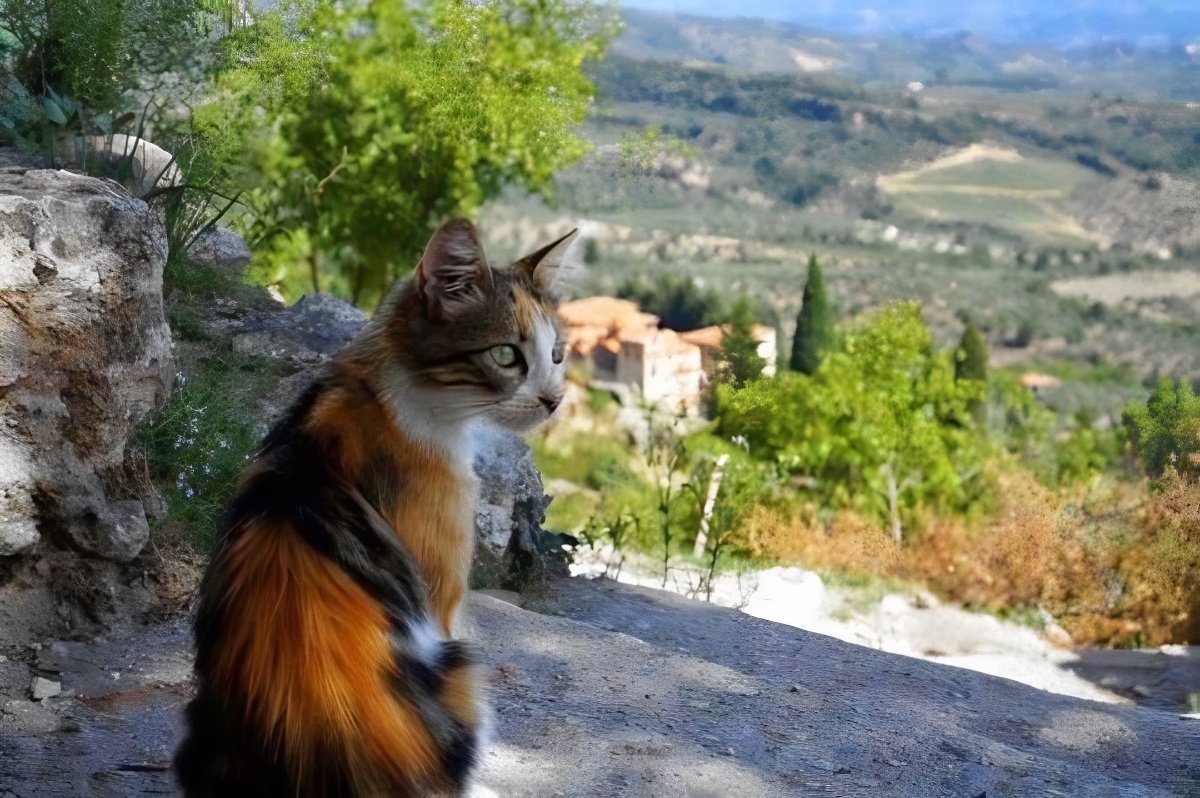
Cats of Meteora
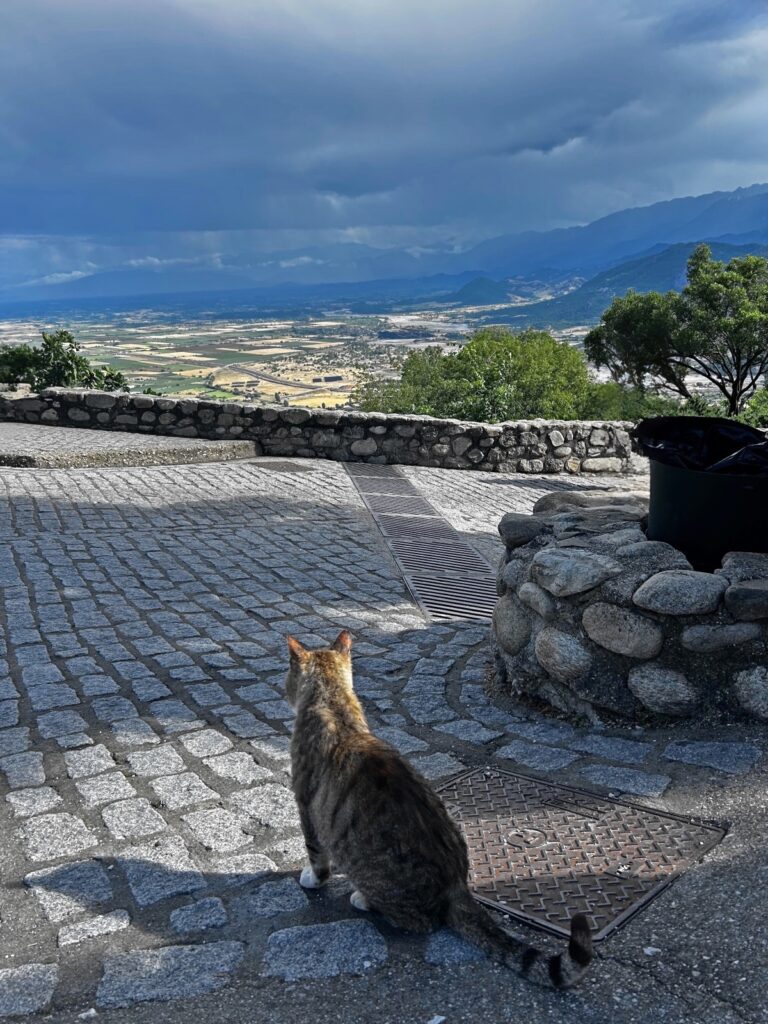
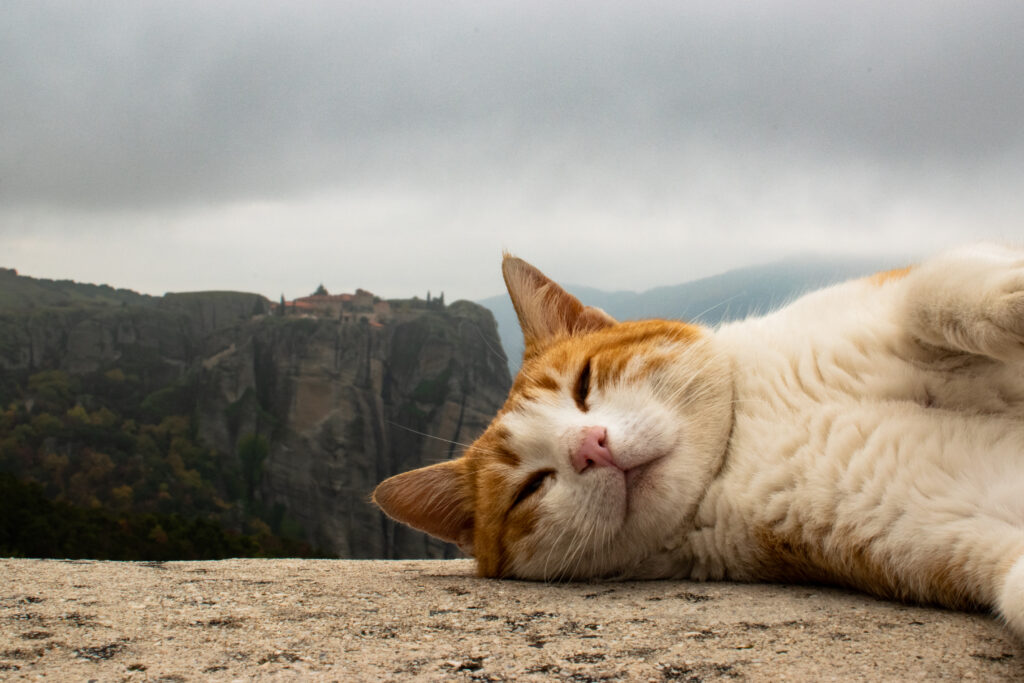
Just when you think Meteora couldn’t get more magical, that’s where the cats come in.
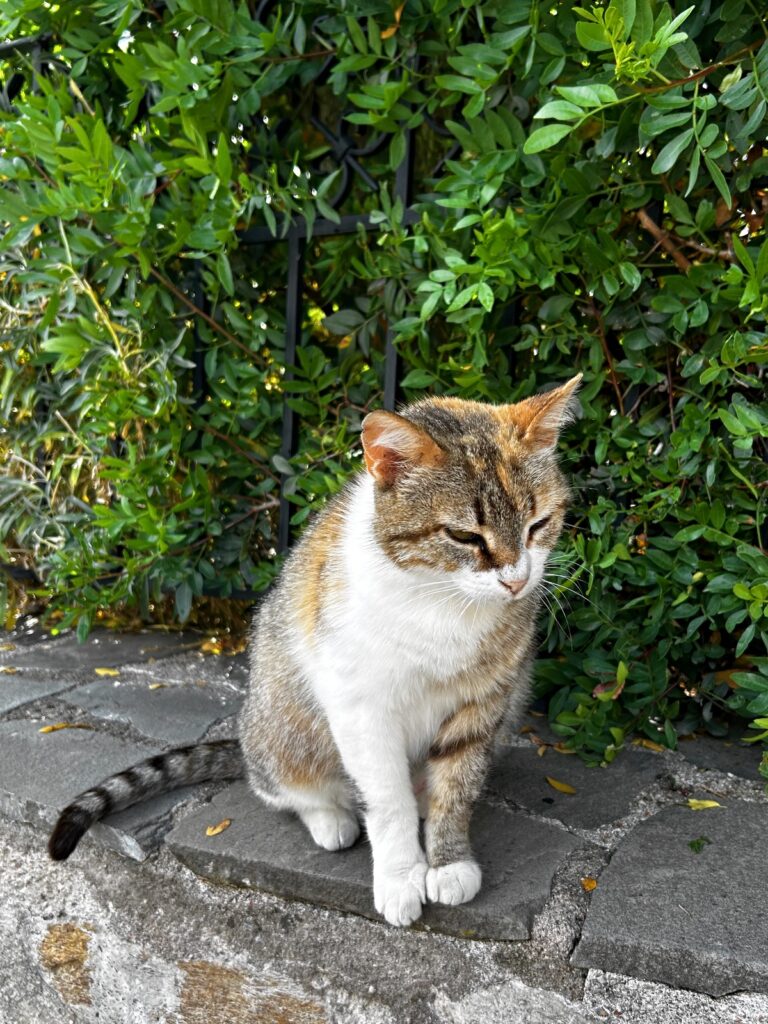
They’re even part of Meteora’s history. Drawn by shelter, scraps, and a peaceful environment, they settled in and never left.
Some live around the monastery courtyards, where the monks and nuns provide food, shelter, and care. In return, the cats keep the mouse population under control.
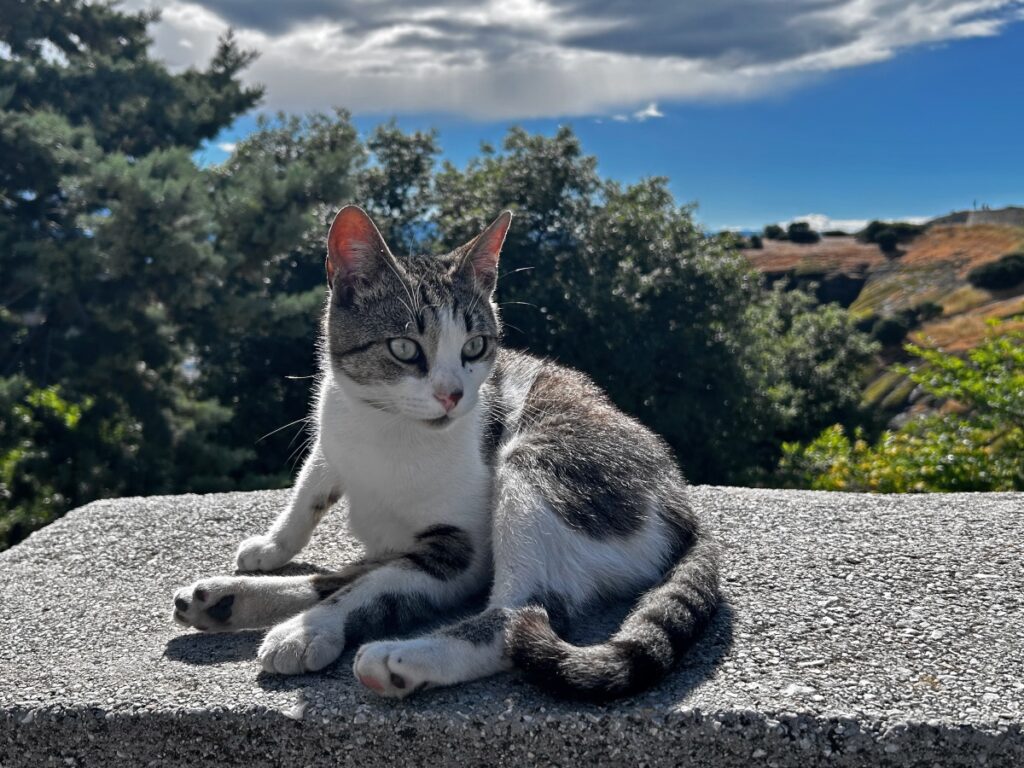
Others hang around the entrances and rely on food and water from visitors.
Don’t be surprised if one of these furry little locals wanders up to you, rubs against your leg, or quietly poses beside a centuries-old fresco. It’s all part of the experience.
🐱 Wondering why there are so many and how to help them? This guide to stray cats in Greece explains where they come from and how they live.
Meteora Monasteries FAQ
Can you visit Meteora with children?
Meteora is surprisingly easy to visit with children, especially if you have a car or join a tour, and visit the monasteries that are easiest to reach. Children under 12 can enter the monasteries for free.
Keep in mind, though, that many frescoes are quite graphic and not suitable for children.
I also wouldn’t pack too many monasteries into one day either. Pick a couple, stop at the viewpoints, and give your young ones a break from all those stairs.
Can you visit Meteora with fear of heights?
I have an extreme fear of heights, so I expected to turn back without visiting any of the monasteries and instead see them from a distance. I thought the elevation would make me dizzy or that I would be too scared, but surprisingly, I wasn’t afraid at all.
The stairs leading up to the monasteries are wide, and you’re never close to the edge unless you deliberately choose to walk over to it. Even at the highest monasteries, I felt completely at ease.
Something else that surprised me is that the monasteries don’t feel nearly as high or dramatic in real life as they look in photos and movies. The roads already take you quite high up into the rock formations, and both the roads and walking paths wind gradually upward rather than climbing steeply. Even at the top, you can see the winding roads below, which makes the height feel less intimidating.
Honestly, if I can do it, you can too.
Can you visit Meteora with limited mobility?
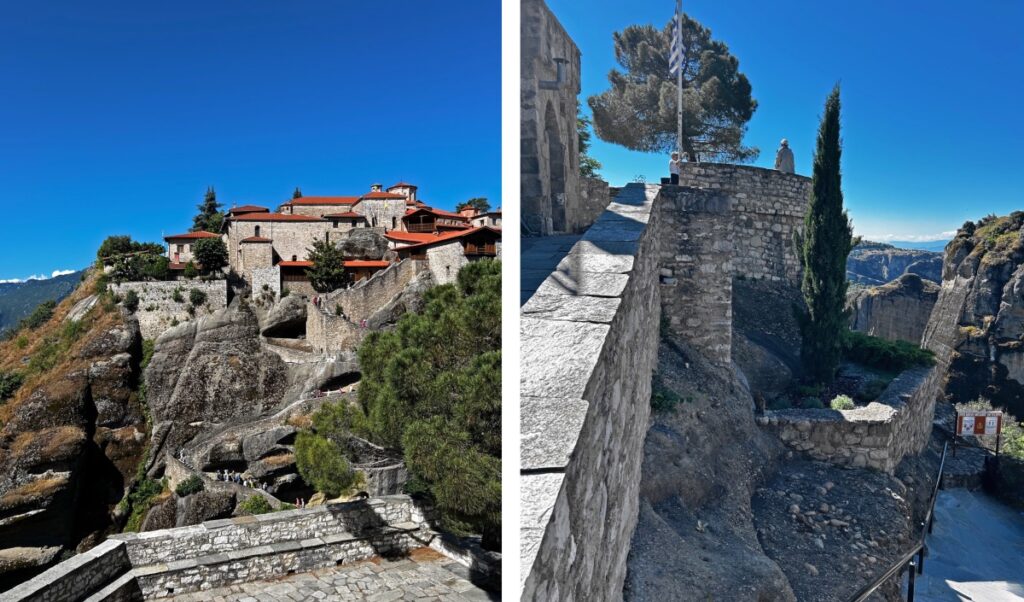
Meteora isn’t the easiest destination if you have limited mobility, but it’s not impossible either. The main road winds through the rock formations and takes you surprisingly close to all six monasteries, while several of the best viewpoints can be reached directly by car.
St. Stephen’s Monastery is by far the easiest to visit, as a short bridge connects the road to the entrance. There is no big staircase to tackle, making it the best option if walking or climbing steps is difficult. Keep in mind, however, that accessibility inside the complex itself is more limited.
The other five monasteries require more effort. Varlaam, Rousanou, and St. Nicholas have around 140 steps each, plus lots of uphill walking. Great Meteoron and Holy Trinity are the most challenging, with more than 300 steps.
Even if visiting the monasteries themselves isn’t possible, you can still see a lot of what makes Meteora special. Driving the scenic road takes you right through the heart of the landscape, with plenty of opportunities to admire the monasteries from outside and stop at viewpoints along the way.
So while I wouldn’t describe Meteora as fully accessible, you can still have a very worthwhile visit without climbing hundreds of stairs.
Are dogs allowed at the Meteora Monasteries?
No, you can’t bring dogs or other pets inside the monasteries. The rules make an exception for assistance dogs.
If you’re traveling through Greece with your dog, you’ll need to make other arrangements while you go inside. You can still enjoy much of the Meteora landscape without entering the monasteries, though.
Can you take photos inside?
You can take photos around the courtyards, terraces, and outdoor areas, but you’re not allowed to photograph the interiors.
Are there toilets at the monasteries?
Yes, all six monasteries have toilets.
Can you fly a drone at Meteora?
No. Greece has specific rules for flying drones around archaeological and protected sites, and Meteora has additional restrictions because it is both a UNESCO World Heritage Site and an active monastic community.
Do you need to book the monasteries in advance?
No, you don’t need to book a time slot for the monasteries. Just turn up during opening hours and pay the entrance fee when you arrive.
Tours are a completely different story. We visited in early June and already found tour buses fully booked, so don’t leave those until the last minute if you have your heart set on a particular excursion. The earlier you can book, the better. Most tours can be canceled up to 48 hours in advance anyway.
Is Meteora safe?
Yes. The stairs are wide, and you’ll never feel close to a drop unless you deliberately walk toward an edge or viewpoint.
You’ll still want to watch your footing on uneven paths and wet steps, and don’t climb over barriers to get a better photo.
If you visit in summer, I’d worry more about the heat than the heights. Bring plenty of water, wear proper shoes, and avoid long uphill walks during the hottest part of the day.
Take a little extra care when driving, too. The roads wind through the rocks, and cars often pull over near popular viewpoints where parking space is limited.
Is Meteora worth visiting?
Meteora is the second-most visited site in Greece after the Acropolis, and also one of the most unique places you’ll come across in Europe. There’s just nothing else like it. That alone makes it worth visiting. And then there are all the cats, of course, which made the experience even better for me.
Still, I found Meteora much less spectacular in real life than it looks in photos and films. It’s gorgeous, no doubt about it, but those towering heights don’t feel nearly as dramatic once you’re there.
The entire area is surprisingly easy to explore, with lots of roads and hiking trails. So even when you’re standing high above the valley, you don’t necessarily feel like you’re hundreds of meters up in the air.
The crowds were the biggest downside for me. We visited in early June and already encountered full tour buses and sunset viewpoints packed with people. Visit outside the busiest months, however, and you can avoid much of that.
Would I still recommend Meteora? Absolutely. It just wasn’t quite the experience I had pictured beforehand.
Have you visited Meteora? Let me know what you loved (or didn’t!) in the comments. And if you have any questions, feel free to ask.
Photos by Vanessa Morgan and Lauren Palmucci.
Explore more of mainland Greece

Pin this guide to the Meteora Monasteries in Greece!



One Response
Meteora looks absolutely incredible! I’d love to visit Varlaam and Holy Trinity, especially for those amazing views from the rock pillars. I also like your advice not to rush through all six monasteries in one day and to leave time for the viewpoints and landscape too.