Skip to content

Last Updated on 15 October 2026 by Vanessa
Planning Mallorca in 3 days? Happen to be a cat lover? Then I’ve got the perfect itinerary for you.
Mallorca isn’t a place where felines are wandering around every street corner like they do on the Greek islands or in Montenegro. In fact, you could spend 2 weeks here without seeing a single one. This itinerary is different, because every stop includes cats as a big part of the experience. They also happen to be some of my favorite places in Mallorca, so even if you couldn’t care less about our feline friends, you’ll still have a great 3 days.
The perfect Mallorca itinerary for 3 days (with cats at every stop)
Day 1 — Palma, Sóller, Port de Sóller, and Deià
Palma
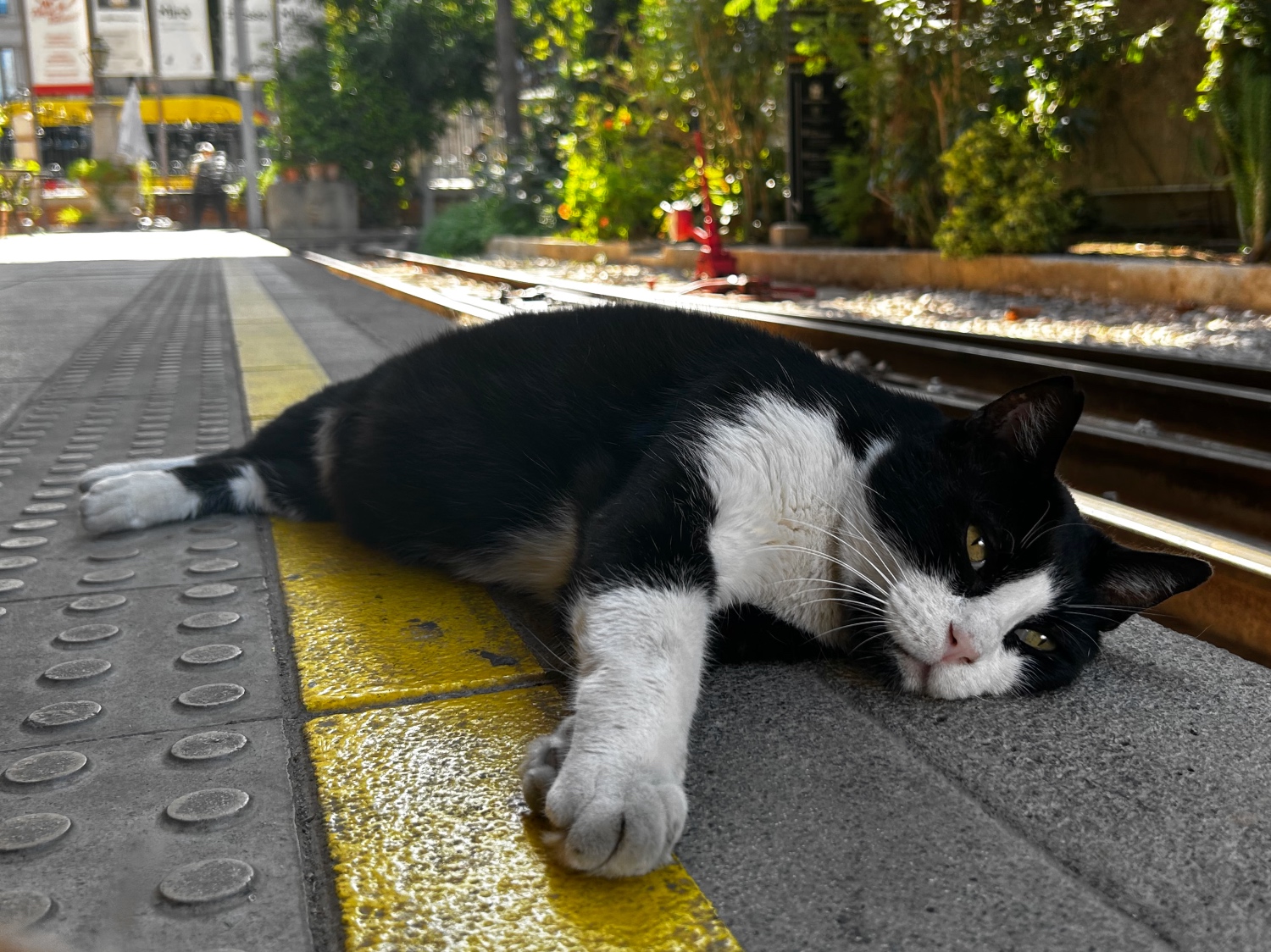
Start your day at the historic Tren de Sóller station in Palma. This is where you’ll meet Tòfol, the famous resident cat — he’s even an attraction on Google Maps!
The station itself is worth seeing, too. The railway has connected Palma with Sóller since 1912, and the wooden train has retained much of its original character.
For this specific itinerary, however, I’d rent a car because the historic train locks you into a timetable and eats up a good chunk of your morning. With a car, you’ll be in Sóller in less than 30 minutes, which means you have an entire morning to see the capital before heading west. If you prefer the train, book your tickets in advance here, because the station only offers same-day tickets, which often sell out quickly.
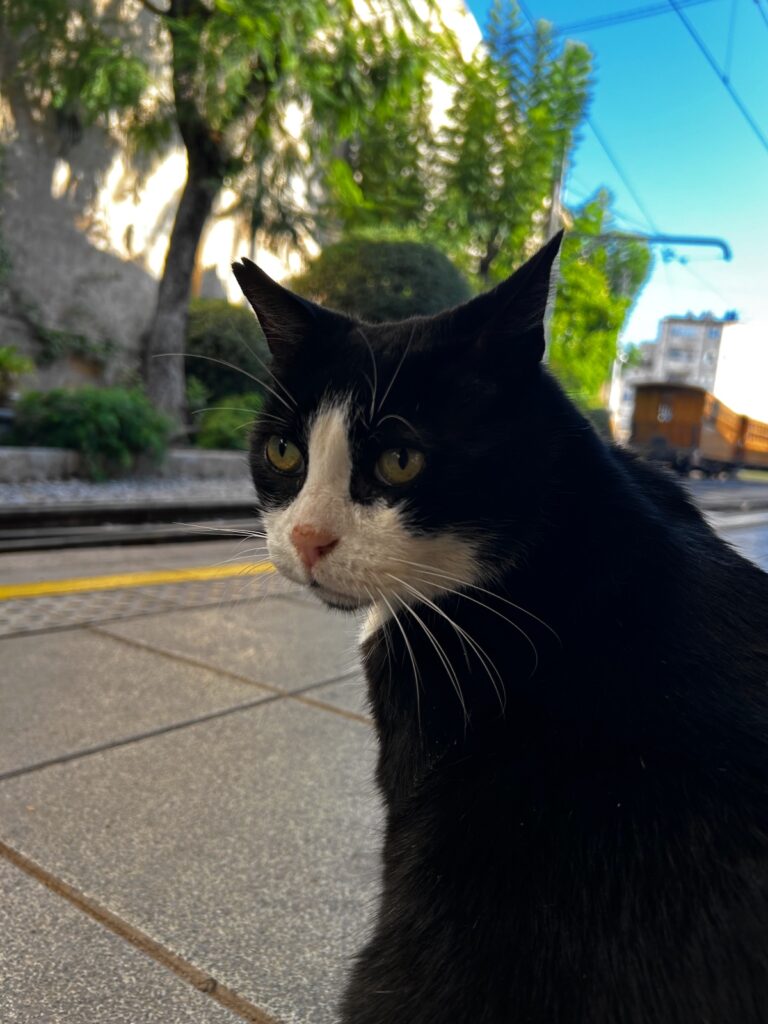
If you only have a few hours in Palma, it’s best to stick to the center. Start at Palma Cathedral, or La Seu, which sits right beside the sea and is the city’s most recognizable landmark. The interior is worth seeing, too, particularly the huge 11-meter (36-foot) rose window, Gaudí’s work on the interior, and the ceramic mural by Miquel Barceló.
Right next door is the palace of La Almudaina, a former Islamic fortress that became a royal residence. You don’t necessarily need to go inside both; simply seeing them from outside gives you a good introduction.
From there, walk into the old town. The medieval streets around Carrer de l’Almudaina, Carrer de la Portella, and Plaça de Cort are packed with old mansions, courtyards, churches, and small squares.
If you have another 30–45 minutes, continue toward La Lonja, the old Gothic merchants’ exchange, and wander through the surrounding neighborhood. The indoor market, Mercado de Olivar, also makes for a fun stop.
Sóller
Next, head to Sóller. If you go by car, the drive is roughly 15 miles (24 km) from central Palma and takes around 30 minutes.
Unlike the tiny stone villages scattered across the Tramuntana mountains, Sóller has a lively town center, with an elegant main square, beautiful architecture, and old buildings hiding some exquisite interiors.
You’ll probably arrive around lunchtime, but take a little time to explore Sóller first. An hour is enough to wander through its historic center and get a feel for the town before moving on.
Start at Plaça de sa Constitució, the main square, where you’ll find the gorgeous Sant Bartomeu Church and the modernist Banco de Sóller building.
Then wander along the main shopping street, Carrer de sa Lluna, which is lined with old stone buildings, small shops, and cafés. Definitely take some time to go inside these businesses, because some of these interiors are absolutely stunning, with open inside patios and wooden ceiling beams.

On Carrer de sa Lluna is also where you’ll find the Can Gata, a restaurant with three resident cats: Ginger, Fosca, and Otto.
Try to get a table on the beautiful back terrace; it’s a little green oasis with plants, trees, and flowers. The cats spend most of their time out here as well, although they sometimes come out to greet guests at the entrance.
Even the interior has a few cat-themed touches, but nothing over the top, so you can bring along friends who aren’t quite as obsessed with cats as you are. The food is excellent, too.

Port de Sóller
After lunch, hop on the historic tram to Port de Sóller. There’s a tram every half hour, and the ride takes roughly 15 to 30 minutes. You can buy the ticket on board or online; the current one-way fare is €10.
Port de Sóller is my favorite resort town in Mallorca. The horseshoe-shaped bay is sheltered by the surrounding mountains, and the waterfront is lined with restaurants, cafés, and shops.
This is also one of the most important stops on this Mallorca itinerary if you want to see cats. Port de Sóller has a sizeable stray-cat community, especially around the waterfront and quieter corners of the port (especially near the seafood restaurant Só Caprichos). Keep your eyes open as you wander, but don’t expect every cat to come out for a meet-and-greet because they are quite shy.
Two days is enough for a good introduction to the town, but you could easily spend half a day or longer here. There are two beaches, a long waterfront promenade, hiking trails, and so much more.
If you have a little extra time, I’d definitely consider getting out on the water.

My favorite excursion is the boat trip to Sa Calobra, a small cove tucked between towering cliffs at the foot of the Tramuntana mountains. The journey takes around an hour each way, and the coastal scenery is spectacular. Once there, you can explore the area around the Torrent de Pareis gorge, where enormous rock walls rise above a narrow stretch of beach.
You can check timetables and reserve your tickets from Port de Sóller to Sa Calobra here.
Another option is Cala Tuent, a quieter cove surrounded by mountains and pine trees. This excursion takes roughly 40-50 minutes each way.
You can check timetables and reserve your tickets to Cala Tuent here.
Whichever boat trip you choose, you’ll be treated to one Mallorca’s most beautiful stretches of coastline.
⛱️ Read next: 15 best things to do in Port de Sóller, Mallorca.

Deià
From Port de Sóller, you can easily head to Deià, which is only about 8 miles (13 km) away.
If you don’t have a car, you can take the TIB 203 bus, which runs from Port de Sóller through Deià and continues toward Valldemossa and Palma. The journey takes under 30 minutes, but there’s only 1 bus per hour, sometimes even less, depending on the season.
Deià itself is split into 2 parts: the old town and the coast.
Deià old town
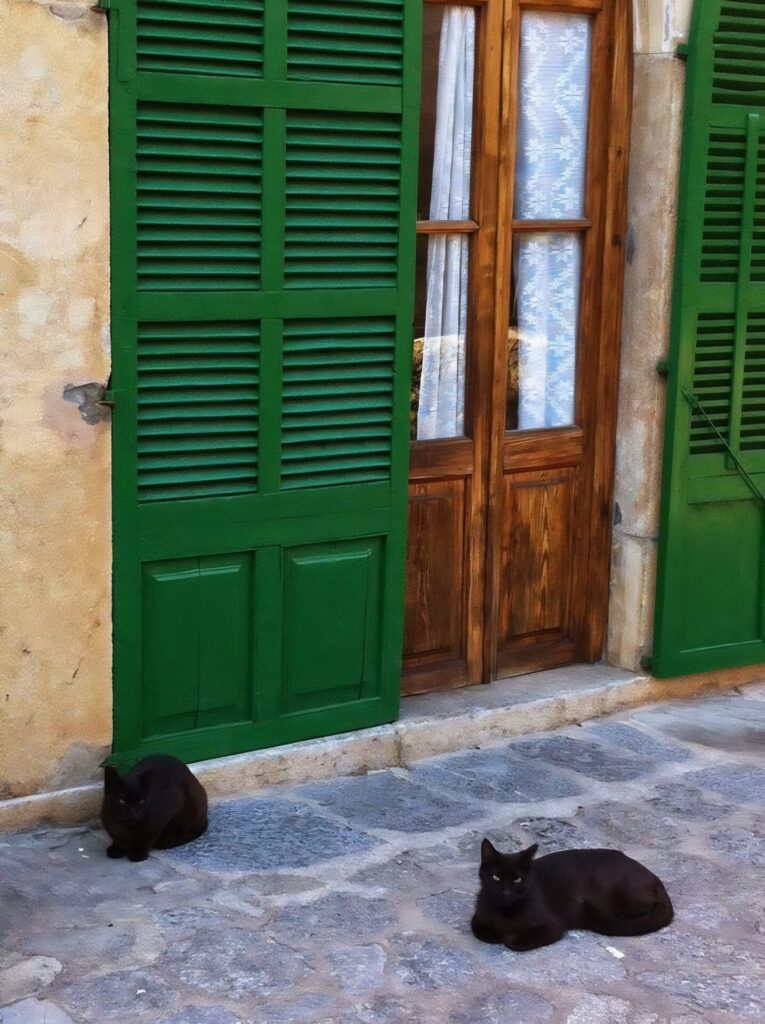
The village sits on a steep hillside in the Tramuntana mountains, with stone houses scattered above the valley and the Mediterranean. It was home to British poet Robert Graves for much of his later life and has attracted artists and writers for decades. The old town is also where the cats love to hang out.
The old town itself is tiny, and you can easily see it all in an hour or less.
Cala Deià
If you have a car, you can continue down toward Cala Deià, a small rocky cove below the village. It’s doable on foot as well, but the road is steep, and walking back up is harder than the roughly 0.93 miles (1.5 km) each way suggests. You should count on at least 2 hours extra if you’re walking from the village and back, including time to enjoy the cove. The views make the detour worthwhile, though.
For dinner, you can head to Ca’s Patró March, the famous seafood restaurant overlooking Cala Deià. Does it look familiar? That’s because it was featured in the BBC series The Night Manager (2016), starring Tom Hiddleston and Hugh Laurie. It’s an absolutely beautiful setting, but book ahead if you want to eat here because the restaurant is extremely popular.
You can spend the night in Deià if you want a quiet evening and an easy start the next morning, but you’ll have more accommodation options in Port de Sóller.
Day 2 — Valldemossa and Alcúdia
Valldemossa
After breakfast, head to Valldemossa, about 6 miles (10 km) away. The drive takes around 15 minutes, but you may want to stop at several of the viewpoints along the way. You can also take bus 203 from either Deià or Port de Sóller to Valldemossa.
Valldemossa sits high in the Serra de Tramuntana at around 412 meters (1,352 feet) above sea level. This makes it the highest town in the Balearic Islands. The village dates back to the Islamic period, and its name is thought to come from the Arabic Mussa valley. Later, it became home to a royal residence and then a Carthusian monastery.
Give yourself about two hours to walk around Valldemossa. The main attraction is the Royal Charterhouse or Cartoixa de Valldemossa, which began as a royal palace in the 14th century before being handed over to the Carthusian monks in 1399. The monastery remained in use for more than 400 years, and you can still visit the old cells, church, cloister, gardens, and other historic rooms. If you want to skip the line, you can pre-book your tickets to the Royal Charterhouse.
The most famous visitors came much later. Frédéric Chopin and George Sand spent the winter of 1838–39 in the monastery, and their stay has become one of the most famous stories associated with the village. Chopin worked on several preludes while he was here, while Sand later wrote A Winter in Mallorca about their time on the island. The Chopin Museum is part of the Charterhouse complex, so this is the place to go if you want to see more about their stay.
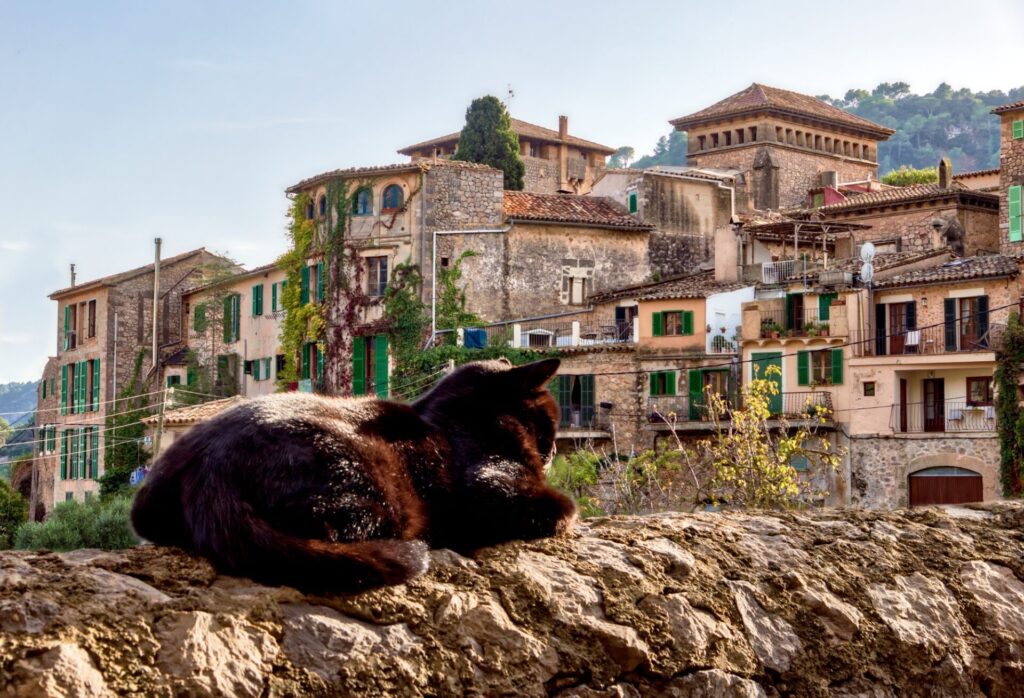
One of my favorite things about Valldemossa, however, is simply wandering through the narrow stone streets and looking at the houses, many of which are decorated with flowerpots and traditional green-and-brown shutters.
And, of course, keep an eye out for the cats of Valldemossa. You’ll find them all around the village, but mostly in the quieter alleys.
👉 Read next: If you’re planning a visit, we’ve put together a Valdemossa travel guide with things to see and do, plus practical information for your visit.
Alcúdia
Once you’ve had your fill of Valldemossa, it’s time to head north to Alcúdia. By car, the journey is about 37 miles (60 km) and takes roughly 50–55 minutes. If you’re traveling by bus, you have to take the TIB 203 from Valldemossa to Sóller, then change to the seasonal TIB 231, which runs directly to Alcúdia’s old town. Having to take two buses may not seem like much, but since they only run once an hour at best, so a missed connection can cost you a lot of time.
To be honest, Alcúdia hasn’t won me over as much as the other destinations on this 3-day Mallorca itinerary, but plenty of visitors love it. My cousin, who lives on the island, is one of them and comes to the market or the beach whenever she gets the chance.

Alcúdia’s historic center
Start by exploring Alcúdia’s historic center, which is surrounded by medieval walls built in the 14th century under King Jaume II of Mallorca. They stretch for about 0.9 miles (1.5 kilometers) and originally had 26 towers. You can still walk along sections of the ramparts, which give you a good view over the rooftops and the streets inside the walls.
You can enter through Porta de Mallorca or Porta del Moll, two of the old town gates, and make your way through the narrow streets. You’ll find traditional Mallorcan houses, small shops, cafés, and plenty of little streets to explore.
The Church of Sant Jaume formed part of the town’s defenses, with its roof serving as a lookout. After the building deteriorated and part of it collapsed in 1870, it was rebuilt in the Neo-Gothic style. The present church was completed in 1893.

Another interesting stop is Pollentia, just outside the old town walls. Founded in 123 BC, it was one of the most important Roman settlements in the Balearic Islands. You can still see the remains of the forum, residential buildings, and a Roman theater.
I’d also walk along part of the Camí de Ronda, the path beside the medieval walls. It gives you a different view of Alcúdia and a better idea of how its fortifications fit into the surrounding landscape.
If you visit on a Tuesday or Sunday, you’ll also find Alcúdia’s market spread through the old town, with stalls selling everything from local produce to clothes and souvenirs.
🚌 Not in the mood for much walking? An open-top bus tour is a good way to see more of Alcúdia without having to explore everything on foot. You’ll pass some of the area’s main sights and enjoy views of the coast along the way. Take a look at the Alcúdia Open Bus City Tour if that sounds like your kind of outing.
Playa de Alcúdia
You can spend the rest of your day at Playa de Alcúdia. There aren’t nearly as many cats here as in the old town, but the beach is popular with locals, especially families. You’ll also find plenty of cafés, restaurants, beach bars, and places to rent sunbeds.
At this point, a few hours by the water sounds much more appealing than another round of sightseeing, don’t you agree?
There are plenty of accommodation options in Alcúdia as well, so you can have dinner by the waterfront or go on a sunset cruise and then walk back to your hotel afterwards.
Try to get some rest tonight, because tomorrow we’ll be exploring a completely different part of the island, with quite a bit of driving, walking, and climbing along the way.
Day 3 — Santuari de Sant Salvador and Porreres
Santuari de Sant Salvador
I hope you slept well, because today we’ll be driving for 1 hour and 15 minutes (roughly 75–85 km or 47–53 miles) to Santuari de Sant Salvador in southeastern Mallorca.
If you want to go by bus (not recommended), you’ll first need to take TIB bus 302 from Alcúdia to Palma, then change to a bus towards Felanitx, such as line 501. From there, you’ll still need to take a cab up to the sanctuary. Without a car, you can expect the entire journey to take around 2.5–3.5 hours each way.
From here, you can walk up the mountain, but it’s a substantial uphill hike (around 70 minutes each way). The sanctuary sits on Puig de Sant Salvador, which rises 509 meters (1,670 feet) above sea level and is the highest point in the municipality of Felanitx. The road winds up the mountain through a series of hairpin bends, opening up views across the Mallorcan countryside and towards the coast. On a clear day, you can see a surprisingly large part of the island from the summit.
The climb to the sanctuary is also popular with cyclists, so don’t be surprised to see plenty of them tackling the steep ascent.

Puig de Sant Salvador has been a religious site since the 14th century. The first church was built in 1348, following the Black Death, while the present sanctuary dates from the 18th century. The complex includes the church, former monastery buildings, and a guesthouse. There’s also a large Christ the King monument near the summit.
I’d allow approximately 1 or 2 hours to explore Santuari de Sant Salvador, not counting the drive or any uphill walk. Allow for even more time if you want to cuddle the many stray cats that live around the Santuari de Sant Salvador.
👉 Read next: For more information about the sanctuary and what to do nearby, check out our guide to Santuari de Sant Salvador.
Porreres
Next, drive northwest towards Porreres and check into Finca Son Jorbo, where you’ll be spending the night. The drive takes roughly 20–25 minutes (16 km/10 miles). If you’re coming from Felanitx, you can also take TIB bus 514 to Porreres, which takes around 15–25 minutes.
After 3 days in Mallorca, Finca Son Jorbo is the perfect place to slow down and recharge. You’ve already driven across a good chunk of the island and climbed up to Mallorca’s second highest viewpoint (the highest one is Puig Major), so now it’s time to put your feet up and enjoy some downtime.
But there’s another reason you came all the way down to this part of Mallorca: Gizmo.
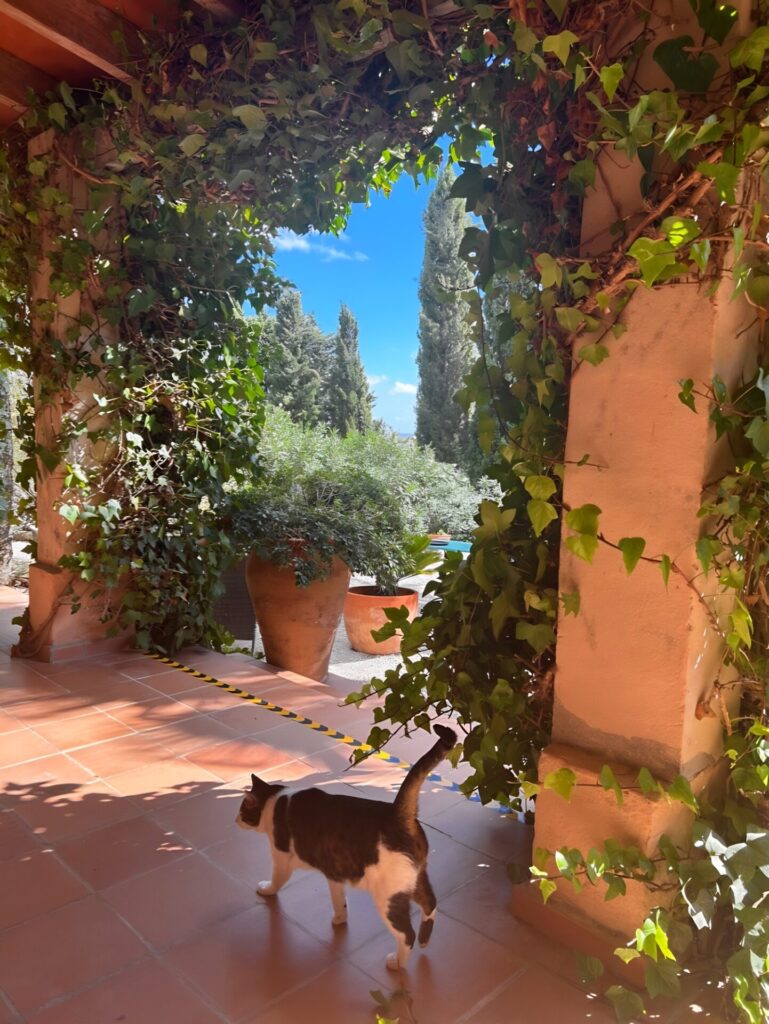
Gizmo is the resident cat at Finca Son Jorbo, and he loves hanging around with guests. You’ll probably be tempted to spend the rest of the afternoon and evening getting acquainted, and honestly, why not? Give yourself some proper downtime with Gizmo before heading home.
Finca Son Jorbo also prepares meals for guests, so definitely ask them about having dinner there. They make their own olive oil, too, and put a lot of emphasis on local ingredients and homemade food.
🏨 You can check current rates and availability at Finca Son Jorbo here.
👉 Read next: If you’re planning to spend the night here, we have a full review on Finca Son Jorbo in Porreres with more information about the property, the rooms, and, of course, Gizmo.
A few practical tips for your 3 days in Mallorca
Can you really see Mallorca in 3 days?
Not at all! This 3-day itinerary covers some of its most popular spots, but there’s still so much more to see. Three days just isn’t enough to fit everything in. And, well, there aren’t that many cats elsewhere either.
For example, the entire east coast with its gorgeous calas (small coves) is missing. If you can add a day or two to your itinerary to see them, I would definitely do that. They’re easy to reach from Porreres and Felanitx, so they make for a great next stop.
Here are a few other popular destinations you could add to your itinerary if you have more time or if one of the above doesn’t pique your interest:
- Pollença: A historic town in the north, known for its charming old center and the 365 steps leading up to El Calvari.
- Cap de Formentor: The dramatic northern tip of Mallorca, with winding roads, steep cliffs, and spectacular sea views. Both Pollença and Cap de Formentor could be combined with Alcúdia if you manage your time well.
- Sa Dragonera: A small, uninhabited island off Mallorca’s southwest coast, popular for its hiking trails, lizards, and sea views.
- Drach Caves: A famous cave system near Porto Cristo (east coast), with impressive rock formations and an underground lake where classical music concerts take place.
- Es Trenc: One of Mallorca’s most famous beaches, with turquoise water, white sand, and a more natural setting than many resort beaches.
- Ses Salines: Mallorca’s traditional salt-producing area, where you can learn how it’s harvested and see the pink-hued flats.
To be honest, I haven’t seen every single spot on the island myself, even though I have family living there and return at least once or twice a year. It doesn’t help that I can’t drive, and, as you may have noticed, getting around Mallorca without a car can be tricky when you want to visit several places in one day.

What’s the best way to get around Mallorca?
If you can drive, I’d definitely rent a car. Getting around Mallorca by public transportation isn’t impossible, but connections between towns and villages can be inconvenient. Smaller places have fewer services, and you’ll often have to travel back to a larger town to catch a connection. You can easily lose two hours just waiting for the next bus.
Driving is definitely recommended, especially if you want to visit several places in one day. The main roads are generally in good shape, although some mountain roads are narrow and winding.
I’d book a rental car ahead of time, particularly if you’re visiting in summer. You can compare options here.
If public transportation is your only option, here’s what you need to know.
Bus
Mallorca has two main bus networks: EMT and TIB. EMT operates buses in Palma and nearby areas, such as Ca’n Pastilla, Arenal, and Cala Major. TIB connects Palma with other towns and villages across the island.
You can pay for TIB buses with a contactless debit or credit card, so you don’t need to buy a ticket in advance. Just remember to tap your card when boarding and when getting off. On EMT buses, you only need to tap when boarding. Always use the same card or device for both taps on TIB.
You can find routes and schedules on the official TIB website.
Historic train
The historic wooden train runs between Palma and Sóller. It’s a scenic ride through the Mallorcan countryside, but it only serves this route.
You can buy tickets online or at the station. I’d strongly recommend booking online, as popular departures sell out quickly. If you buy a ticket at the station, know that you can only do so on the day of departure.
Historic tram
The historic tram connects Sóller with Port de Sóller. It’s a short ride, but a fun and convenient way to get between the town and the waterfront. It runs every half hour and costs 10 euros one way.

When is the best time to visit Mallorca?
I’d avoid visiting Mallorca between May and October. The heat and many tourists can be overwhelming.
My favorite time to visit is actually winter or late autumn.
The weather is usually still pretty nice, though evenings can get chilly. However, I wouldn’t turn it into a beach vacation, especially as many typical beach resorts close for the off-season. You won’t have the same problem in the more traditional villages and towns on this itinerary.
Also, Palma does the festive season really well, with beautiful lights, decorations, and Christmas markets throughout the historic center.

Which stop are you most excited about?
So, which stop on this itinerary are you most looking forward to? Palma, Sóller, Port de Sóller, Deià, Valldemossa, Alcúdia, Santuari de Sant Salvador, or Finca Son Jorbo?
We’d also love to know where you found the most cats in Mallorca. Leave a comment below and tell us about your favorite cat-spotting location. We’re always curious to hear about places we haven’t found yet.
If you want more destinations where cats are part of the experience, subscribe to Traveling Cats, and we’ll send you more cat-filled places to add to your travel list.

Pin this Mallorca itinerary!