
Last Updated on 25 April 2026 by Vanessa
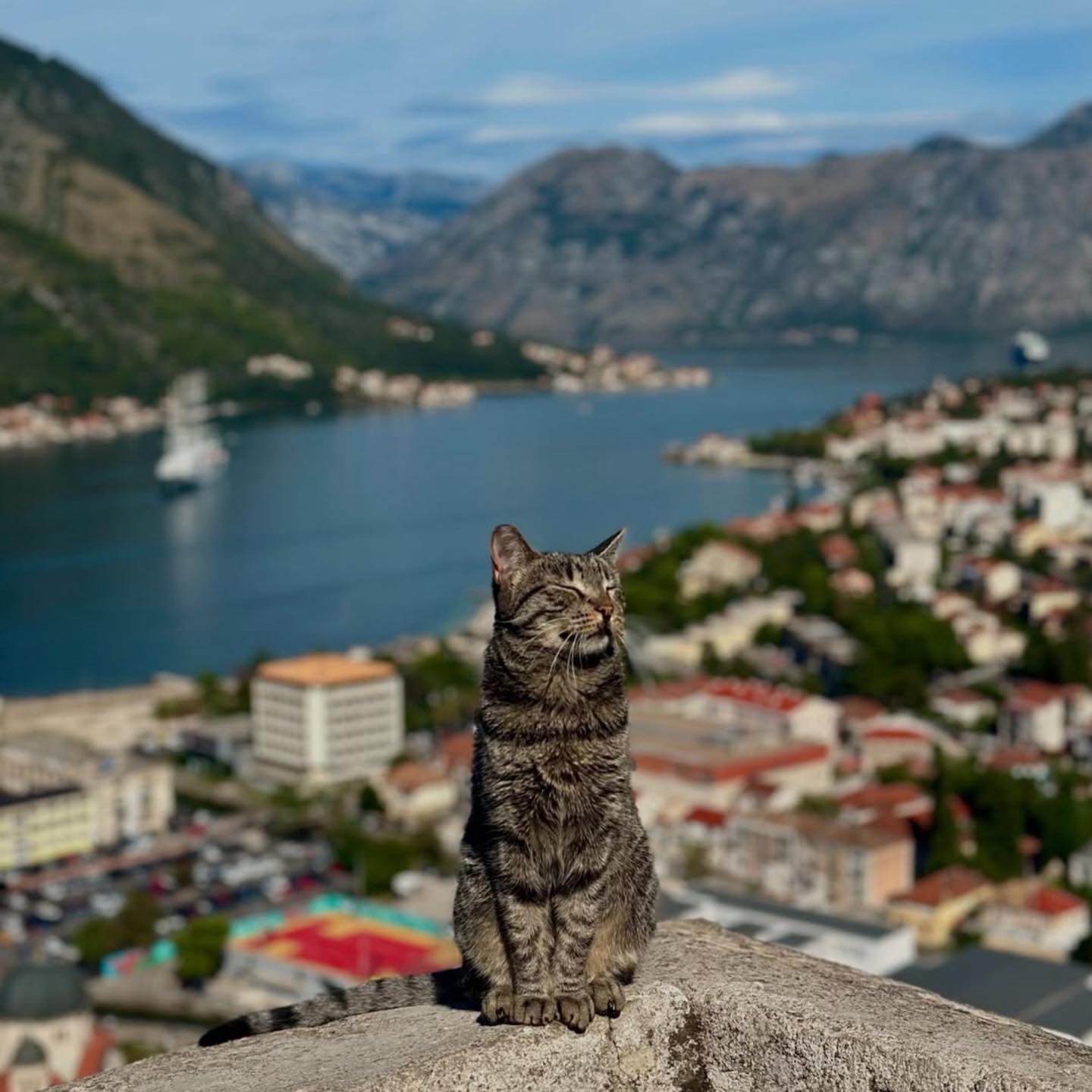
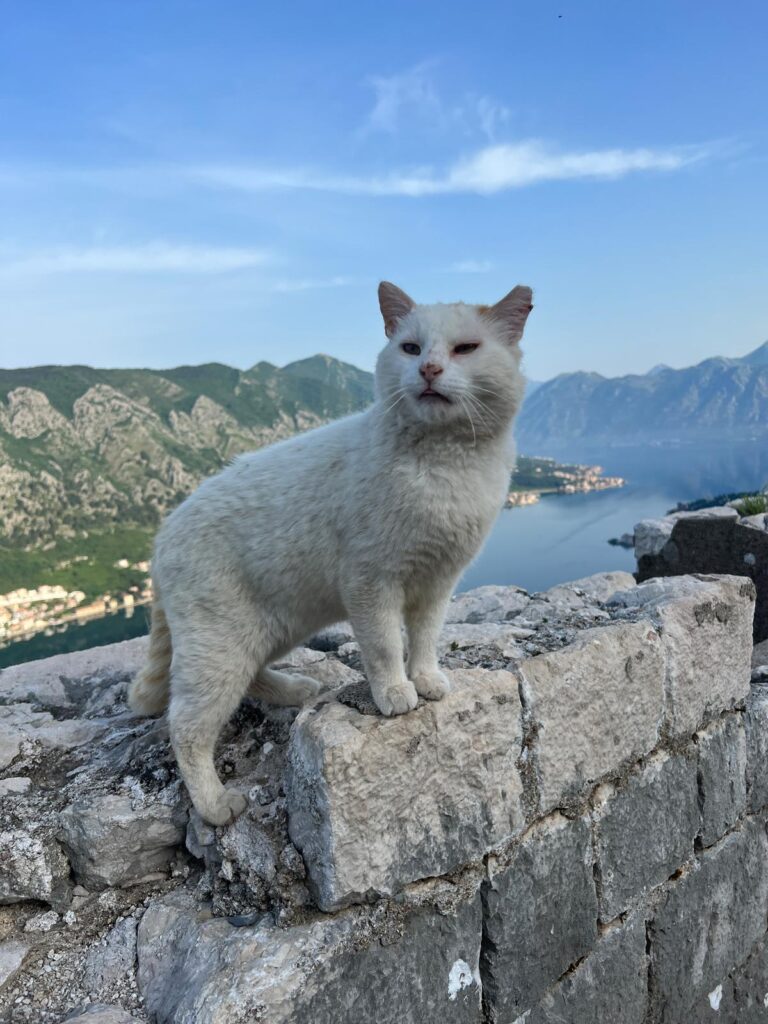
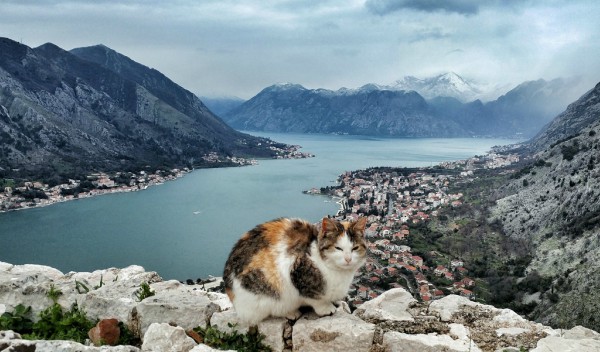
The photo above was snapped near the Fortress of St. John, high above Kotor, Montenegro, where one of the famous cats of Kotor was enjoying the last warmth from the rocks as the clouds moved in.
Tourists often call Kotor the “city of cats.”
But despite the sun and scenic beauty, life is not that easy for the animals of Montenegro.
It’s still a developing nation—formed in 2006 after the break-up of former Yugoslavia—and it’s dealing with quite a few economic struggles.
In this article, I’ll answer your most important questions: how many cats live in Kotor, whether the cats of Kotor are safe, if they are being spayed and neutered, and, most importantly, how you can help them.

Cats of Kotor, Montenegro: everything you need to know
Where is Kotor, Montenegro?
Tucked along Montenegro’s Adriatic coast, Kotor sits inside one of the most dramatic natural harbors in Europe: Kotor Bay, a winding fjord-like inlet often called the southernmost “fjord” in Europe (though it’s technically a submerged river canyon). The whole region is part of the UNESCO-listed “Natural and Culturo-Historical Region of Kotor,” thanks to its Venetian stone fortresses, maritime trade routes, and medieval architecture.
Montenegro itself is one of Europe’s smallest countries, but it packs in a large amount of natural and cultural variety. Beyond Kotor, Montenegro’s hidden gems include the glacial lakes and pine forests of Durmitor National Park, the dramatic Tara River Canyon (one of Europe’s deepest), and the quieter coastal towns of the Budva Riviera. Inland, centuries-old monasteries carved into cliffs and Ottoman-influenced mountain villages add another layer to its cultural landscape.
Why Kotor has a large street cat population (and where you’ll see them)
The cats you’ll see in the old town are associated with the city’s historical role as a maritime port. During the period when Kotor developed as a Venetian-controlled trading hub (15th–18th centuries), ships regularly arrived carrying goods through the Bay of Kotor, and cats were commonly kept aboard merchant vessels across the Mediterranean to control rodents in cargo holds.
Over time, some of these cats established populations onshore, where the dense stone architecture, narrow streets, and sheltered courtyards provided suitable habitats.
Where to find the most cats in Kotor
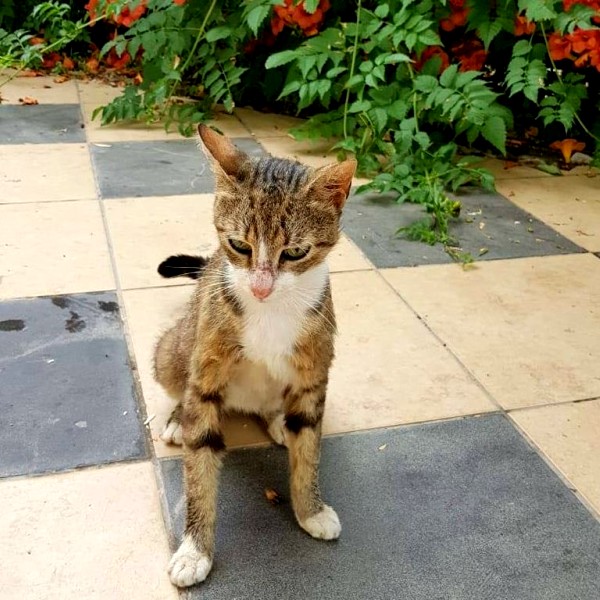
Today, Kotor maintains a visible street cat population, especially in and around high-foot-traffic heritage zones such as the Sea Gate entrance, St. Luke’s Square, and the areas surrounding St. Tryphon Cathedral.
Local animal welfare groups operate informal feeding points and provide basic veterinary support within the old town, near the city walls, and in quieter courtyards.
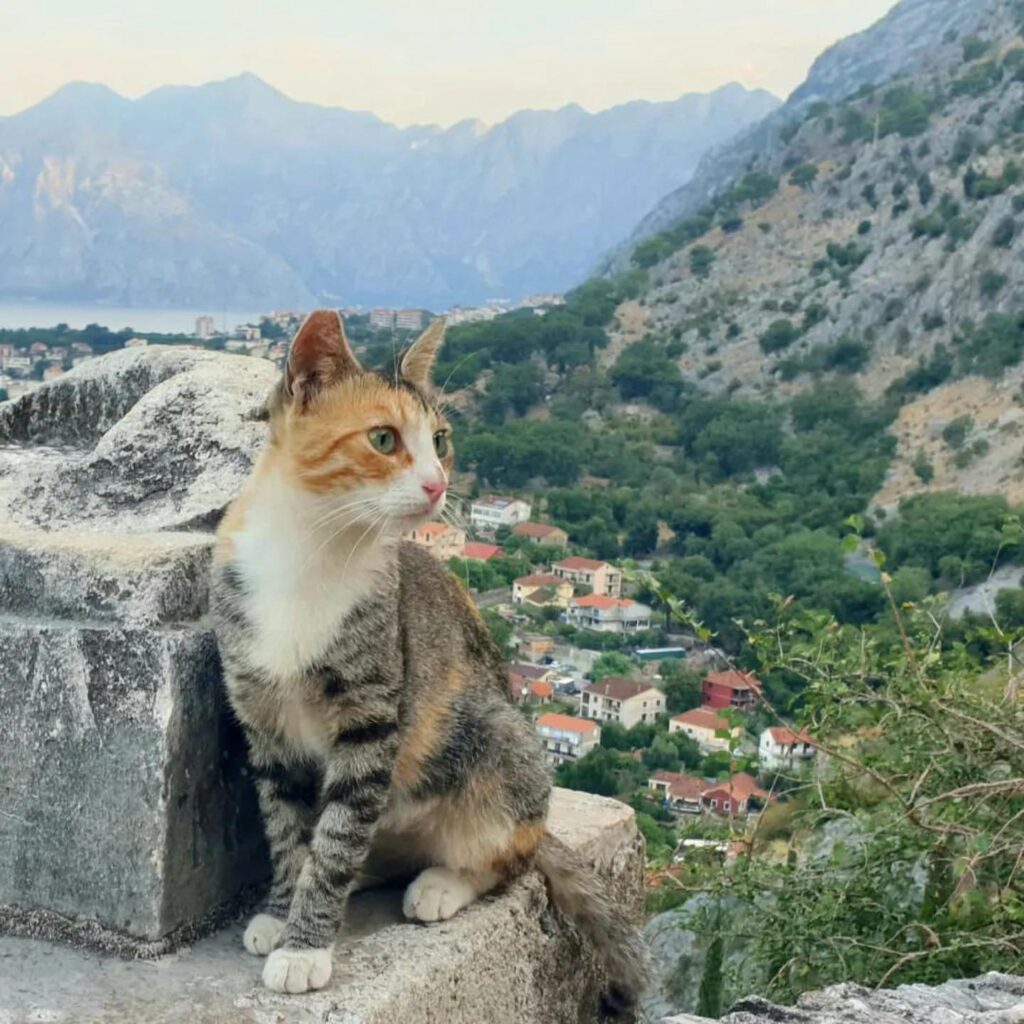
Because St. John’s Fortress and the surrounding upper ramparts are among the most visited viewpoints in Kotor, they also intersect with common cat movement routes along the hillside pathways, particularly in the early morning and late afternoon when temperatures are lower.
How many cats in Kotor?
Kotor has around 22,746 residents, but the number of street cats is believed to be even higher.
Spaying and neutering are not common here. When you combine that with how quickly cats reproduce, it’s easy to see why the street cat population keeps growing.
Even if only half of the Kotor kittens survive—a fair assumption for street conditions—a single female could still produce about 58 kittens by the time she reaches seven years old. If half of those kittens are female and also go on to reproduce, that one cat’s family line could grow to more than two thousand in just a few years.
Starting with only a hundred unspayed females, the population could reach more than 200,000 within seven years.
This simple math shows why spay and neuter programs are vital to controlling the street cat population in Kotor and throughout Montenegro.
What is spay-Neuter-Return (TNR)?
Because of Montenegro’s economic problems, there’s no official spay-neuter-return (TNR) program for animals. There are no shelters either.
On top of that, many cats are unwanted and thus uncared for.
Trap-Neuter-Return (TNR) is a humane and effective approach to managing free-roaming or feral cat populations.
It involves trapping feral cats using humane traps, spaying or neutering them to prevent them from reproducing, and then returning them to their original location.
Volunteers then take care of them by providing food, water, and shelter.
TNR is one of the most humane and effective methods of managing feral cat populations for several reasons.
First, it helps to control the population of feral cats by preventing them from reproducing. This reduces the number of kittens born into the colony.
Second, it improves the health of the cats by reducing the spread of diseases that are common among unneutered and unspayed cats, such as reproductive cancers and sexually transmitted infections.
Third, it stabilizes feral cat colonies, because the neutered cats are less likely to exhibit mating behaviors, such as yowling and fighting.
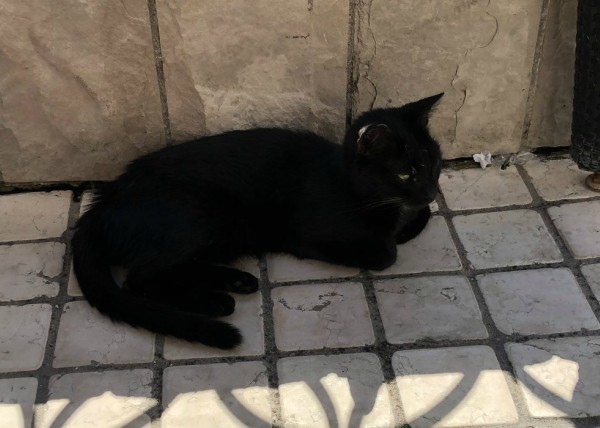
Other measures often accompany TNR. Think vaccination, ear-tipping (which is a universal symbol indicating that a cat has been spayed/neutered and vaccinated), and ongoing care and monitoring by caretakers.
They aim to balance the needs of the cats with the concerns of the community, including issues related to public health, wildlife conservation, and animal welfare.
Are the cats in Kotor safe?
The cats in Kotor are part of daily life, but their safety depends on where they live.
Many live in the old town, where tourists feed and care for them. You’ll also see bowls of food and water outside shops and cafés, and a few local groups keep an eye on their health.
That said, life on the streets is never easy.
The cats face risks from traffic, disease, and harsh weather.
Kittens often struggle the most because they’re small and vulnerable.
Medical care is limited. And since spaying and neutering aren’t common, the number of cats keeps rising faster than anyone can manage.
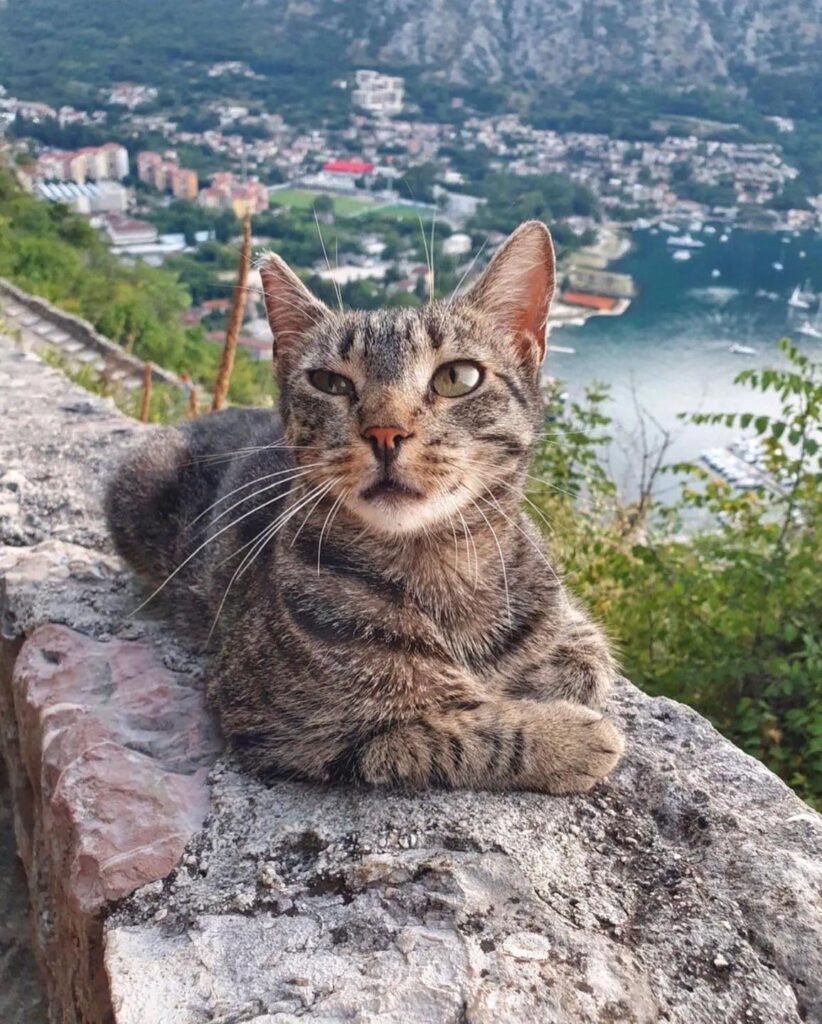
However, the cats near the Fortress of St. John (where most of these photos were taken) face tougher conditions than the ones in Kotor’s old town. The fortress sits high above the city, and while it’s a beautiful spot, it’s a hard place for cats to survive.
There’s little shelter up there, no steady source of food or water, and the terrain is steep and rocky.
Many of the cats near the fortress depend on tourists for food. Unfortunately, that help disappears when the tourist season ends. In winter, when the trails are quiet and the weather turns cold and wet, food becomes scarce.

A few local volunteers and animal groups try to reach those areas with food and medical help, but it’s not easy because the climb is long.
So while the fortress cats are some of the most photographed in Kotor, they’re also some of the most vulnerable. They rely almost entirely on visitors who bring food or support spay and neuter efforts in the area, and their well-being and safety depends on continued care, sterilization programs, and help from locals and visitors.
Kotor Kitties
In June 2018, the organization Kotor Kitties started addressing these unmet needs of the street cats of Kotor.
Their mission is to improve the health of Montenegro’s street cats and to reduce their number through spaying and neutering.
Kotor Kitties reached out to the locals who feed the large colonies of community cats and works with a private veterinarian who was kind enough to reduce his fees.
How to help the street cats of Kotor, Montenegro?
You can help pay for the spaying and neutering of the cats of Montenegro by donating directly.
For donations within Montenegro:
Crnogorska komercijalna banka AD Podgorica
Nevladino udruzenje /Kotorske Macke/ Kotor Kitties
Account number: 510000000014980138
IBAN: ME25510000000014980138
For donations from the United States:
Kotor Kitties
c/o 14318 Roslyn Place North
Seattle, WA 98133
Your support helps feed, treat, and protect Kotor’s street cats. Every bit helps continue Kotor Kitties’ work.
They currently have over 150 cats waiting to be sterilized, so all help is welcome.
On their Facebook page, you’ll find pictures of each cat immediately after surgery.
Kotor Kitties also faces roughly $1,000 in fees to incorporate as a non-profit charity in the USA, to secure a business license, and to apply for official NGO status in Montenegro.
Final thoughts
The cats of Kotor face numerous challenges every day: hunger, disease, overpopulation, and dangerous streets.
Now that you know that you can make a difference in their lives, will you consider making their lives better by supporting Kotor Kitties?
Also, if you’re in Montenegro and find a sick, injured, or dying cat, you may always contact Kotor Kitties. They will connect you with caretakers and veterinarians who are willing to help.

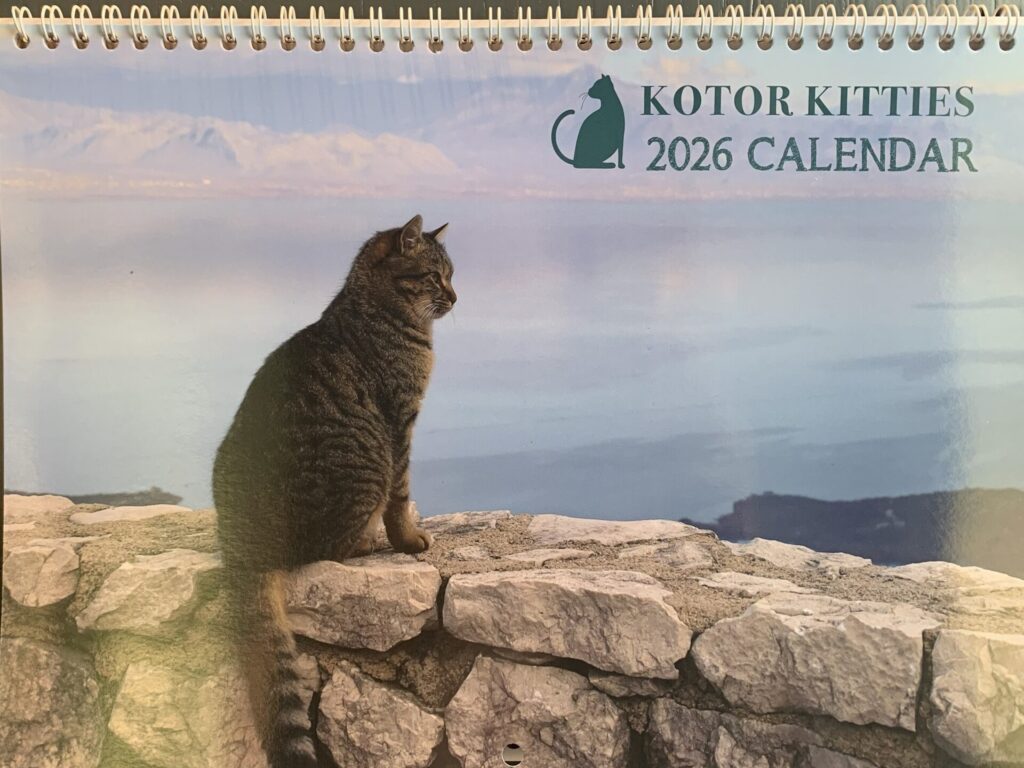
You can also support Kotor Kitties by ordering their latest cat calendar. Every purchase goes directly to spay, neuter, and care programs. Even printing and shipping costs are fully donated.
You can order through the Kotor Kitties website. If you are in Montenegro, you can pick up a calendar from a partner veterinarian. Email nvo@kotorkitties.org with the number you would like and your preferred pickup location.
Consider ordering cat calendars from other charities as well. Some of our favorites include those of:
Did you like this post? Please share it with your friends and on social media (Facebook, Twitter, Pinterest, etc) to help spread awareness about the street cats of Kotor, Montenegro.
Photos of the street cats of Kotor courtesy of Kotor Kitties.




One Response
There’s something so pure about the love that pets give us. It’s unconditional and so comforting, especially after a long day