

Last Updated on 24 March 2026 by Vanessa
Aoshima went viral as Japan’s Cat Island: hundreds of cats, almost no people. Today, both the cats and the human population are vanishing, and the island is heading toward complete silence.
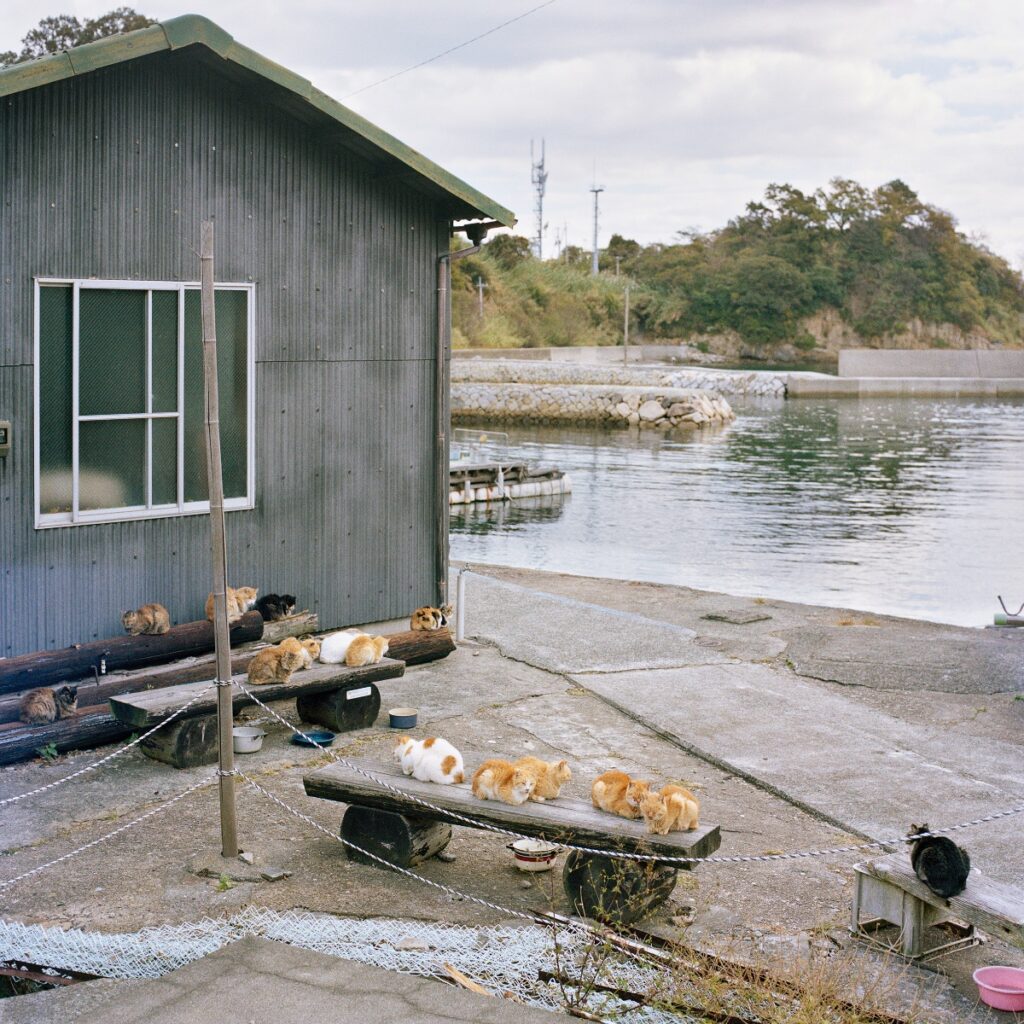
Photographer Katherine Longly visited Aoshima five times over the past few years. She spoke with the remaining residents and the people who care for the cats, and she created a deeply observed photography project—Cat Island Blues—that captures Aoshima’s inevitable fate.
Aoshima Cat Island is quietly disappearing — Here’s what’s really happening
Japan’s once utopian cat island
For a brief moment in time, Aoshima seemed to embody something impossibly pure. A tiny island in Japan’s Seto Inland Sea, barely one kilometer long, it was a place where cats ruled freely and humans existed only at the margins.
Several viral articles showed felines spilling down staircases, clustering at the docks, lounging in the sun with no traffic, no crowds, no visible hardship. To millions of viewers, myself included, Aoshima felt joyful, harmless, almost utopian. It was a cheerful fantasy that asked nothing more than admiration and a ferry ticket.
And then the tourists arrived, all chasing the promise of an island full of cats.
The tourist boom and its consequences
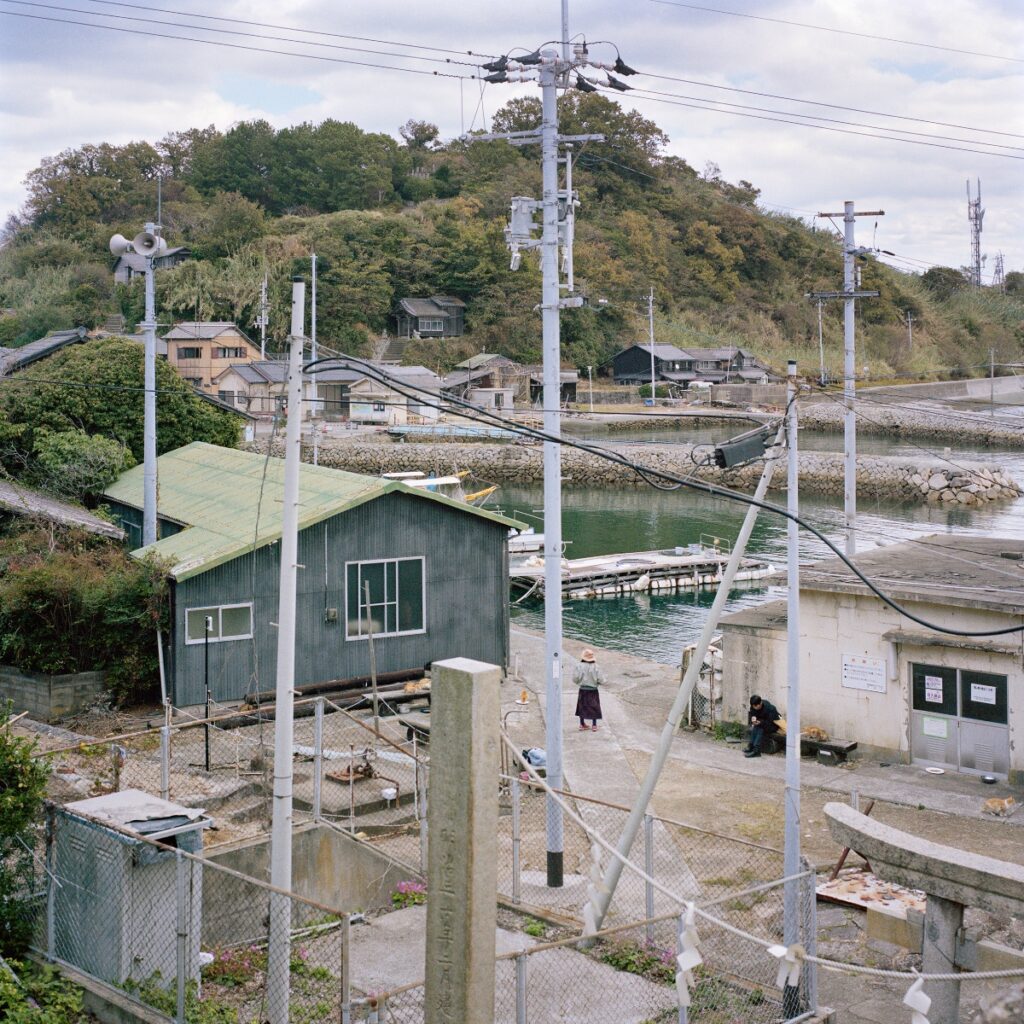
Aoshima was never designed to host visitors, let alone absorb the weight of global fascination. There are no hotels, no restaurants, no shops, and no reliable infrastructure beyond the odd ferry connection to the mainland.
The island’s population had already been shrinking for decades before the first viral images appeared. At its peak in the 1940s, Aoshima had nearly 900 inhabitants, most of whom made their living from fishing.
But many young residents had started leaving in search of work. Those who remained grew older. By the time the internet discovered Aoshima in 2013, there were only 50 people left and the island was already fragile.
At the same time, the cat population exploded.
More than 200 cats lived there. They had been introduced decades earlier by fishermen to control rodents that damaged their nets and food supplies. The cats became the island’s most visible residents just as its human community neared collapse.
When tourists started arriving in waves, so did the food supplies and social media attention. The consequences were catastrophic.
Overfeeding from tourists disrupted the animals’ health and allowed the feline population to grow even more without natural migration. This led to inbreeding, fighting, and disease.
Meanwhile, birds and mice had disappeared on Aoshima, so the cats couldn’t survive on their own anymore. Humans had to care for them.
The few remaining residents, most of them elderly, struggled to feed and clean after hundreds of cats while managing their own declining health. What looked playful through a camera lens often felt exhausting, even though these people were often emotionally attached to the animals.
Treating sick cats became nearly impossible as well. Aoshima has no veterinary clinic or animal shelter, so every trip to care for an injured or ill cat required a ferry ride to the mainland. Even buying groceries meant taking the ferry.
The island reached a breaking point. Everyone knew the situation couldn’t go on. Cats kept multiplying, inbreeding increased, and more aggression and health issues followed.
The decision that came next would quietly seal Aoshima’s future.
The 2018 mass sterilization campaign
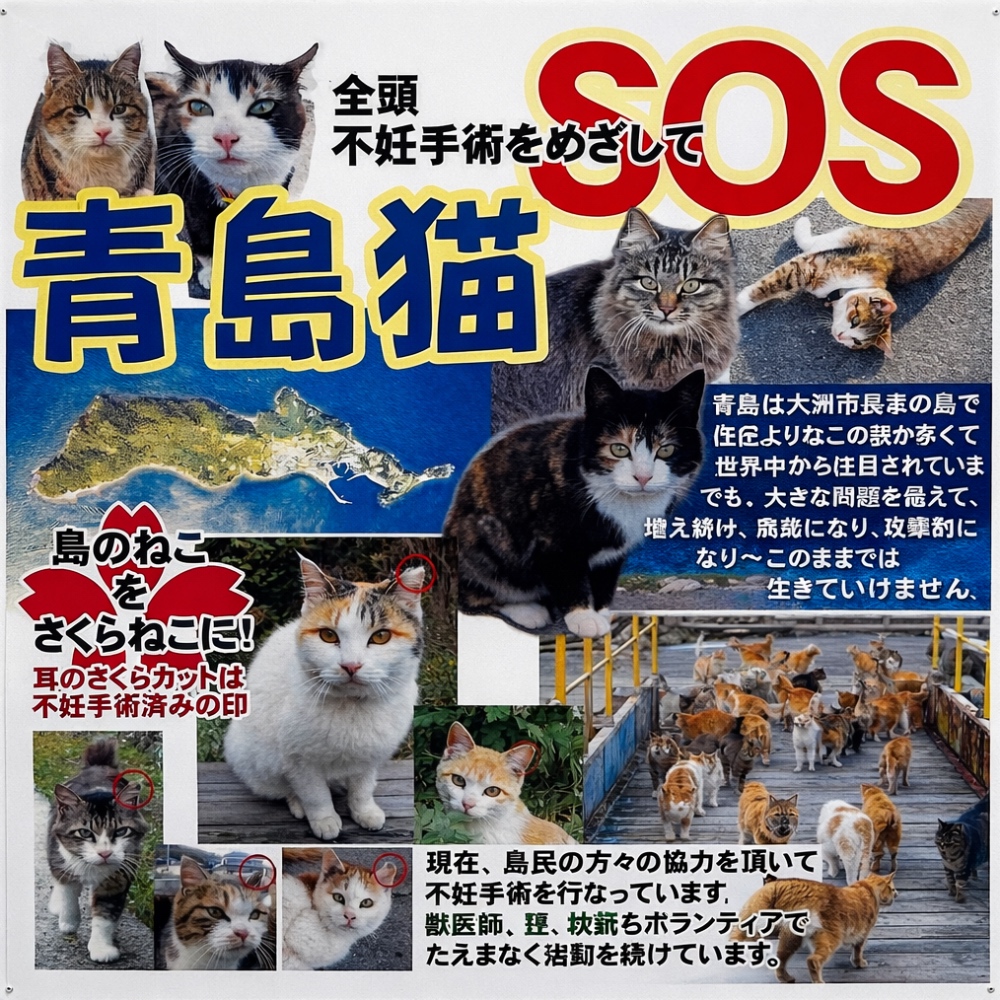
To address the crisis, a team of veterinarians and volunteers from organizations such as the Dobutsu Foundation launched a mass sterilization program in October 2018. They aimed to stop the birth of new kittens so the population could decline naturally without causing suffering.
Volunteers and veterinarians came from all over Japan. They set up dozens of traps, and sterilized every cat in just two days. Since then, no kittens have been born on Aoshima.
How many cats are on cat island today?
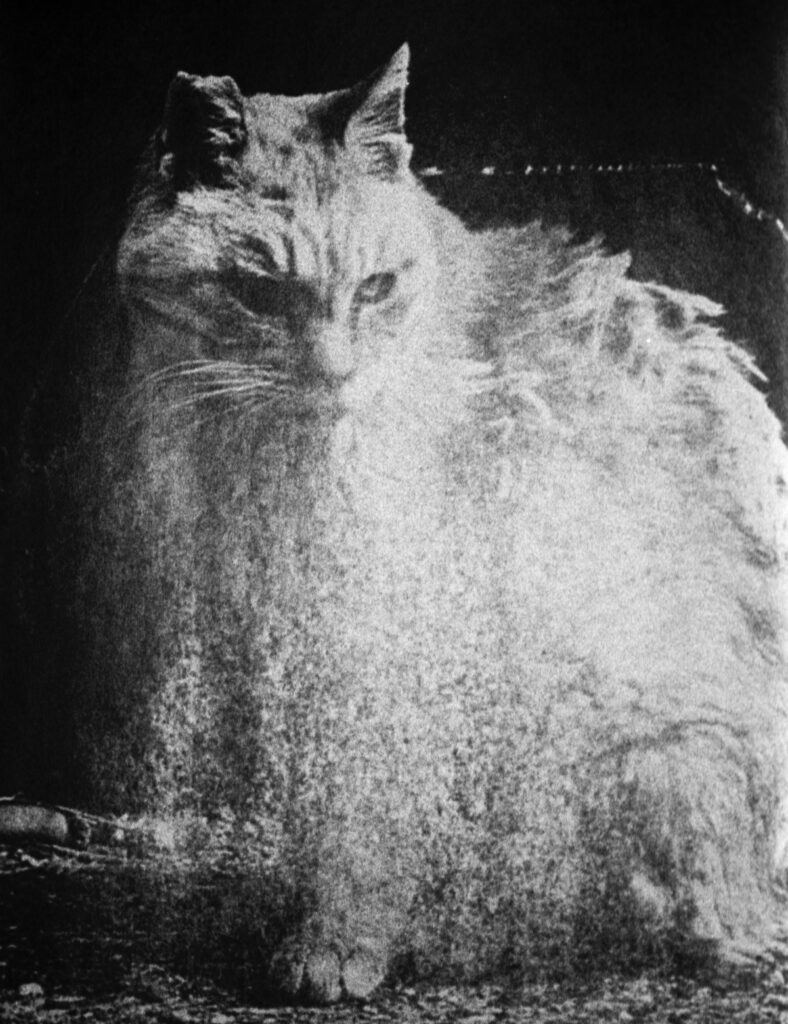
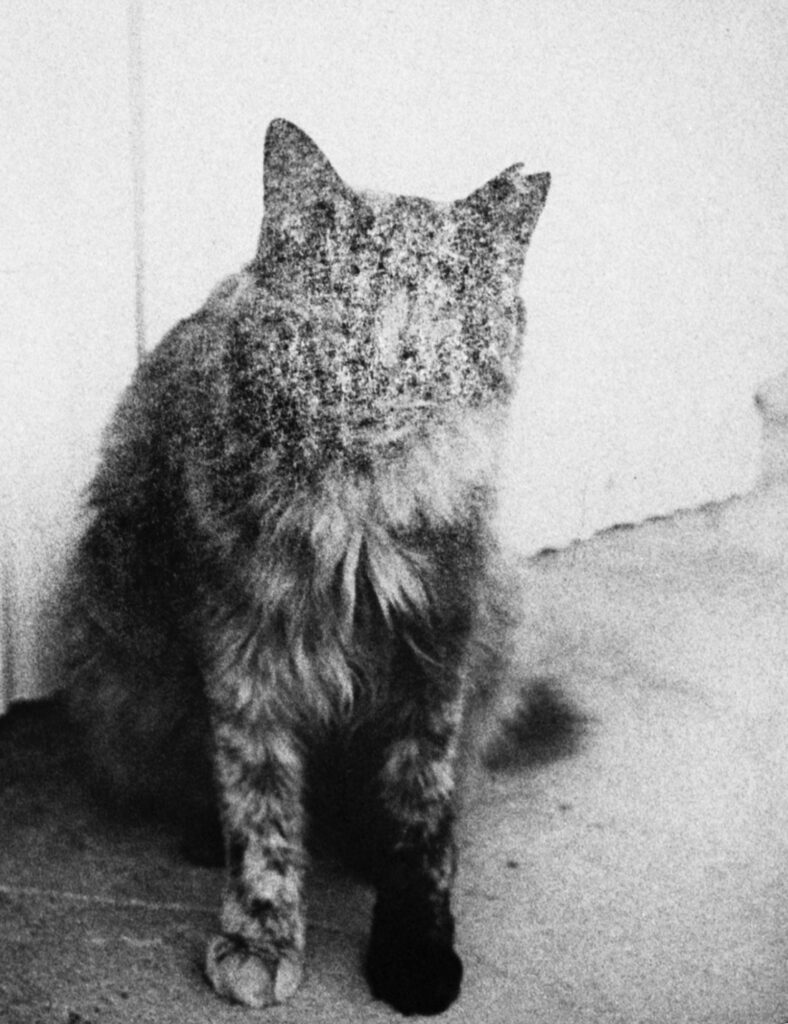
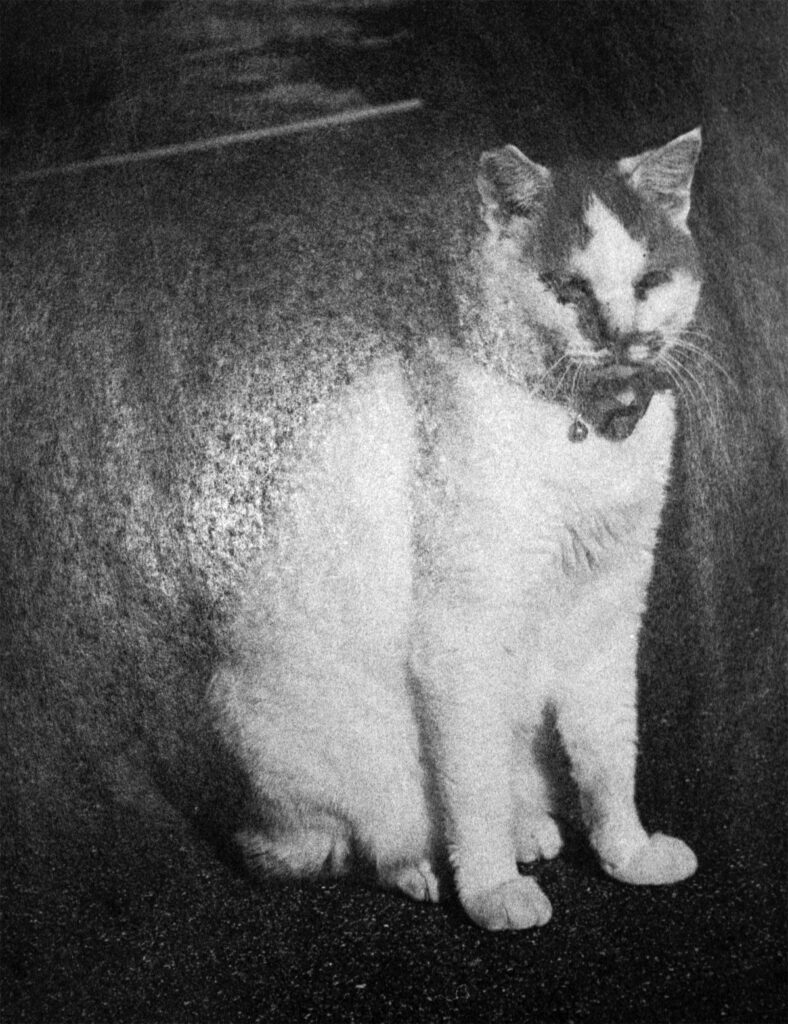
Today, only three elderly residents remain, along with around 40 cats, all seniors facing health challenges such as blindness or respiratory problems.
These numbers continue to decline.
Within a decade—likely even sooner—the island will have no permanent residents left, human or feline.
📍 By contrast, Tashirojima is still very much a cat island and continues to host well over 100 cats. Its human residents still number in the dozens, and there are shops, lodging, and other infrastructure to support both people and visitors. You can still experience the cats as an integrated part of daily life here, and not as the last remnants of a fading island.
Should you still visit Aoshima?
Aoshima is no longer a place worth visiting purely for the cats. If your main goal is to experience a true “cat island,” there are far better alternatives where cats are still thriving and part of daily life. You can find the best Japanese cat islands and how to visit them here.
That said, you may still feel drawn to Aoshima for its story, its atmosphere, or simply to witness this moment before it disappears entirely. If you do want to visit, it’s important to approach the island with the right expectations and ethic.
You are not visiting a lively destination, but a place in quiet decline.
And if you hope to still see some of the remaining cats, it is better to visit sooner rather than later.

How to visit Aoshima (if you still decide to go)?
To reach Aoshima, you need to take a small ferry from Nagahama Port in Ōzu City, located in Ehime Prefecture.
Getting there is relatively simple on paper, but in practice, it requires careful planning. The ferry runs only a few times per day, has limited capacity, and can be affected by weather conditions. If conditions change, return trips are not always guaranteed.
There are also no shops, restaurants, or accommodation on the island, which means you need to bring everything you need for the day and plan your timing carefully.
Because of these limitations, visiting Aoshima is not as straightforward as many people expect, and small mistakes in planning can easily disrupt your trip.
If you’re still considering visiting, I strongly recommend reading my complete Aoshima travel guide, where I explain ferry schedules, timing strategies, and practical tips to avoid getting stranded.
Cat Island Blues
With each visit, Longly witnessed Aoshima slip a little further out of sight—fewer residents, fewer cats, fewer reasons for people to visit. What remains is a place slowly emptying itself.
Her latest project, Cat Island Blues, gathers her observations into a deeply layered body of work. On view at L’Enfant Sauvage in Brussels from January 16 to March 15, 2026, the exhibition combines photographs, maps, archival documents, newspaper clippings, videos, and short biographies of some of the cats (written by Mr. Ono, who lives in the region and runs the Facebook page Cat Island Aoshima).

Visiting Aoshima for the first time
It all started in 2023 when Longly was in Japan working on another project and felt the need for a vacation. She tells Traveling Cats, “Tourism had become overwhelming in Japan, so I was looking for something more remote, somewhere less visited. I love cats and I love Japan, so the internet algorithm suggested Aoshima.”
What she found there was far from the cheerful images that had gone viral years earlier. “It was horrible,” she recalls. “My partner and i expected cute little cats greeting us at the port. But instead, we saw old cats—almost like zombies. We were so surprised.”
That moment became a turning point. It made her want to understand what was actually happening on the island, and she knew right away she would come back.
Capturing a changing island
“The second time I visited, I brought an interpreter. We spent three days in the region and on the island, talking to historians and former residents, and we asked each person who we should meet next,” Longly says. “That’s also when we connected with local figures who had pushed for the cats’ sterilization.”
Some of the exhibition’s most striking works are the black-and-white images of the Aoshima cats. To achieve the effect she wanted, Longly rephotographed her original digital images, and together with the texture of the paper, it produces a reflection that makes the cats almost blend into the background. She printed them on Japanese Awagami washi paper, which is handmade from natural plant fibers. Because this paper is ultra-thin and fragile, it echoes the delicate, fragile state of Aoshima itself.
The exhibition also features color photographs of Aoshima and its inhabitants today. Some reveal how vegetation is steadily reclaiming the island.
“There’s a photo with three houses: one still open, the other two already swallowed by vegetation,” Longly says. “The first time I visited, you could see all three clearly. Nature moves incredibly fast on Aoshima.”
These photographs are framed with wood sourced directly from Aoshima. “I wanted to leave a tangible trace of the place and connected the work physically to the island itself,” she explains.
Together with the archival documents, maps, and videos, they tell the full story of Aoshima and the fragile balance between its human and feline inhabitants.

Practical information
Cat Island Blues runs in Brussels until March 15, 2026.
Address
L’Enfant Sauvage, Rue de l’Enseignement 23, 1000 Brussels, Belgium.
Opening hours
- Monday: Closed.
- Tuesday: Closed.
- Wednesday: Closed.
- Thursday: 02:30 pm – 07:00 pm.
- Friday: 02:30 pm – 07:00 pm.
- Saturday: 02:30 pm – 07:00 pm.
- Sunday: 02:30 pm – 07:00 pm.
Can’t make it to the exhibition? Follow Longly on Instagram and stay up to date with her other projects and events.
More Cat Island Blues exhibitions will follow, including one at Kyotographie in Kyoto in April and May. Longly’s book about cat island will be released in June.
Final thoughts
The emotional toll weighs heavily. “When Naoko (the woman in the top photo) calls the cats to feed them, one is often missing,” Longly explains. “She has known them since they were kittens, and she has cared for these cats for years. But almost every week, one of them dies, and their numbers keep shrinking. As long as she can care for them, she will. She stays committed to them until the very end.”
Longly shows the same commitment to Aoshima. “I’ll return in April, and I will keep accompanying the island,” she says. “I even plan on going back once the island is completely deserted.”
Did you visit (or have wanted to visit) Aoshima at its peak? Do you think the sterilization decision was the only realistic option?
If the story of Aoshima moved you, consider sharing Longly’s work with friends and on social media. Aoshima and its cats deserve to be remembered, especially now, while the island’s story is still unfolding.
📍 Did you know that Japan has several so-called cat islands? Discover them all here.
About the photographer
Katherine Longly is a Belgian photographer and visual artist, born in Messancy in 1980. She lives and works in Brussels and holds degrees in photography, communication, and anthropology. Her work focuses on documentary projects that combine photography with narrative and visual arts.
Longly travels extensively for her projects, especially in Japan, where she has spent many years working and studying. Research and engagement with the communities she documents guide her approach. She collects photographs, testimonies, archival materials, and objects to create layered visual stories.
Longly exhibits her work in galleries and festivals in Belgium and internationally, including France, Switzerland, China, Japan, Brazil, Latvia, and Bulgaria.
Three books feature her work: To Tell My Real Intentions, I Want to Eat Only Haze Like a Hermit (2018), Hernie & Plume (2020), and Just My Luck (2023).
Pin this article about Aoshima!




20 responses
I remember when this island went viral and I didn’t know how it is today! I also didn’t know there were many other cats island. Very interesting article, this is a true exemple of how tourism can have such negative impact
People take over and ruin everything, don’t they? And tourists are the worst. That’s why we stay at home LOL
This is such a thoughtful and sobering piece. I appreciate how it tells a more complete story of the island, the people, and the cats.
A glaring example of how “instagram-driven” tourism can affect environments. So sad …
This is really informative and edifying. Sheds light on some of the downsides and consequences tourism can have.
Visiting today from #PoCoLo
This is a very informative and interesting story about the people and the cats.
Fascinating post that perfectly illustrates the tragic impacts over tourism can have. It’s great to visit places for the animals, although I think it can be so dangerous when small places, that clearly can’t manage large scale tourism, are over marketed.
Thank you for sharing the history behind Aoshima. I didn’t know cat islands existed in Japan. It’s interesting to learn more of how the island changed over the years with tourism and its affect on the cats.
How sad for all of them. Instead of going to gawp, it would be nice if tourists would go to do good work for the people and animals where they visit.
It’s a touching and eye-opening look at Aoshima and its cats. It’s beautiful, but it’s also sad to see it slowly fading.
That was such an interesting read, but also sad that it turned out that way. Never heard about cat islands in Japan, there’s so much to learn about this country!
Thank you for raising awareness on this topic. I would have loved to see the cats in their peak period.
This is such a thoughtful and sobering piece. I appreciate how it goes beyond the viral images and actually explains what’s happening on Aoshima now. It’s a good reminder that places we see online as “cute” or “utopian” often have much more complicated, fragile realities behind them.
Sadly the tourist come to gawk feed the cats a d leave never thinking of the consequences. I think this was the right thing to do given the future of the island. the odyssey cats would have been in deeper crisis once the people have gone.
What a fascinating story. I visited a cat village with a similar history in Taiwan, though it seems to be dealing with tourism okay for now.
Thank you for sharing such an interesting story.
What a great post. I would love to visit this island and feed and love all the kitties. So precious.
Thank you for joining the Awww Mondays Blog Hop.
Have a fabulous Awww Monday and week. ♥
How sad. Social media can be well meaning, but often contributes to an area’s downfall. It’s heartbreaking about the cats, I wish they would have just been left alone to live out their lives. I can see doing some sterilization, but did they have to destroy the entire colony?! Such a shame, for both cats and humans.
That is so so sad, humans are disgusting as they have no respect for the four legged residents and this is what happens. My heart is breaking as one of the unique islands in the world will soon not exist. I would love to see the exhibition but unfortunately I am not close enough.
Interesting! I hadn’t heard of this island, I don’t think. I do remember hearing about a few cat islands, which might have been this one. Sad that things can’t stay the same or at a contentment stage. It’s starting to look a bit like a setting for a horror movie. So sad! Fun read! Thanks for highlighting this island and explaining it.
Such an interesting piece…I had no idea about cat islands in Japan. Oh, how sad that what once was a beautiful and free place for cats has been destroyed. The photos truly are works of art and do leave one with a somber, sad, inquisitive response. Reminds me so much of the wild horses, and how so many wild mustangs have also been eliminated…social media has it’s rightful place, but unfortunately the oversaturation of beautiful animals in locales winds up not highlighting them, but rather leading to the destruction of both the animal residents and the land itself. I’m glad the artist is documenting the island…but it truly is sad… Thank you for such an insightful post. I find myself hoping one day that maybe the island will once again bloom with cats and residents, but I fear not.