

Last Updated on 3 November 2025 by Vanessa
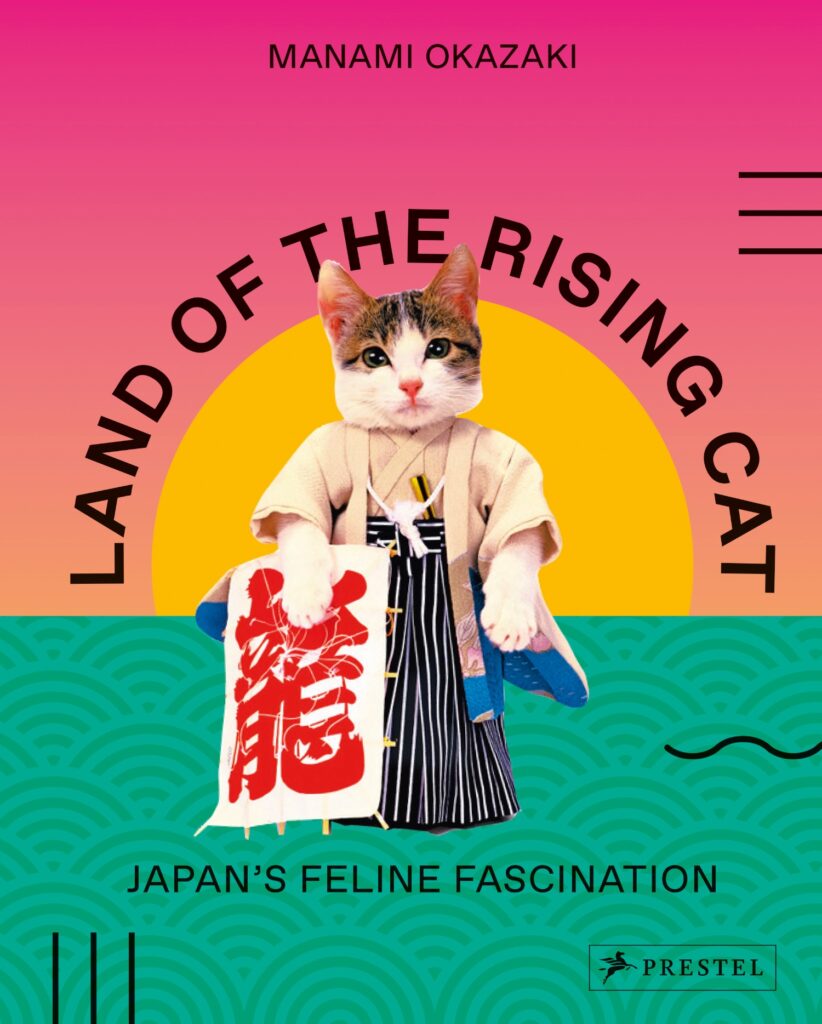
Land of the Rising Cat by Manami Okazaki charts Japan’s extraordinary fascination with cats, from the rise of celebrity felines and the proliferation of cat cafés to designers, chefs, and creatives who place cats at the heart of their work.
Okazaki weaves together history, folklore, and contemporary trends with insight and clarity, revealing a culture where cats are far more than pets—they are muses, icons, and a lens through which to understand modern Japanese life.
Curious to find out which artists turn cats into collectible kaiju or which chefs create pastries that pay homage to their whiskered muses? Then read on.
Land of the Rising Cat by Manami Okazaki
Why a book about cats in Japan?
Cats are taking over in Japan. In 2017, they outnumbered dogs for the first time, a shift shaped in part by tighter regulations on dog breeding introduced in 2005. Cats remain easier to own, particularly for singles, an aging population, and those working from home.
Their popularity, however, stretches back much further. Archaeologists have uncovered cat bones at a third-century BC site on Iki, some of the earliest evidence of their presence in Japan. Over the centuries, cats have also inspired legends, regional tales, and even monstrous apparitions.
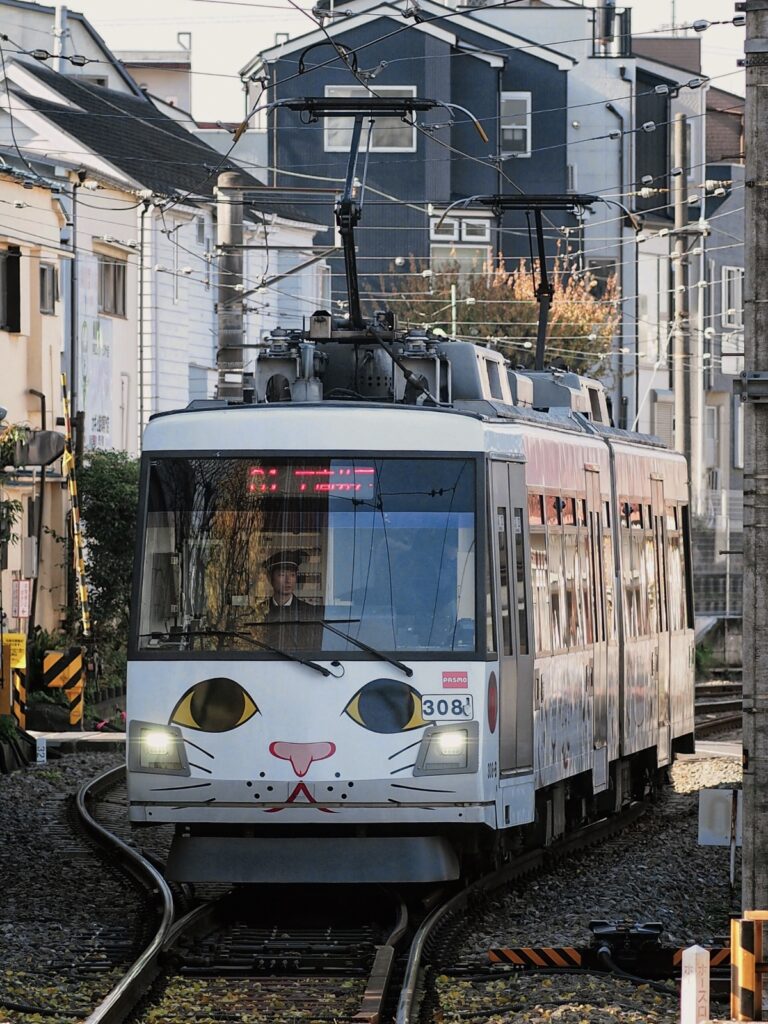
The mid-2000s saw the rise of cat blogs, which became a national obsession, while cat stationmasters such as Tama achieved celebrity status. By 2010, cat cafés were popping up across Japanese cities, offering urban dwellers a place to relax with feline companions.
Around the same time, TV programs like wildlife photographer Mitsuaki Iwagō’s World “Cats” Travelogue (2012) and documentaries such as Cat Nation (2020) sparked waves of interest in cat-themed travel and tourism.
Journalist and author Manami Okazaki has spent years observing this phenomenon, and her latest book captures Japan’s fascination with its feline citizens in vivid detail.
She has written extensively on Japanese culture, art, crafts, and fashion, authoring Kawaii! Japan’s Culture of Cute and Japan’s Best Friend: Dog Culture in the Land of the Rising Sun, with work appearing in The Japan Times, Wall Street Journal, South China Morning Post, and Lonely Planet.
In 2019, she helped stage the Land of the Rising Cat exhibition at London’s Sway Gallery, collaborating with curator Tiger Tanuki and artists Konatsu and Kaori Mitsushima.
Given her deep knowledge of Japanese culture and her keen eye for trends, it is hardly surprising that Okazaki turned her attention to cats.
Chapters
The book divides into seven chapters, each exploring a different facet of Japanese cat culture. Below is a chapter-by-chapter overview of Land of the Rising Cat and what readers can expect from each section.
Religion
This opening chapter looks at dozens of religious structures in Japan that are dedicated to cats.
Some exist because of local folklore and historical legends. Others serve as refuges for stray cats or function as pet cemeteries. In a few cases, the sites exist to appease the spirits of supernatural cats.
Fourteen of these places are mentioned, each only briefly. Unrinji Temple in Hagi and Jikeiin Temple in West Tokyo receive more attention and come with slightly more detailed descriptions.
Read next: Nyan Nyan Ji Cat Temple in Kyoto has a feline monk, and it’s pure bliss!

Destinations
The second chapter highlights several regions where cats have shaped local identity.
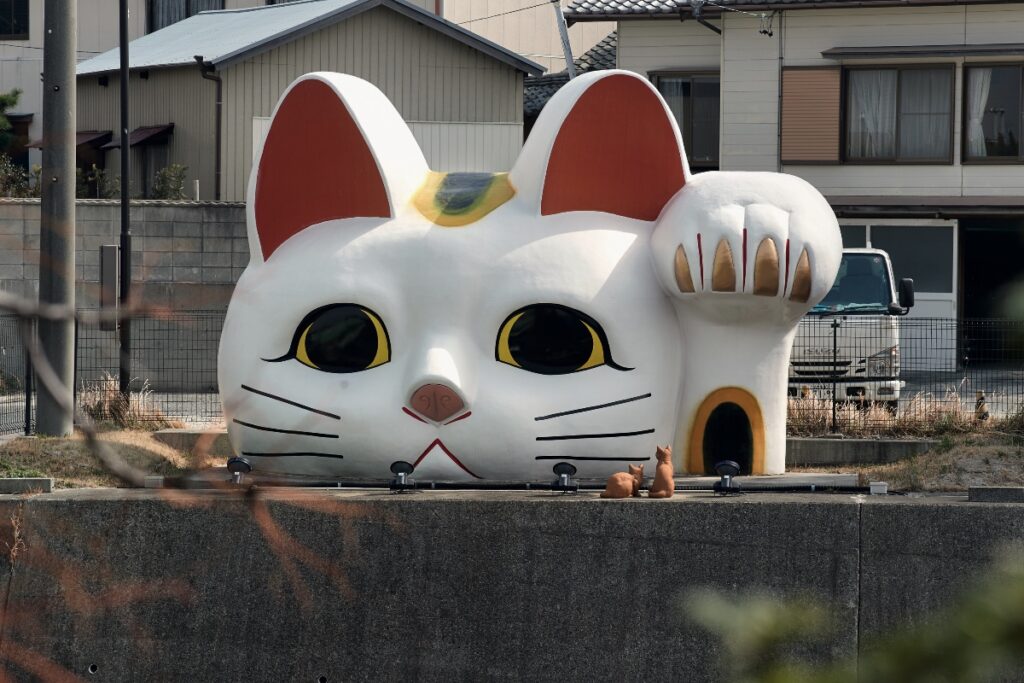
Some areas fully embrace the spirit of the manekineko. Seto and Tokoname, for example, have been producing these lucky figures for generations, and you can feel that history in the streets, workshops, and museums.
Ishikawa Prefecture adds its own artistic flavor with kutani-ware manekineko, painted in bold enamel and covered in intricate designs that turn every piece into a work of art.
This chapter also introduces us to Onomichi City in Hiroshima. This place blends film history (this is where the cat movie House aka Hausu was filmed) with a Cat Trail full of cute cafés, local artist studios, and a manekineko museum.
Small towns like Usuki also get their time in the spotlight thanks to the Red Cat Festival, when children dress up in bright red cat outfits and perform traditional dances in the streets.
The chapter ends with the unlikely heroes of modern tourism: cat stationmasters. These uniform-wearing cats spend their days lounging around rural train stations and somehow manage to attract massive numbers of visitors. It shows how a single cat can spark curiosity, boost local pride and bring entire communities together.
Artisans
This chapter focuses on people who pour their love of cats into beautiful handmade creations.
Featured here are Shugai Toen‘s brightly painted manekineko figures and Kutani Choemon‘s cat-themed ceramics.
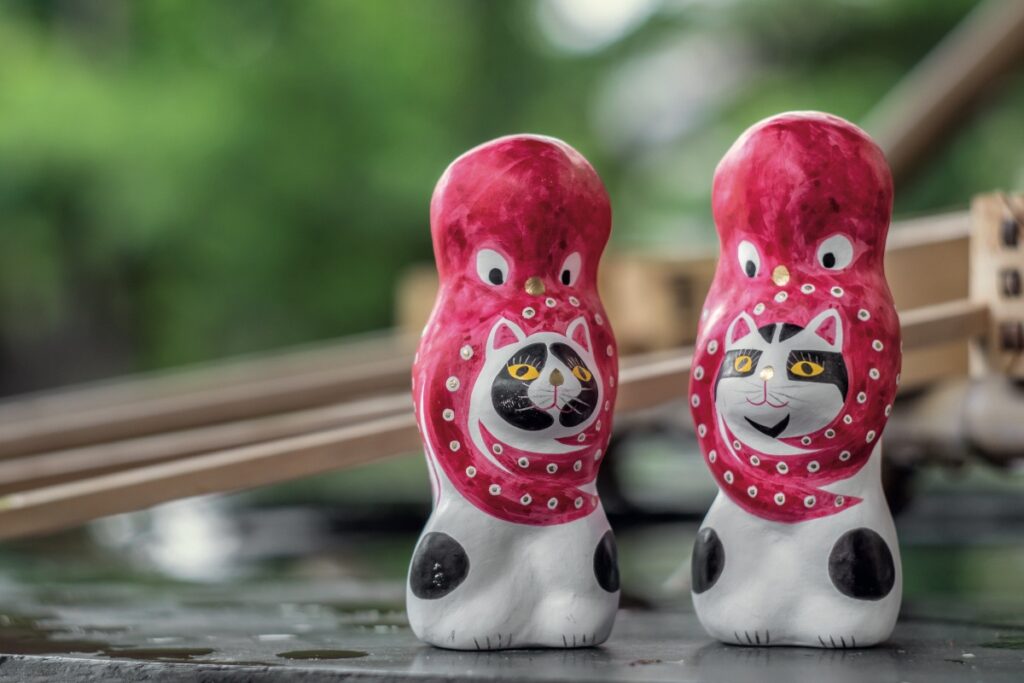
It then jumps into the world of traditional folk toys with Oidashineko and Sagara dolls (cat-themed toys that repel bad luck) and kokeshi doll-makers Naomi Umeki, Yasunobu Oki and Sendai Sasuri.
Pop culture
The chapter on pop culture shines the spotlight on several cat manga, including Doraemon, the blue, earless robot cat.
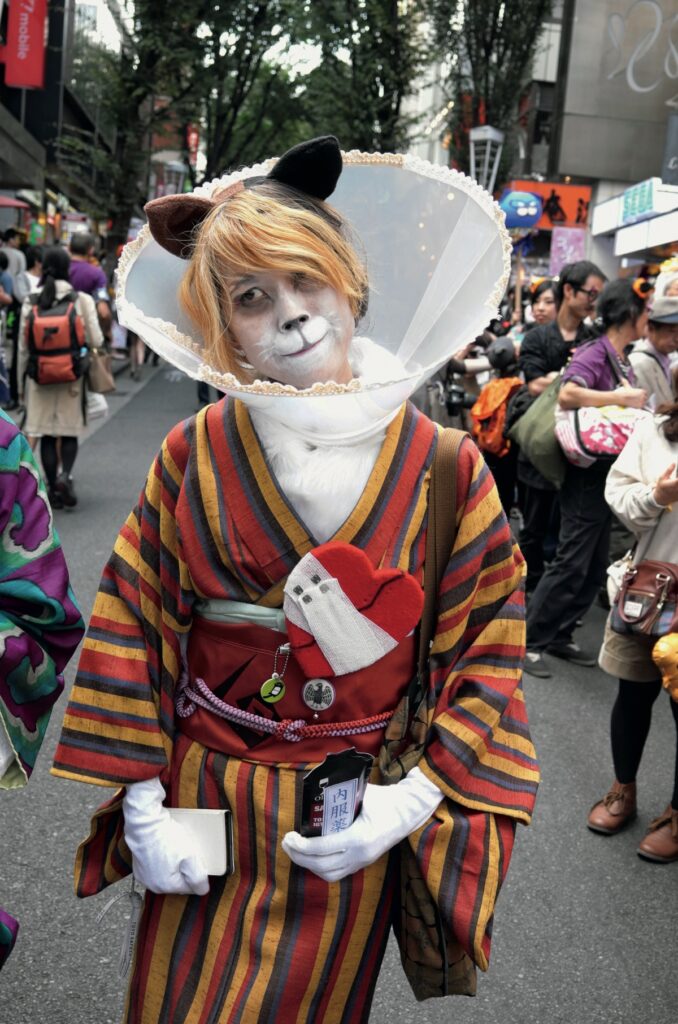
We then go to the Kagurazaka neighborhood in Tokyo, where Soseki Natsume (author of I Am A Cat) once lived and where the annual Bakeneko Festival turns the streets into a wild cat-costume parade.
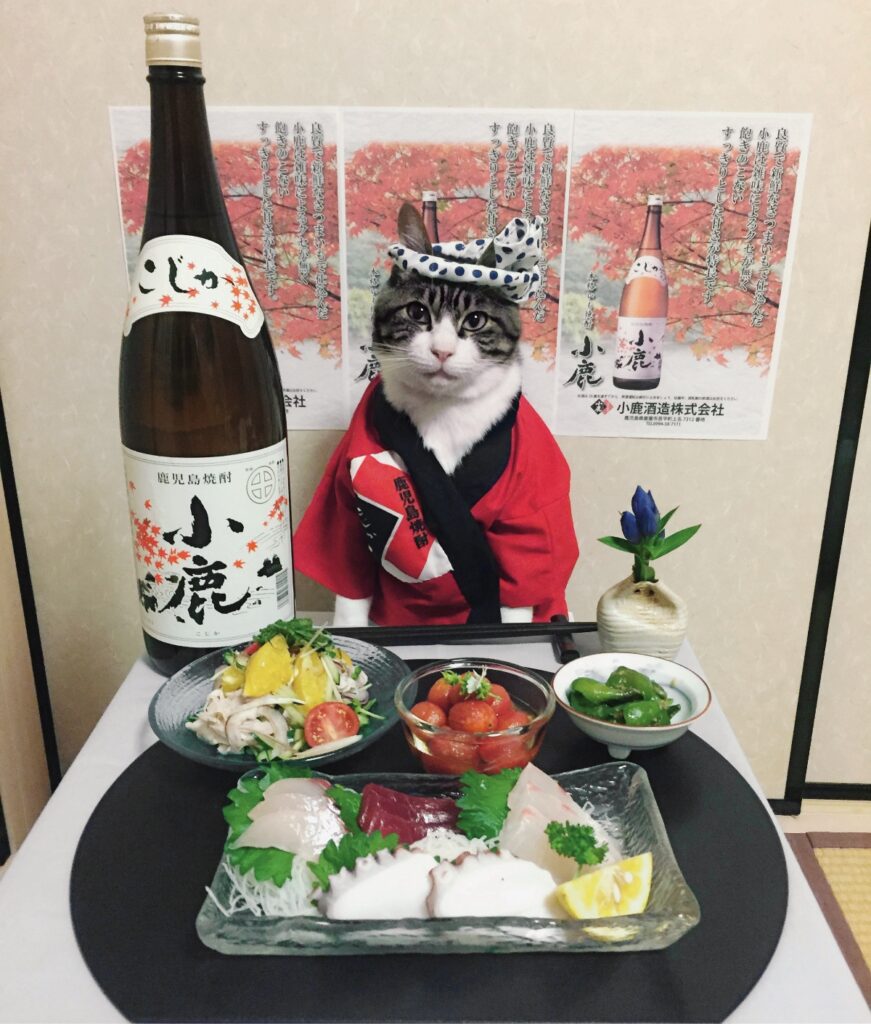
The chapter also dives into modern internet fame with Maro (@rinne172), an Instagram cat who poses in costume next to delicious plates of food.
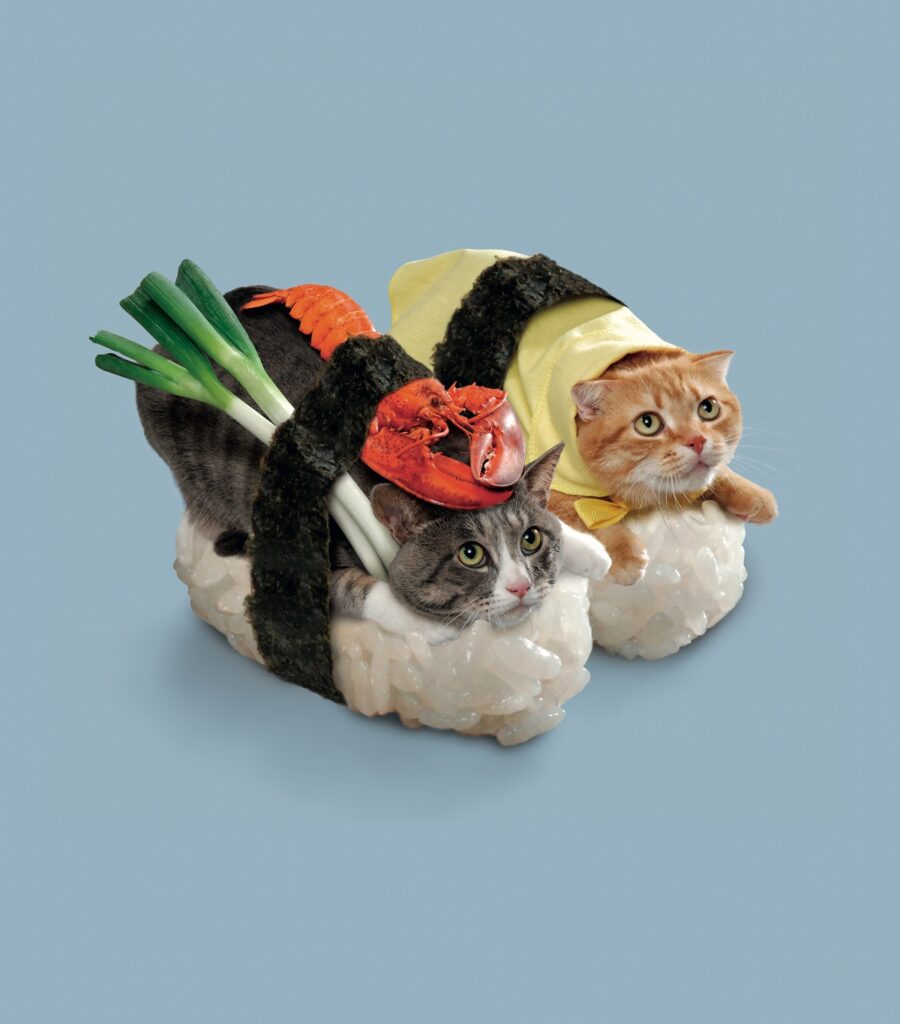
Finally, there are sections on Nekozushi, a series of surreal (and hilarious) cats resting on sushi rice, Namja Town‘s quirky cat-themed attractions located inside Sunshine City in Ikebukuro, and kawaii mascots (such as Hikonyan, Haginyan, Shimanekko, Nyankomachi and Nyajiro), who promote everything from banks to pharmacies.
Design
This chapter revolves around several creators have built huge parts of their careers around cats.
Architect Kenji Hirose from Fauna + DESIGN, for example, builds homes that accommodate both cats and humans. They contain integrated tunnels, elevated walkways, and naturally lit resting platforms that merge seamlessly with domestic living spaces.
The team at Nadenade Nekochan, on the other hand, develops robot cats, designed as therapeutic companions, especially for people who can’t own pets due to allergies or mobility issues. Nurses in care homes use these cats to ease anxiety and help residents feel calm and emotionally grounded.
Meanwhile in Fukuoka, traditional furniture makers at Okawa Furniture apply the same techniques used in luxury human furniture to handcrafted mini sofas made specifically for cats. The wood is hand-finished, the upholstery is custom-woven, and each piece looks like it belongs in a design museum.
In the world of fashion, Saku Laboratory reimagines classic kimonos by weaving in delicate feline patterns, while Takuya Angel combines underground streetwear with traditional Japanese fabrics and mononoke (supernatural spirit) folklore.
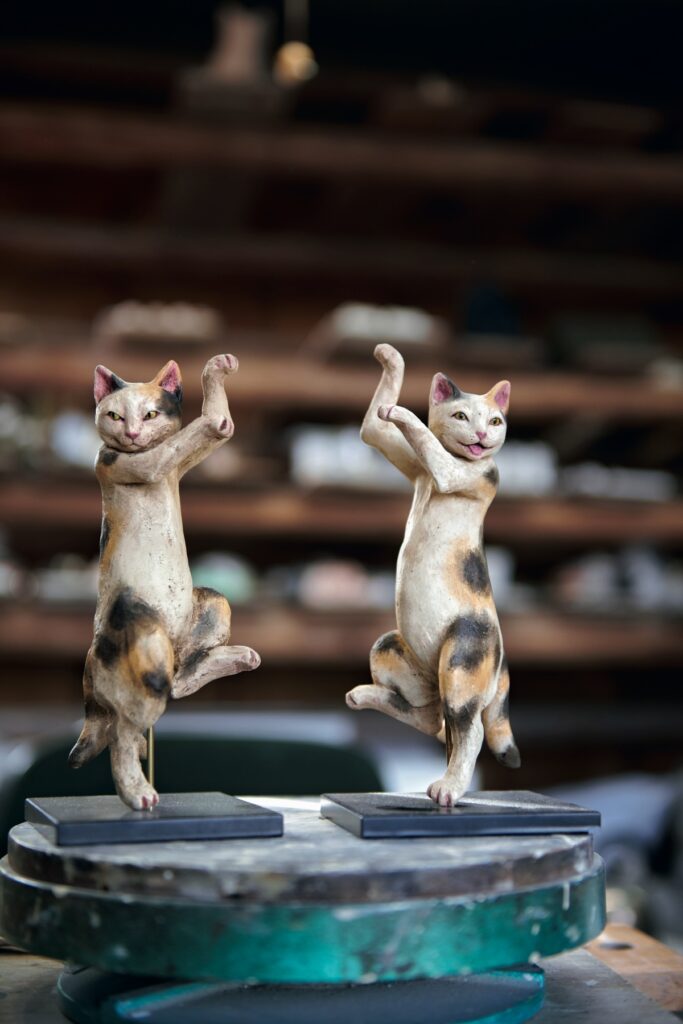
In the sofubi (soft vinyl) scene, artist Konatsu turns cats into full-on kaiju. Her limited-edition Negora figures mix Godzilla-style monster design with cat-like charm. They sell out instantly and have become cult collectibles among toy fans around the world.
The chapter ends on a sweet note with Laura, a pastry artist who turns simple desserts like wagashi, pancakes, and éclairs into edible cat sculptures that are almost too cute to eat.
Real cats
The sixth chapter explains how cat cafés became popular in Japan and how they turned into cozy spaces for people to relax. (Check out our reviews of Temari No Ouchi and Asakusa Neko-En.)
It then spotlights cat inns, traditional ryokans where resident cats greet guests like little furry staff members.
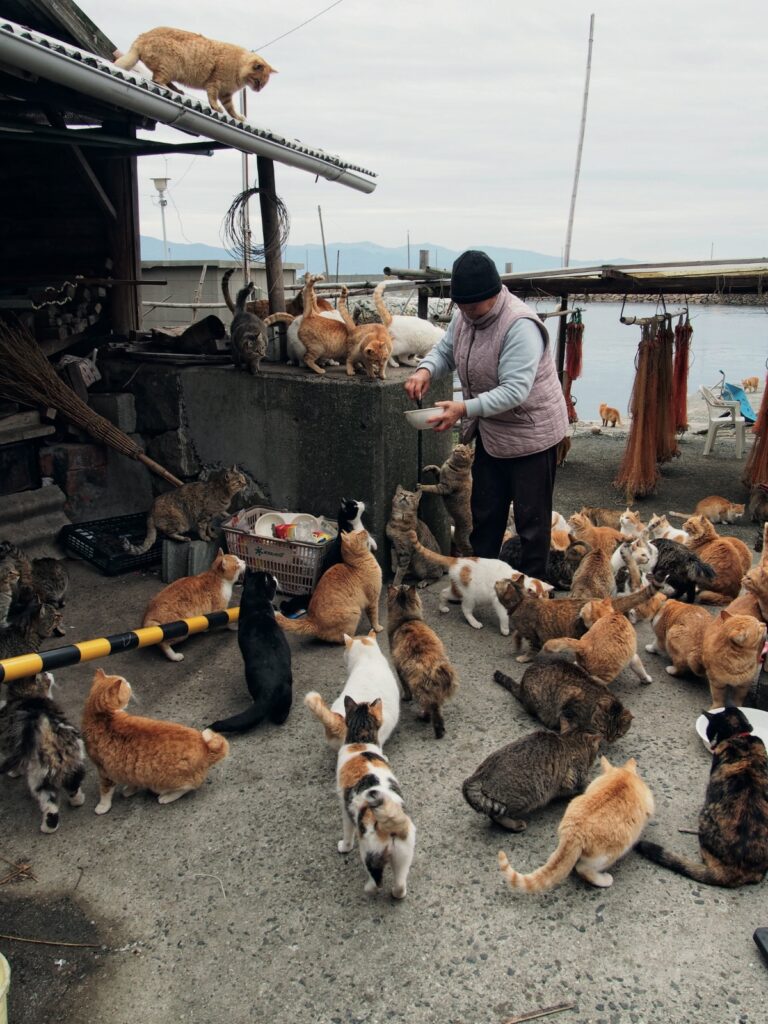
Cat islands get a section as well, and include an interview with Naoko Kamimoto from the Aoshima Cat Protection Association. (Aoshima and Tashirojima are the most famous ones, but you can check out our complete list of Japanese cat islands here.)
There’s also ARK, an animal refuge in the Kansai area known for being one of the most respected in the country.
The chapter ends with the Iriomote Yamaneko, a rare wildcat species that lives only on Iriomote Island in the far south of Japan.
Artists
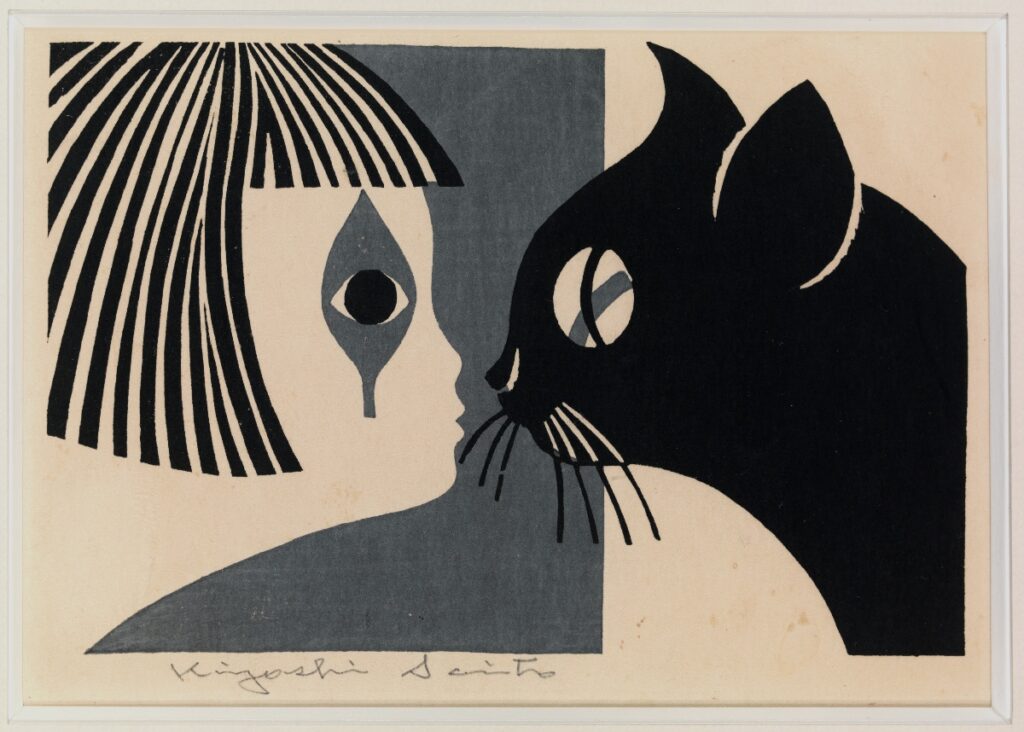
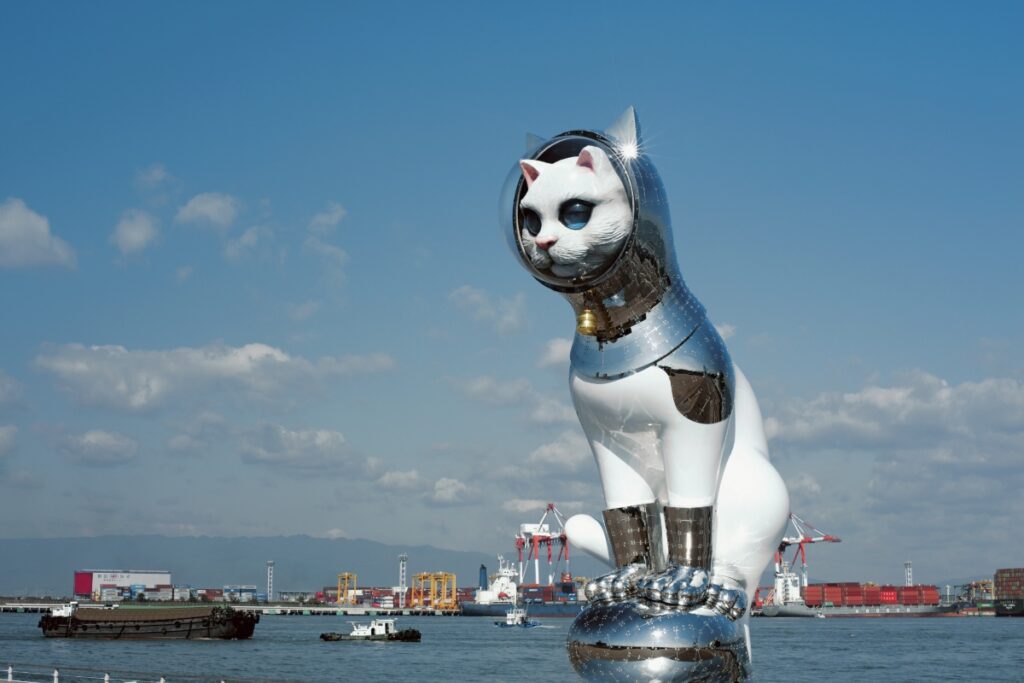
The final chapter puts the spotlight on several artists: sculptor Fumio Asakura, painter and illustrator Yumeji Takehisa, sosaku hanga (creative print) creator Kiyoshi Saito, graffiti artist DELS4, embroidery designer Koichiro Takagi, pin-striping expert Makoto, illustrator Kaori Mitsushima, and sculptor Kenji Yanobe.
Final thoughts
Land of the Rising Cat touches on these topics lightly, offering more of an introduction than an in-depth guide. It does not aim to be exhaustive, so several well-known elements of the country’s cat culture go unmentioned (such as Misao and Fukumaru, the Yanaka Cemetery and neighborhood, and cat photographers Fubirai, Tokyo Bling, and Yutaka Katayama). Of course, with a country that is as crazy about its cats as Japan, it’s nearly impossible to be complete.
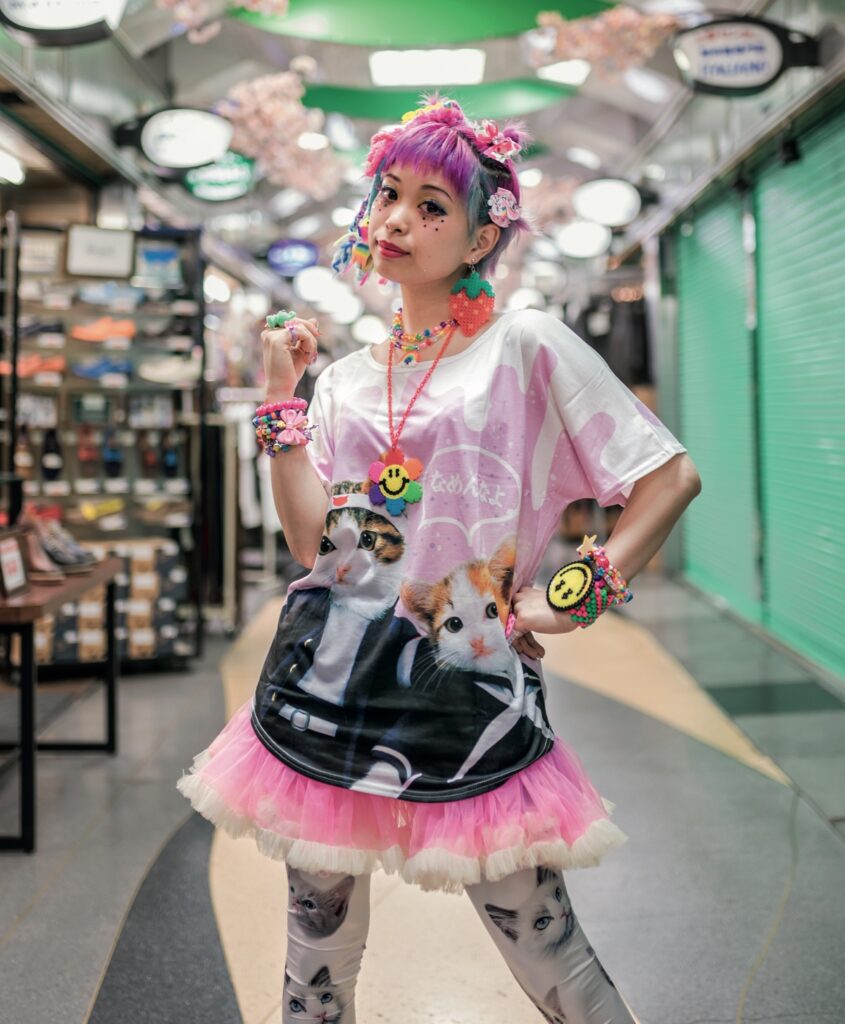
It is packed with photographs and illustrations and also includes many short interviews with artists, curators, and other voices from Japan’s feline scene.
Overall, the book is one to dip into rather than read cover to cover. It makes a charming gift for anyone with a fondness for cats, Japan, or both.
Has this review of Manami Okazaki’s Land of the Rising Cat: Japan’s Feline Fascination sparked your curiosity? If so, the book is now available in paperback format.
Are you a fan of Japanese cat culture? Have you tried any of the crafts, gadgets, or visited any of the cat-themed spots mentioned in the book? If so, share your experiences in the comments. I’d love to hear from you.
And don’t keep this book to yourself. Share this article with your fellow cat-loving friends and on social media.
Cats & Japan
Also check out these other books about Japanese cat culture:
- Neko Land
- The Zen of Cat: An A-Z of Japanese Feline Philosophy
- The Cat With Three Passports
- Cats of Japan
This post contains affiliate links. If you make a purchase after clicking on the links, Traveling Cats will get a small commission, with no extra cost to you.
Pin the Land of the Rising Cat book cover!


3 responses
I’d never heard of this cat focused region. The sheer number of pop culture and design items centered around cats is amazing!
This is so cute! especially the cat statue in Tokoname
So many cats! I have always wanted to know more about the manekineko. thanks for this!