 Skip to content
Last Updated on 22 June 2026 by Vanessa
Have you heard of the Roman Aqueduct of Moria? It’s one of Lesbos Island’s hidden gems—quiet, beautiful, and full of history. The stone arches rise from the hills like something out of a storybook.
But history isn’t the only reason why you should visit.
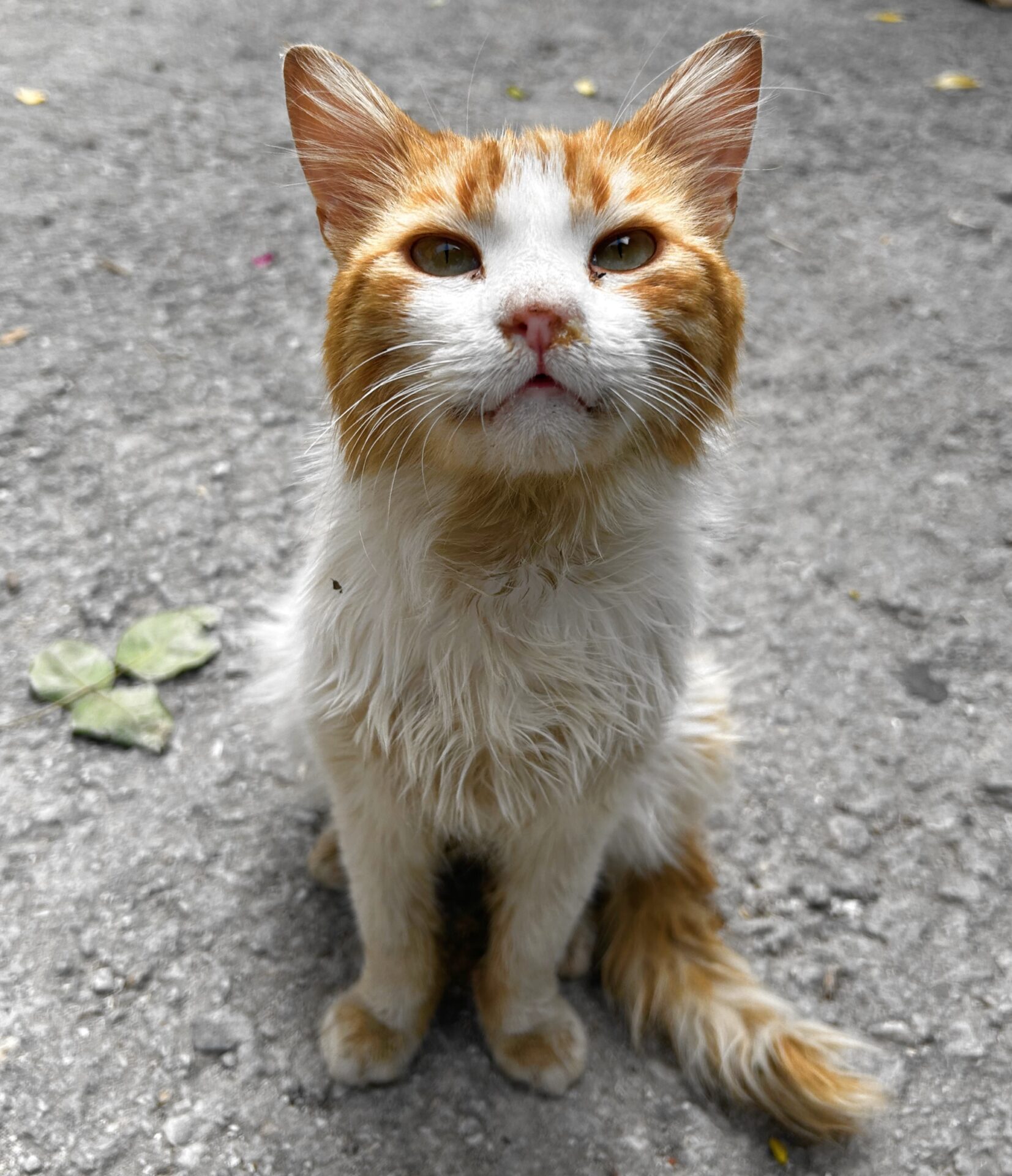
Wander through the village, and you’ll notice them: cats. Dozens of them. Sunbathing on warm stones, keeping silent company with the ruins, and following you through the village like tiny tour guides.
Moria is the kind of place that sneaks up on you. Most tourists miss it—but you don’t have to.
👉👉 Want even more hidden gems? Check out these 35 things to do on Lesbos, Greece!


Exploring the Roman Aqueduct of Moria
Where is the Roman Aqueduct of Moria?
Moria is a small village located in the southeastern part of Lesbos Island in Greece. It sits about five kilometers (three miles) northwest of Mytilene, the island’s capital. That’s roughly a 10- to 15-minute drive or a short bike ride if you’re up for a bit of uphill effort.
The Roman Aqueduct of Moria itself lies just outside the village, among olive groves and low hills.


A village with quiet charm
Moria isn’t the kind of village where you’ll find souvenir shops or bustling cafés. It’s a lived-in place, where locals tend their gardens, elders sit in the shade discussing the weather, and the rhythm of life feels like it hasn’t changed in decades. The air smells faintly of oregano and woodsmoke, and the pace is a balm for the hurried traveler.
The village has been around for centuries, when it served the nearby Roman settlement. It was once known for its olive oil and stonework, with families passing land and homes down through generations. It’s not a museum, though—it’s real life, slow and steady, and very much still unfolding.


The aqueduct: a stone testament to Roman ingenuity
Just beyond the heart of the village lies the Moria Aqueduct, one of the most remarkable feats of Roman engineering in the Aegean. It dates back to the late 2nd or early 3rd century AD, from the era when Lesbos was part of the Roman Empire.
A Roman water system that stood the test of time
This monumental water bridge carried fresh spring water from near Agiásos all the way to the city of Mytilene—over 26 kilometers away. At its peak, it delivered around 127,000 cubic meters of water every single day.
The structure stretches 170 meters long and rises 24,46 meters high. It consists of 17 arched openings and three tiers of arches in the middle part, resting on piers.
To keep the water moving steadily across the island’s rough terrain—through hills, valleys, and rocky slopes—Roman engineers combined underground tunnels, rock channels, and stone bridges. Near Prineri Katifori, they even dug a 1-kilometer tunnel that plunges up to 35 meters below the surface. And they did it all nearly 2,000 years ago—without a single machine.

Local materials
To shape the pillars and lower arches of the aqueduct, the Romans extracted gray marble, extracted from a nearby quarry.
For the upper arches, which carried the water channel, they used compact clay bricks—a functional yet lightweight material designed to support the flow of water.


Preserving the Aqueduct of Moria for future generations
Like anything that stands the test of time, the aqueduct has faced its share of struggles. Earthquakes, erosion, and weather have chipped away at its foundations, leaving only parts of the aqueduct intact across the island.
In the early 2000s, restoration efforts began, funded by the EU, to stabilize what remained. Still, some sections remain fragile and at risk of collapse.
Despite the wear, several towering arches still stand strong among olive groves and wildflowers. It’s a peaceful, often empty place—apart from the cats, of course.

The feline keepers of the aqueduct
The cats everywhere. Some are scrappy and scruffy and patched with scars. Others are too young to know the world is hard. But all of them know how to sleep in the sun.

The villagers give them food and set out water in plastic tubs. Sometimes, you see a cardboard box outside a home in which a litter of newborn kittens sleep.
Sadly, not all of them will make it. The ones that do learn early to be quick and to find shade and scraps and safety when they can. It’s the old kind of survival—instinct and luck.
None of the cats are fixed either. It’s just not part of the culture, and there’s no money for it anyway.
Thinking about adopting one (or more!) of these Greek kittens? It’s easier than you might think—learn how to do it here.

Getting there
Moria is about a 10-minute drive from Mytilene. There’s limited public transport, so a rental car is the easiest option (we found ours through Discover Cars). Renting a bike is another great way to enjoy the scenery if you’re up for a bit of a ride.
The aqueduct is signposted and easily walkable from the village.

Final thoughts
Moria is the kind of place where time slows down. One minute you’re admiring ancient Roman arches, and the next you’re in a quiet alley, sipping Greek coffee while a cat rubs against your leg. It’s not a famous village, but it has soul—and the cats bring it to life.
📸 Tip: Bring your camera and maybe a kitty snack or two.
(I buy the kibble straight from the local, family-run grocery stores—it’s a nice way to support the community while keeping the cats happy and well-fed.)

Loved the cats of the Roman Aqueduct of Moria? Here are more cat-filled spots on Lesbos Island
If the cats of Moria captured your heart, you’re in luck because Lesbos has no shortage of feline-friendly spots. Here are a few of our favorites:
Monastery of Ypsilou
Perched high on a volcanic peak, the 9th-century Ypsilou monastery offers stunning views—and a small army of monks’ feline companions.
Molyvos
Cobblestone streets, castle ruins, and cats at every turn. Molyvos is a postcard-perfect village where cats rule the rooftops and cafés. Don’t be surprised if one curls up next to you while you sip your frappe.
Skala Sykaminia
This tiny harbor village feels like it came out of a Greek fairytale. The iconic church by the sea, the little fishing boats, and cats sunbathing on stone walls—Skala Sykaminia is pure magic.
Anaxos
Known for its beach and laid-back vibe, Anaxos is also home to plenty of friendly strays. Check under taverna tables or by shady olive trees—they’re always nearby.
Petra
With its rock-top church and winding alleys, Petra is full of charm—and cats. You’ll find them lounging on doorsteps or sneaking through bougainvillea-lined paths.
Eftalou
Famous for its hot springs, Eftalou is a quiet, windswept corner of the island where cats soak up the last rays of sun on stone walls or keep watch near the shore.


Text and photos by Vanessa Morgan.
Big thanks to Stephan Jankovic for pointing me toward the Roman Aqueduct of Moria.

For your hammock-reading pleasure: Meow! Cats in Horror, Sci-Fi, and Fantasy Movies blends pop culture, fun facts, and a whole lot of whiskers. Get your copy today!

Pin this article on the Roman Aqueduct of Moria!


2 responses
That aqueduct looks stunning, I do hope they manage to keep it for as long as possible. I’d be happy to be around so many cats, they are so cute. Moria sounds like the perfect quiet place to visit.
nearly all the catys shown are orange or tortie, with few if anyof the other colors. is the whole island like that?