
Last Updated on 18 June 2026 by Vanessa
Lesbos was the first Greek island I ever visited, and I still think it’s one of the most underrated. It’s bigger, more diverse, and far more authentic than many of the more famous Hellenic destinations.
From traditional villages and beautiful beaches to incredible food, hot springs, and landscapes filled with olive groves, Lesbos has a bit of everything, yet it receives fewer than 100.000 visitors a year. You can spend weeks there and still feel like you’ve only scratched the surface.
This ultimate Lesbos travel guide has everything you need to know, including 35+ (!) things to do, as well as how to get here, where to stay, and much more. It’s based on more than 20 visits to the island.
Trust me, you’ll be glad you added Lesbos, Greece, to your itinerary!
Lesbos Greece: the ultimate travel guide for 2026
What is Lesbos Greece famous for?
Lesbos isn’t as well known as many other Greek islands, mostly because it sits far out in the northeast Aegean, closer to Turkey than to Athens. It also doesn’t slot easily into the classic island-hopping routes.
For me, though, it’s the island where I feel most at home—and I’ve spent a fair amount of time across Greece.
Even so, Lesbos stands out for quite a few things, including:
- Sappho: The island is the birthplace of Sappho, one of the most important lyric poets of antiquity. That legacy still shapes how people talk about Lesbos today.
- Birdwatching: Lesbos, in particular the Kalloni Gulf, attracts huge numbers of birdwatchers, especially during migration seasons.
- Ouzo: Lesbos is known across Greece for ouzo. The town of Plomari produces some of the country’s most respected ouzo brands, and you’ll find distilleries all over the island.
- Hot springs and thermal baths: Lesbos has a strong tradition of hot springs and thermal baths, which are still in use.
- The Petrified Forest: The Petrified Forest near Sigri is one of the most important geological sites in Europe. It shows fossilized trees from a volcanic past.
- Food and olive oil: Lesbos really stands out when it comes to food. The island produces some of Greece’s most respected olive oils, and that shows up everywhere in the cooking. You also get a subtle but real Anatolian influence from the island’s proximity to Turkey.
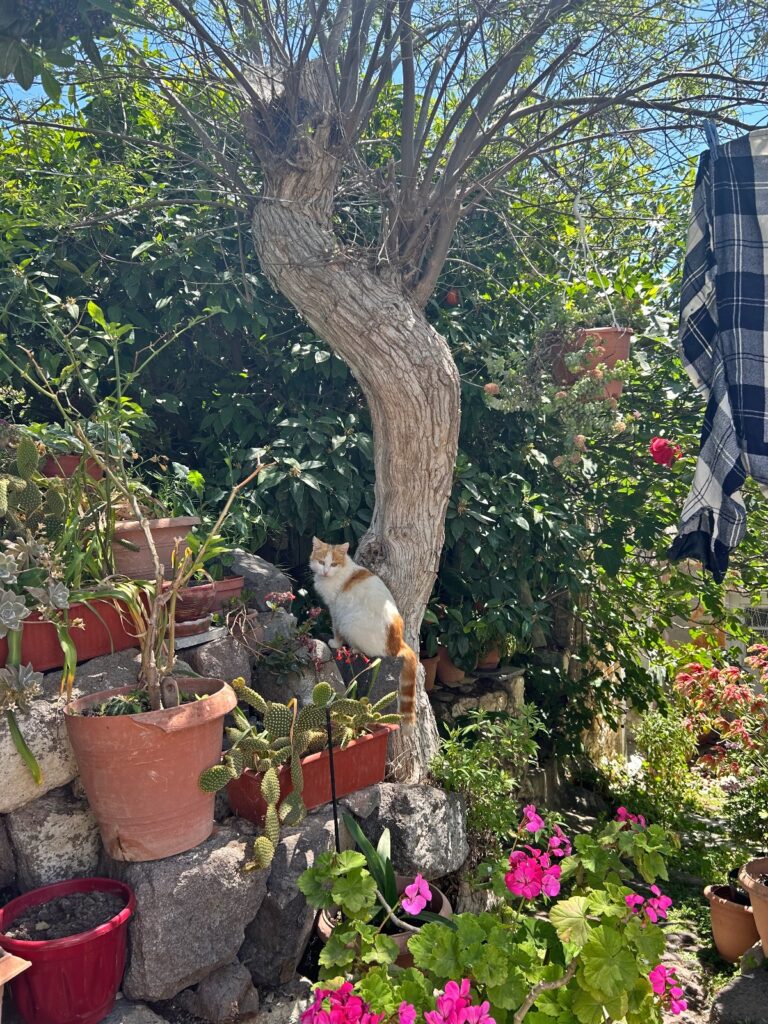
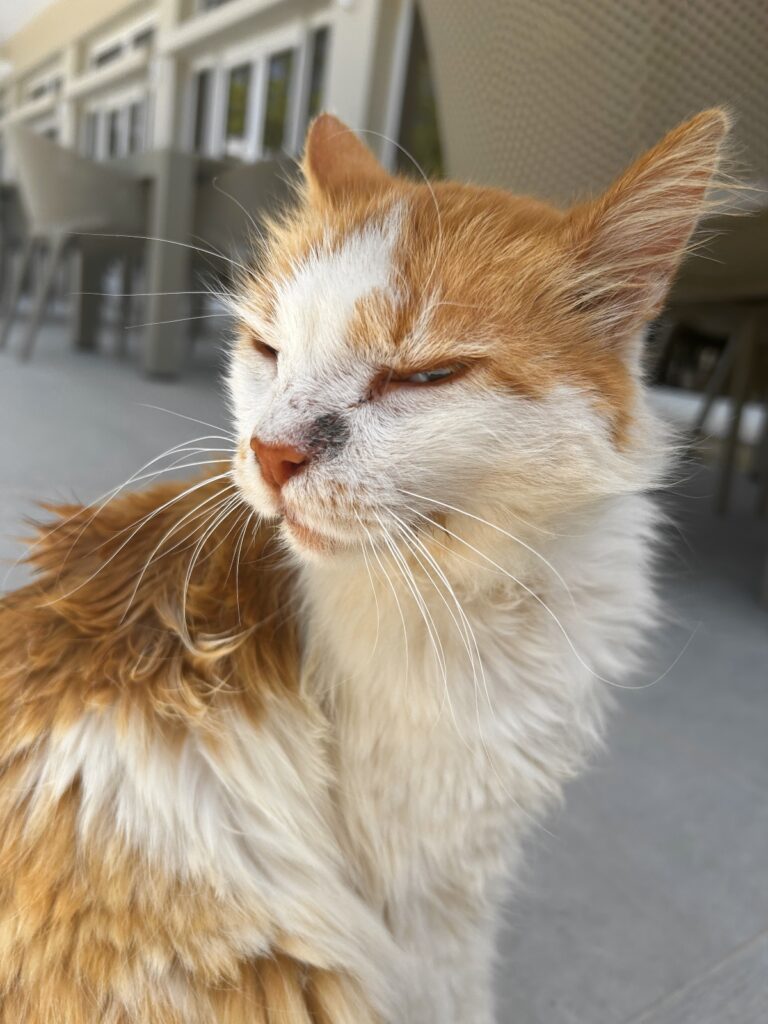
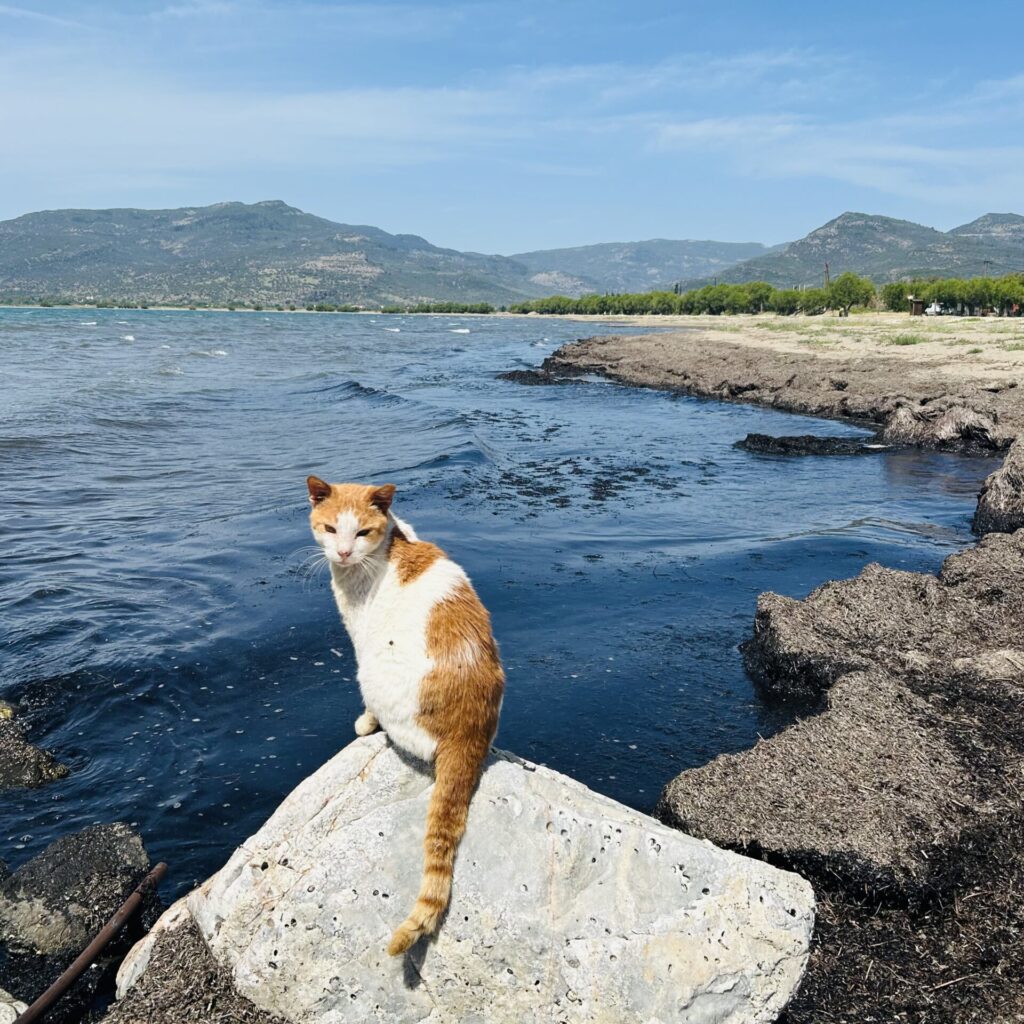
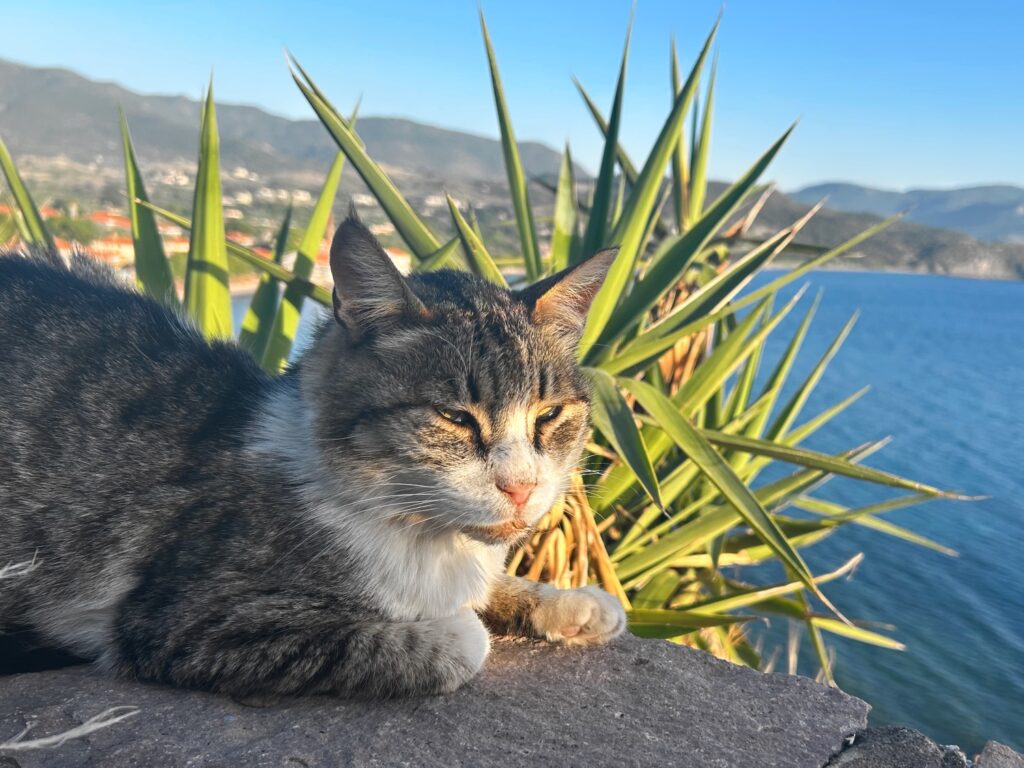
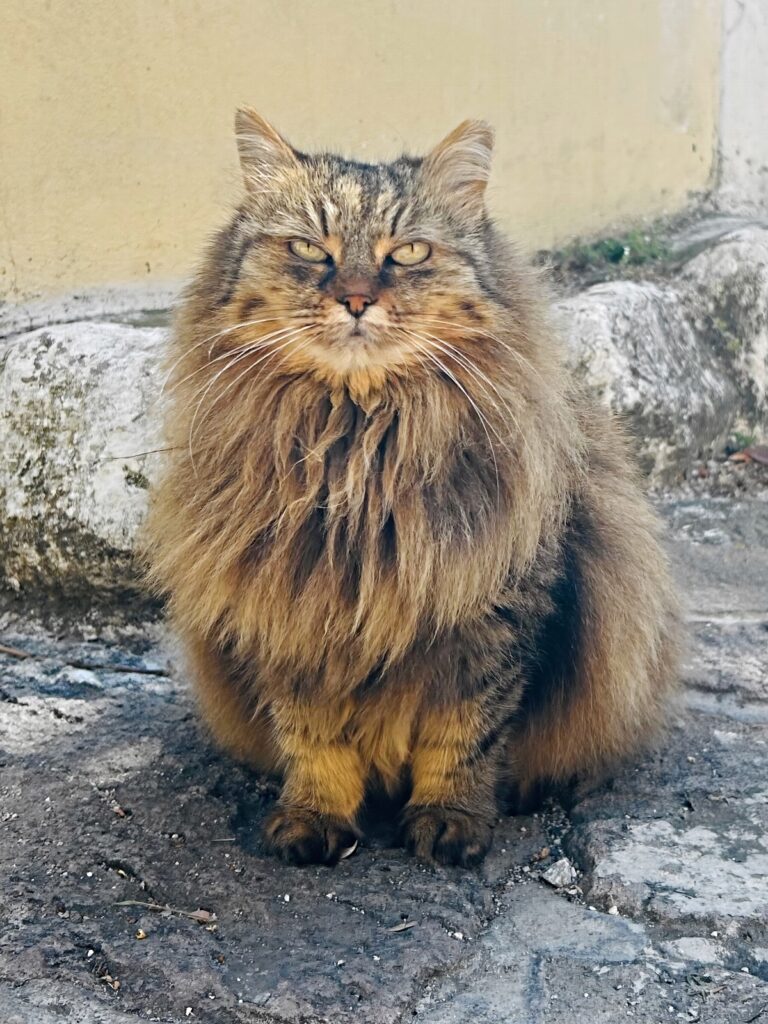
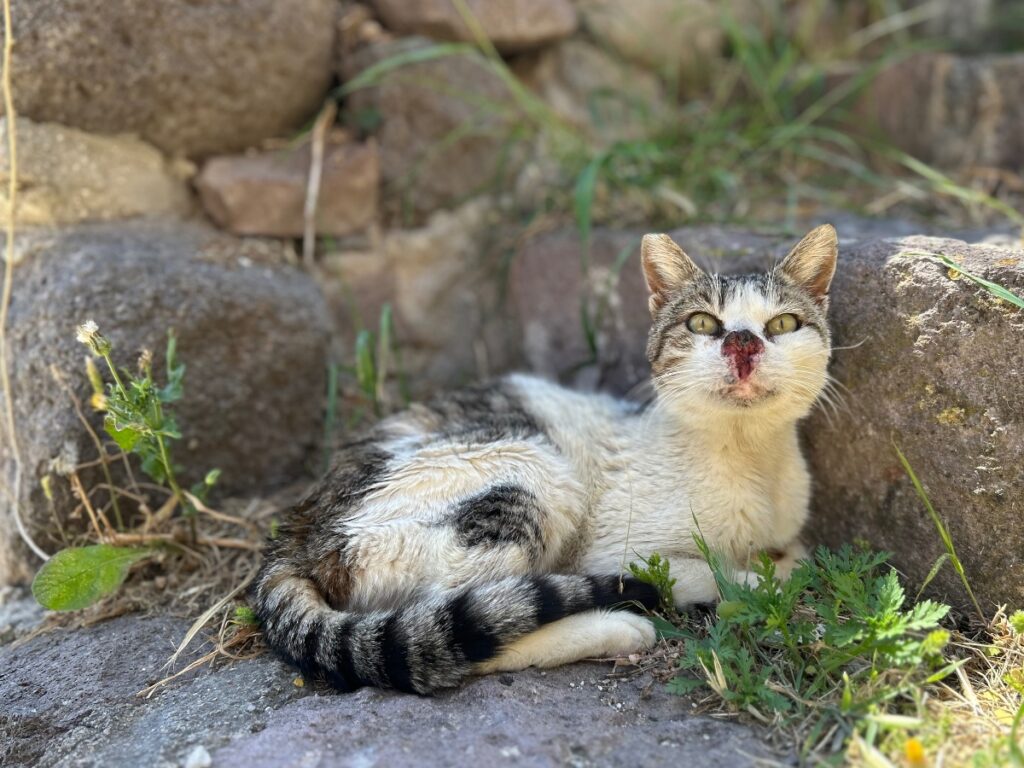
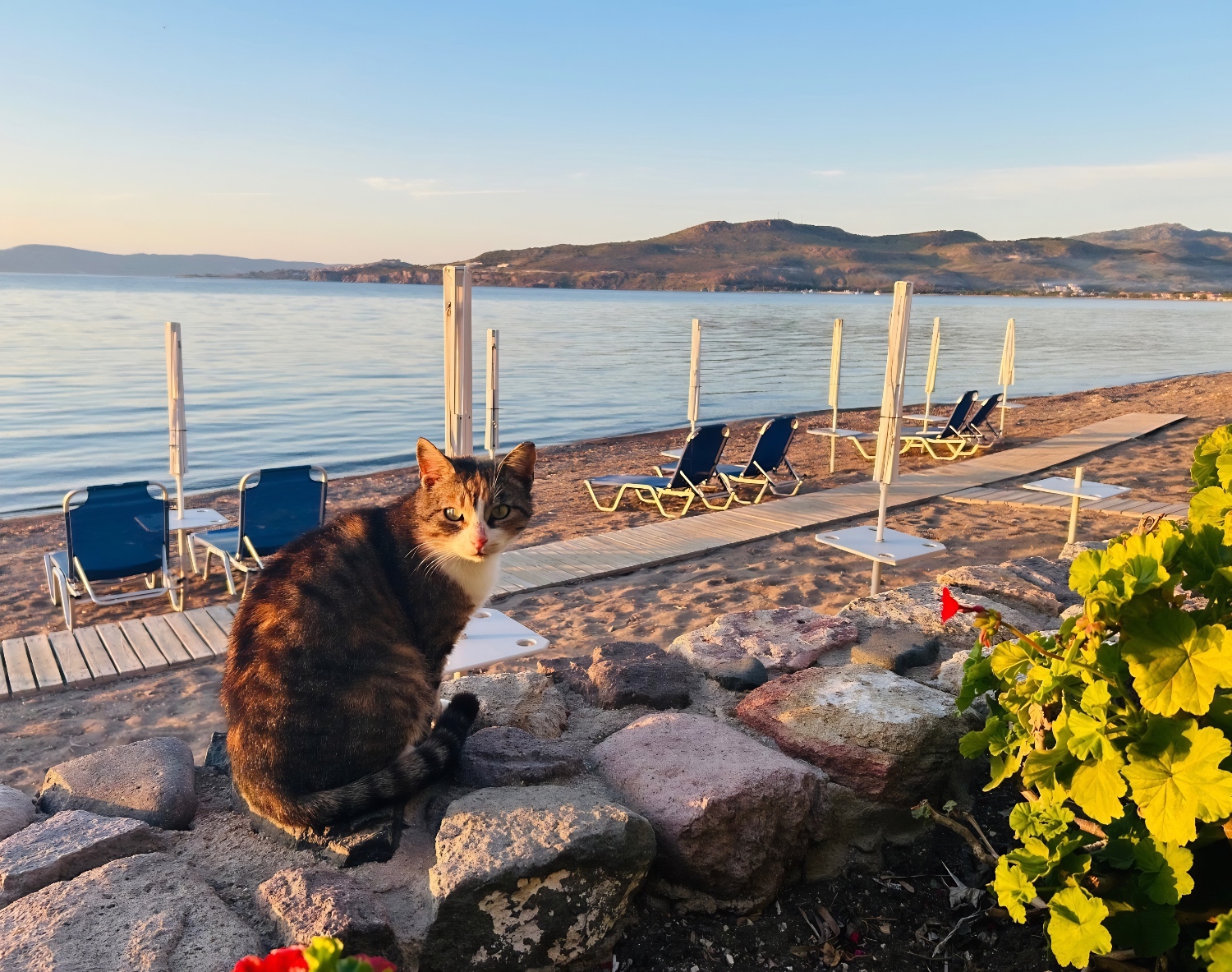
- Cats: If you like cats, you’re in luck: Lesbos has more stray cats than any other Greek island I’ve visited.
Before we dive into the best things to do on Lesbos, let’s answer some of your most asked questions.

Is Lesbos safe to visit?
Lesbos is very safe to visit. The island overall is calm, relaxed, and welcoming to visitors.
The only exception is the capital, Mytilene, especially around the port and busier central streets. Mytilene shows visible poverty, and you really have to keep an eye on your belongings in crowded areas. This can truly affect your experience there. It’s a shame, because Mytilene itself has real charm and character, with a beautiful waterfront and cozy shopping streets.
Where to stay on Lesbos
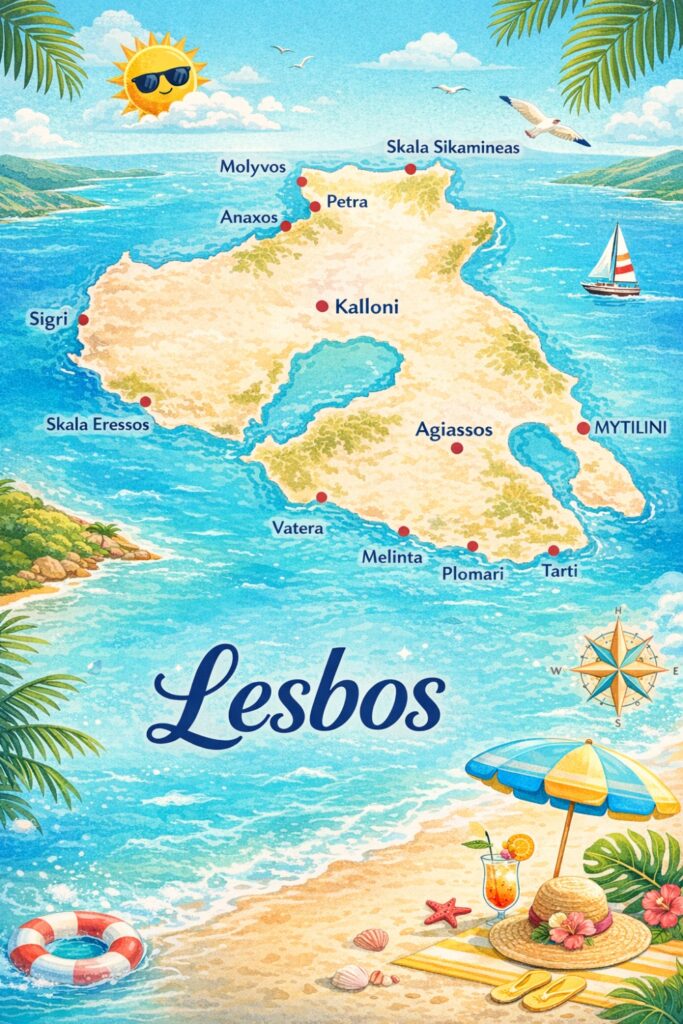
If you’re visiting Lesbos for the first time, I would stay in either Petra or Molyvos. Both offer the best overall experience on the island, with beautiful surroundings, plenty of restaurants, easy beach access, and some of the island’s most attractive streets to wander through after a day of sightseeing.
They also put you within easy reach of many of Lesbos’ top attractions, including the villages of the north coast, the Petrified Forest, and much of the central part of the island.
However, while Petra and Molyvos work well as a base for exploring the north, west, and central parts of the island, the south is a bit too far away. Reaching Plomari from Molyvos, for example, takes at least two hours by car each way. That’s perfectly doable, but not ideal.
If you plan to spend a lot of time around Plomari, Agios Isidoros Beach, and the southern coast, consider splitting your stay between two locations. Spending part of your trip in Petra or Molyvos and the other part in Plomari allows you to see much more of the island without spending so much time on the road.
Another option is using Skala Kalloni as a base because of its central location. From here, you can reach Petra and Molyvos in about 35–40 minutes by car, while Plomari sits roughly 45–50 minutes away.
If your main goal is to explore as much of the island as possible (or to go bird-watching every day), Skala Kalloni works very well. However, it lacks the charm, scenery, and atmosphere of Petra, Molyvos, and Plomari, so most visitors won’t find it as enjoyable to return to each evening.
Skala Eressos is another option, but I would only recommend it if you specifically want to spend most of your vacation in the remote western side of Lesbos.
Although it offers one of the island’s best beaches and a relaxed atmosphere, the drives to Molyvos, Petra, Mytilene, or Plomari are long, which makes it less practical as a base for exploring the entire island.
👉👉 For hotel recommendations, check out my guide to the best hotels on Lesbos Island. Every hotel in that guide is cat-friendly, and many sit in locations that make exploring the island easy.
How many days on Lesbos?
Lesbos is large (1,633 square kilometers or 2631 square miles) and doesn’t lend itself well to a quick two- or three-day visit. While you can visit some of its highlights during a quick stop, you’ll barely scratch the surface, and you’ll be missing out on thermal springs, hiking routes, hidden Roman ruins, and quiet fishing villages.
Also, Lesbos is a place for slow travel. You’ll want to enjoy the views, lay on the beach, and enjoy the incredible food.
Lesbos also sits far from the country’s main island-hopping routes and is much closer to Turkey than to Athens. That means it takes a little longer to get there.
For all of those reasons, I recommend spending at least one week on Lesbos. If your schedule allows, ten days to two weeks is even better.
What is the best time to visit Lesbos?
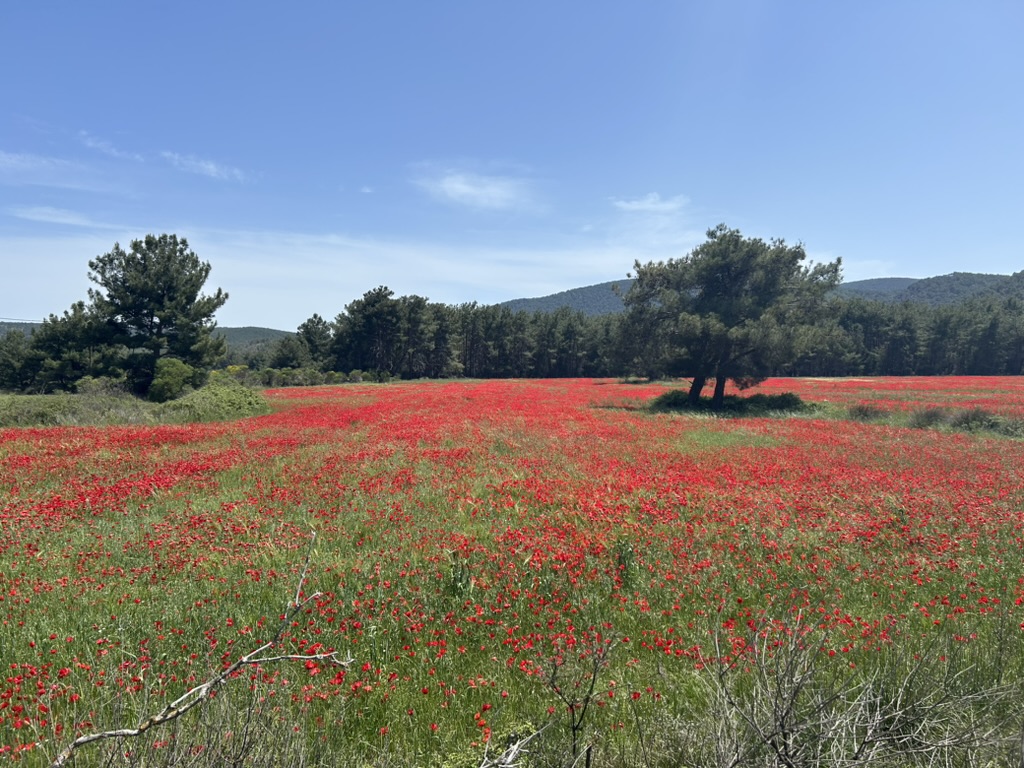
May to June and September to October are the best times to visit Lesbos in my opininion. Temperatures usually sit in the mid-20s, which makes it easy to explore the island, drive around, and enjoy long meals and naps outdoors. I’ve never run into rainy days in those months.
Because the visitor numbers are still quite low, the island also feels more relaxed then.
July and August bring the highest temperatures, usually around 32–36°C during the day and about 24–26°C at night. The heat can feel intense, especially if you plan to hike or spend long days exploring.
Another thing to keep in mind is that restaurants in the more touristy areas, such as Petra and Molyvos, can fill up quickly in peak season, and you’ll usually need a reservation.
From November to March, Lesbos slows down a lot. Temperatures drop to around 10–15°C, and rain becomes more likely. Tourism becomes almost non-existent. Many businesses close for the season, and flights are being reduced to domestic carriers only.
How to get to Lesbos, Greece?
Flights
Lesbos has an international airport—Mytilene International Airport (MJT)—that is a quick 10-minute drive to the center.
The airport was remodeled in 2017 and offers domestic flights via Aegean Airlines (Athens and Thessaloniki) and Sky Express (Athens, Chios, Lemnos, Rhodes, Samos, and Thessaloniki).
A small number of European countries also offer direct flights to Lesbos, including the UK, Netherlands, Belgium, Germany, etc. Most of these operate only seasonally.
There are no direct flights from outside Europe.
📍 Click here to check airline tickets →
Ferries
Lesvos is well-connected to other Greek islands like Lemnos, Chios, Psara, and so on. You can also travel from Piraeus (Athens), Thessaloniki, and Kavala to Lesbos. Here’s what the travel times look like:
- Piraeus (Athens) to Lesbos: 10–12 hours overnight on a conventional ferry
- Thessaloniki to Lesbos: 10–13 hours
- Kavala to Lesbos: 8–10 hours
- Lemnos to Lesbos: 4–6 hours
- Chios to Lesbos: 2–3 hours
- Psara to Lesbos: 2–3 hours (but schedules run less frequently)
If you want to travel to Turkey, there are also daily ferries to Ayvalık a very cute seaside town that’s worth the trip. This journey takes 1–1.5 hours, making it the quickest hop from the island.
Make sure your passport is valid, and consider an eSIM because roaming charges can get expensive once you cross over to Turkey.
📍 Click here to check ferry tickets →
How to get around the island?
Do you need a car?
Yes. If you want to truly explore the island, renting a car or a scooter is your only option (we found ours through Discover Cars). Without your own transportation, it’s very difficult to get around on Lesbos.
That said, you can go without renting a vehicle if you just want a relaxing beach holiday, and maybe explore a few nearby spots.
Just keep in mind that, unlike many other destinations, Lesbos has very few organized tours.
Luckily, renting a car or scooter is easy (and cheap), especially in Mytilene (near the airport) and in popular areas like Petra and Molyvos. However, I’d really recommend booking your vehicle in advance during the summer months because availability is usally limited. You can check car rental prices and options here.
To rent a vehicle in Lesbos, you’ll need either an EU driver’s license or an international driving permit. If your license was issued outside the EU, you’ll have to present an international permit as well.
Driving conditions on Lesbos
Traffic on the island is generally very light, with the only real exception being the capital.
Most roads are in good condition, although you’ll occasionally come across narrower or uneven sections—especially in the mountains or on the smaller roads leading to more remote villages like Skala Sykaminia.
Try parking outside of hilltop towns such as Molyvos or Plomari. Trying to navigate the narrow, winding streets here is setting yourself up for failure.
It’s also a good idea to have GPS or Google Maps, particularly if you plan to explore lesser-known spots such as hidden aqueducts or waterfalls, which aren’t always signposted.
A word about guided tours
Since Lesbos is not a touristy island, you won’t find many guided tours. We will mention the few bookable options that are available online in this guide where relevant.
Some local agencies and small tour operators also run tours, but availability is extremely limited and depends on the season.
Things to do on Lesbos Island
📍 Short on time? Take this full-day private tour around the island with a local.
There are so many things to do and see on Lesbos Island that you’re likely not going to get around to everything during your stay.
Here is a summary of the top highlights. Some of these are well-known, others I’ve never seen mentioned in any guides but are well worth a detour. To make this section easier to navigate, I’ve split it into different categories, such as beaches, hot springs, hiking routes, and so on.
Places marked with an ⭐️ signify that I highly recommend a visit.
Best beaches on Lesbos
Many people visit Lesbos for a beach vacation. However, not every part of the island suits that purpose equally well. If beaches sit at the top of your list, these are the places worth heading to.
Petra ⭐️
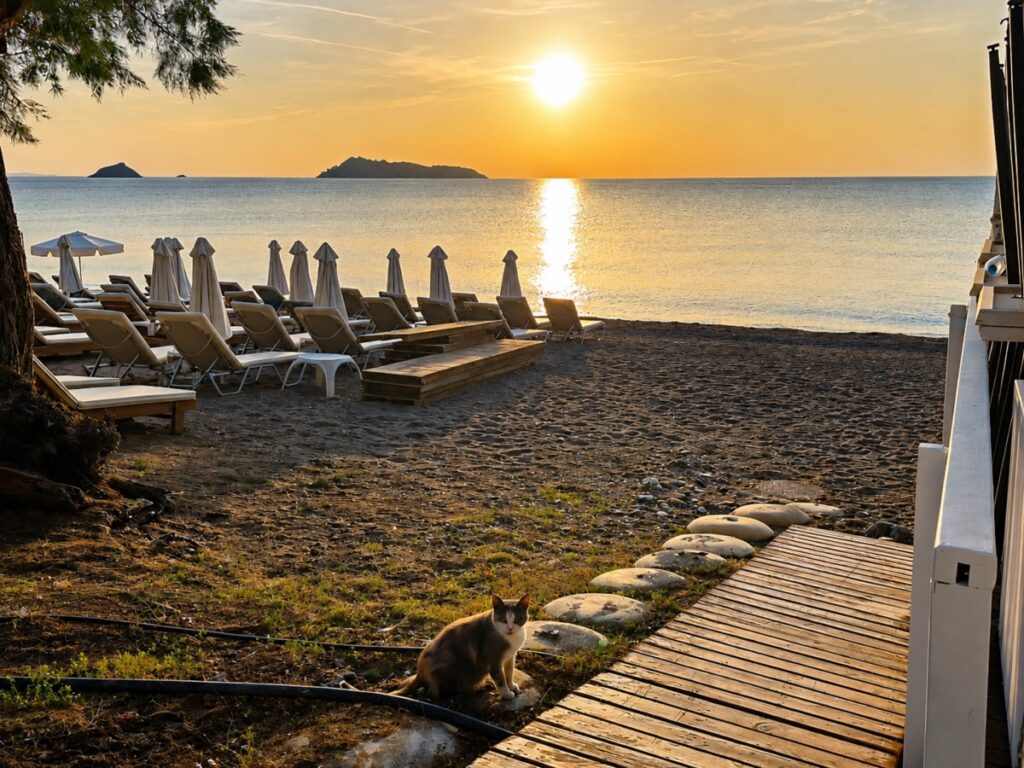
If you want a classic beach vacation with easy access and soft sand, Petra gives you a long sandy stretch right in front of a lively village, so you can swim, grab lunch, and stay close to everything. This is by far your strongest option.
Anaxos
Anaxos sits just west of Petra and feels much quieter. The beach itself is beautiful, but the tavernas and restaurants are only open from mid-May and through peak season. Outside that window, the area feels completely abandoned.
👉👉 Read my full guide to Anaxos to get a better idea of what to expect.
Skala Eressos
For something livelier, Skala Eressos stands out. It stretches out in a wide bay with a long beach, a laid-back promenade, and a steady flow of cafés and bars right by the sea. You can spend the whole day there without moving far, and sunsets here tend to steal the show.
Skala Eressos is also the most LGBTQ+-firendly option on the island.
Plomari ⭐️
Plomari has some of the most underrated beach options on Lesbos.
The main one is Agios Isidoros Beach, which is just a short walk from Plomari. This is the most developed beach in the area, with clear water, smooth pebbles, beach bars, and plenty of space for a full beach day. It’s organized but not overbuilt, and the water gets deep quickly, which keeps it nice for swimming.
Tarti Beach is another option. This is a small cove-style beach that’s especially popular with Greeks on weekends. The setting is really nice, with clear water and a compact, sheltered shoreline that gives it a bit of a natural amphitheater feel.
There are many more beaches on Lesbos, of course, but I wouldn’t go out of my way to visit them.
Vatera
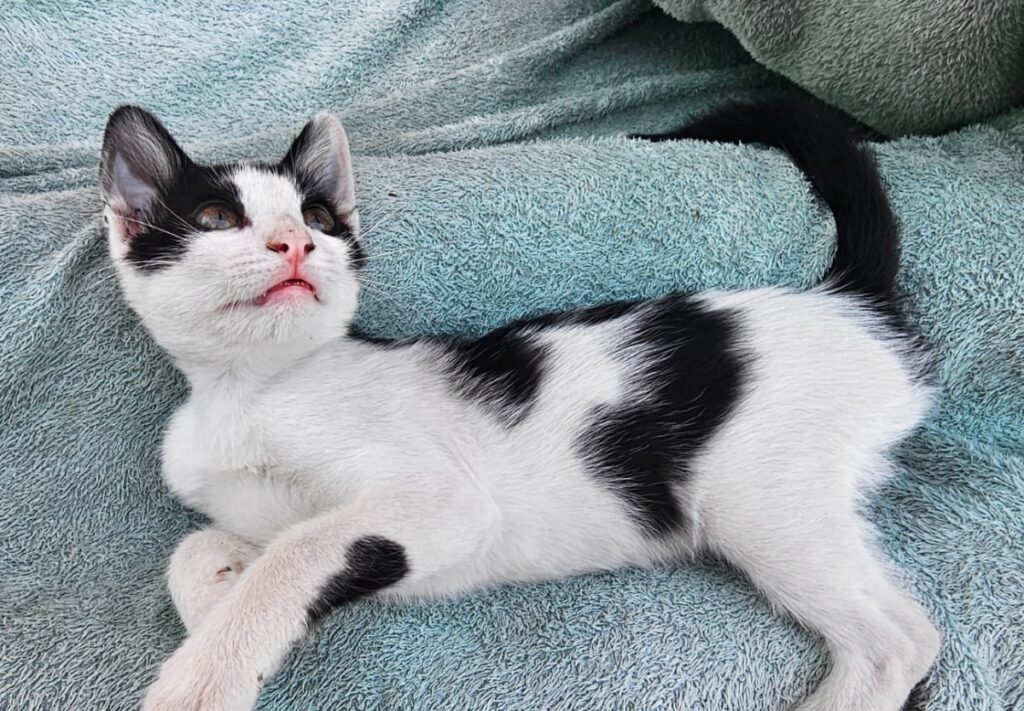
Vatera Beach is also one of the better options on the island. It stretches for several kilometers (miles) with a long, open shoreline, soft pebbles and sand, and very few tourists.
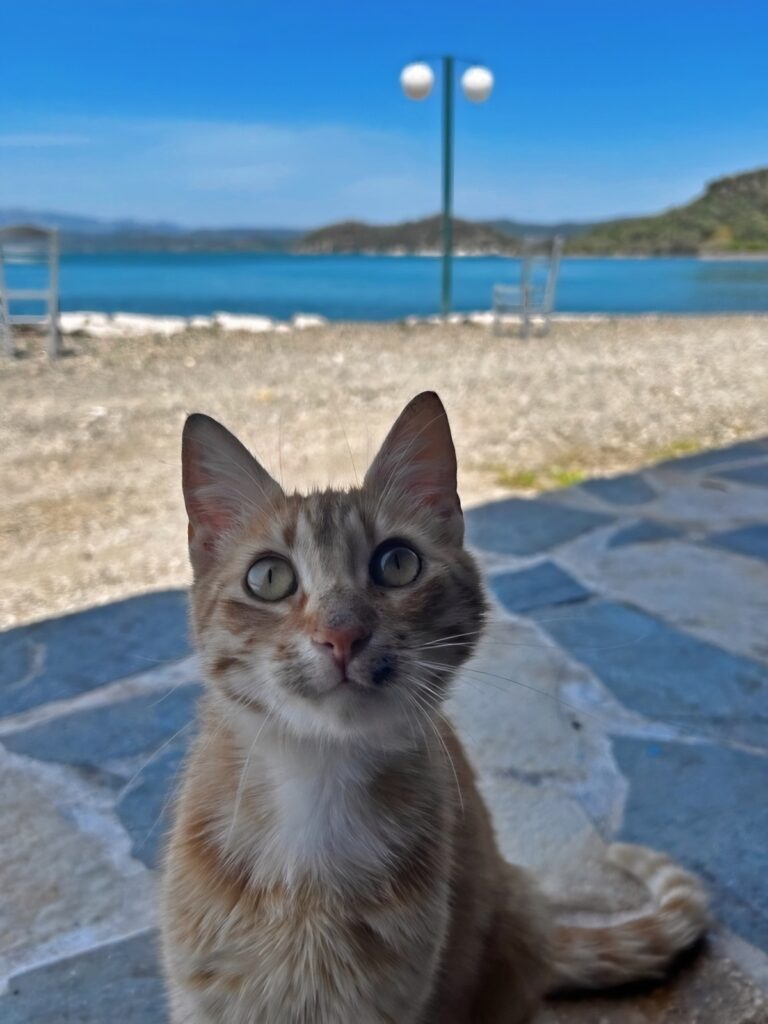
If you’re exploring further along the coast, definitely make a stop at O Neftis / O Neftas on the Vasilika beach stretch for lunch. It’s the only thing around, but you’re eating right on the beach with no tourists in sight, and everything is homemade. And there’s a cat. Easily one of the better dining experiences I had on the island.
The Petrified Forest and The Petrified Forest Museum ⭐️
The Petrified Forest is the island’s most unique attraction. It formed around 20 million years ago after volcanic eruptions buried a subtropical forest under ash. Without oxygen, the trees stopped decaying. Over time, silica-rich fluids replaced the organic material in the wood with minerals, and the trees slowly turned into stone while keeping their original shape.
Many tree trunks still stand upright in their original growth positions, with roots still anchored in the ground. You can also clearly see bark texture, tree rings, and full trunk structures.
The Petrified Forest Museum in Sigri adds context. It explains how the volcanic eruptions unfolded, how the petrification process preserved the wood in such detail, and what kind of climate and species the forest had before it disappeared. It also displays fragile specimens that can’t stay outdoors and shows reconstructions of the island’s environment before the eruption.
Towns and villages
One of my favorite things to do on Lesbos is explore its towns and villages. This is where the island truly shines. Each place has its own personality, and together they show just how much variety Lesbos packs into one island. Here are the ones that shouldn’t be missing from your Lesbos itinerary:
Molyvos (Mythimna) ⭐️
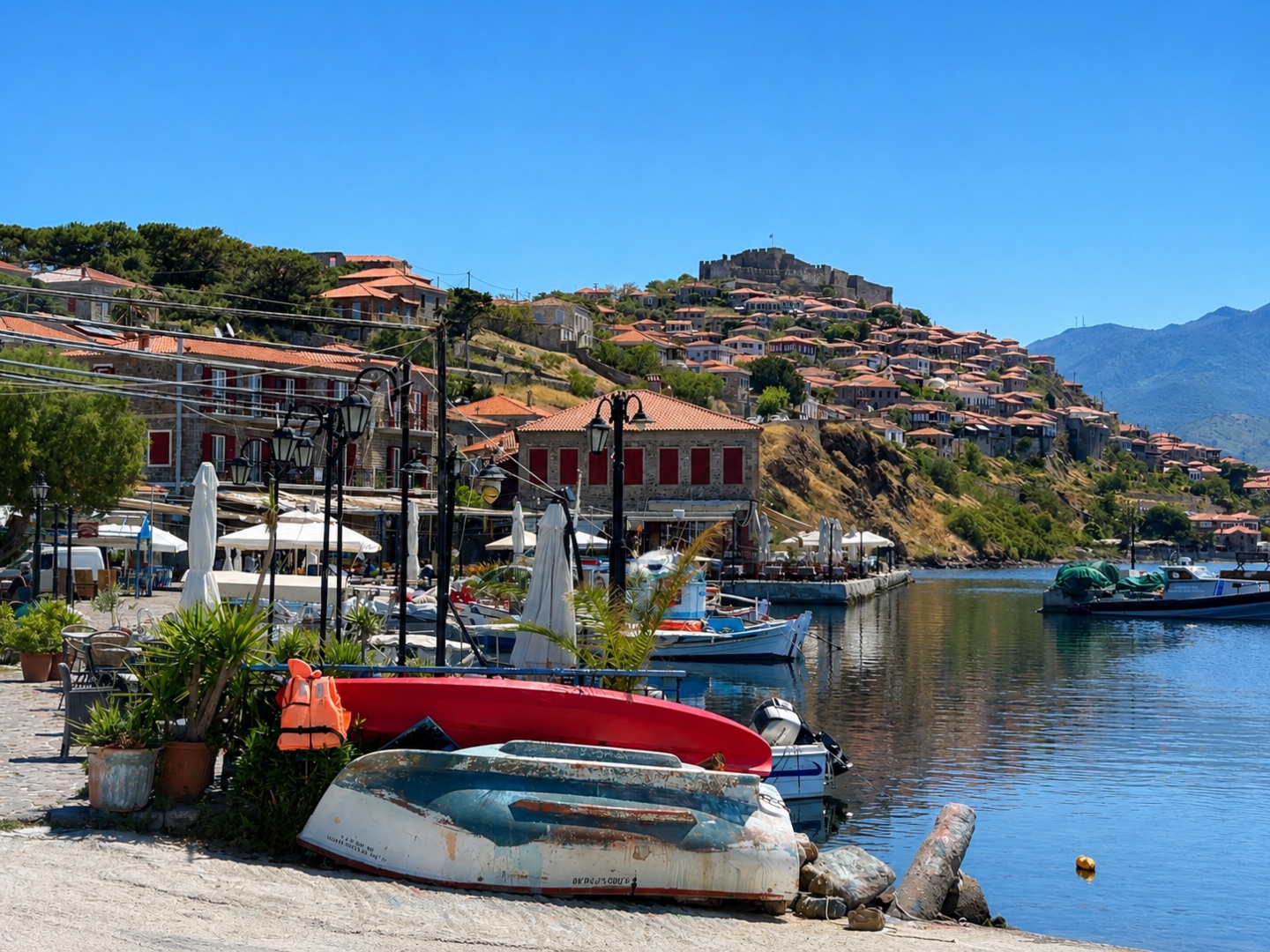
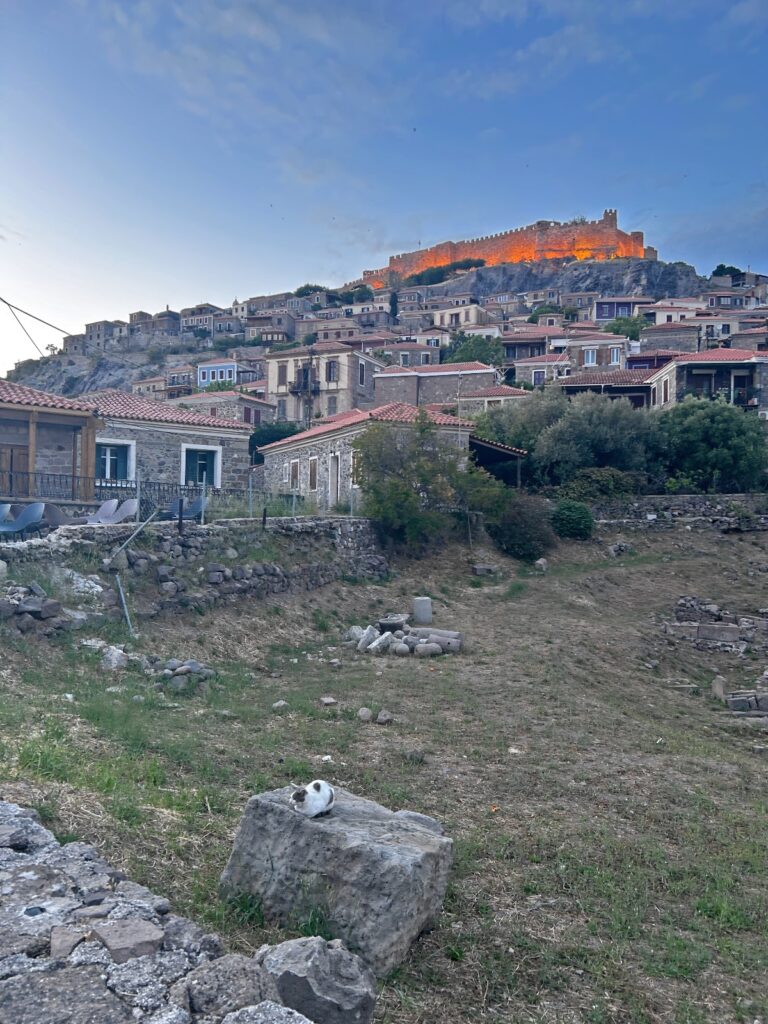
Molyvos is the reason I fell in love with Lesbos. This beautiful village sits on the island’s far northern coast and ranks among the most picturesque places in the Aegean.
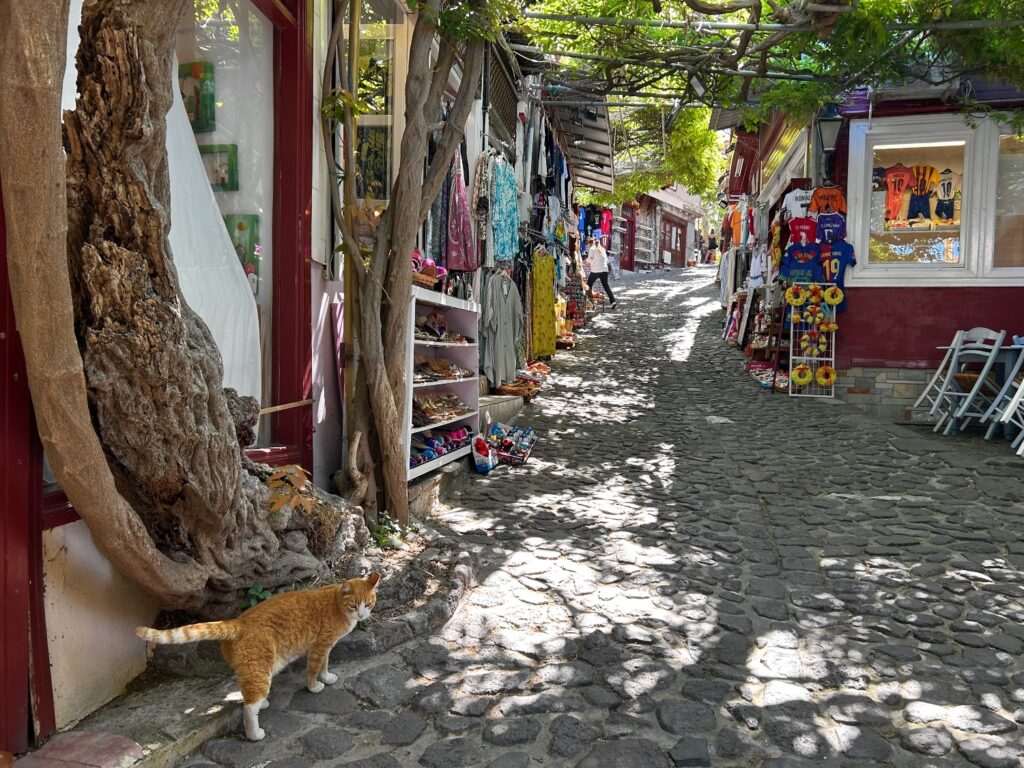
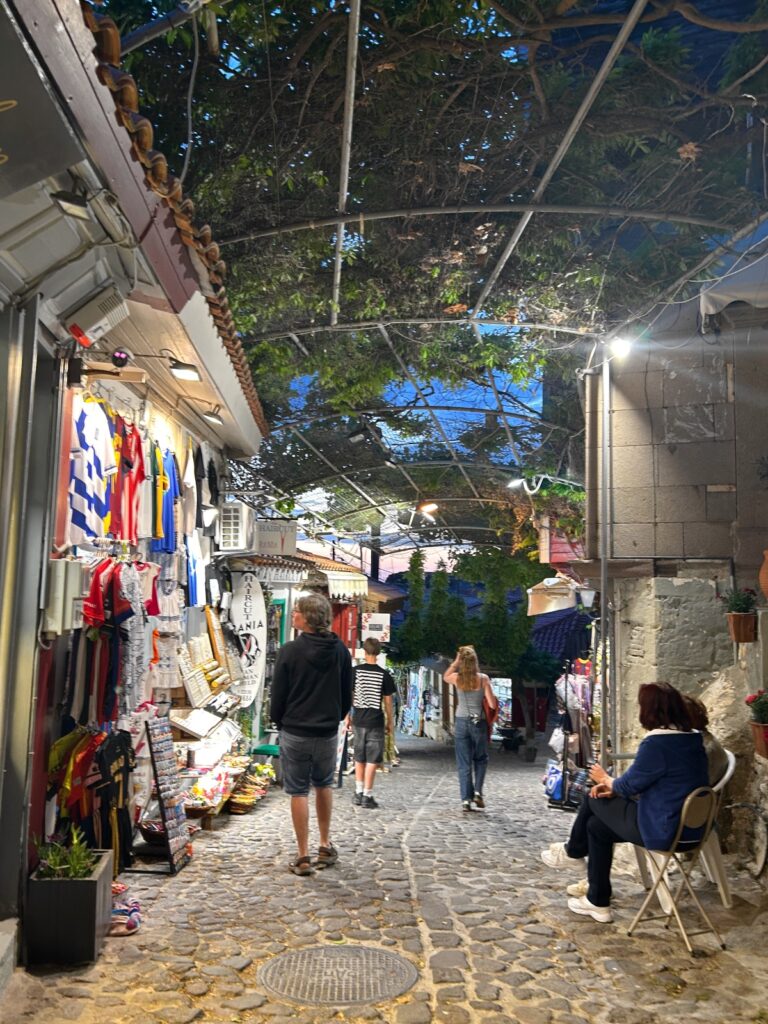
Stone houses climb a steep hillside toward a striking medieval castle that dominates the skyline. You can wander through narrow cobblestone streets, browse small shops and galleries, and enjoy sweeping views across the sea to Turkey.
The castle is the village’s main attraction, but the postcard-perfect harbor, waterfront tavernas, and nearby beaches attract plenty of visitors as well.
If you only visit only one place on Lesbos, make it this one.
👉👉 Check out our ultimate guide to Molyvos for tips on the best hotels, restaurants, things to do, and more.
Plomari ⭐️
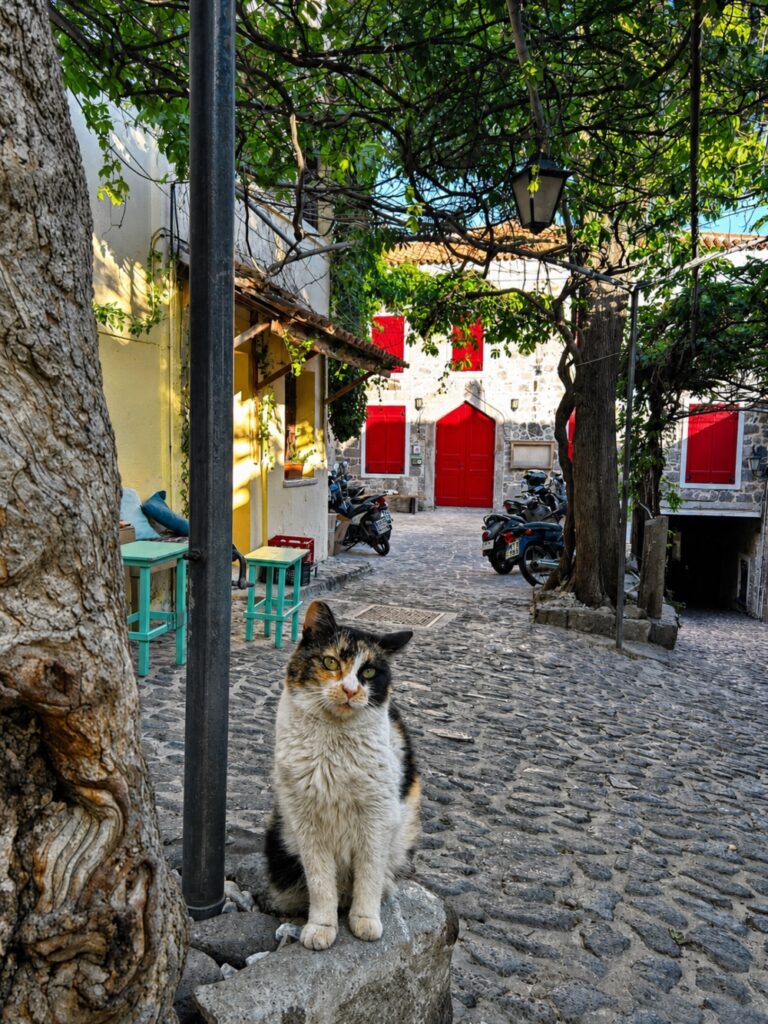
This town on the island’s rugged southern coast has a lot in common with Molyvos. Like its northern counterpart, Plomari climbs a hillside above the sea and has a picturesque waterfront, neoclassical buildings, and strong local character. Unlike Molyvos, however, Plomari feels much quieter and less touristy.
Plomari also serves as the traditional center of ouzo production on Lesbos. Several distilleries offer tours and tastings, and the Ouzo Museum provides a fascinating introduction to the island’s most famous drink.
When you’re done exploring village, you can relax on nearby beaches such as Agios Isidoros or enjoy fresh seafood along the harbor.
Petra ⭐️
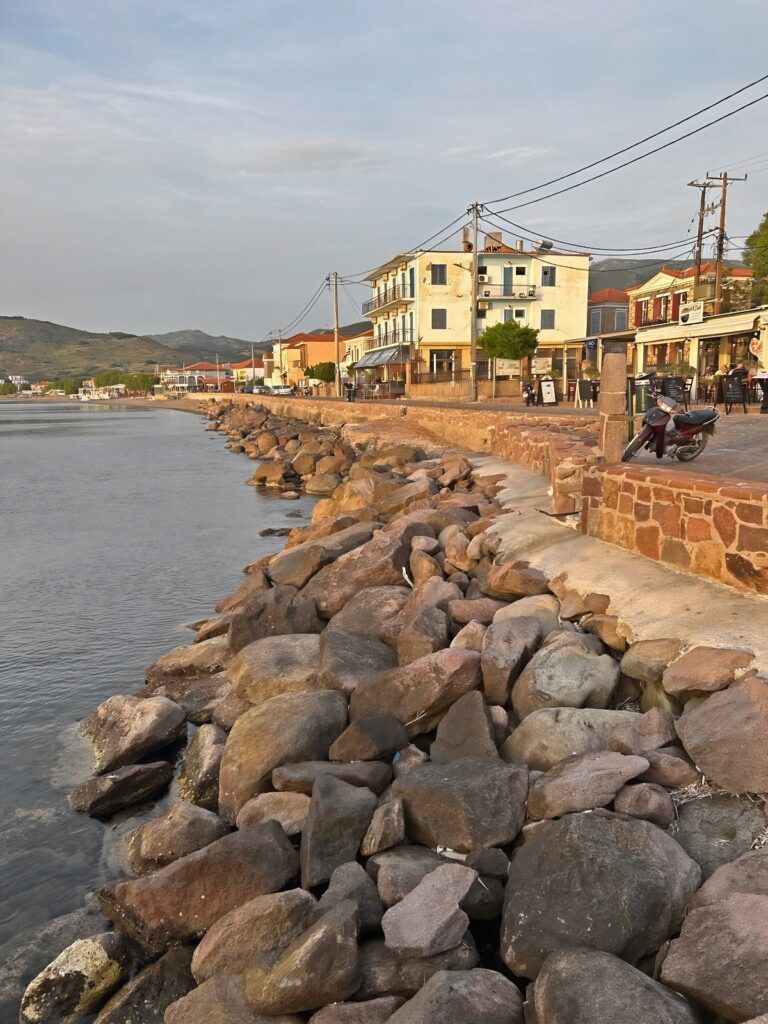
Petra occupies the northwestern coast, just a few miles east of Molyvos. It offers the best tourist infrastructure on the island, which makes it one of the best places to stay on Lesbos.
The name comes from a dramatic rock formation that rises above the center of the village. At the top stands the Church of Panagia Glykofilousa, which you can reach by climbing a long staircase. The effort rewards you with wonderful views of the coastline and surrounding countryside.
Petra also has one of the island’s widest sandy beaches, making it a favorite destination for swimming and family vacations.
Skala Sykaminia ⭐️
This tiny fishing harbor on the northeastern coast gained fame through its connection with the novelist Stratis Myrivilis and later through its role during the refugee crisis, when many volunteers assisted arriving migrants.
Today, it is one of the most charming fishing villages in Greece. Colorful boats line the harbor, seafood tavernas sit right at the water’s edge, and the small chapel of Panagia Gorgona rests on a rocky outcrop beside the bay. You’ll also meet plenty of cats.
👉👉 Read more about Skala Sykaminia here (lots of photos).

Stipsi ⭐️
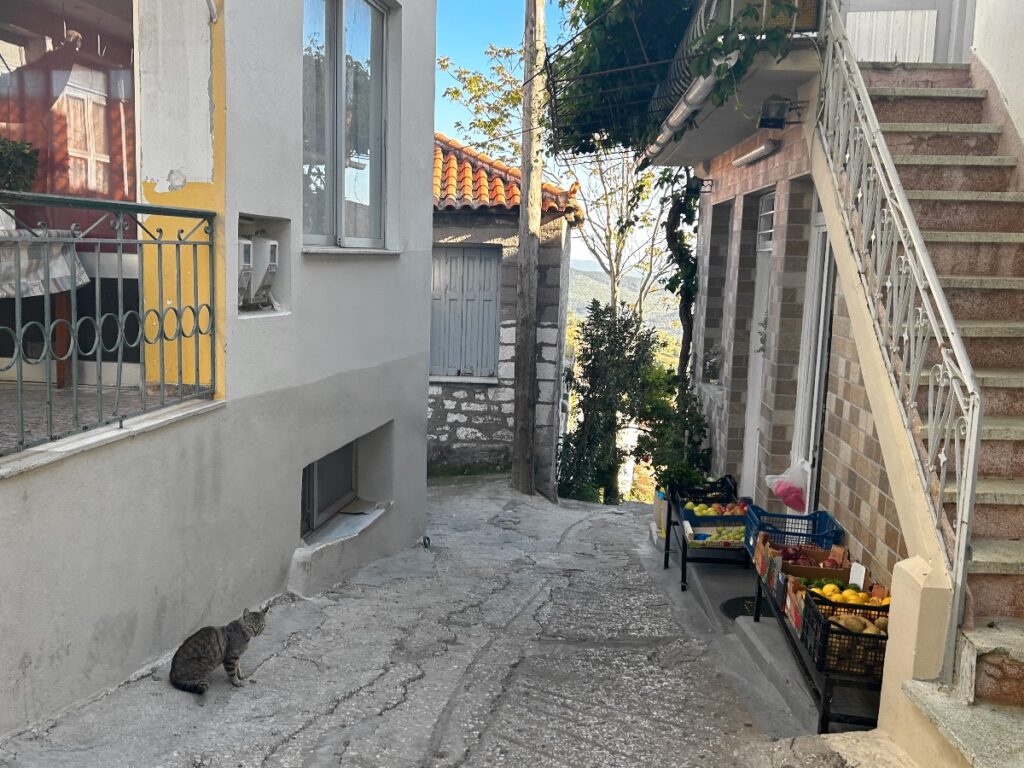
Stipsi is a small mountain village that most tourists completely overlook. It sits far from the coast and away from the island’s main tourist routes. You won’t find souvenir shops, hotels, or more than a single restaurant.
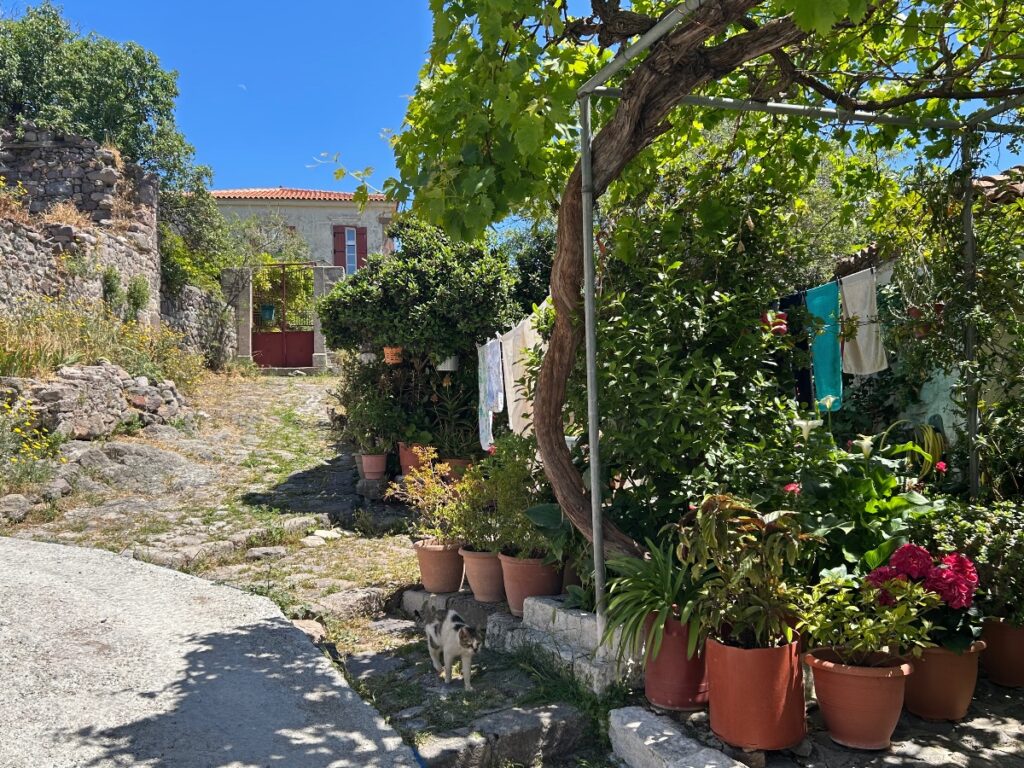
But a visit to Stipsi offers a glimpse of everyday life on Lesbos. Quiet streets wind between traditional homes, olive groves surround the village, and local residents continue long-standing traditions of olive oil and cheese production.
If you’re looking for authenticity rather than attractions, Stipsi is a must. Petra makes the easiest base for a visit.
Sigri
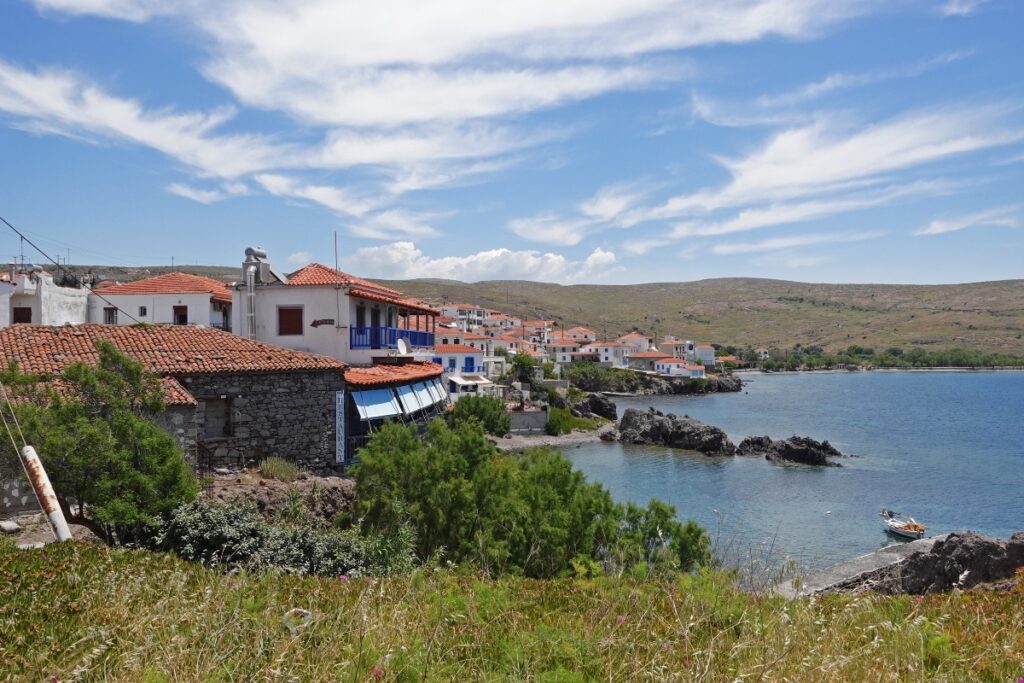
Sigri serves as the gateway to the Petrified Forest, one of the most important natural attractions on the island’s western tip.
The Natural History Museum of the Petrified Forest is also located here, yet it rarely attracts large crowds.
The small harbor, Ottoman-era castle, and sense of isolation give Sigri a distinctive frontier atmosphere. Perfect for lunch after the visiting the Petrified Forest and its museum.
The surrounding landscape looks completely different from the greener northern and eastern parts of Lesbos. Volcanic activity shaped the terrain millions of years ago and left behind wide-open scenery that feels almost otherworldly.
Bird watching
Lesbos is one of the most important birdwatching destinations in Europe because it lies right on a major migration route between Europe, Asia, and Africa. In spring and autumn, huge numbers of birds pass through the island as they move between breeding and wintering grounds.
But Lesbos also has an unusual mix of habitats in a relatively small area: wetlands, salt pans, coastal lagoons, olive groves, dry hills, and low mountains. Different species use different parts of the island, so you get a lot of diversity without traveling far.
The Kalloni Gulf wetlands and the surrounding reedbeds is where you’ll notice the most bird watchers. The salt pans, marshes, and shallow lagoons there attract large concentrations of waders and waterbirds, especially in migration seasons.
Just inland, the olive groves and low hills add species like shrikes, warblers, and hoopoes.
On the western side of the island, around Sigri, birding shifts more toward open, dry landscapes. It’s good for raptors and migrating birds crossing the Aegean, and it pairs well with visits to the petrified forest area.
The Gera Gulf in the southeast is another reliable spot, especially for waterbirds and quieter observation away from busier areas.

Thermal baths
Lesbos has an unusually large number of natural thermal springs for a single European island. All of them draw their water from the same volcanic system, but each one offers a different setting, mineral composition, temperature, and atmosphere. Some feel like traditional bathhouses, while others sit right beside the sea.
Here are the main ones:
Polichnitos Hot Springs (Hippocrates Thermal Springs) ⭐️
This is the most extreme one in terms of temperature. It’s among the hottest thermal waters in Europe. Water temperatures at the source reach roughly 60–90°C.
Polichnitos has the most developed infrastructure of all the thermal baths on Lesbos and has several pools and facilities.
Eftalou Hot Springs
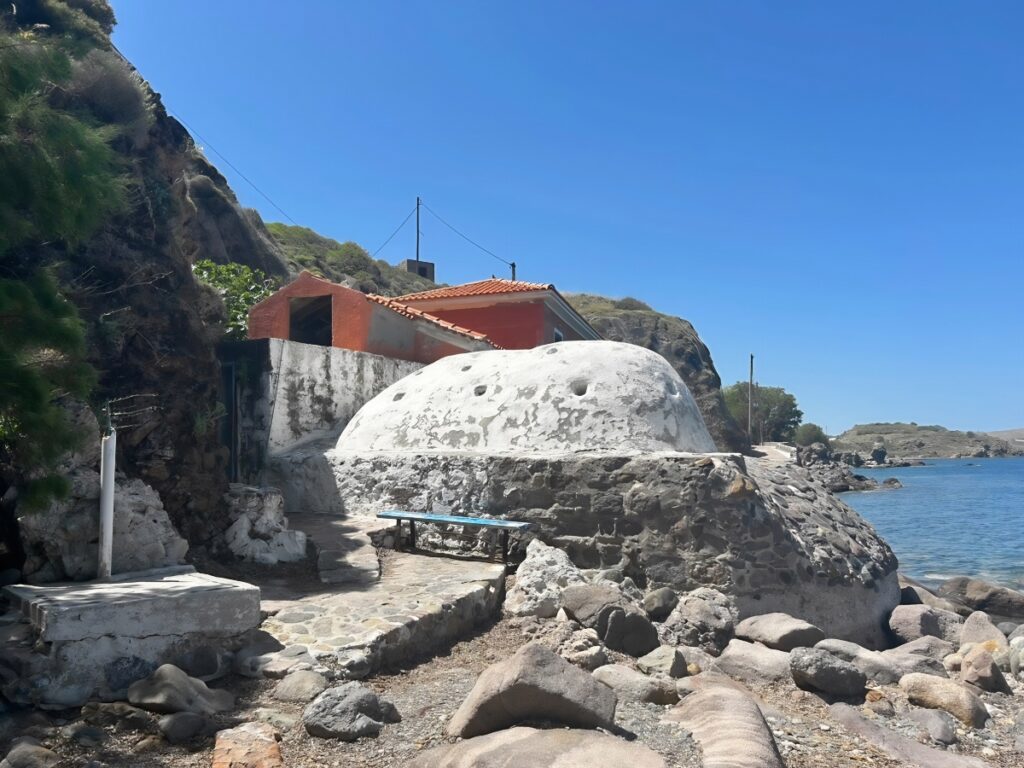
This is the most atmospheric one: a seaside bath inside a small domed building right next to the sea.
The water temperature is around 43–46°C, and the springs mix partially with seawater. You alternate between the hot pool and the cold Aegean Sea outside.
You can visit the springs free of charge, but the site no longer receives regular maintenance. As a result, cleanliness has declined considerably. That’s a shame, because Eftalou used to be one of the island’s most special places.
The nearby I Eftalou Tavern (which used to serve some of the best food on Lesbos) has also closed its doors. Today, the area is much quieter and attracts very few tourists.
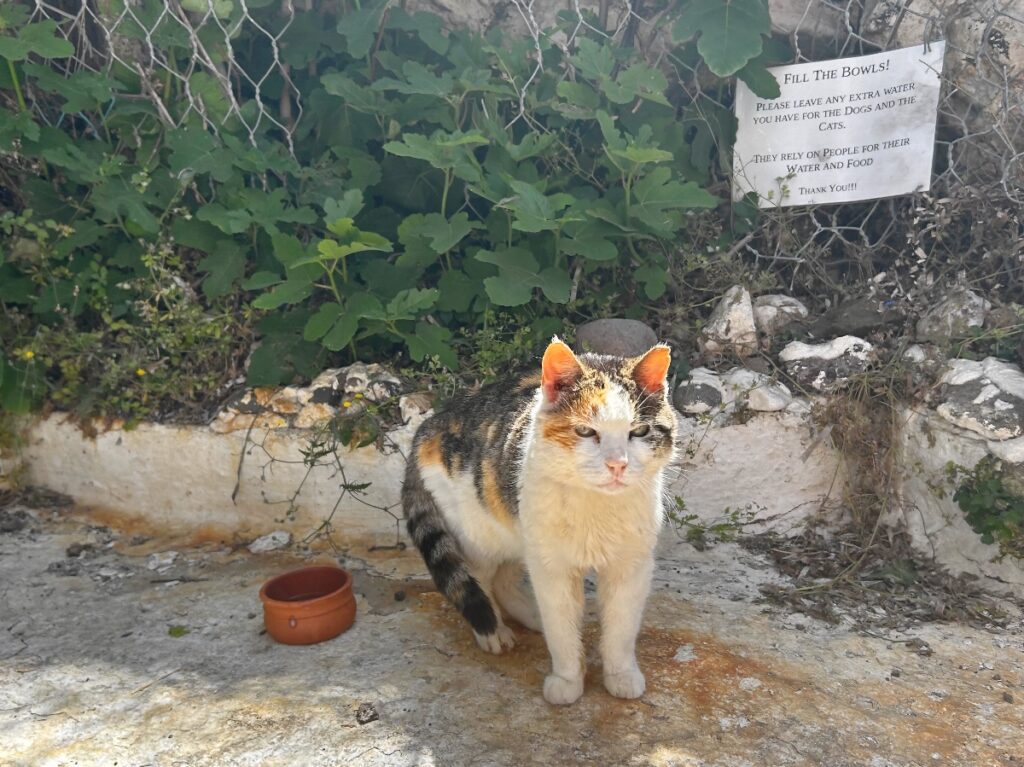
A large group of stray cats still lives around the entrance of the Eftalou hot springs, though. Since nobody manages the site anymore, many of them struggle to find enough food and fresh water. If you happen to visit, bringing some drinking water and a little kibble can make a huge difference for them.
Lisvori Hot Springs (Kalloni Gulf area)
These springs sit more inland, surrounded by olive groves and green countryside. The water reaches about 69°C, making it one of the hottest thermal sources on the island.
The facilities offer more structure than Eftalou but attract fewer visitors than Polichnitos. People have used parts of the site since Ottoman times.
Therma Spa Mytilene (Gera Gulf area)
This is the island’s most modern thermal-bathing experience, with indoor pools, hammam-style spaces, and contemporary facilities creating a comfortable wellness environment.
The water temperatures stay lower than those at Polichnitos, and the focus leans more toward relaxation than traditional thermal therapy.
Kryfti Hot Springs (Plomari area)
Kryfti is one of the island’s most natural geothermal sites. Hot water emerges along a rocky stretch of coastline and mixes directly with the sea.
You won’t find bathhouses or extensive facilities here, and access can be limited depending on conditions. It’s more of a wild geothermal spotthan a bathhouse.
Argenos Hot Springs
This is a small and little-known coastal spring where hot water flows into the surrounding rocks and sea. The site has no developed facilities and attracts very few visitors.
Most people who come here do so out of curiosity or a desire to explore one of the island’s lesser-known geothermal spots.
Ouzo
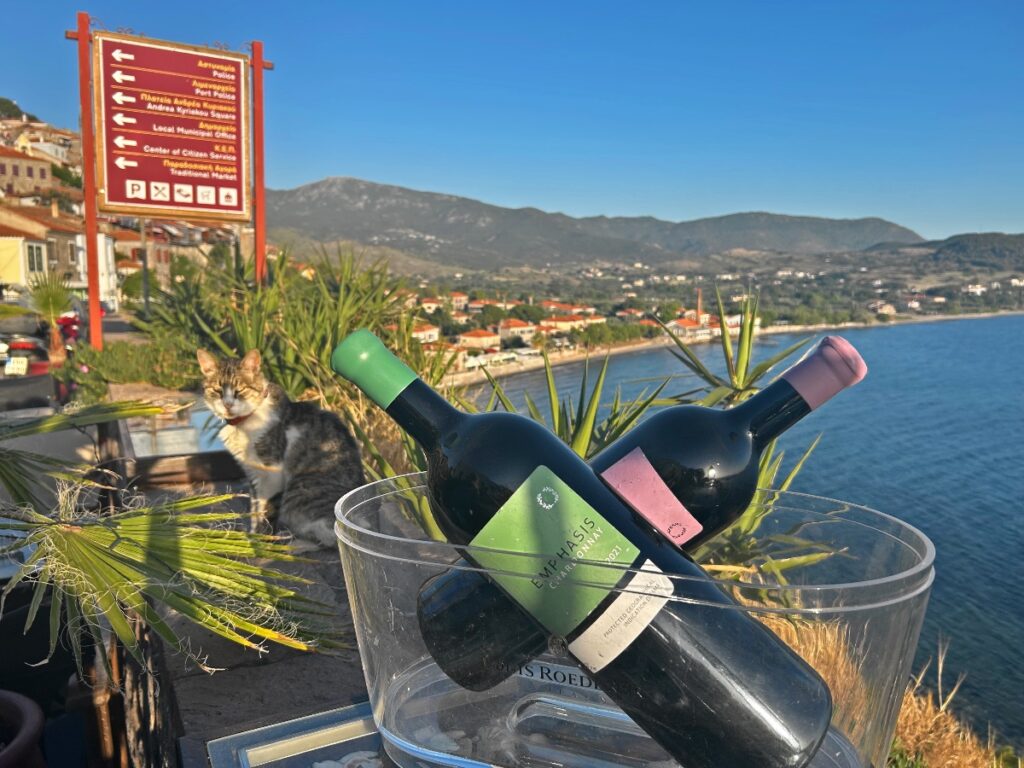
Did you know that Lesbos is basically the heartland of Greek ouzo, especially around Plomari in the south? There are two big ouzo producers on the island, and a few smaller ones. The main ones are:
Ouzo of Plomari Isidoros Arvanitis
This is the most well-known and largest distillery on Lesbos. It started in 1894 and runs as a modern, export-ready production site but still uses traditional copper pot distillation.
It has a museum-style setup that walks you through the production process step by step, so it works well if you want a straightforward explanation of how ouzo gets made, along with a guided tasting.
Barbayannis Ouzo Distillery
Barbayannis in Plomari gives you a more traditional experience. The family has run it since 1860, and the distillery keeps a strong historical character throughout.
You walk past older equipment, archival material, and production spaces that still feel close to hands-on craft rather than industrial output.
The brand produces several different ouzo lines, each with its own profile, so you can compare styles side by side.
Smaller local distilleries on Lesbos
Outside the two main producers, Lesbos has several smaller ouzo makers spread across the island. These operations run on a local scale and don’t always offer formal tours.
Hiking
Lesbos has one of the most developed hiking networks in the Aegean, with marked trails linking mountains, villages, wetlands, and the volcanic west of the island.
The backbone is a network of around 18 marked trails spread across the island, designed to connect key landscapes like Agiasos, the Gulf of Kalloni, Gera Bay, and the Petrified Forest region. These vary from short village loops to longer cross-regional walks.
Here’s a short overview:
Agiasos mountain trails (central Lesbos)
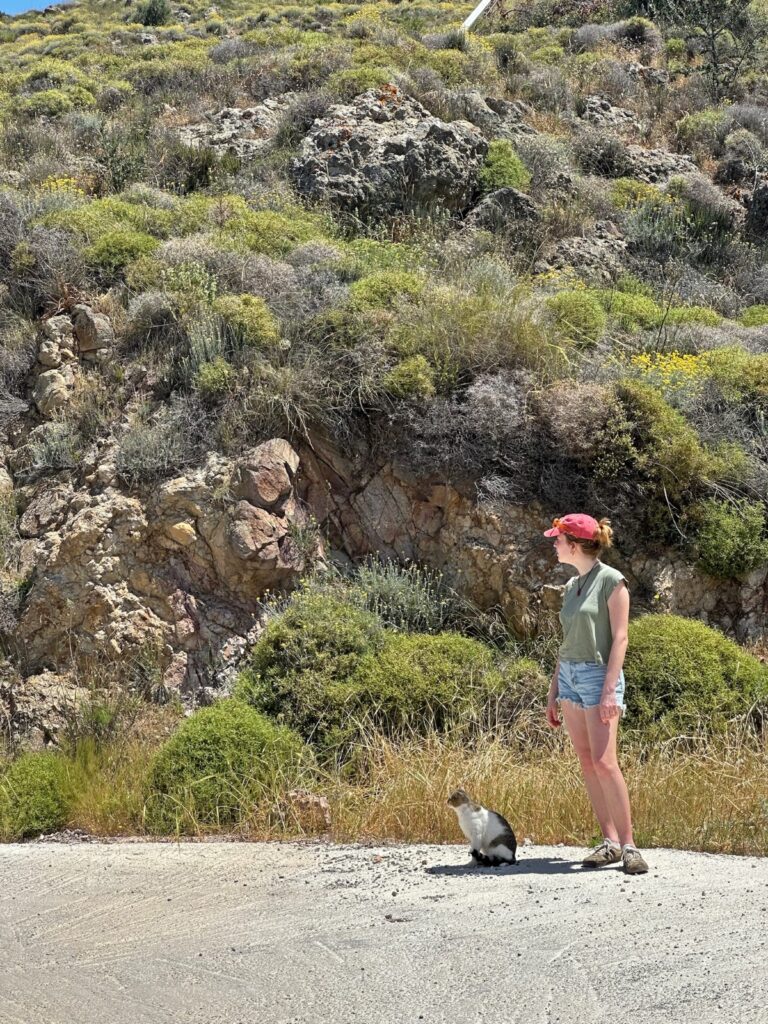
This is the main hiking base in the mountains. Trails start in and around the village of Agiasos and climb into the slopes of Mount Olympus. The routes pass through chestnut and oak forests and stay green for most of the year, especially in spring and autumn.
Here, you’ll find easy village loops, steady uphill forest routes, and old paths that link the Monastery of Taxiarchis and nearby settlements such as Platanos and Megalochori.
Kalloni Gulf wetlands routes
The Kalloni area focuses on flat, lowland walking. Trails move through salt pans, reedbeds, farmland, and olive groves, with short links between villages and coastal viewpoints.
Birdlife drives most walks here, especially during migration periods. The terrain stays easy, and most routes work well for relaxed, short-distance hiking.
Western Lesbos volcanic routes (Sigri–Eressos)
The west side of the island feels very different. The landscape opens up, dries out, and reflects the island’s volcanic past.
Routes between Sigri and Eressos run along the coast and across open ridges with wide views of the Aegean. Some paths also cut through areas linked to the Petrified Forest. This terrain is more exposed than in the rest of Lesbos, with fewer trees and more wind.
Petrified Forest / lava paths
The Petrified Forest area in the western geopark focuses on shorter walks with a strong geological focus. Trails loop through fossil sites, coastal volcanic terrain, and areas with visible petrified tree trunks.
These routes don’t cover long distances. They focus on close-up views of the geological features that define the area.
Coastal and village-to-village routes
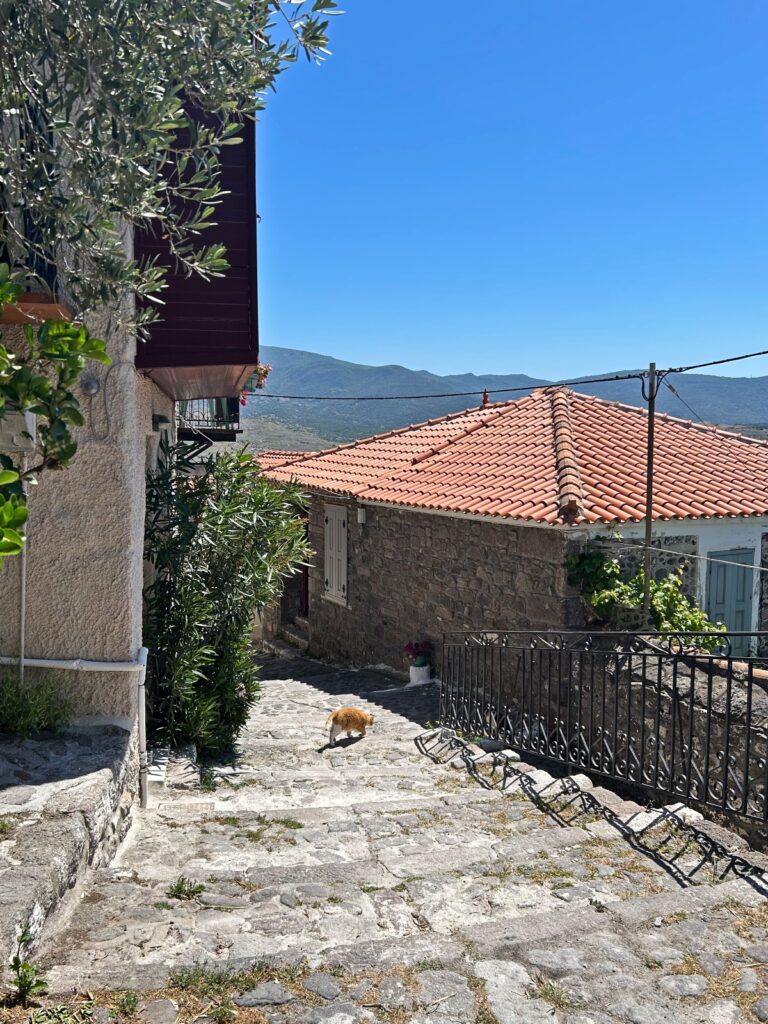
Across the island, trails connect villages, coastlines, and inland paths. Around Petra, routes climb into nearby hills and toward villages such as Lafiona and Stipsi.
Around Molyvos, trails follow coastal ridges with sea views.
Gera Bay, on the other hand, offers links between olive-growing villages, and inland areas include short monastery-to-village paths.
Roman aqueducts
Roman Aqueduct of Moria ⭐️
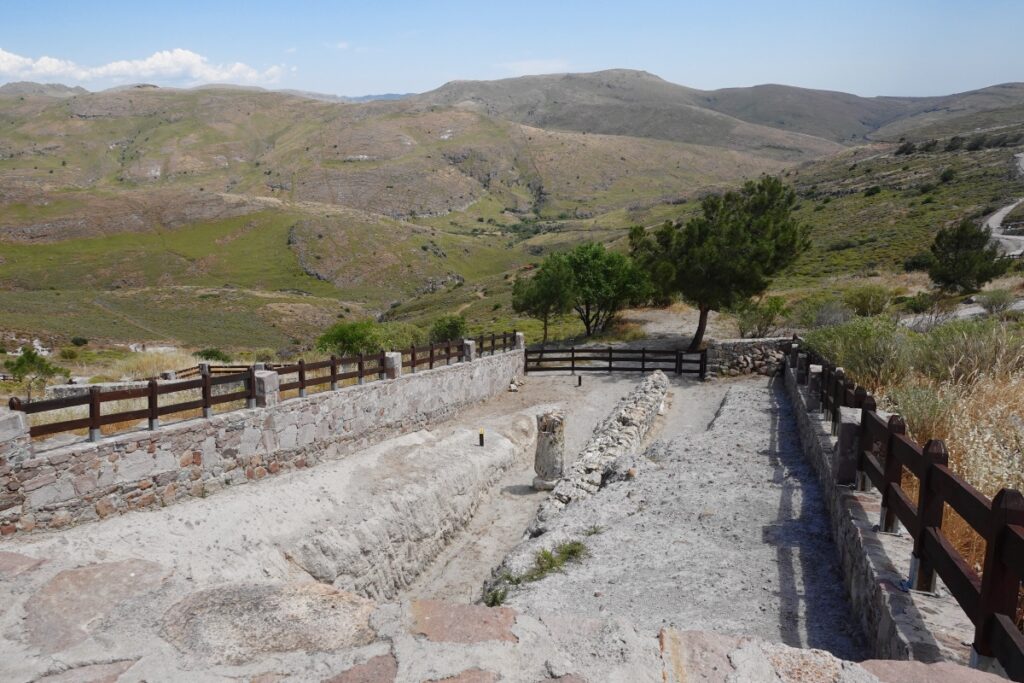
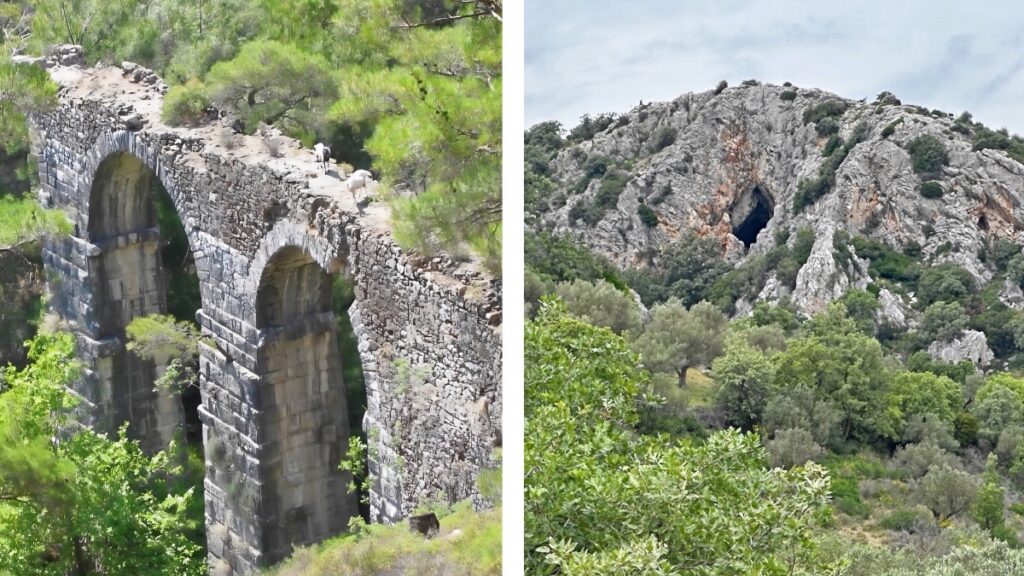
Romans built the aqueduct of Moria in the late 2nd or early 3rd century AD to carry water from the springs of Mount Olympus to Mytilene, which is about 26 kilometers away.
The structure includes a well-preserved long marble bridge with 17 arches that once formed part of a much larger water system.
👉👉 Read my full article on the Roman Aqueduct of Moria for more photos and historical detail.

Aqueduct in the forest (between Kalloni and Mytilene) ⭐️
This second aqueduct sits deep in the woods, with trees surrounding the ruins on all sides.
A small road sign marks the way the site, but most people drive past without noticing it. Very few people know it even exists, but it’s worth a little detour.
Here are the GPS coordinates: 39.156339,26.385651.
Waterfalls
Man’ Katsa Waterfall (near Mantamados) ⭐️
Man’ Katsa sits about 3 km south of Mantamados in the northeast of Lesbos. You reach it by driving the Mytilene–Mantamados road, then turning off onto a dirt track near Pedi and following a short signed walking path. The final walk takes around 10–15 minutes.
Volcanic rock surrounds the site, and tectonic fractures shaped the waterfall over millions of years. The water flow changes a lot by season, and in dry periods the fall can reduce to a trickle or even stop completely.
A small path leads you through olive groves and rocky ground before you reach the gorge. The area is very quiet and sees few visitors.
Nearby, you find the village of Mantamados with its well-known monastery, plus small local tavernas that serve as the main stop before or after the walk.
Pessa Waterfall (near Polichnitos / Achladeri) ⭐️
You can the reach the Pessa Waterfall in southern Lesbos by driving the road between Agiasos and Polichnitos, then turning onto a short dirt track near the signposted access point.
The waterfall drops around 15 meters and flows into a small pool fed by water from the Agiasos lake system. The surrounding area includes farmland, low hills, and olive groves, which shape the wider landscape.
Water flow depends heavily on rainfall, so the site looks much stronger in winter and early spring. In summer, the flow often weakens significantly.
Vathylimno Waterfall (between Pterounda and Chidira)
You can reach this small waterfall in the western part of the island through a rough track. The flow depends heavily on the season, so it can range from a proper cascade after rain to a very light trickle in dry months.
This one will be hard to find, so here are the GPS coordinates in case you want to visit: 39,2063406, 26, 0344987.
The Monastery of Ypsilou ⭐️
Lesbos has well over 100 monasteries and monastic churches, spread across mountains, villages, and coastal areas. One monastery that stands out above all others is the Monastery of Ypsilou (Moni Ypsilou), which sits at about 800 meters on the highest peak of western Lesbos. That means you get unobstructed views across the Petrified Forest region, and the Aegean toward Turkey on clear days.
You reach it by driving up from Sigri or Eressos, then following a winding mountain road that climbs into a dry, volcanic landscape with almost no settlements along the way.

Turtle Pond
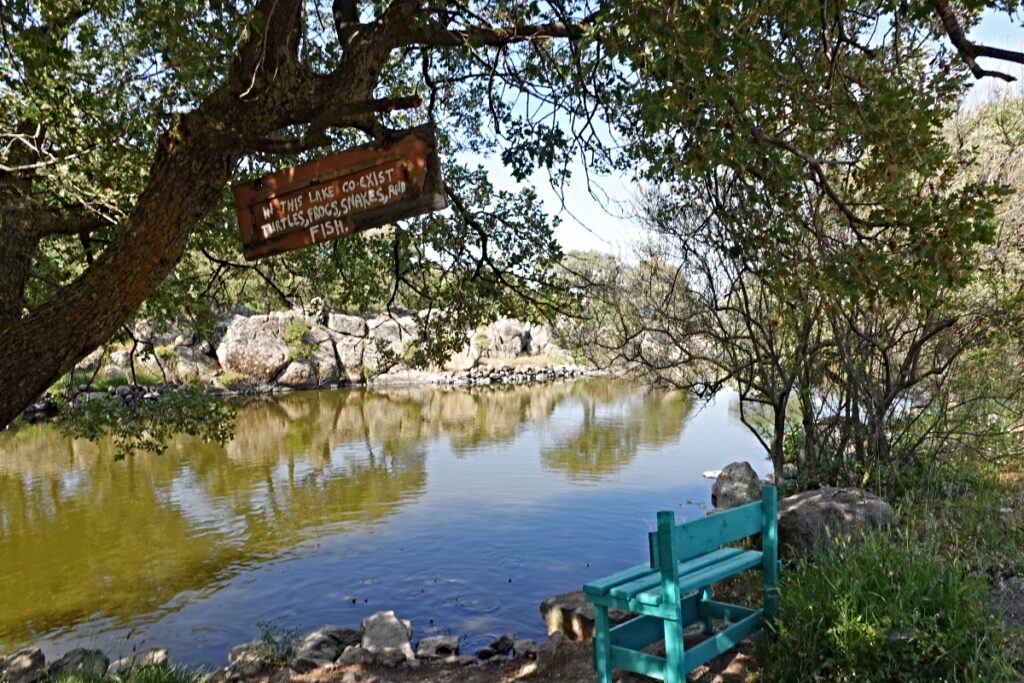
Turtle Pond sits in the interior of Lesbos near the road between Skalochori and Skoutaros, not far from the Kalloni Bay area.
This freshwater pond likely formed from natural drainage and irrigation channels that slowly turned into a semi-permanent wetland habitat for Balkan pond turtles.
You reach it by driving inland from the Kalloni plains and following small rural roads that cut through farmland and low hills. The exact spot doesn’t show up as a formal attraction on most maps, so you need to look for a small roadside pull-off and a shallow water area surrounded by reeds.
You can combine it with stops at the Kalloni saltpans, Sigri, the Petrified Forest, and/or the monastery of Ypsilou.
Olive Press Museum in Agia Paraskevi
Olive oil is incredibly important on Lesbos. The island has millions of olive trees and produces some of Greece’s best olive oil, but most production still happens on a small scale, and many groves belong to local families rather than businesses that actively welcome tourists.
However, if you want to learn about olive oil, your best option is the Olive Press Museum in Agia Paraskevi. It occupies a beautifully restored olive mill and explains how people produced olive oil on the island before modern machinery arrived. You’ll see the old presses, steam-powered equipment, and the entire production process. For most visitors, it provides far more context than walking through a grove.
That said, one of the nicest ways to experience Lesbos’ olive culture is simply to drive through the island. Vast olive groves cover much of the landscape between Kalloni, Agia Paraskevi, Gera, and Plomari. In some areas, the trees stretch for miles without interruption. Many of them are centuries old, and a few are believed to be much older.
Horseback riding
Because the terrain is often varied and open, Lesbos works really well for horseback riding. Several small guided rides operate on the island, led by local stables that focus on short, accessible routes.
Most rides take you through a mix of dirt paths, olive groves, and low mountain slopes.
One tour takes place in the hills of Petri, an inland mountain village above the north coast, where riders follow rural trails through farmland and open countryside with wide views over the surrounding valleys. (Check prices and availability.)
Another tour runs near a water reservoir inland, where the route passes quiet tracks around wetlands and farmland with birdlife and seasonal water levels shaping the landscape. (Check prices and availability.)
Mytilene (capital of Lesbos) and its fortress
I put Mytilene last because of the safety issues and heavy traffic. That said, the city still deserves a visit because it holds most of the island’s history, museums, and everyday life in one place.
The city centers around a large harbor. The streets move between neoclassical buildings, markets, and waterfront cafés, then shift quickly into denser urban neighborhoods as you move inland. It’s more a living hub than a postcard destination.
Above the city, the Castle of Mytilene rises on a rocky hill between the northern and southern harbors. The Byzantines likely built its earliest foundations in the 6th century AD, and the Genoese and Ottomans later expanded and modified it.
The fortress ranks among the largest castles in the Aegean. Its walls stretch across a wide area, with towers, underground cisterns, and layered fortifications that reflect its long military history. From the upper sections, you get clear views over the harbor, the city, and the coast of Asia Minor.
Lesbos Greece map
Is Lesbos Greece worth visiting?
Absolutely. Of all the Greek islands I’ve visited, Lesbos is the one I’ve returned to the most and the place where I feel most at home. If you stay in areas such as Molyvos, Petra, or Plomari, you’ll quickly understand why so many visitors keep coming back.
It’s a great choice if you enjoy slow travel, hiking, birdwatching, traditional villages, and excellent food.
On the other hand, if you’re looking for beach clubs, nightlife, and a party atmosphere, you’ll probably enjoy other Greek islands, such as Mykonos, more.
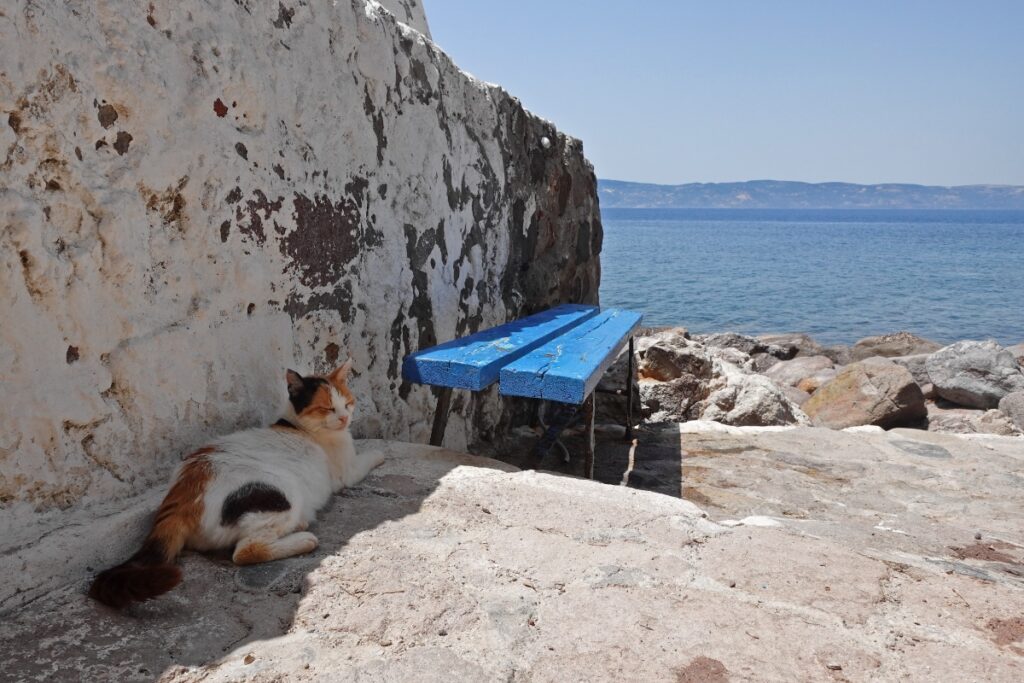
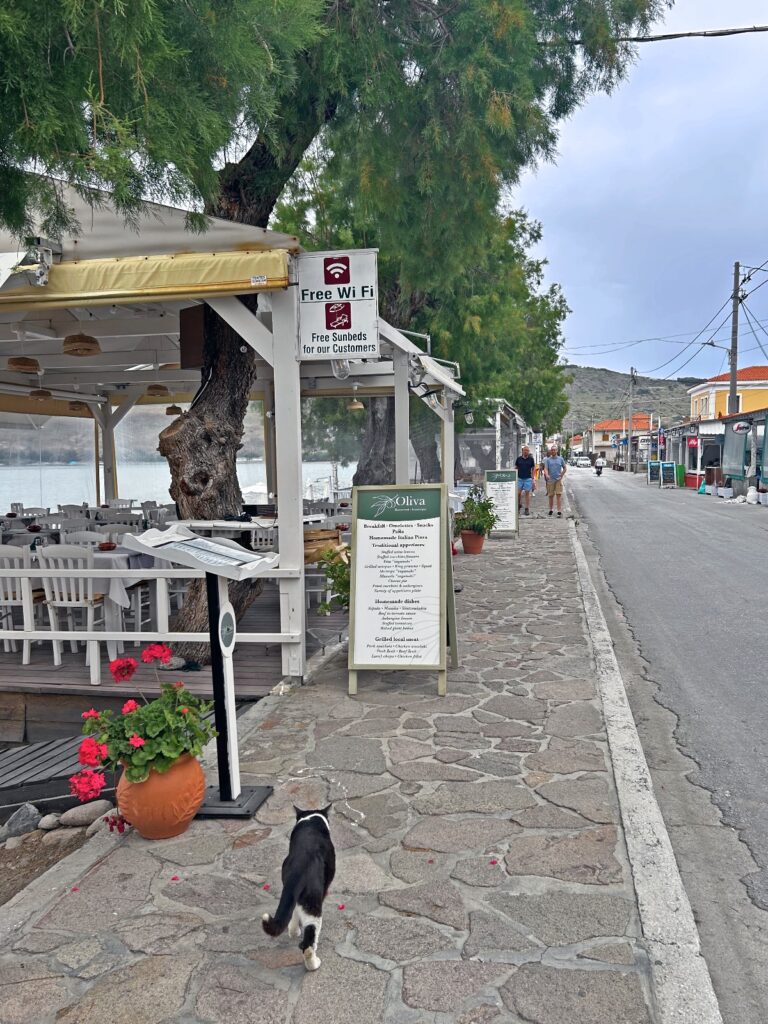
By the way, did you know that Lesbos is the Greek island with the most cats? You’ll find them everywhere: in fishing harbors, village squares, monastery courtyards, and restaurant terraces.
If that sounds like your kind of destination, Lesbos definitely deserves a spot on your travel list.
Planning a trip to Lesbos? Or have you already visited? Feel free to leave a comment with your questions, tips, and recommendations.
STEPHAN JANKOVIC has pledged his allegiance to our feline sovereigns ever since he watched The Cat From Outer Space (1978) as a child and realized who truly runs the universe. Now, he is the proud parent of three rescue cats (and one human) and dedicates many hours a month to helping neighborhood strays. He has traveled to Lesbos over 20 times and still considers the island his favorite destination.
VANESSA MORGAN has a long-standing love affair with Lesbos, an island she returns to again and again for its landscapes, food, and cat population. Her passion for feline photography led her to create Traveling Cats, where she documents cats she encounters on her journeys. She is also the author of several books, including the cat-themed Avalon, Clowders, and Meow! Cats in Horror, Sci-Fi, and Fantasy Movies. Three of her stories have been adapted for the screen.
Pin this guide to Lesbos, Greece!





3 responses
Lesbos looks like a most amazing place. Maybe someday I can get there.
Such an useful article! Thank you for all the detailed information.
Wow, this has me really wanting to visit Lesbos! I had no idea it was such a great blend of nature and cultural sites. The Petrified Forest and birding sound right up my alley!