Last Updated on 31 October 2025 by Vanessa
I finally crossed a visit to Pompeii off my bucket list, and it was even better than I imagined. Ever since I was a child, I’ve been fascinated by its history—reading every book, watching every movie, and dreaming of walking those ancient streets.
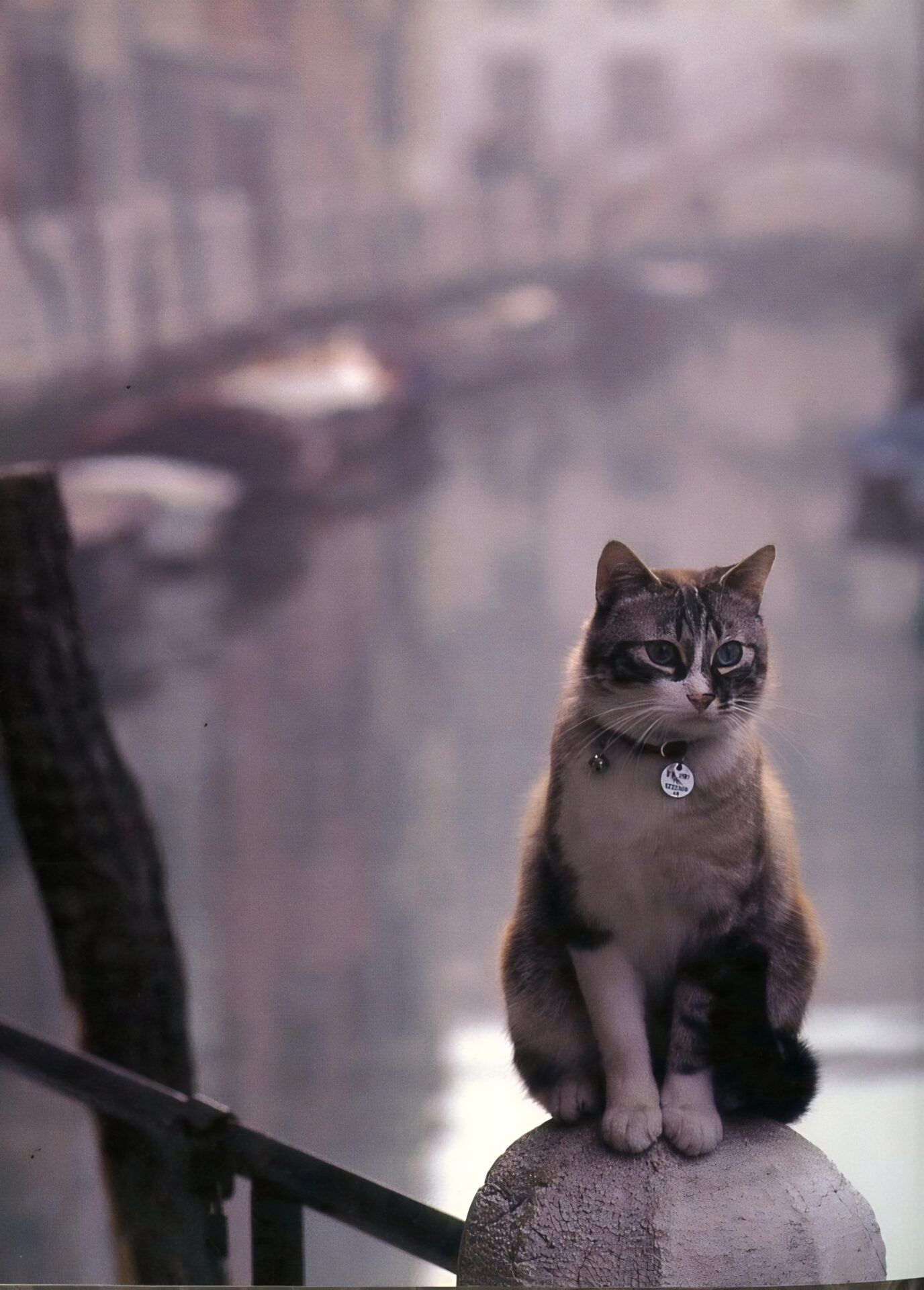
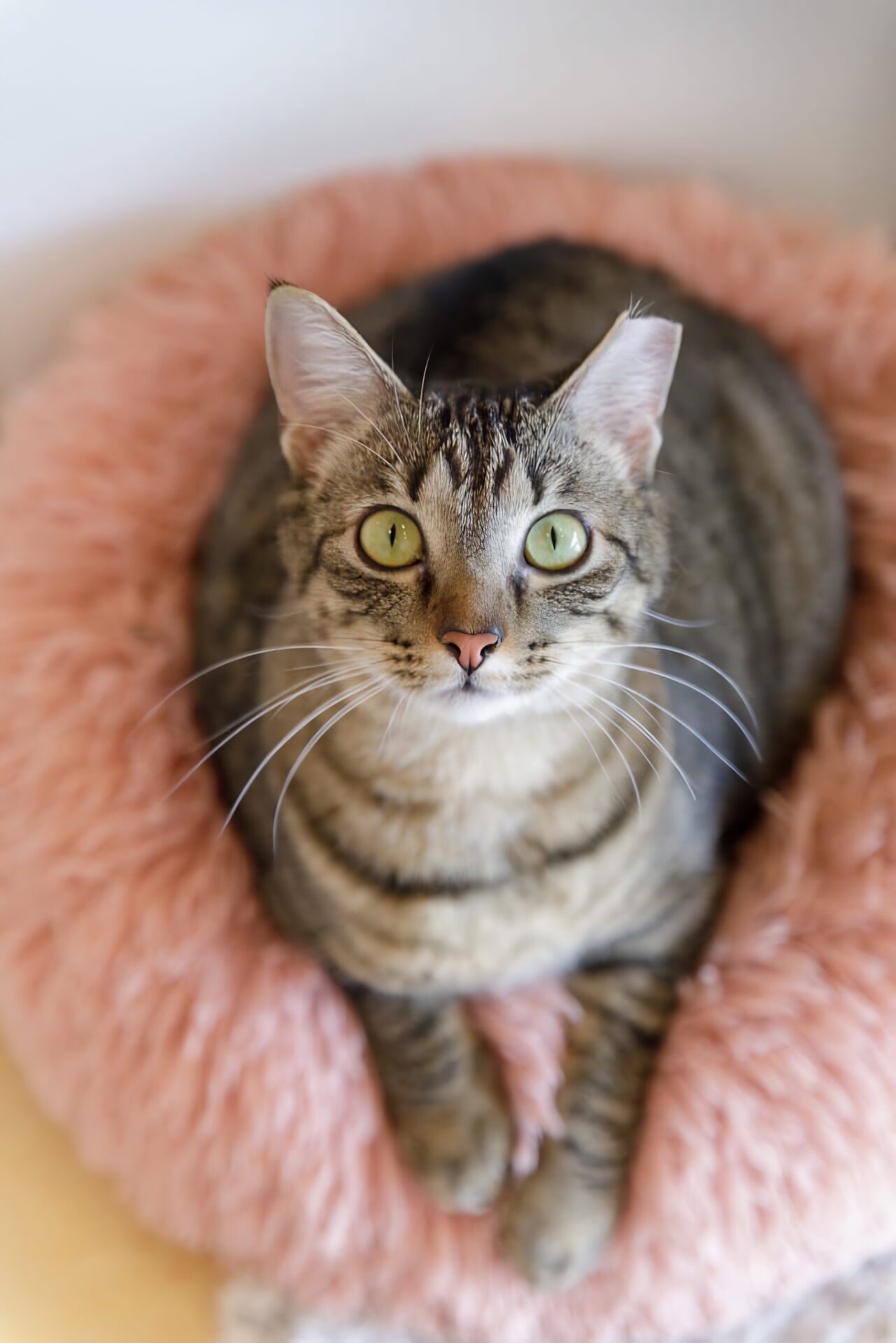
And when I finally did, one thing immediately caught my attention: cats. They were everywhere!
But something was missing: Pompeii dogs. Where did they go?
In this article, I’ll look at how the animals of Pompeii lived before Mount Vesuvius erupted, what their daily lives were like in ancient times, where to find the famous dog cast and mosaic, and where most of the cats hang out today.
Interesting facts about Pompeii’s dogs and cats
A short history of Pompeii
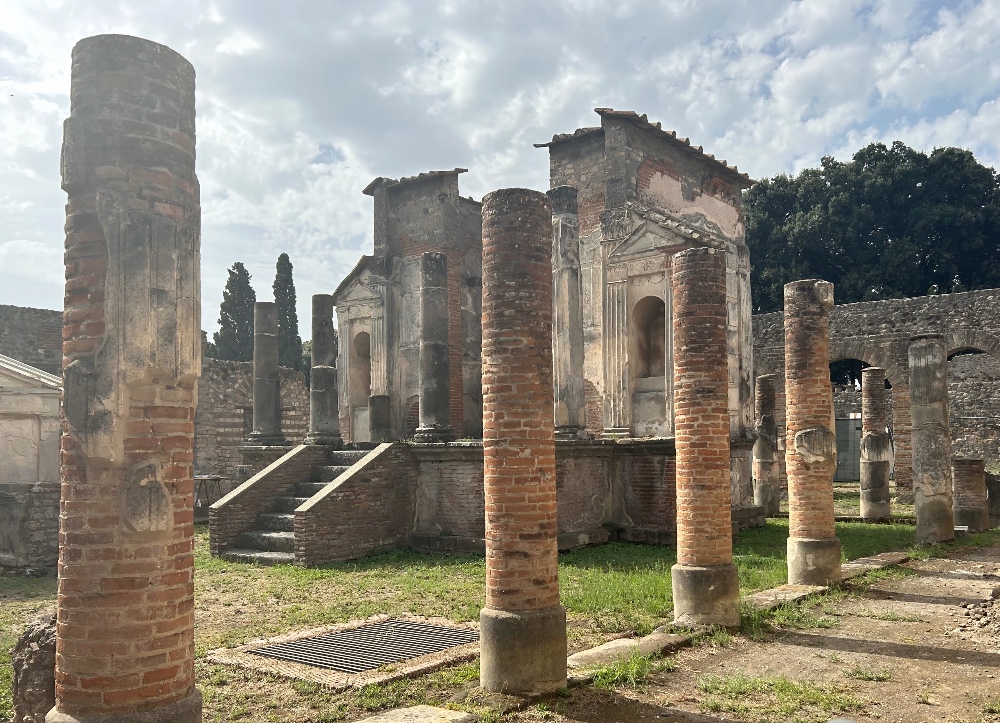
Before we get into why Pompeii is full of cats but not dogs, let’s take a quick look at the city’s history.
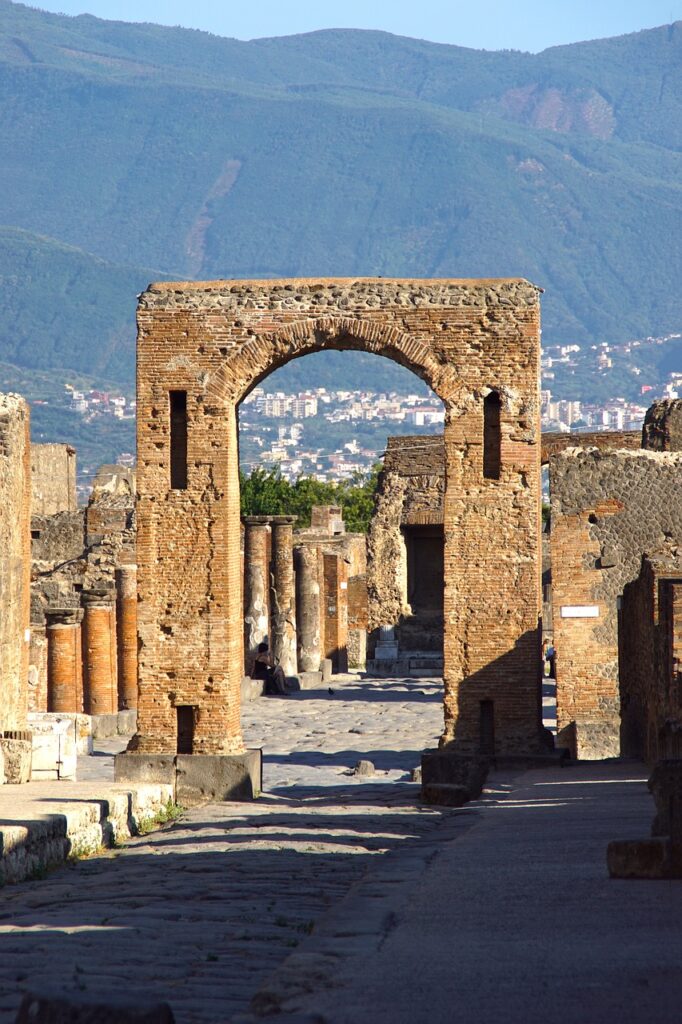
Pompeii was a thriving Roman city near modern-day Naples, Italy.
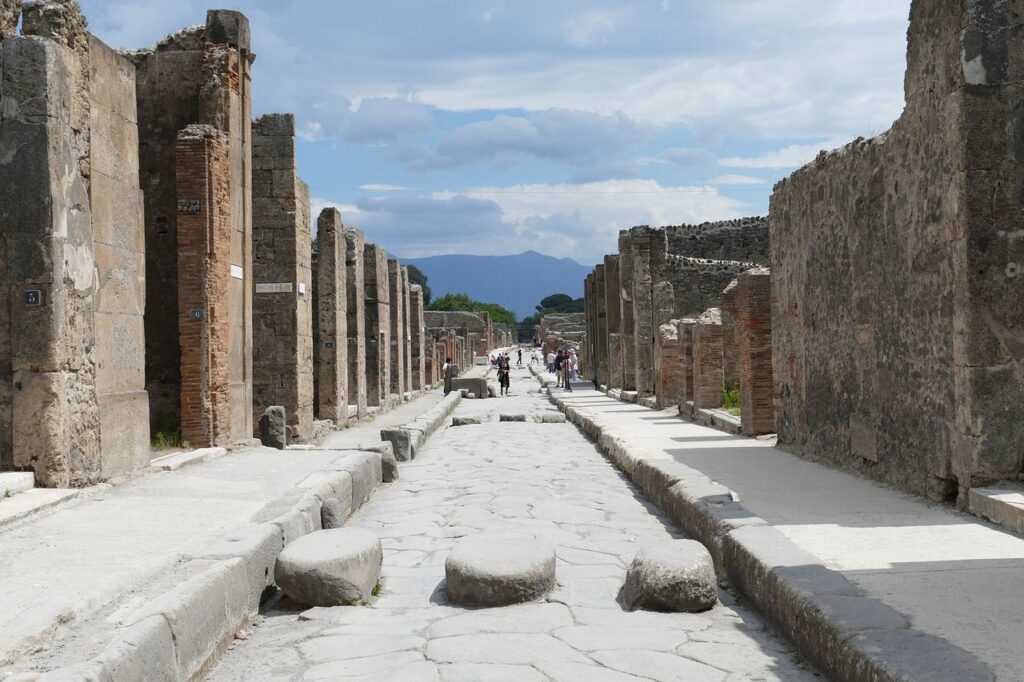
For centuries, it bustled with life. People shopped in markets, worshipped in temples, and watched performances in theaters.
But everything changed in 79 AD when Mount Vesuvius erupted. The volcano buried the city in ash and pumice, freezing Pompeii in time.
For almost 1,700 years, it stayed hidden underground until excavations in the 18th century uncovered it by accident.
What archaeologists found was incredible: streets, buildings, artwork, everyday objects, and even plaster casts of people — and one dog — trapped by the eruption.
Today, Pompeii is a UNESCO World Heritage Site where you can walk its ancient streets and experience what life was like just before disaster struck.
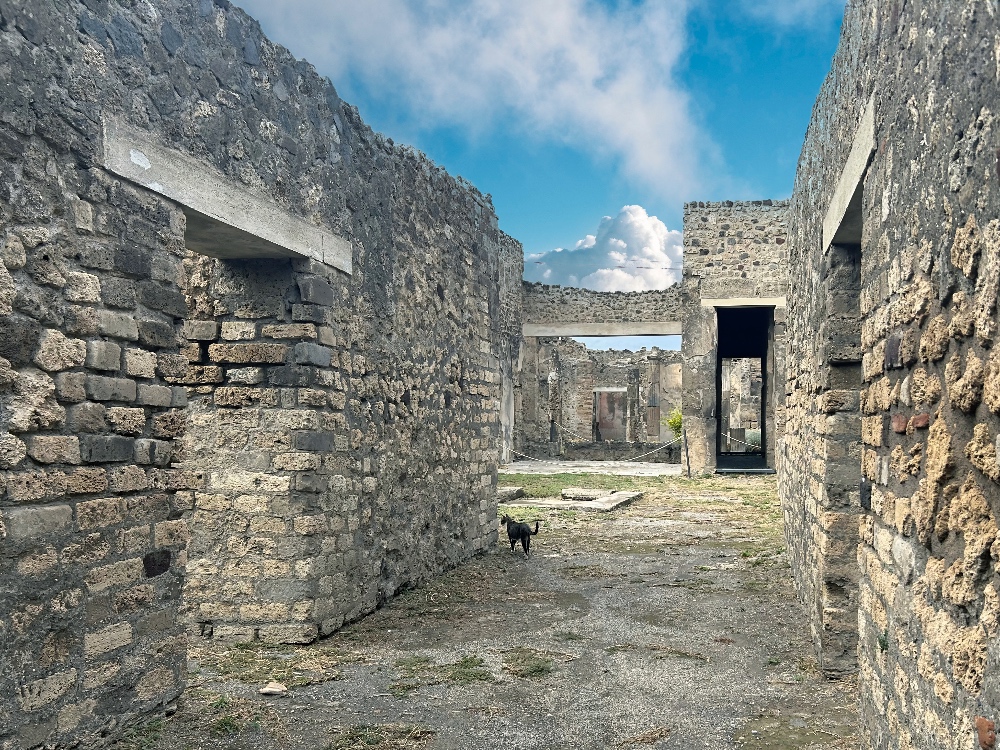
Pompeii cats
In the past, I had seen cats in various other archaeological sites like Largo di Torre Argentina, Ephesus, and Delos.
However, the sheer abundance of cats in Pompeii took me by surprise.
They seemed to be everywhere.
And it’s not just a recent thing. Apparently, it’s been happening for ages!

Why are there so many cats in Pompeii?
The inhabitants of Pompeii have always loved having cats as their sidekicks because these little furballs were masters at keeping the rodent population in check.
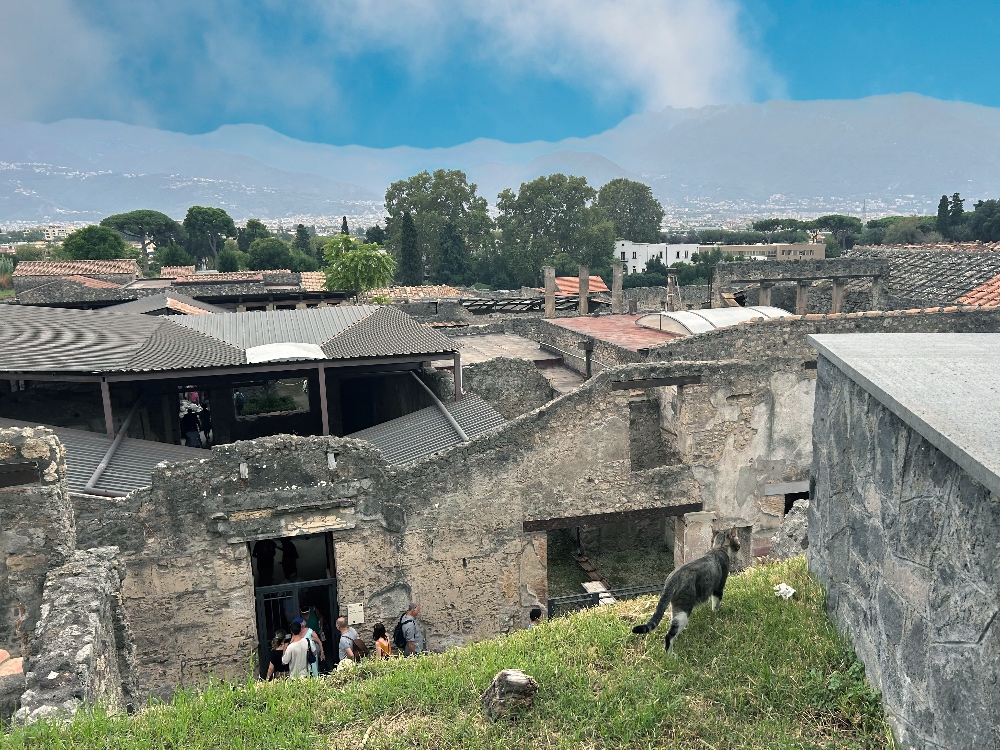
Now, fast forward to today, and Pompeii is like the ultimate cat paradise.
The old ruins provide the purr-fect hideouts for these cats to take a nap.
And the people taking care of Pompeii are totally on board with the whole cat situation. They’re giving them the VIP treatment, making sure they have enough food and water.
These animals are basically celebrities now.
Tourists can’t stop sharing photos of them on social media.
They have become the unofficial mascots of Pompeii and add a whole lot of charm to a place that was already fascinating to begin with.
So, if you’re visiting Pompeii, keep an eye out for these cats. They’re living legends of these ancient ruins.

Where to find cats in Pompeii?
While cats can be found everywhere in Pompeii, you’re more likely to see them in areas with the highest concentration of people. Some of these include:
Just outside and inside the entrance gates
Given the abundance of food stalls here, there’s always someone willing to share their food with the cats.
And once the cats’ bellies are full, they can take a nap on the lawn and watch the tourists stroll by.

Scavi Café
This is the only place inside the archaeological site where visitors can rest and grab a snack or something to drink.
Many cats are hanging out here as well, hoping to get a cuddle and a bite out of your meal.

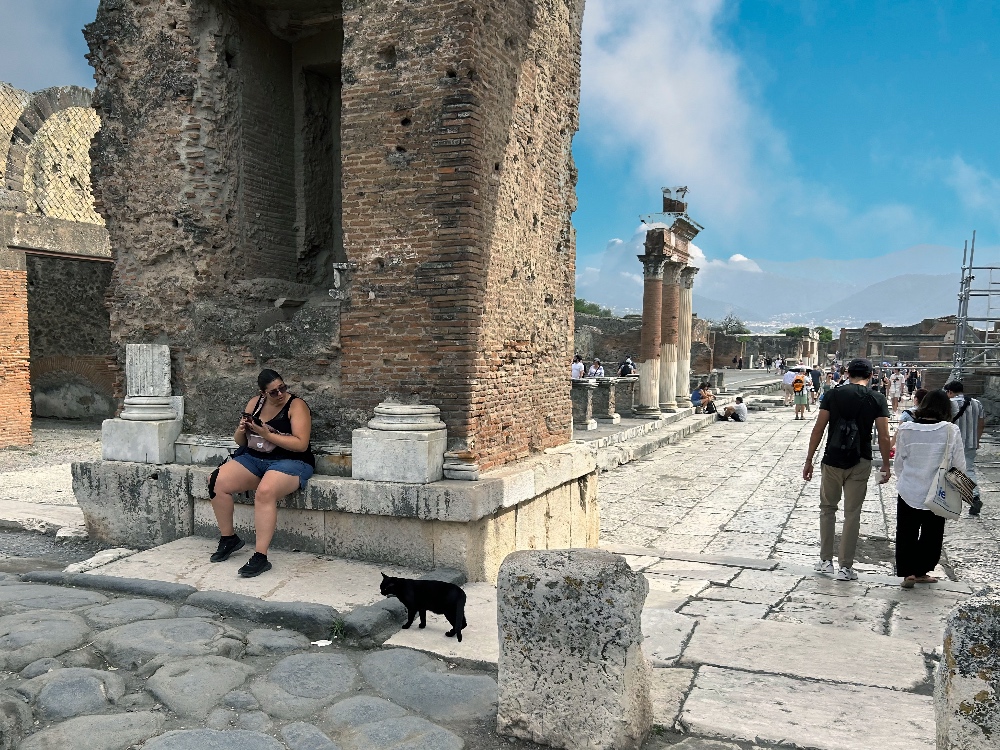
The Forum
The Forum was the central public space and the heart of Pompeii’s political, religious, and social activities.
Surrounded by important public buildings, temples, and basilicas, the Forum served as a bustling hub for commerce, political discussions, and religious ceremonies.
It featured colonnades, statues, and monuments, offering a glimpse into the daily life of ancient Pompeii.
This area is often teeming with cats. They casually stroll alongside tourists as though they were just another regular part of the visitor experience.
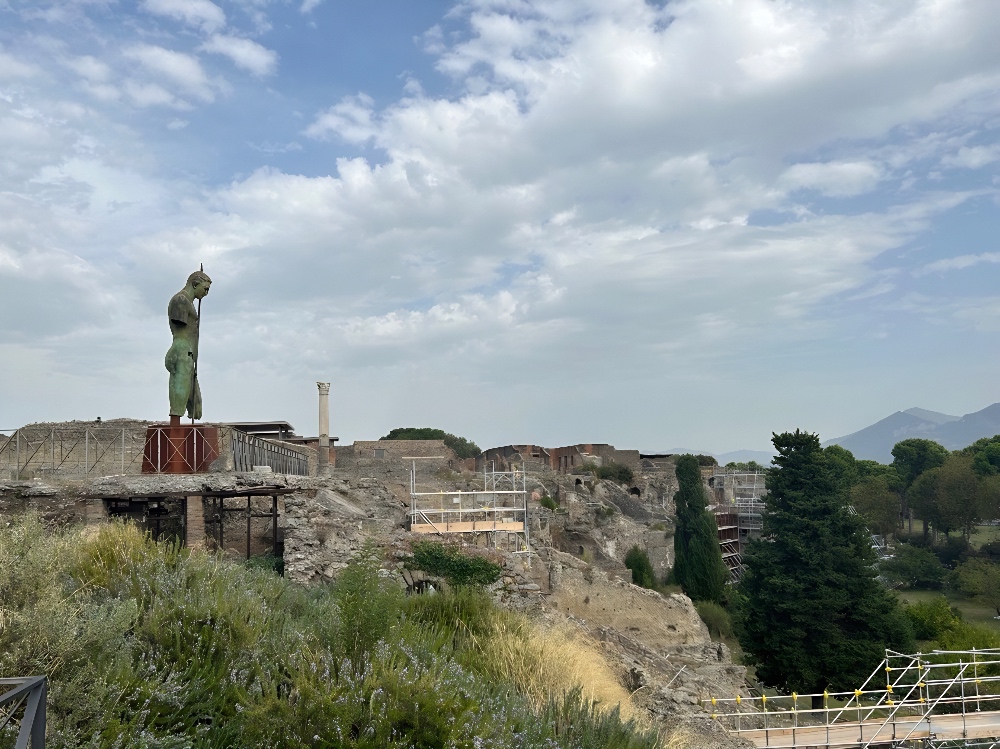
Daedalus statue
There are quite a lot of cats living around the bronze Daedalus statue by late Polish artist Igor Mitoraj.
You’ll have to look hard, though, because most of them will be hiding in the distance.
Teatro Grande
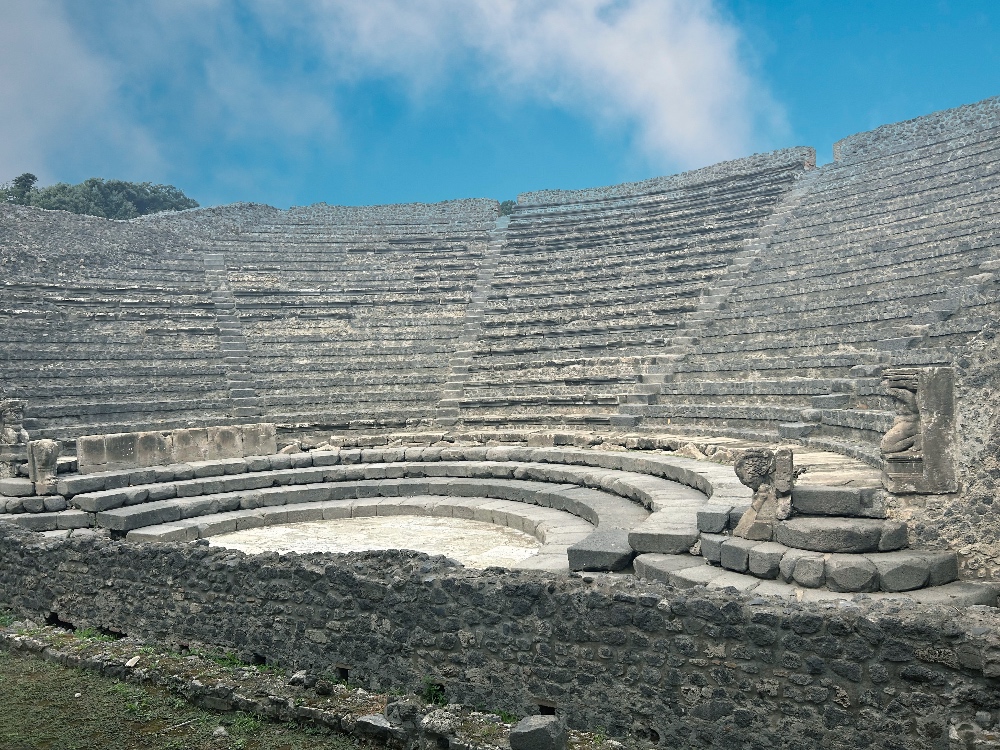
There are quite a lot of dark nooks at the Teatro Grande, perfect for the cats to sleep without being noticed and bothered by tourists.
The Teatro Grande is the ancient Roman amphitheater of Pompeii.
It dates back to the 2nd century BCE and is one of the oldest surviving Roman theaters.
With a seating capacity for around 5,000 spectators, Teatro Grande was primarily used for theatrical performances and musical events.
The well-preserved structure provides valuable insights into the entertainment culture of ancient Pompeii and remains an iconic landmark within the archaeological site.
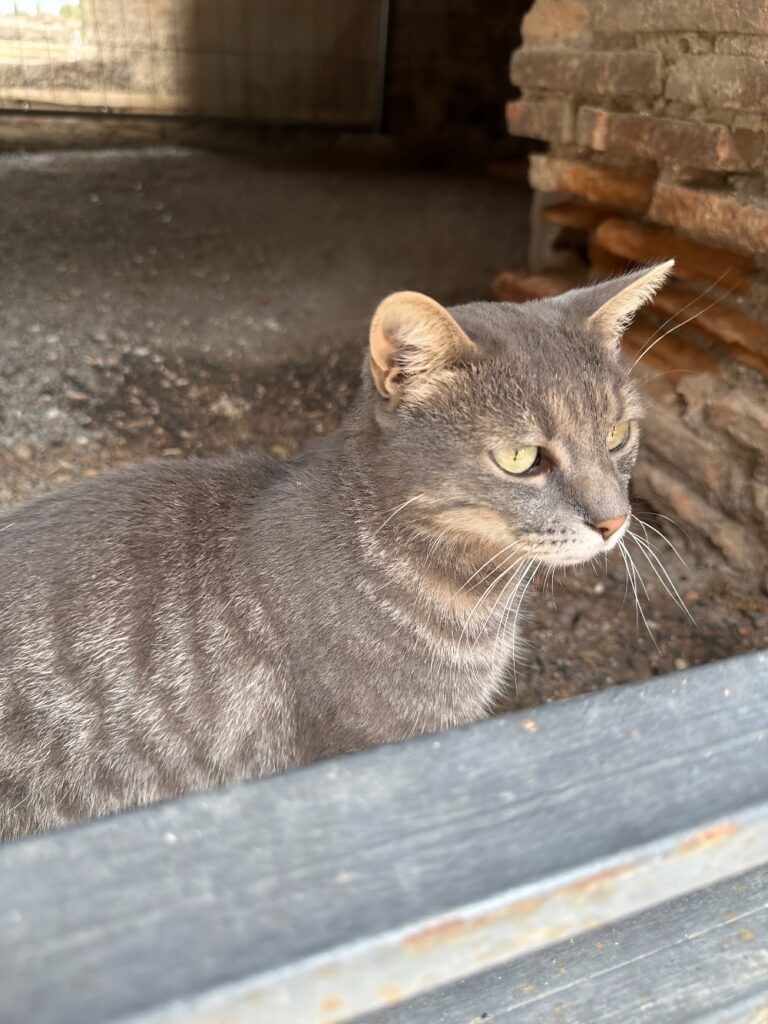
I found the kitty below at Regio VIII / Insula VII, 21, in case you want to go look for him.
Were there cats in Pompeii before the Vesuvius erupted?
While there have been numerous discoveries of human and animal remains in Pompeii, including dogs, there is limited evidence of the presence of cats at the time of the eruption.
However, their preservation was more likely dependent on the location of the animals during the event and subsequent archaeological efforts.
Also, the casts made from voids left by decomposed bodies in the ash might not have captured the forms of cats as prominently as they did for dogs.
It is well-known, though, that our feline friends were domesticated and kept as pets in ancient Rome, so it is generally assumed that there were cats in Pompeii, too, and that they were being kept as pets to take care of harmful rodents.
Archaeological discoveries continue to be made at Pompeii, and ongoing research may reveal more information about the presence of cats and other animals in the ancient city.

Are there mosaics of cats in Pompeii?
No. There are no mosaics of cats in Pompeii.
Pompeii dogs
Cats are undeniably taking center stage at Pompeii. The tally of dogs I encountered there was a resounding zero.
Why the absence of dogs at Pompeii?
Are dogs allowed inside Pompeii?
Big dogs are no longer allowed inside the archaeological site, even if they are kept on a leash and muzzled.
Exceptions apply to dogs weighing up to 10 kg and with a maximum height of 40 cm. Those that are permitted to enter must be kept on a leash and carried by their owners.
This measure aims to safeguard the site’s integrity and protect historical artifacts, as the presence of dogs poses a potential risk to archaeological remains and structures.
There used to be a lot of stray dogs too at Pompeii, but they have been banned from the site for the same reason.
Were there dogs in Pompeii before the Vesuvius erupted?
Yes, there is evidence that dogs were present in Pompeii before the eruption of Mount Vesuvius in 79 AD.
Archaeological excavations have uncovered remains of dogs in various areas of Pompeii, including homes and public spaces.
The discovery of dog skeletons and remains indicates that they were indeed a part of daily life in Pompeii before the catastrophic event.
Dogs likely served various roles in ancient Pompeian households: companionship, guarding, and possibly assisting with tasks.
However, the exact roles and breeds of these ancient Pompeian dogs are challenging to determine.
Are there mosaics of dogs in Pompeii?
Yes, there are mosaics featuring dogs in Pompeii.
One notable example is the House of the Tragic Poet, where a famous mosaic known as “Cave Canem” (Beware of the Dog) was discovered. This mosaic depicts a dog on a chain, along with the warning “Cave Canem” written below. This proves that guard dogs were common in ancient Pompeii.
Some other mosaics in Pompeii also feature dogs in various contexts.
The Dog of Pompeii story
In 1874, during excavations at Pompeii, archaeologists found the well-preserved body of a dog that had perished during the eruption. It was probably tied by a collar and couldn’t escape the disaster.
The dog’s body was found in a crouching position, and its remains were coated with a void left by the decomposed body, filled with plaster to create a cast.
This cast now reveals the poignant and emotional moment of the dog’s last moments, capturing its posture and expressions at the time of its death.
Where is the dog cast in Pompeii?
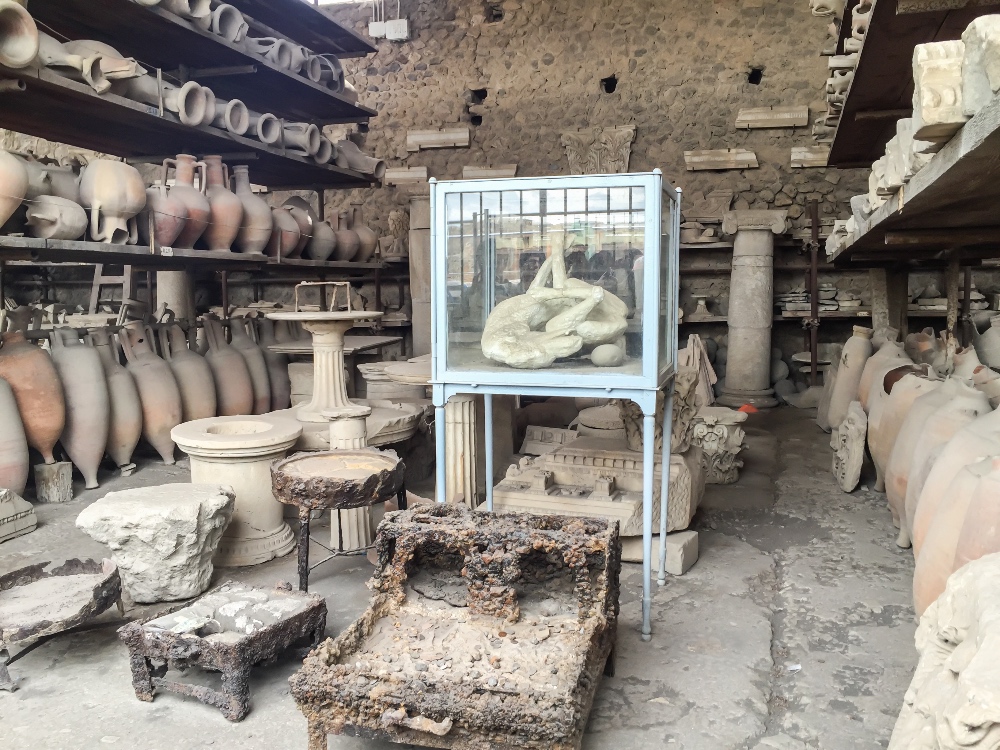
The cast of a chained dog found in Pompeii is currently on display at the Antiquarium of Boscoreale.
There is an exact replica of the original in the grain market on the Forum of Pompeii from the House of Vesonio Primo (VI 14, 20).

Practical information
Do you want to visit Pompeii and its cats yourself? Here’s everything you need to know to get you started:
Where to buy tickets to Pompeii
The queues at Pompeii can be quite extensive, even outside peak tourist seasons.
To avoid long waits, you’re better off purchasing your tickets in advance.
If you’re looking for a more immersive experience, you can also purchase an entry ticket that includes a guided tour with an archaeologist.

Opening hours
Pompeii opens at 09:00 am every day, no matter what season.
The closing time is between 07:00 pm and 07:30 pm.

How to get there?
By public transport
- Start at the Naples Central Train Station (Stazione Napoli Centrale) or Napoli Porta Nolana station.
- Take the Circumvesuviana train train toward Sorrento.
- The ride takes approximately 30 minutes and is quite scenic.
- Get off the train at the Pompei Scavi – Villa dei Misteri station. This station is right next to the entrance of the Pompeii archaeological site.
Guided tours from Rome or Naples
One of the easiest options is to take a guided tour that departs from nearby cities such as Rome or Naples.
My top recommendation is the guided tour led by an archaeologist that combines both Pompeii and Herculaneum.
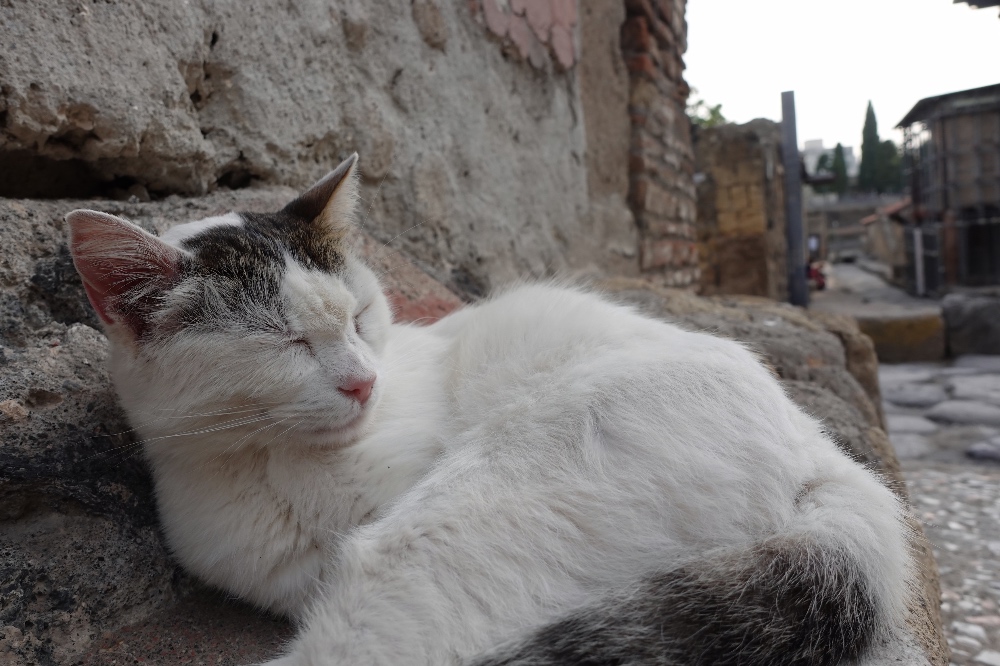
Herculaneum is an absolute must, in my opinion. And, yes, there are also cats in Herculaneum, though not as many as in Pompeii. (The kitty below lives at Herculaneum)
For an even more comprehensive experience, you could also opt for the all-inclusive tour covering Pompeii, Herculaneum, and Mt. Vesuvius, though I wouldn’t recommend visiting all three of them in one day.
The following options are also available:
From Rome: Pompeii, Amalfi Coast, and Positano Day Trip: This one is great if you’re short on time and want to see as many places in Italy as possible. However, one day is not quite enough to truly enjoy the experience. If you can, I would spend one day at Pompeii and at least one day at the Amalfi Coast.
From Rome: Naples, Pompeii, and Mt. Vesuvius with Lunch and Wine Tasting: A delightful option offering a combination of history and culinary experiences.
Where to eat in Pompeii?
Numerous food stalls line the area just outside the archaeological site, but inside you have only one small café with limited options.
I recommend having a big meal before entering because exploring Pompeii is likely to take up your entire day, and re-entry isn’t permitted. Many visitors find themselves hungry during their day-long exploration.

Where to stay when visiting Pompeii?
Here are several recommended accommodation options in the vicinity of Pompeii, covering luxury, mid-range, and budget options:
Luxury accommodations
- San Mauro Hotel (Portici): This four-star hotel in Portici offers a luxurious stay with modern amenities. It’s located close to the Herculaneum archaeological site and provides easy access to Pompeii, which is at a distance of approximately 15 kilometers (9.3 miles).
- Grand Hotel La Favorita (Sorrento): Situated approximately 15 kilometers (9.3 miles) from Pompeii, Grand Hotel La Favorita is a luxurious choice, with its classic Italian charm, spacious rooms, and a rooftop terrace overlooking the Bay of Naples.
Mid-range accommodations
- Hotel Forum (Pompeii): Hotel Forum is located within walking distance of the archaeological site. It provides comfortable rooms, a restaurant, and a rooftop terrace with views of Pompeii.
- Hotel del Mare (Sorrento): Located approximately 15 kilometers (9.3 miles) from Pompeii, Hotel del Mare is a charming hotel with a seaside location. It features cozy rooms, a garden, and a terrace where you can enjoy breakfast with a view.
Budget accommodations
- B&B Eco (Pompeii): B&B Eco is a budget-friendly option close to the Pompeii archaeological site. It offers simple yet comfortable rooms and a welcoming atmosphere.
- B&B Villa Patrizia (Portici): For budget-friendly accommodation, B&B Villa Patrizia provides a cozy stay with a homely atmosphere. It’s a good option for those looking for affordable yet comfortable lodging. Distance from Pompeii: approximately 15 kilometers (9.3 miles).
Conclusion
Cats are clearly living it up in the ruins right now.
However, they are not the only reason why Pompeii merits a definitive spot on your Italy itinerary.
Walking through the ancient ruins is like stepping back in time, and delving into the tales of the eruption and daily life in Pompeii is more exciting than the many movies or books made about the subject.
If you can, consider pairing your Pompeii visit with Herculaneum and Mt. Vesuvius, as these three sites really complement each other.
And when you’re there, shower some affection on the cats, and take some photos of your new feline friends (and if you do, share them with us on Facebook, Twitter, or Instagram).
And don’t forget to visit the nearby cat café Gattò Bistrot in Portici.

What to visit next in Italy if you love cats?
- Positano: approximately 34 kilometers (21 miles)
- Procida: approximately 227 kilometers (141 miles)
- Rome: approximately 234 kilometers (145 miles)
- Matera: approximately 263 kilometers (163 miles)
- Alberobello: approximately 346 kilometers (215 miles)
- Ravenna: approximately 512 kilometers (318 miles).
- Cozze: approximately 556 kilometers (345 miles)
- Portovenere: approximately 611 kilometers (379 miles)
- Manarola: approximately 633 kilometers (393 miles)
- Vernazza: approximately 634 kilometers (393 miles)
- Venice: approximately 656 kilometers (407 miles)
- Vicenza: approximately 690 kilometers (429 miles)
- Badia Polesine: approximately 746 kilometers (464 miles)
- Milan: approximately 801 kilometers (498 miles)
- Riva Ligure: approximately 826 kilometers (513 miles).
Also check out this exhaustive list of cat cafés in Italy!

English version / version française
Pin this article on Pompeii’s dogs and cats!