Last Updated on 10 March 2026 by Vanessa
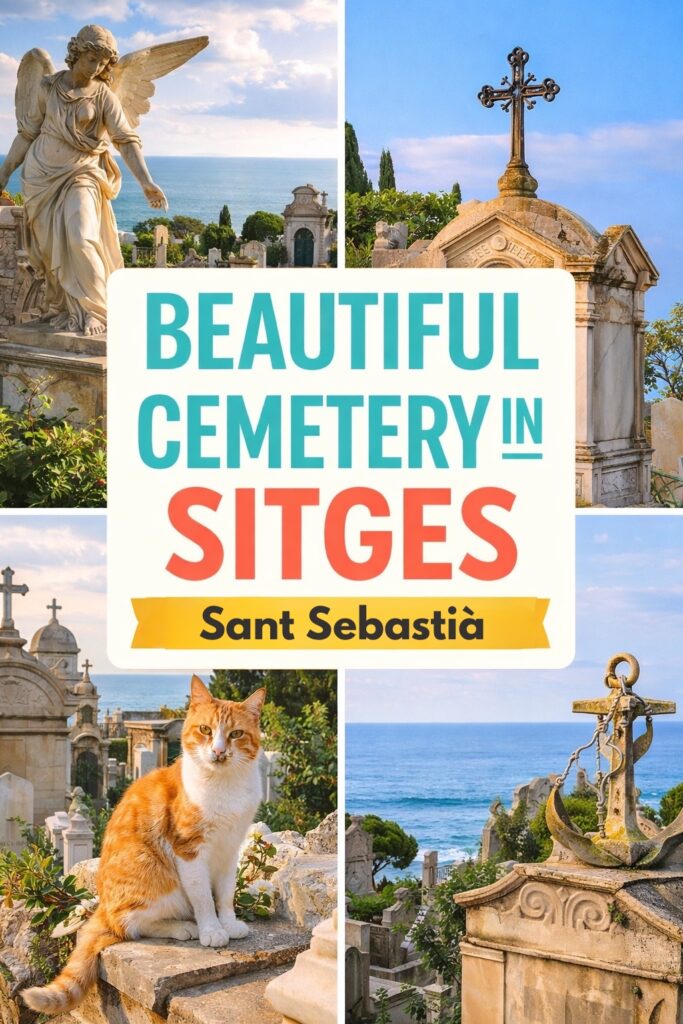
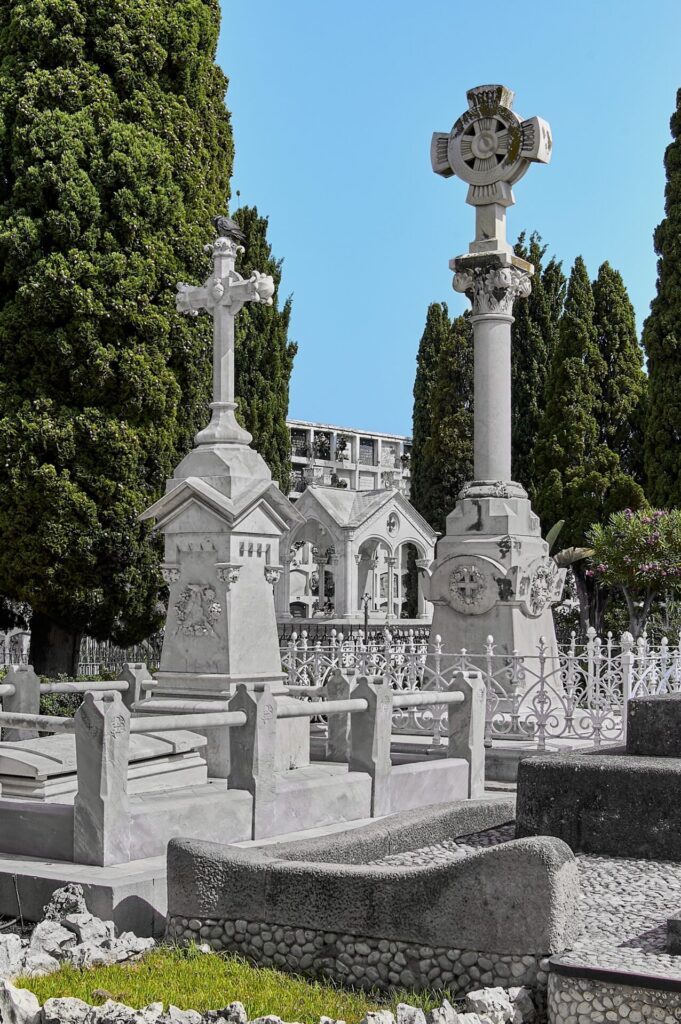
Situated opposite the beach, the small but gorgeous Sant Sebastià Cemetery (Cementiri de Sant Sebastià) in Sitges, Spain, is known for its 19th century funerary art, created by known sculptors such as Josep Llimona, Enric Sagnier, Pere Jou, and Manel Fluxà.
If you’re planning a trip to Sitges and wondering whether this seaside cemetery is worth adding to your itinerary, this guide will help you decide. I’ll cover exactly what you can see here, why it matters architecturally, how much time you need, where it’s located in relation to the old town and beaches, and how to combine it with other highlights nearby. That way, you can easily work it into your Sitges schedule — whether you’re staying for a weekend, visiting during the film festival, or exploring the town more slowly.
📍 If you’re planning a trip to Sitges, you’ll find a full overview of the town in my Ultimate Sitges Travel Guide.
Sant Sebastià Cemetery Sitges: art, history, and practical tips
Why Visit the Sant Sebastià Cemetery?
If you’re wondering whether the Sant Sebastià Cemetery in Sitges is worth your time, the short answer is yes — especially if you’re already exploring the old town and nearby beaches.
First, the setting is unusual. The cemetery sits just above the sea, close to Platja de Sant Sebastià. It’s not remote or gloomy. On the contrary, it feels peaceful and light, almost like an extension of the waterfront.
The setting also means you don’t need to make a detour to see it. If you’re walking the promenade that connects the old town with the port, you’ll pass right by the entrance anyway. It’s an easy, natural stop along one of Sitges’ most scenic routes.
Second, the artistic value is real. Several well-known Catalan sculptors contributed to the funerary monuments, and you’ll see clear modernist influences in the angels, draped figures, allegorical women, and detailed reliefs. The symbolism is layered: broken columns for lives cut short, anchors for hope, veiled faces for mourning, and floral motifs representing eternity.
It’s also small. Five to ten minutes is enough. The layout makes it easy to navigate, and because it’s rarely crowded, you can take your time.
If you’re interested in architecture, sculpture, photography, or lesser-known cultural sights in Spain, this is one of those stops that adds depth to your Sitges itinerary without taking over your day.
History of the Sitges Cemetery
In 1814, King Ferdinand VII ordered burials to move outside town centers for public health reasons. Sitges followed that decree and created a new cemetery beyond its old walls, near the Chapel of Sant Sebastià, which gave the cemetery its name.
At the beginning, the space served a practical purpose. Builders designed a simple rectangular layout with neat rows of graves. As Sitges expanded during the 19th century — especially after wealthy “Americanos” returned from the Americas — local families invested in more elaborate tombs and mausoleums. The cemetery gradually shifted from a functional burial ground to a display of status, craftsmanship, and artistic ambition.
At the end of the 19th century, architect Gaietà Buïgas i Monravà reshaped parts of the cemetery. He added arcades, refined ironwork, and a more structured architectural rhythm. He also designed the Chapel of Souls and enhanced the entrance gate, which still anchors the site today.
Understanding this evolution helps you read the cemetery more clearly. What started as a health-driven relocation became a visual record of Sitges’ wealth, artistic influences, and social hierarchy — all carved into stone along the seafront.
The most beautiful tombs and sculptures
The angel sculptures
Angels with flowing robes and delicately carved feathers are among the cemetery’s most striking figures. Some stand tall and triumphant, wings extended toward the horizon. Others kneel in quiet grief, faces softened by time and sea air.
These sculptures date to the late 19th and early 20th centuries, when Sitges’ wealthy families commissioned elaborate memorials to reflect both devotion and status.
Maritime motifs and symbolism
Sitges has always been a seafaring town, and the cemetery reflects that identity beautifully. Anchors, ropes, ships, and wave-like carvings appear throughout the grounds.
Many of the town’s fortunes were made through trade with Cuba and the Americas.
Wealthy Sitges family mausoleums
In the late 1800s, returning “Americanos” (locals who made money overseas) transformed Sitges and brought their wealth home with them. Their mausoleums here are architectural statements: columns, domes, sculpted saints, and intricate ironwork.
Modernist funerary art
The influence of Catalan Modernisme (the same artistic movement associated with figures like Antoni Gaudí) is everywhere here. Flowing lines, floral motifs, and expressive sculpture define many early 20th-century tombs.
Symbolism
One of the most fascinating parts of visiting the Sant Sebastià Cemetery is decoding the symbols. Cemeteries speak in a quiet visual language. Once you recognize it, every monument tells a deeper story.
Here are some of the most common symbols you’ll encounter:
Angels
They represent protection, guidance, and the soul’s journey to heaven. Upright angels often symbolize guardianship and hope. Mourning angels, especially those leaning or weeping, reflect grief and remembrance.
The direction they face can also matter. Some gaze toward the sea, suggesting watchfulness or eternal horizon.
Broken columns
A broken column usually represents a life cut short. The symbolism comes from classical architecture — when a column breaks, the structure is incomplete.
You’ll often see this motif on graves of younger individuals or heads of families whose lives ended unexpectedly.
Anchors (maritime symbolism)
Anchors symbolize stability, hope, and safe passage — particularly meaningful in a coastal town like Sitges.
In Christian symbolism, the anchor can also represent faith. For families connected to shipping or overseas trade, it was both personal and spiritual.
Flowers
Carved flowers aren’t just decorative. Each type carries meaning:
- Roses often symbolize love and devotion.
- Lilies represent purity.
- Poppies suggest eternal sleep.
Draped figures
Draped or veiled figures convey mourning and the thin veil between life and death. The flowing fabric carved in stone is a hallmark of skilled sculptors and adds emotional weight to many monuments.
Some appear to be physically collapsing into grief. This is a powerful artistic expression typical of late 19th-century funerary art.
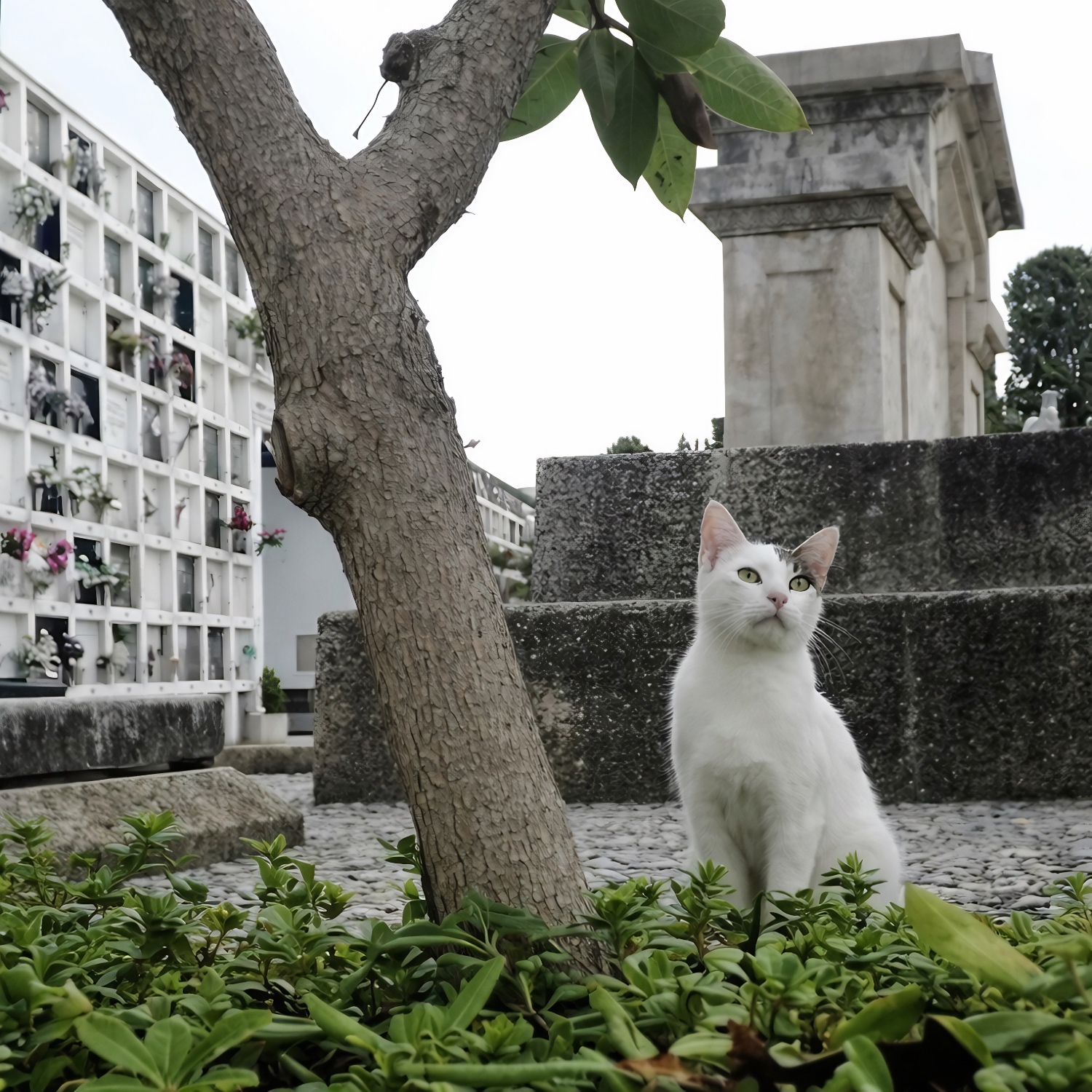
The cemetery cat
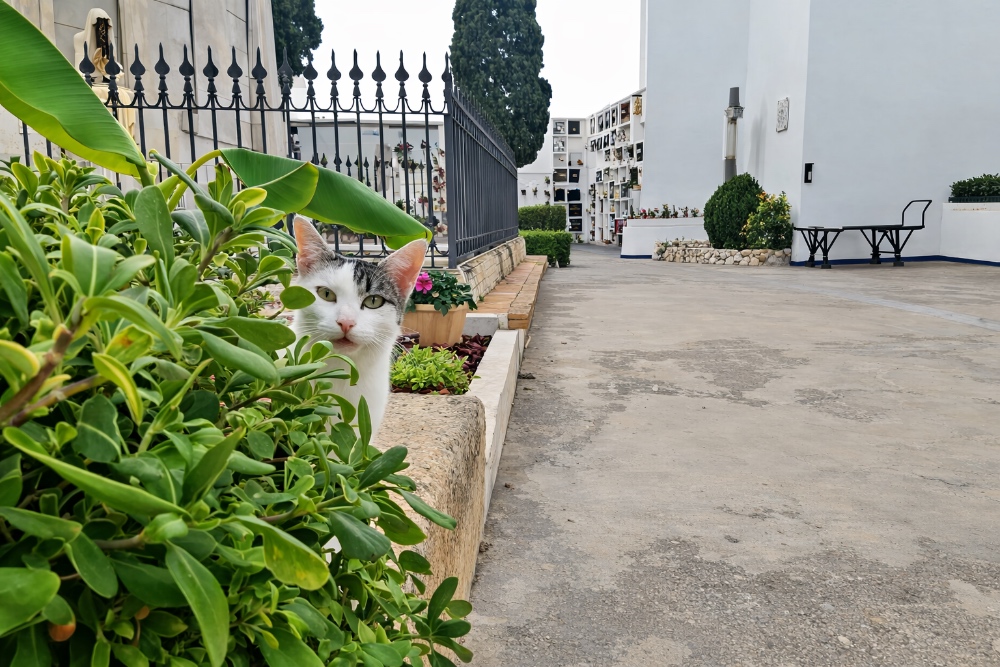
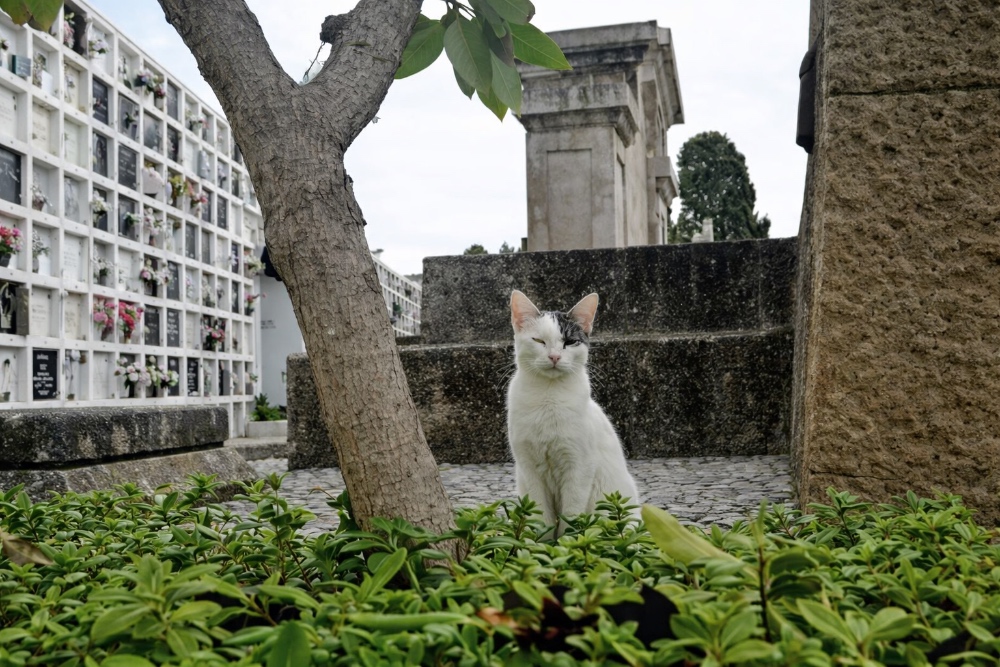
One of my favorite parts of the cemetery, however, is that there’s a resident cat.
I had just come out of a screening of Jupiter’s Moon by Kornél Mundruczó during the Sitges Film Festival when I wanted to photograph the morning light in the cemetery. I was sitting alone on a bench, looking across the gravestones, when she turned the left corner and headed in my direction. She was far from anxious, just curious. I lured her with little sounds, and she meowed back at me.
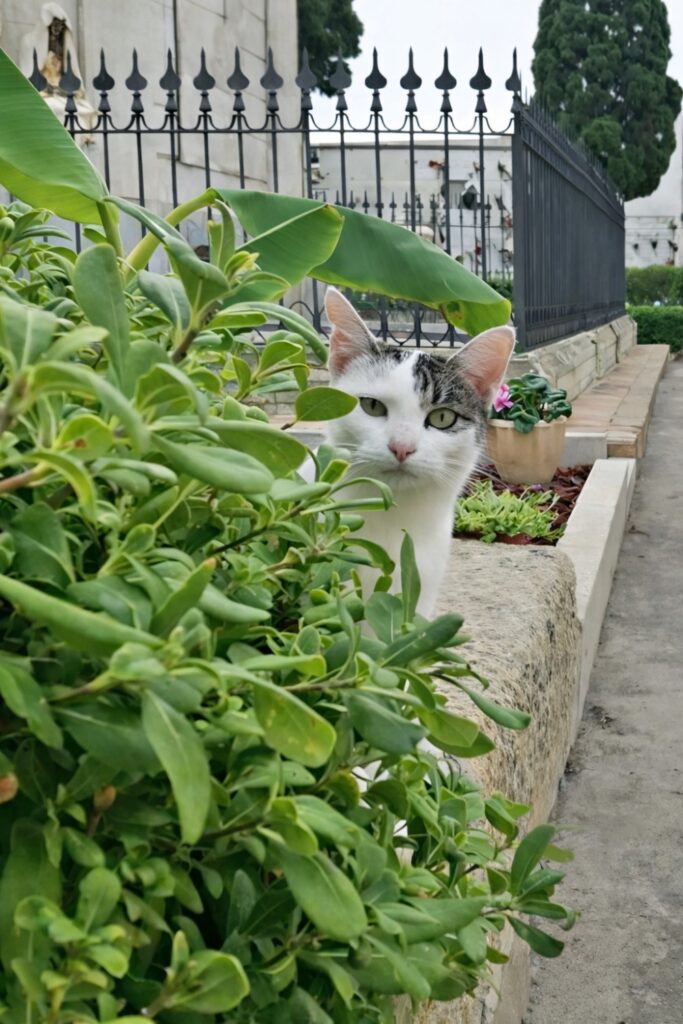
She rolled onto the ground near the bench before eventually coming closer for head butts. From a distance, her coat had looked rough and a little wild, but when I touched her, she was unexpectedly soft.
I had visited the cemetery the day before, too — but it was busier then, and she hadn’t shown herself. That morning, with no one else around, she seemed to feel safe enough to seek out company.
Sitges is known for its cats. Most of them are near the port and the piers. If you’re curious about the feline residents of the town, I’ve written more about the cats of Sitges and where you might meet them.
Practical information
If you’re planning to visit the Sitges Cemetery, here’s everything you need to know before you go.
Address
Cementiri de Sant Sebastià, Passeig Balmins, 08870 Sitges, Barcelona, Spain.
Opening hours
The Sitges cemetery is open from Monday to Saturday from 09:00 am to 01:00 pm and from 03:00 pm to 05:00 pm. Sunday from 09:00 am to 01:00 pm.
Entrance fee
There is no admission charge.
How long to visit
You only need about ten minutes for a relaxed visit.
That said, photographers and architecture lovers could easily spend longer exploring the sculpture details.
Best time to visit
Early morning or late afternoon are perfect for photography.
How close is it to Sant Sebastià Beach?
The cemetery sits directly above Platja de Sant Sebastià, which is one of Sitges’ most picturesque beaches.
It’s about:
- 2–3 minutes walking from the beach promenade
- Around ten minutes on foot from Sitges old town
That means you can easily combine beach time and a coastal walk with a short cemetery visit, all within the same hour.
What to visit nearby?
One of the best things about visiting Sant Sebastià Cemetery is that you’re never far from something beautiful, historic, or delicious. You can easily turn this short cemetery stop into a relaxed half-day wander through Sitges.
Sant Sebastià Beach
Just below the cemetery sits Platja de Sant Sebastià, one of the prettiest beaches in town. It’s perfect for a quick swim after your visit — especially in summer.
Monumento a Santiago Rusiñol
A short walk toward the old town brings you to the Monumento a Santiago Rusiñol, dedicated to the celebrated Catalan artist and writer who helped shape Sitges’ artistic identity. It’s a lovely spot to pause for a coffee.
The old town
From the cemetery, it’s about a 10-minute stroll into Sitges’ charming old town — whitewashed streets, flower-draped balconies, and sea views around every corner.
This is where you’ll find boutique shops, small galleries, and that relaxed Mediterranean atmosphere people fall in love with.
Cine Retiro
Film lovers shouldn’t miss Cine Retiro, one of Sitges’ historic cinemas and an important venue during the world-famous Sitges Film Festival.
La Guineu
After all that walking, you’ll probably be ready for tapas. One of the best spots in town is La Guineu, just a ten-minute walk from the cemetery.
The port
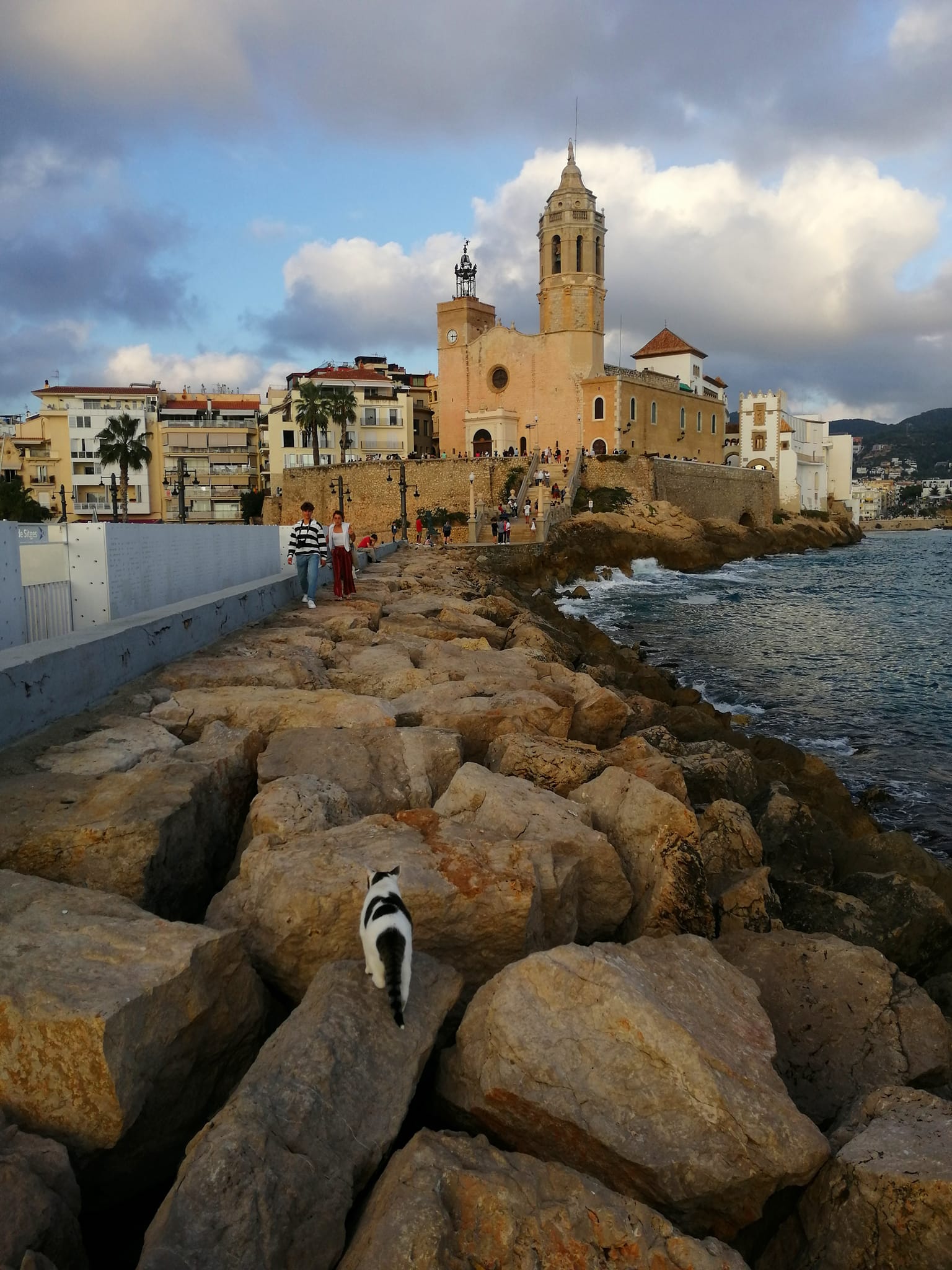
If you continue walking along the coast in the other direction, you’ll eventually reach Port de Sitges.
See if you can spot a ginger cat named Nosferatu going about her very important day in the vicinity of Hotel Meliá. This feline has become the unofficial mascot of the Sitges Film Festival, and she patrolls the grounds as if she personally organizes the red carpet schedule.
📍 Ready to plan your stay? Check out our guide to the best hotels and neighborhoods in Sitges to make the most of your visit.
If Sant Sebastià stole your heart, wait until you see these other cemeteries across the world:
- Highgate Cemetery in London
- Montmartre Cemetery in Paris
- Begraafplaats Groenesteeg in Leiden
- Campo Verano Cemetery in Rome
- Non-Catholic Cemetery in Rome
- Recoleta Cemetery in Buenos Aires
- Yanaka Cemetery in Tokyo
- Aoyama Cemetery in Tokyo
And if you love cats, check out these famous cemeteries with more cats than spirits.
Pin this article about Sant Sebastià Cemetery Sitges