Last Updated on 15 July 2025 by Vanessa
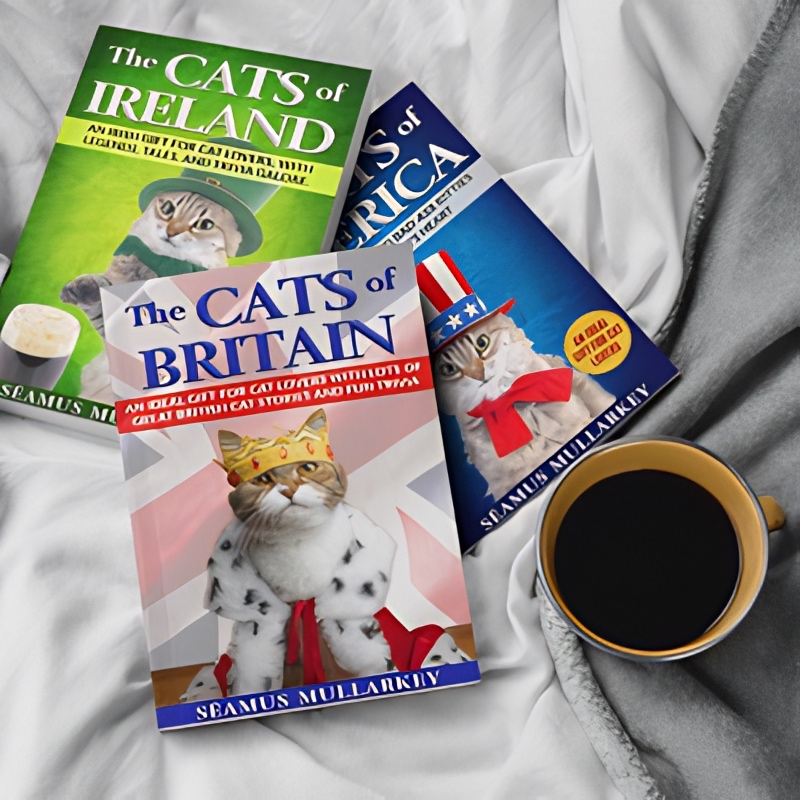
The Cats of America by Séamus Mullarkey is a book that that spills the beans on how our feline friends impacted America’s leaders, shaped folklore, and became Hollywood legends. From famous feline street performers to pampered residents of four-star hotels, this book purr-fectly captures the enduring bond between the Americans and their whiskered companions.
But is The Cats of America worth reading?
Let’s find out by taking a look at the book’s most interesting themes.
The Cats of America by Séamus Mullarkey
Cats and politics
Did you know that many American leaders were cat lovers?
In his book The Cats of America, Mullarkey shares that the first felines in the White House were Abraham Lincoln’s pets, Tabby and Dixie. Lincoln’s wife mentioned his hobby was simply “cats.” He even rescued strays and brought them to the White House until they found permanent homes.
Other cat lovers followed: Rutherford Hayes and his Siamese pair, William McKinley with two Angora cats, Teddy Roosevelt with his polydactyl cat Slippers, and the Kennedys with their Tom Kitten.
The book provides more details about each of these stories and their feline companions.
Cats at the heart of our great American institutions
Another enjoyable section discusses the cats of America’s postal service and libraries.
It turns out that American postal offices hired cats to control mouse populations, with funds allocated in the federal budget for this purpose.
Libraries also commonly employed cats for this task.
The Library Cat Society acknowledges more than three dozen libraries with their own feline staff. The society advocates for the welfare of these cats and supports their roles as literary ambassadors.
The Cats of America highlights some famous library cats, such as Dewey from The Spencer Public Library and Herbie from the Herbert Hoover Presidential Library, both located in Iowa. However, the book sadly overlooks Page from the Book Buyers Library in Charlotte.
Mullarkey also mentions Glendale Central Library. This institution boasts the world’s largest collection of cat-related books and items (over 20,000 publications), mostly amassed through donations from the Jewel City Cat Club.
American cat breeds
The Cats of America also dives into some of the most popular breeds in America: Maine Coon, Persian, Ragdoll, American Curl, American Shorthair, Domestic Shorthair, California Spangled, Siamese, and American Curl.
The book explores their history, origins, and how the breed gained popularity in America, as well as their defining characteristics.
Feline folklore
Another interesting topic is feline folklore. Superstitions about cats have been around since colonial America, with early European settlers even using them to predict the weather.
The book covers various feline folklore beliefs, including:
- Kittens born in May are believed to be witches’ cats.
- If a cat washes its face in front of several people, the first person it makes eye contact with will get married.
- Seeing a white cat is considered lucky. However, encountering one at night is seen as unlucky.
- If a witch moves into a house, black cats will refuse to stay there.
- A cat sitting on a grave signifies that the devil took possession of the deceased.
- Two cats fighting near a grave or an ill person’s bedside represents a battle between an angel and a devil for their soul.
- Among the Pennsylvania German community, placing a cat in a baby’s cradle will grant wishes. On the other hand, feeding a cat from your shoe will alleviate pre-wedding jitters.
Ghost cats
Closely related to the previous topic is the chapter on ghost cats and other supernatural sightings. Mullarkey delves into the stories of several ghost cats, including:
Demon Cat aka D.C.
During the post-Civil War era, night watchmen at the US Capitol Building reported encountering a black cat that grew to the size of a panther and attacked a guard before vanishing into thin air. It’s believed that this spectral feline appears during national tragedies and presidential transitions.
Napoleon
This psychic Persian cat dubbed the Weather Prophet of Baltimore, Maryland, would lie flat on his stomach with his front paws extended and press his face against the floor before it rained. His accurate weather predictions led to his forecasts being published in newspapers.
The Witch of Pungo
The Witch of Pungo, Virginia, was accused of transforming into a cat and causing crop damage. After her execution, her body vanished, followed by unnatural storms and sightings of black cats around her home. Farmers who feared the cats killed them. This resulted in a rat infestation that devastated crops.
Read more: Meet the ghost cats of the 1886 Crescent Hotel in Eureka Springs, Arkansas.
Gathering places – for humans and cats alike
The chapter titled “Gathering Places – For Humans and Cats Alike” highlights various cat-centric locations across the country. Here are a few examples covered in the book:
New York’s Algonquin Hotel
The Algonquin Hotel in New York City is a favorite “cat attraction,” popular with such notable literary and Broadway figures as Dorothy Parker.
In 1927, a stray cat wandered into the hotel. Founder and owner of Algonquin, Frank Case, adopted him and named him Billy. After Billy’s passing, another stray cat, Rusty, moved into the Algonquin. Nicknamed Hamlet, this orange tabby became a beloved fixture in the hotel lobby, where he enjoyed his nightly shot of milk at the bar.
The tradition of hosting a resident cat continues to this day, with each male cat named Hamlet and each female cat named Matilda.
There are two books on the subject if you want to know more: Hamlet the Algonquin Cat and Matilda the Algonquin Cat.
Pubs
The book also explores famous pubs that have a history of hosting cats. For instance, McSorley’s Old Ale House in New York City, established in 1854, was known for providing a refuge for street cats. The tavern’s owner, Bill McSorley, cared for as many as 18 cats at a time, continuing a tradition started by his father, the bar’s founder, who believed it was more economical to keep cats than to hire a plumber to deal with mice.

Hilton Pier in Key West
At the Hilton Pier in Key West, Florida, Dominique “The Catman” Lefort and his troupe of talented cat acrobats perform thrilling feats such as jumping through flaming hoops and navigating balance beams.
Cats in entertainment
The Cats of America also showcases the contributions of felines in Hollywood’s film industry, on television, in music, in literature, on the Internet, and in advertising.
Hollywood
Our furry friends made their screen debut in Thomas Edison’s The Boxing Cats. In this 1894 short film kittens in a boxing ring swat it out like miniature Rockys.
The chapter also mentions the rise of Pepper, who played in silent films alongside legends like Charlie Chaplin and Fatty Arbuckle. And then there’s the 1990 adaptation of Romeo and Juliet, in which an all-feline cast of over 100 cat actors starred opposite John Hurt as the sole human cast member.
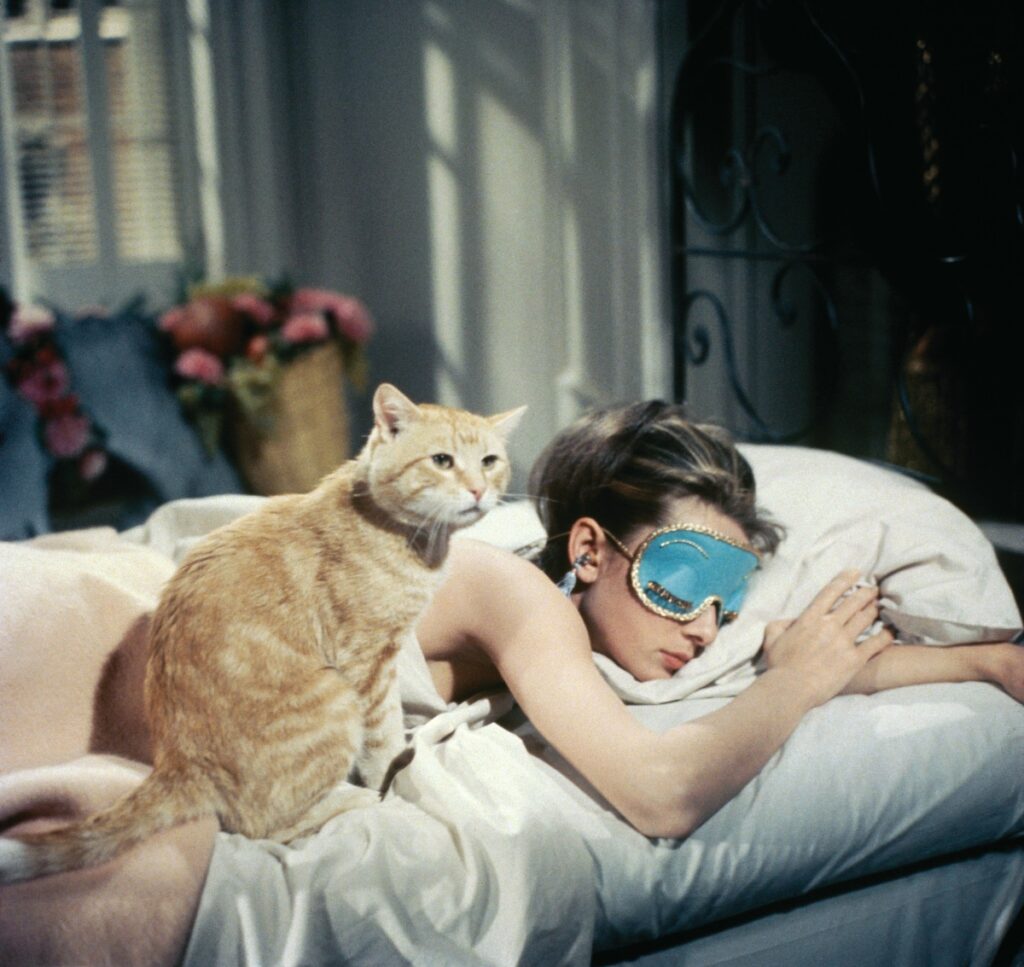
The American Humane Society even created the PATSY, the furry equivalent of the Oscars. The only cat to ever win twice was Orangey. He won one PATSY for Rhubarb and one for his 1962 role alongside Audrey Hepburn in Breakfast at Tiffany’s.
Music
Cats have also influenced American music, appearing on album covers and inspiring artists like Zen Confrey, King Oliver, and Sterling “TrapKing” Davis aka The Cat Rapper. Personal anecdotes include John Lennon’s love for cats and Iggy Pop rescuing a stray kitten on the set of Blood Orange, highlight their impact in this realm.
Literature
American literature often celebrates feline companions through books and poems. Authors like Edgar Allan Poe and Mark Twain even drew inspiration from their own cats. There’s also a literary magazine called The Black Cat that ran from 1895 to 1923 and featured on its covers a cat dressed in that issue’s theme.
Of course, an entire section is dedicated to Ernest Hemingway and his mini-kingdom of polydactyl cats. His home in Key West, Florida, is now a museum and is a must-visit for anyone looking to learn more about the writer and his cats. You can read more about the Hemingway Home and Museum and its polydactyl cats here.

Television
Felines have left an indelible mark on American television, too.
The very first still image ever being broadcasted on television was that of Felix the Cat. This animated feline modeled after Charlie Chaplin went on to be the star of 150 silent cartoons.
Cartoon cats were especially a big deal in the 1960s and 1970s, with Courageous Cat, Top Cat, and The Secret Lives of Waldo Kitty being the most popular.
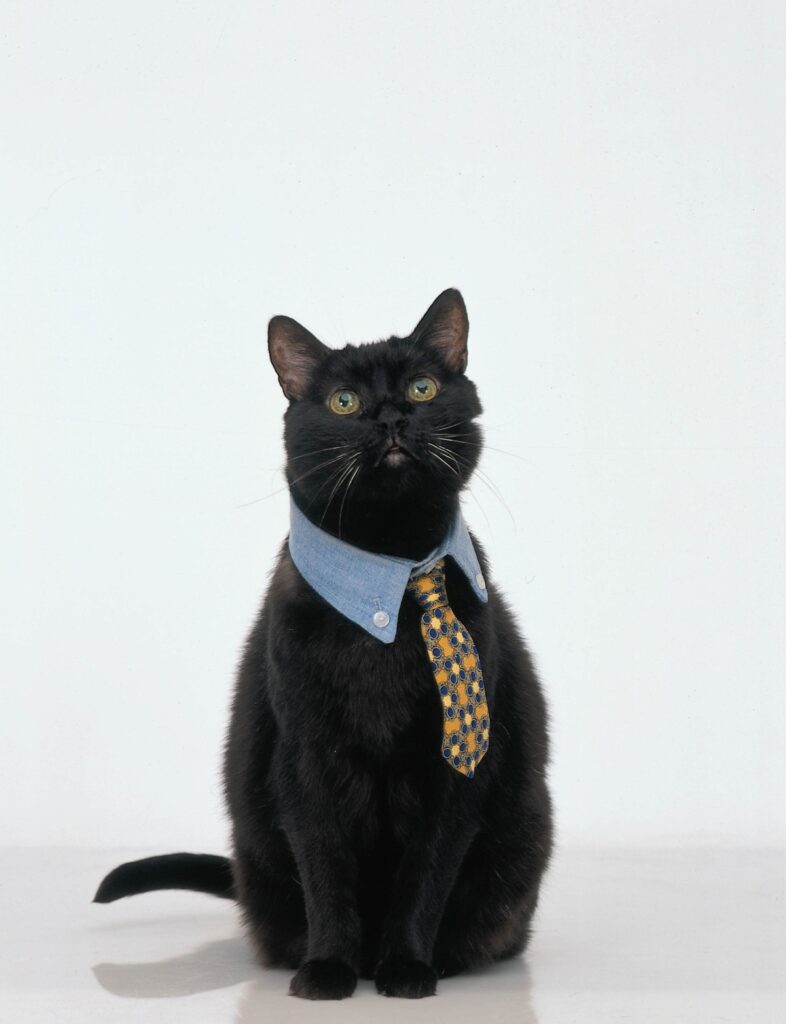
In the 1980s and 1990s, Itchy and Scratchy, Salem from Sabrina the Teenage Witch, and the pet cats from The Simpsons further solidified cats’ presence on TV.
In addition, reality TV entered the scene with Meow Mix House. This show featured shelter cats competing for the title of Meow Mix’s Feline Vice President of Research. Meanwhile, Mary Tyler Moore Productions honored the MGM lion by adopting a yawning kitten as the mascot for the television production company.
The Internet
Internet culture embraced cats with websites like “I Can Has Cheezburger?” and viral sensations like Grumpy Cat and Nala Cat. Celebrity-owned cats, including those of Katy Perry and Robert Downey Jr., have amassed large followings on social media.
One of the most endearing stories is about Taboo, a kitty owned by a couple living next door to Michael Jackson. Taboo was catnapped several times by overzealous fans, who hoped to meet the celebrity by holding his cat for ransom, unaware that Taboo wasn’t actually Jackson’s pet.
Advertising
Even in advertising, cats have made their mark, from early appearances to becoming iconic figures in commercials. One rescued shelter cat became a prominent advertising star, symbolizing the industry’s embrace of feline charm.
Cat laws
One of the funniest chapters is the one on cat laws.
Have you ever heard of the law in Natchez, Mississippi, that forbids cats from drinking beer? Or the one from Cresskill, New Jersey, that states cats must wear three bells on their collar to warn birds?
Apparently, there is also a Californian law prohibiting cats from mating within 1,500 feet of schools, taverns, or places of worship. And one in Barber, North Carolina, that says cats and dogs are not allowed to fight.
Additionally, there are more serious laws, such as a bill signed by President Ronald Reagan (then governor of California) that could send someone to prison for injuring a cat.
The book also highlights famous klepto-cats and murderous felines, along with the orange calico that became the mascot of the Boston Police Department.

But wait, there’s more!
These were just a few examples of the topics covered in The Cats of America. However, there’s a wealth of discoveries waiting within these pages. With each chapter being concise, there’s plenty of room for a wide range of subjects.
Mullarkey also delves into lots of trivia and fait-divers stories: the tale of a cat rescuing a child by leaping onto a kidnapper’s back, a Californian cat anticipating phone calls before they rang, and an orange kitty dialing 911 in emergencies, etc.
The book also features chapters on famous cat haters, America’s oldest cats, feline escapades in football stadiums, the first cloned cat, popular American cat names, and much more.
Conclusion
Are you wondering if The Cats of America by Séamus Mullarkey is worth your time?
If you’re drawn to the topics mentioned earlier, this book will likely pique your interest. While it might not expand your intellect, the stories and facts are enjoyable to read and can spark entertaining conversations.
On a minor critique, the writing could benefit from more polish. There’s a lot of passive voice, lengthy sentences, and uninspired word choices. Nevertheless, despite this weakness, the book would make a delightful gift for cat-loving individuals, whether they’re children, teenagers, or anyone seeking quirky feline facts.
By the way, Mullarkey has published numerous other books about cats. If you’d like some further feline reading material by the same author, you may also wish to purchase The Cats of Britain (Mullarkey’s best) and The Cats of Ireland.
Check out even more true stories about famous American cats!