
Last Updated on 29 March 2026 by Vanessa
Planning a trip to Sitges, Spain? This in-depth Sitges travel guide covers everything you need to plan the perfect getaway — from the best hotels and beaches to top restaurants, day trips, nightlife, and insider tips you won’t find elsewhere.
Located just 35 minutes from Barcelona, Sitges is one of the most beautiful coastal towns in Catalonia — famous for its golden beaches, postcard-perfect old town, vibrant LGBTQ+ scene, outstanding food culture, and world-class events.
I’ve visited Sitges more than ten times, often staying for a full week or longer, and I return almost every year for the Sitges Film Festival, which is one of the most important fantasy and horror film festivals in the world. But while the festival originally drew me in, Sitges charms me just as much for its relaxed Mediterranean lifestyle, swimmable beaches, exceptional dining scene (including some of the best vegan options in coastal Spain), and effortlessly chic atmosphere.
In this ultimate Sitges, Spain travel guide, you’ll find:
- The best areas to stay in Sitges
- Top-rated hotels (luxury, boutique, mid-range, and budget)
- The best beaches in Sitges — including LGBTQ+ beaches
- Where to eat (from tapas bars to fine dining and excellent vegan restaurants)
- The top things to do in Sitges beyond the beach
- Day trips to Tarragona and Garraf Natural Park
- Practical planning advice (how to get there, when to visit, how long to stay, and budgeting tips)
Whether you’re visiting for the beaches, the nightlife, Pride celebrations, the famous Carnival, or a relaxing Mediterranean escape, this complete Sitges travel guide will help you plan your trip with confidence — and make sure you don’t miss the very best this stunning Spanish seaside town has to offer.
Let’s plan your perfect trip to Sitges.
Sitges, Spain travel guide 2026: best things to do, beaches, restaurants & travel tips
Is Sitges worth visiting?
Absolutely. No matter what draws you here — the picture-perfect views, the Sitges Film Festival, the carnival, the beaches, or the LGBTQ+ scene — this coastal town has a way of charming travelers from all backgrounds and interests. Even though I’ve visited more than ten times, I’m still not bored.
And I’m not the only one who feels that way. Actor Norman Reedus (best known as Daryl Dixon in The Walking Dead) lived here for a year in the late 1990s and returned in the second season of his travel documentary series Ride With Norman Reedus. Japanese film director Takashi Miike also fell in love with he town while attending the Sitges Film Festival and later chose it as a filming location for JoJo’s Bizarre Adventure: Diamond Is Unbreakable (2017).
Then there are the events — the film festival, the carnival, and one of Europe’s most celebrated LGBTQ+ party scenes — all of which give Sitges year-round energy and make it far more than just another Spanish beach destination.
If you’re wondering whether Sitges deserves a spot on your Spain itinerary, the answer is simple: yes — especially if you’re looking for a coastal town that combines beaches, culture, nightlife, and easy access from Barcelona in one highly walkable, beautifully photogenic destination.
How long do you need in Sitges?
You can technically “do” Sitges in a day.
However, Sitges isn’t about ticking off landmarks. It’s about experiencing the film festival, the carnival, or the LGBTQ+ scene. It’s about morning beach. Long breakfast. Some festival screenings. Sunset promenade. Tapas. Repeat.
Most of all, it’s a place people keep coming back to. Visitors who come only once are rare. I’ve convinced plenty of friends to go during festival season, and now they return every year.
How to get to Sitges from Barcelona Airport
The nearest airport to Sitges is Barcelona-El Prat Airport (BCN), located northeast of town. Sitges is only about 30–35 kilometers away, which makes it one of the easiest coastal destinations to reach after landing in Spain.
Here are the best ways to get from Barcelona Airport to Sitges:
Bus
Taking the bus is by far the most affordable and straightforward way to reach Sitges. The Bus Garraf service operates direct routes between Barcelona-El Prat Airport and Sitges.
The journey takes around 30 minutes, and buses run once per hour (once every two hours during the weekend). A one-way ticket costs 8.5 euros.
If you prefer a direct connection without changing trains, the bus can be slightly simpler, especially if you’re traveling with luggage.
Taxi
Because Sitges is so close to Barcelona Airport, taking a taxi is a very convenient option — especially if you’re arriving late at night, traveling as a group, or carrying a lot of luggage.
The drive takes around 25 to 30 minutes. You can expect to pay approximately 60 euros to 80 euros for a taxi from Barcelona Airport to Sitges. Prices may vary slightly depending on time of day. For couples or small groups, the cost can be reasonable when split between passengers.
Consider booking an airport taxi transfer in advance here, because the waiting lines for taxis can be long.
Train
From Barcelona-El Prat you’ll first catch the Rodalies R2 Nord train from the airport to El Prat de Llobregat, then transfer to the R2 Sud train toward Sitges.
The total trip takes about 45–55 minutes depending on connections. Ticket prices are usually around 6 euros one-way when you buy at the station or in advance.
📍 If you’re going to travel through Spain a lot using the train, it’s a good idea to purchase a Aurorail Spain Pass, which allows you unlimited train rides for the number of days of your choice.
Should you rent a car?
If your plan is simply to explore Sitges itself, you don’t need a car. The town is extremely walkable, with beaches, hotels, restaurants, nightlife, and cultural attractions all within easy walking distance.
There are also excellent train connections between Sitges and other coastal towns along the Costa Dorada, so it’s easy to plan day trips without driving.
However, renting a car can make sense if you want to explore inland Catalonia. Scenic mountain areas, small wine villages in the Penedès region, and more remote beaches are much easier to access with a car.
Competitive car rental rates are available when you book in advance through major rental platforms such as DiscoverCars.
Visit Sitges as a day trip from Barcelona
If you’re staying in Barcelona and considering a day trip to Sitges, it’s absolutely doable, and one of the most popular excursions from the city.
Train
To get from central Barcelona to Sitges by train, take the Rodalies R2 Sud line toward Sant Vicenç de Calders from Barcelona Sants, Passeig de Gràcia, or Estació de França.
The journey is direct, takes about 30 minutes, and trains run every 15–30 minutes throughout the day.
A one-way ticket costs 6 euros and can be purchased at station machines or counters (or you can use your Aurorail Spain Pass). Sitges train station is about a 10-minute walk from the old town and beaches.
Guided tours
You don’t really need a guided tour, as public transportation is simple and affordable. However, organized tours can be a convenient option if you prefer everything arranged for you, including transportation and local insights.
If you do decide on a guided tour to Sitges, know that these sell out extremely quickly, even outside of the summer season and festivals.
📍 You can book your guided tour from Barcelona to Sitges here.
Some tours combine Sitges with other destinations, such as Montserrat or Tarragona, which allows you to see multiple highlights in one day.
Tarragona was once the ancient Roman capital of Hispania and is known for its Roman ruins and UNESCO World Heritage Sites, including the well-preserved Roman amphitheater and the Las Ferreres Aqueduct. Montserrat, on the other hands, is famous for its dramatic mountain formations and the Benedictine monastery that houses the famous Black Madonna.
- Book your day trip to Montserrat, Tarragona, and Sitges here.
- Book your Tarragona and Sitges guided tour here.
Where to stay: best hotels and areas
For a full breakdown of the best areas to stay in Sitges and more hotel recommendations by neighborhood and budget, read my detailed guide to the best areas and hotels in Sitges. That article will help you choose the right base for your trip.
If you just want a quick overview, here are three solid options:
- Meliá Sitges: Best luxury option, especially for the Sitges Film Festival and stays near the port. Spacious rooms, pool, and upscale comfort. (Check prices and availability.)
- Hotel Galeón: Great boutique-style stay with an excellent price-quality ratio. Central location, strong breakfast, and a quiet pool area. (Check prices and availability.)
- El Cid: Reliable budget option in the center of town. Simple, well-located, and popular during festival and carnival season. (Check prices and availability.)
No matter where you stay, book early for summer and festival dates, as rooms sell out fast.

Awesome things to do in Sitges
At first glance, Sitges might look like a sleepy seaside town, but you’ll quickly realize there’s far more than just beaches and pretty façades. Below are the things to do and see that should be on every Sitges itinerary:
Wander the Old town
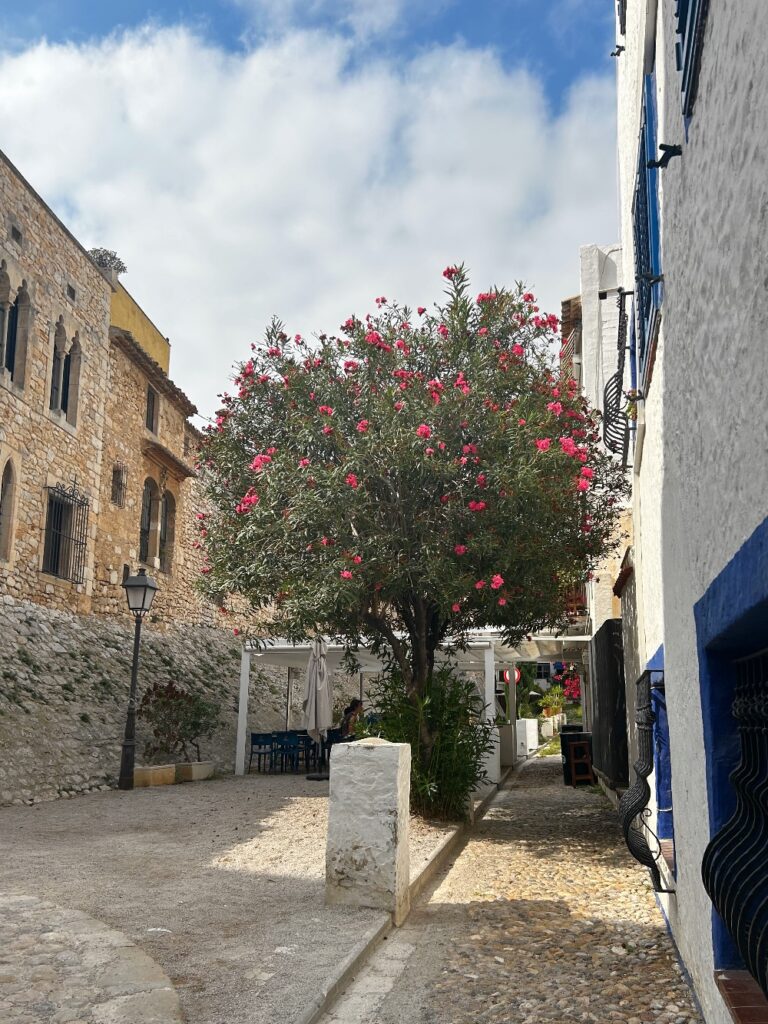
In the historic center or Sitges, narrow cobblestone streets twist between whitewashed houses with colorful shutters and wrought-iron balconies with flowers. Many buildings in this picturesque maze showcase Catalan Modernisme details, because the movement flourished here in the late 19th century when Sitges became a magnet for artists and intellectuals.
Tip: Book a self-guided walking tour of the historic quarter that includes museum access.
Visit the Sant Bartomeu Church
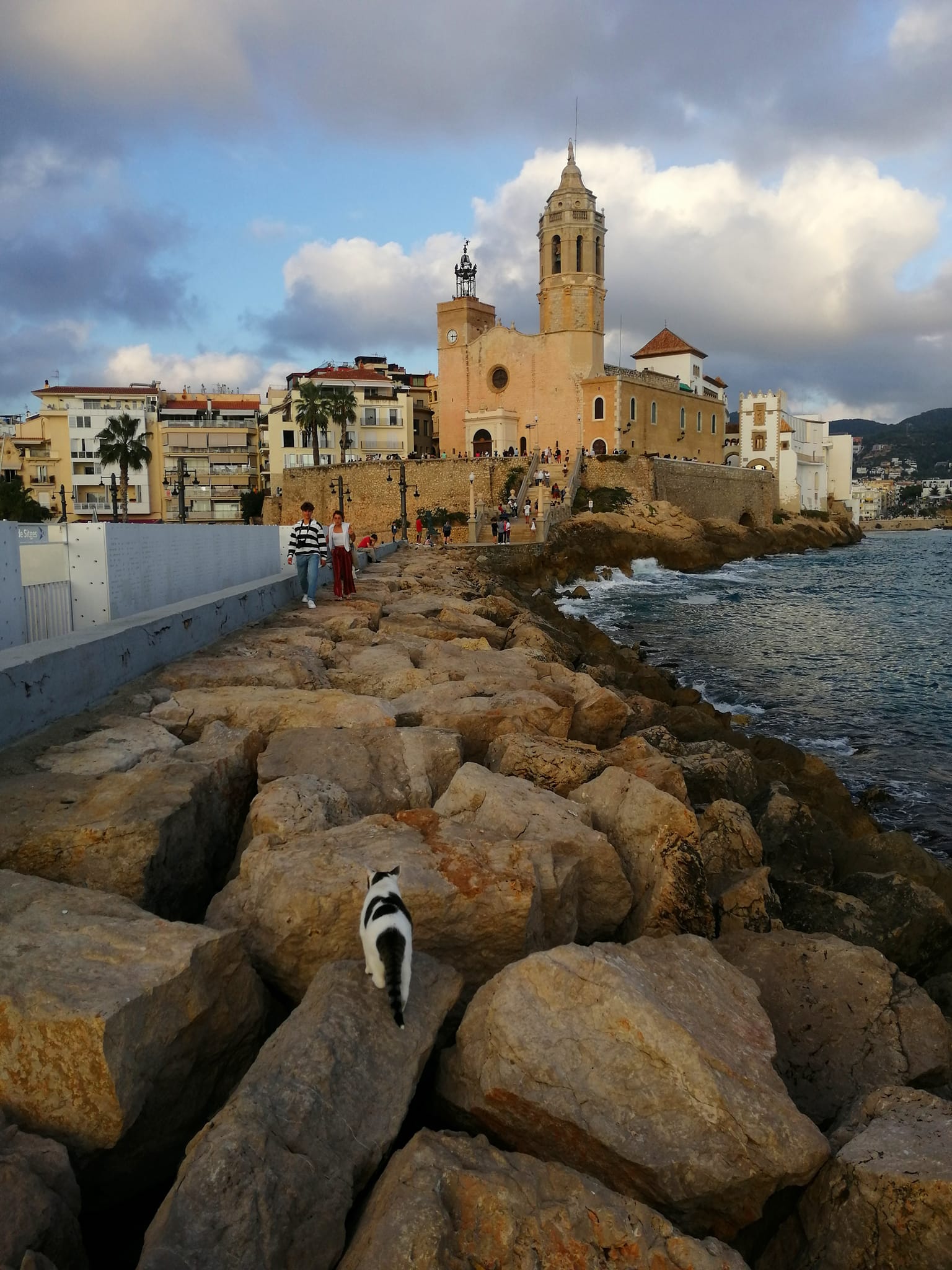
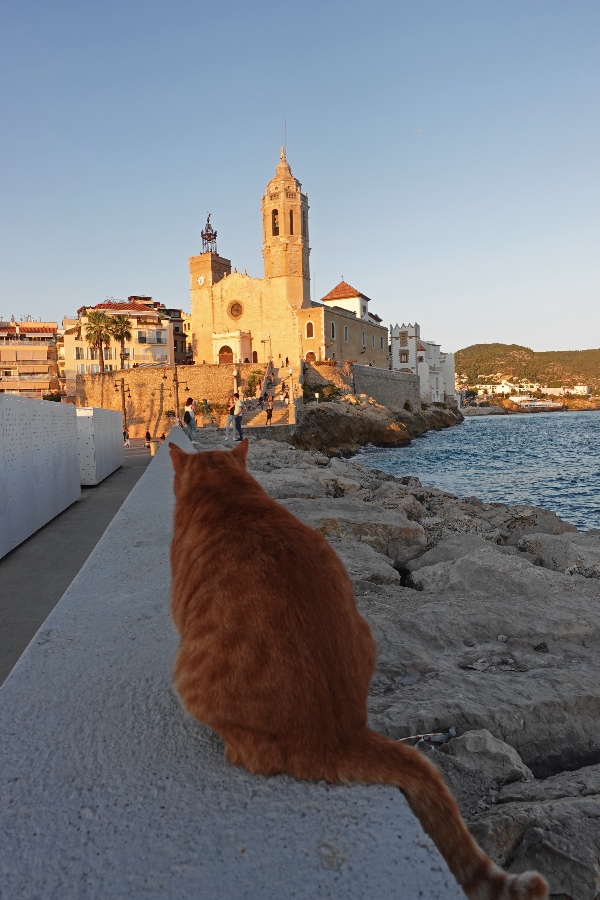
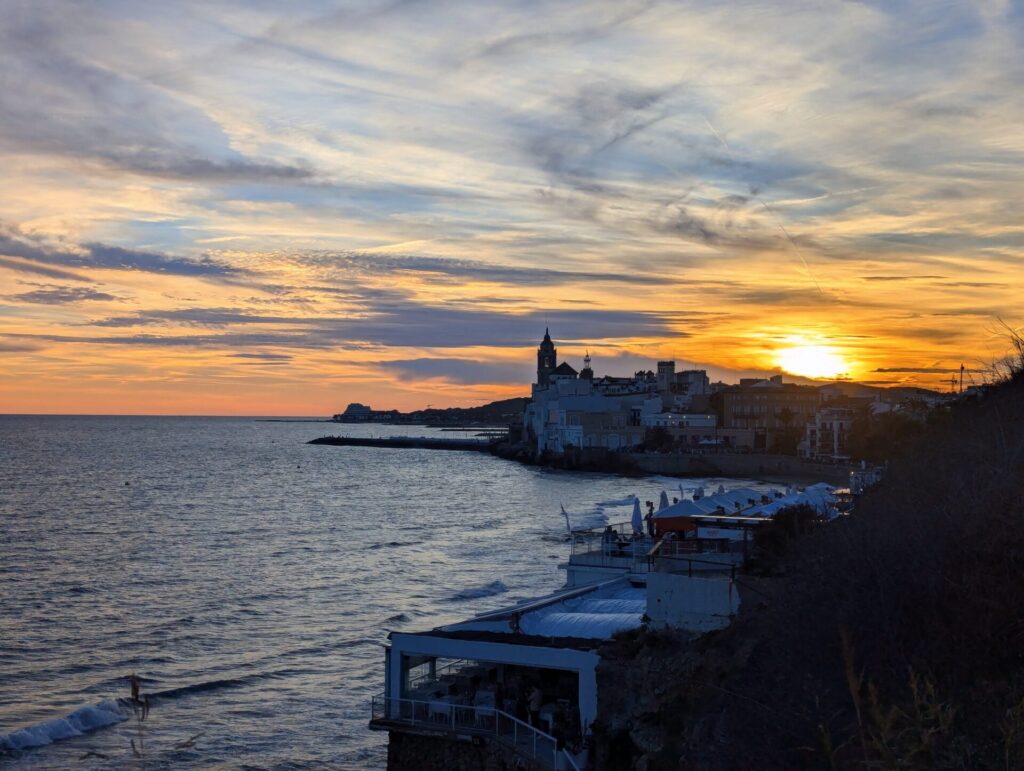
The Church of Sant Bartomeu and Santa Tecla defines the Sitges skyline and sits dramatically above the town’s main beach. It dates back to the 17th century and replaced earlier medieval churches destroyed by pirates.
Inside, the church features a Baroque altar and several notable paintings by local artists, including Josep Ribas. The exterior includes a small bell tower and a plaza that often hosts local festivals and processions.
Explore the Cau Ferrat Museum
Painter and writer Santiago Rusiñol helped turn Sitges into a cultural hub. His former home and studio is now the Cau Ferrat Museum, one of the most important Modernist museums in Catalonia.
The museum is located within the old town and displays a collection of Modernist paintings, sculptures, and decorative art, including works by Rusiñol and Picasso.
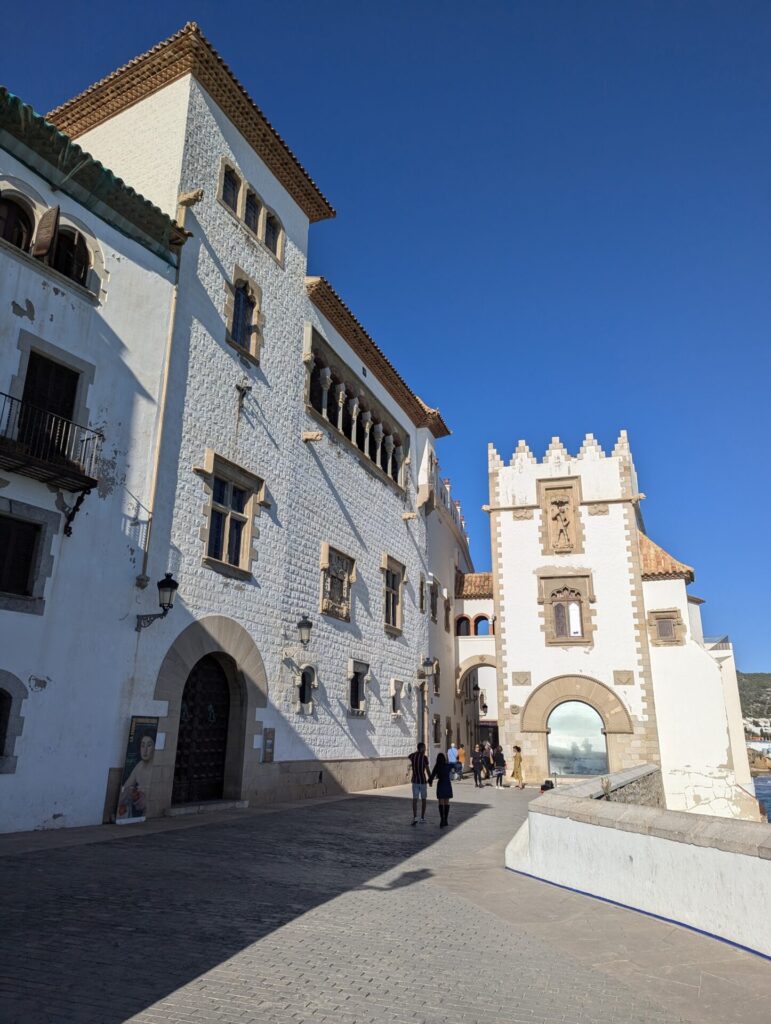
Discover the Palau Maricel
One of Sitges’ architectural gems is the Palau de Maricel. Built in the early 20th century, it blends Gothic, Renaissance, and Mediterranean elements into something harmonious. The sea-facing terrace alone is worth it.
Roam the Cementiri de Sitges
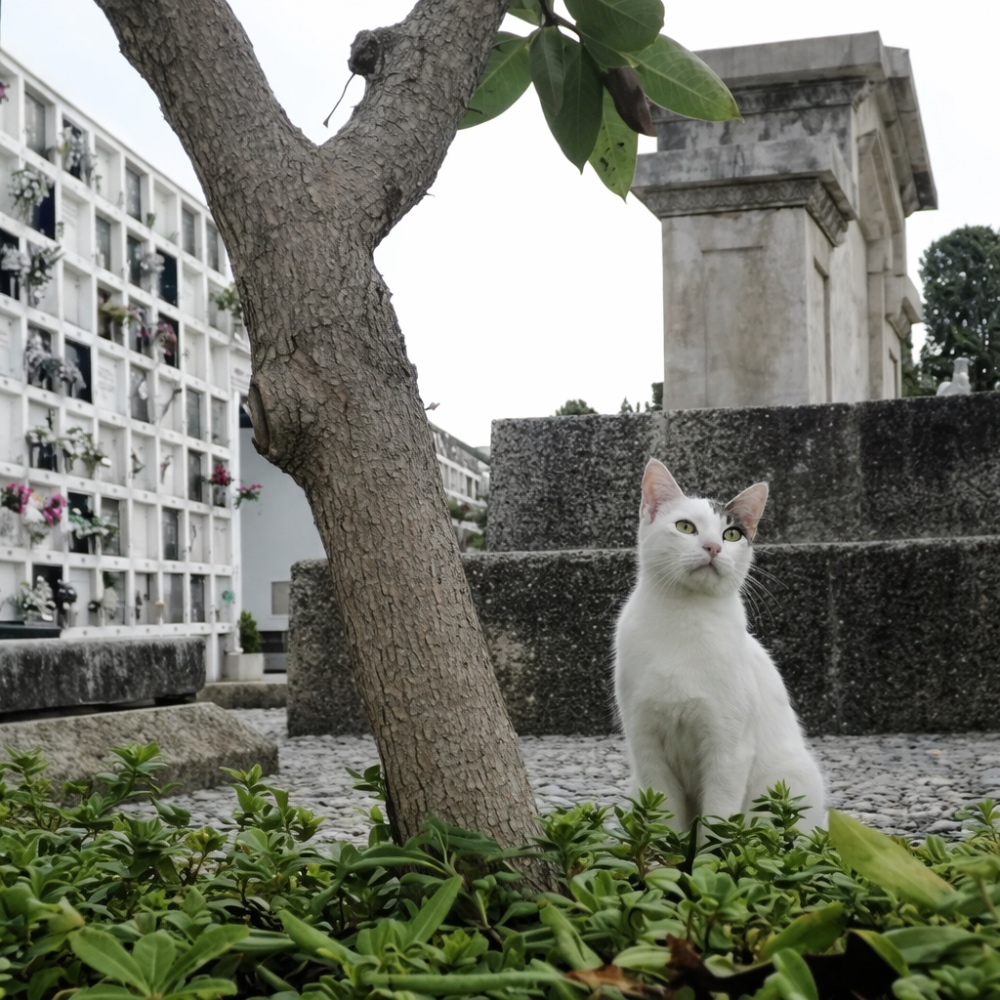
The Cementiri de Sitges, filled with modernist tombs, is one of the most striking seaside cemeteries in Catalonia. For a deeper look at its history, symbolism, and the most notable graves to see, check out this guide to the Sitges cemetery.
Stroll along the beachfront promenade
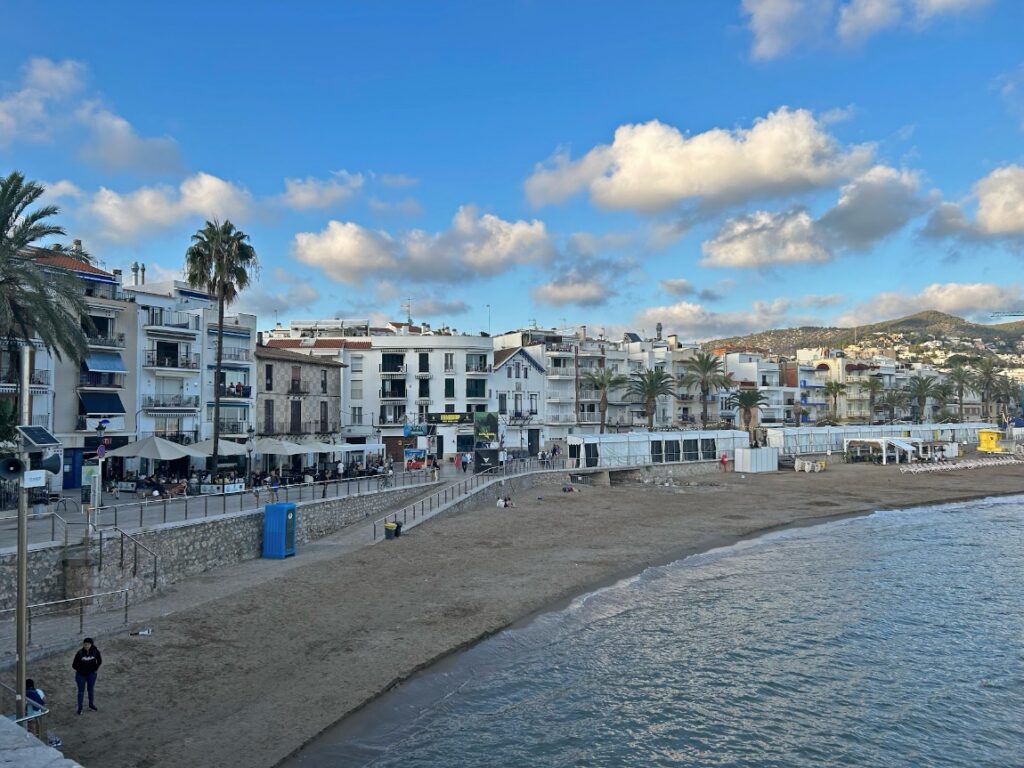
The Sitges seaside promenade stretches about 3 kilometers from the church of Sant Bartomeu and Santa Tecla toward the Terramar Gardens, running along several of the town’s main beaches and offering uninterrupted views of the Mediterranean.
Along the route you’ll see several sculptures that have become a major part of Sitges’ cultural identity.
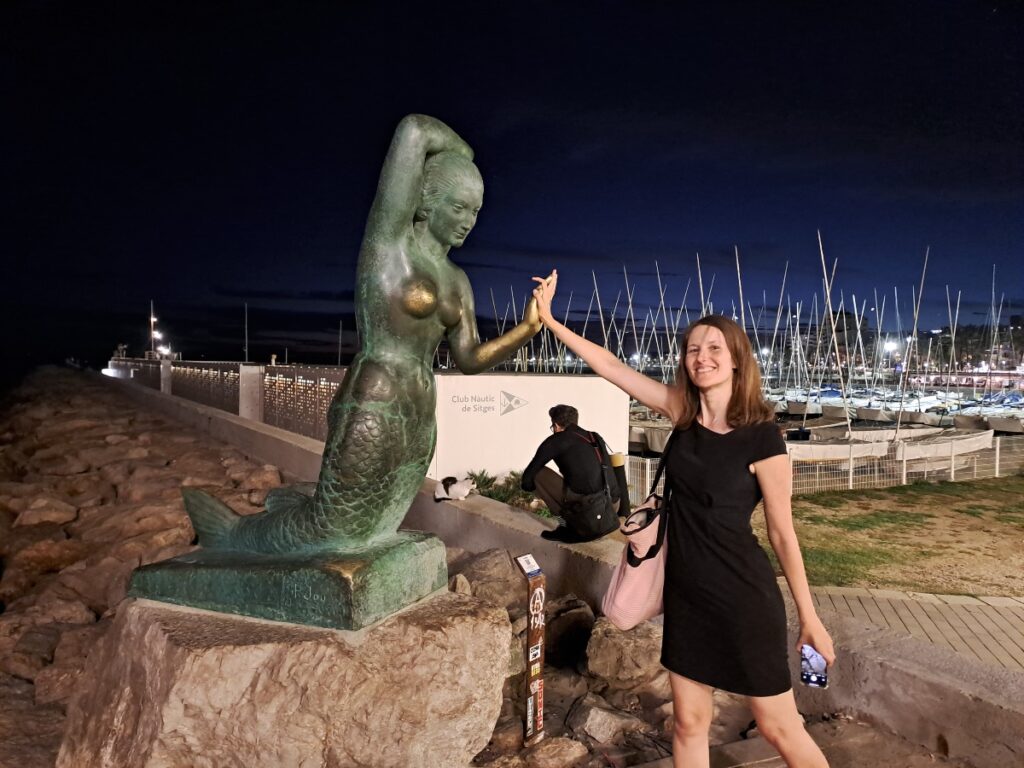
One of the most photographed pieces is La Sirena, a bronze mermaid created by Pere Jou in 1965. It symbolizes the town’s connection with the sea.
Other public sculptures nearby include Columna de sorra by Àlex Papalini and monuments along the waterfront celebrating figures like El Greco and the painter Santiago Rusiñol.
You’ll also pass landscaped gardens, benches, and outdoor cafés, making it easy to walk the full length. It’s the perfect late-afternoon ritual. Coffee in hand. Sun lowering. Locals strolling. That soft Mediterranean air.
Relax on the beaches
Sitges has 17 beaches packed into a small stretch of coastline.
Historically, Sitges was a fishing village before tourism took over in the 20th century. That’s why the beaches are woven so tightly into the town itself.
Here are the most famous beaches in Sitges (the first two are my personal favorites):
- Platja de Sant Sebastià: One of the first beaches to the east of the town center, popular with families and visitors looking for calm waters and easy access from the promenade.
- Platja de la Ribera: One of Sitges’ longest and busiest beaches, with amenities, water sports, and easy access from the promenade.
- Platja de la Fragata: A family-oriented beach near the historic church; it’s wide and has space for volleyball and pedalos.
- Platja dels Balmins: A mixed nudist and LGBTQ+-friendly beach with three small coves; clothing optional and very popular during summer.
- Platja de la Bassa Rodona: The main LGBTQ+- friendly beach in the town center, especially popular with gay visitors in peak season.
- Platja d’Aiguadolç: A quieter beach toward the eastern side of town; also considered a nudist-friendly area and less crowded than central beaches.
Spot cats near the port
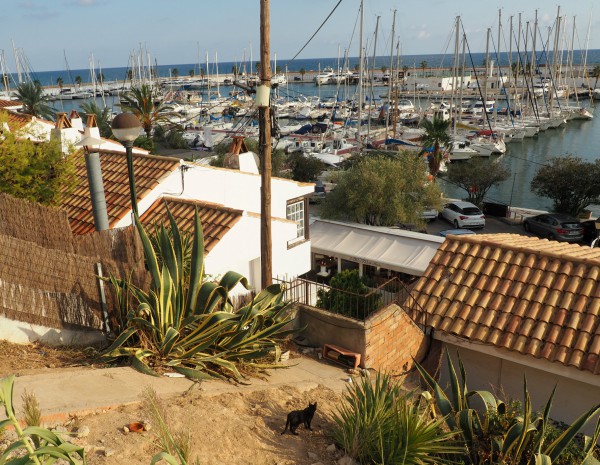
The port area in Sitges, especially Port de Sitges-Aiguadolç, feels quite different from the historic center and the beaches near the church. The marina is pleasant to walk around, with rows of sailboats and yachts, small docks, and nice views back toward the coastline.
Many people come here for the restaurants. The port has several seafood and Mediterranean places with terraces overlooking the boats. Personally, I prefer the restaurants in the town center (see my recommendations below), but the port definitely wins when it comes to dining with a view, especially in the evening, when the light over the water is beautiful.
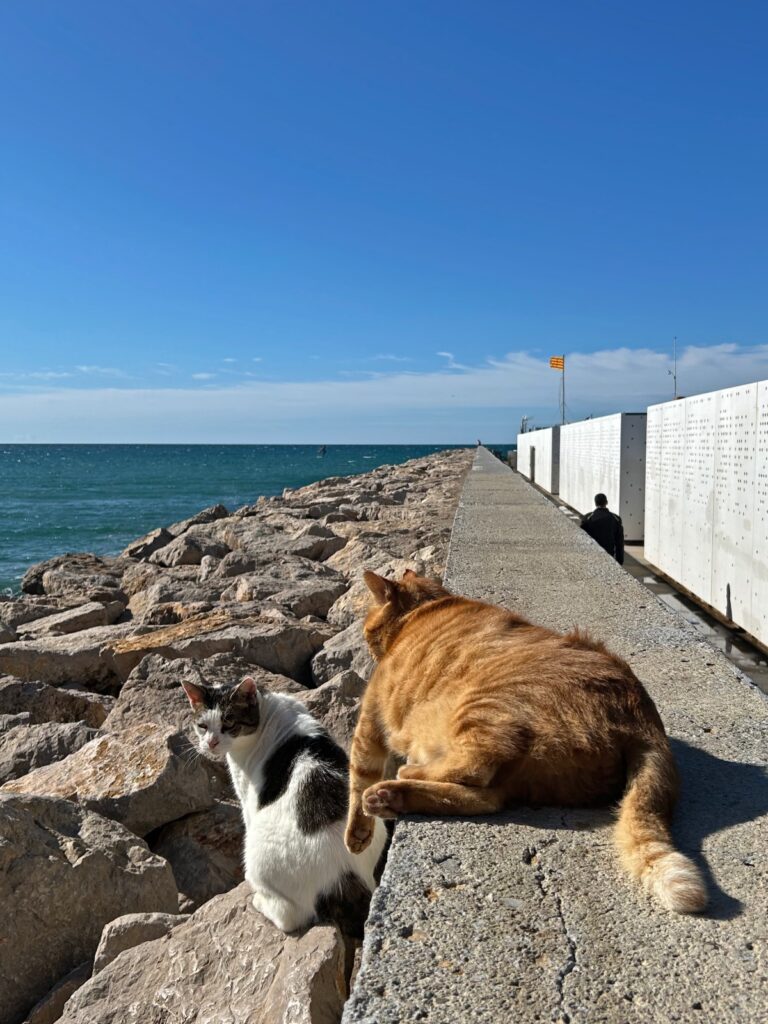
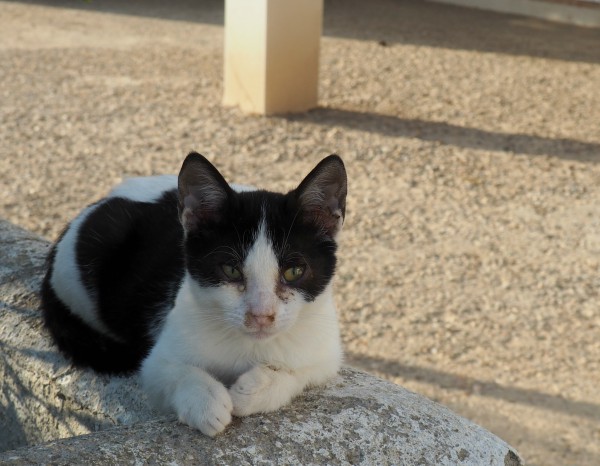
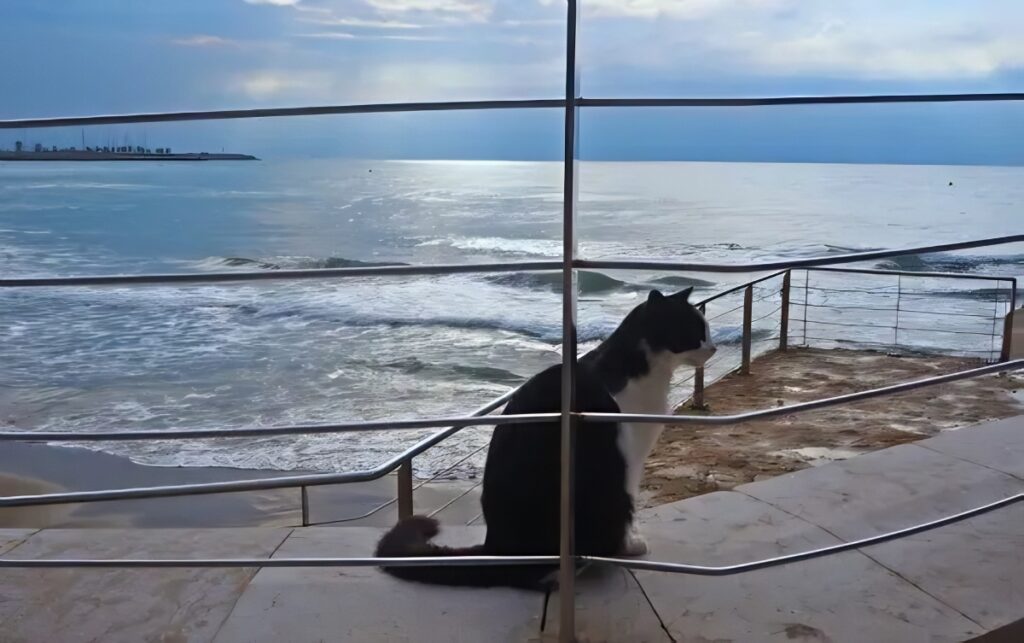
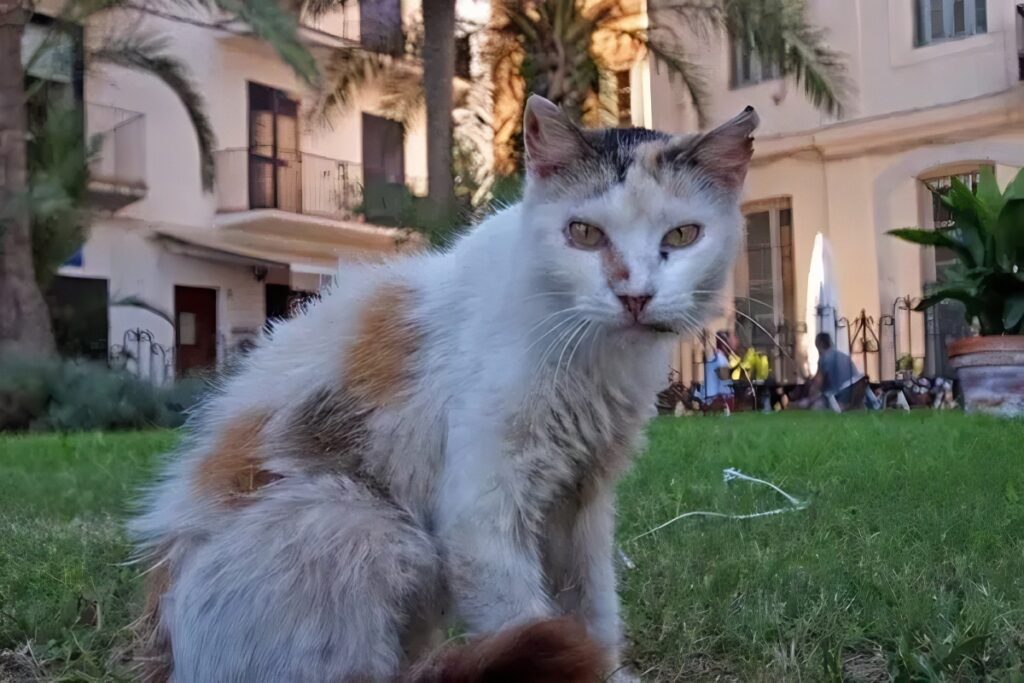
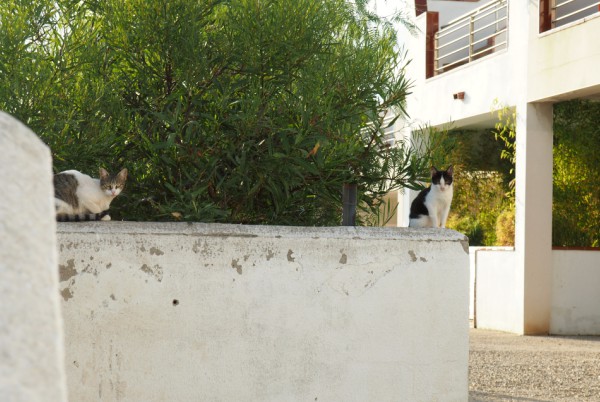
The real reason I enjoy this area, though, is the cats. It’s definitely the place in Sitges with the most stray cats.
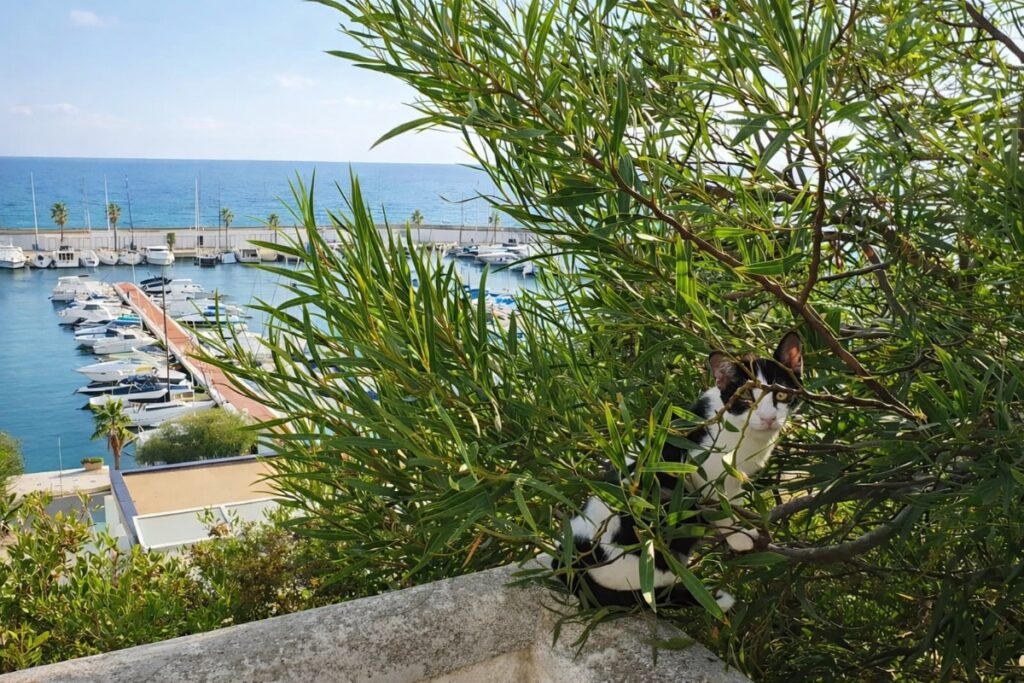
As you will see from some of the pictures, the “gats” (that’s “cats” in Catalan) that live near the port of Sitges are timid. Although a handful of locals feeds them every day, they prefer to hide when tourists are around.
Some of these cats will be strolling along the pathways that lead toward the port, though they will run away and hide whenever someone approaches.
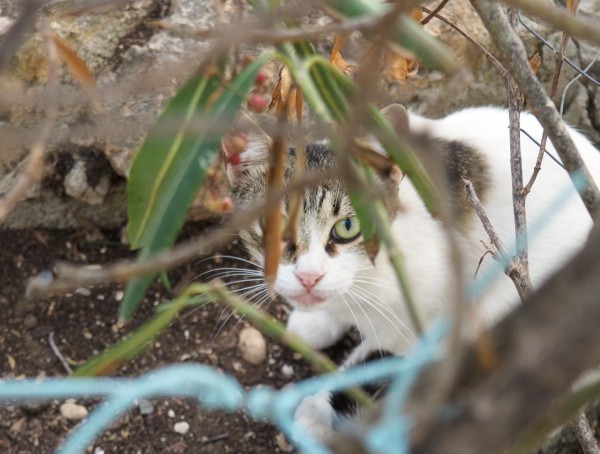
During the daytime, these cats seldom venture into the port area itself due to the bustling presence of tourists, especially because the seafront is lined with restaurants.
However, it’s highly likely that they emerge during the quiet hours of the night when the restaurants are closed, scavenging for leftover scraps and sustenance.
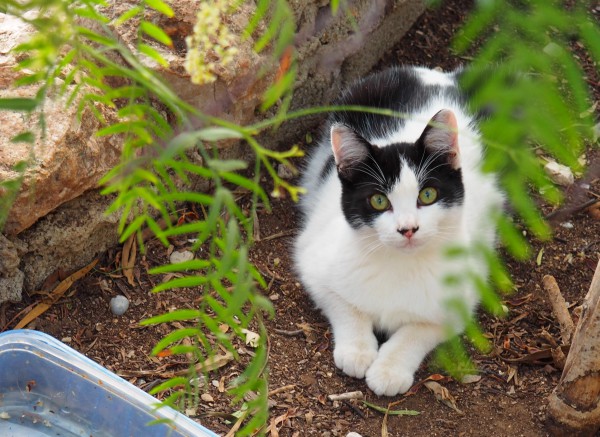
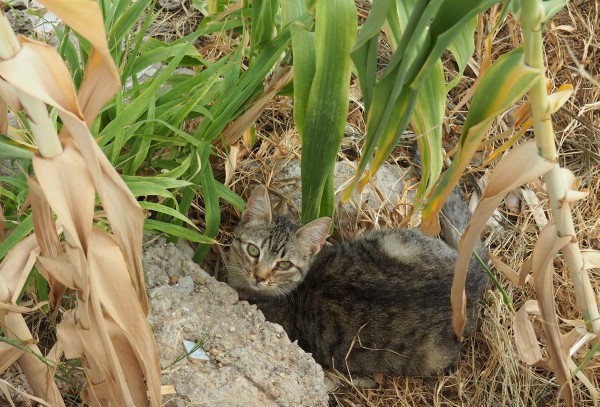
If the cats are hiding, look down, into the plants and dried grass that line the pathways. You’ll immediately know you’re on the right track if you see handmade cat houses, scratching posts, and feeding bowls.

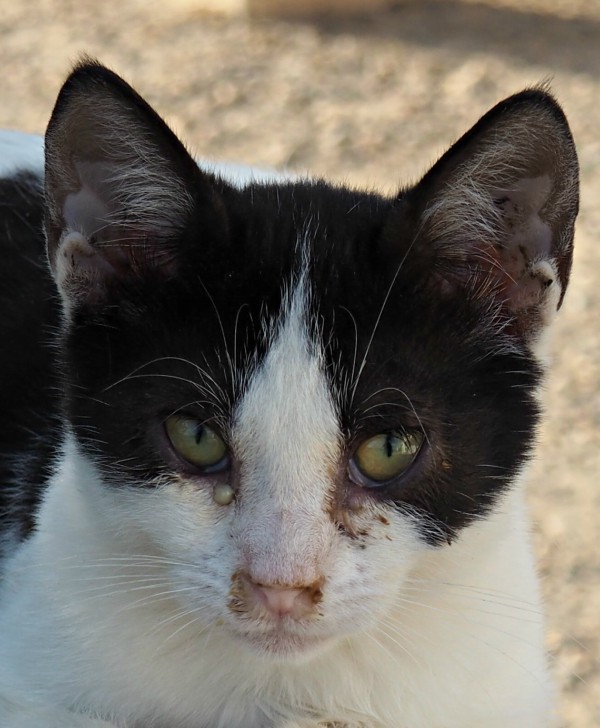
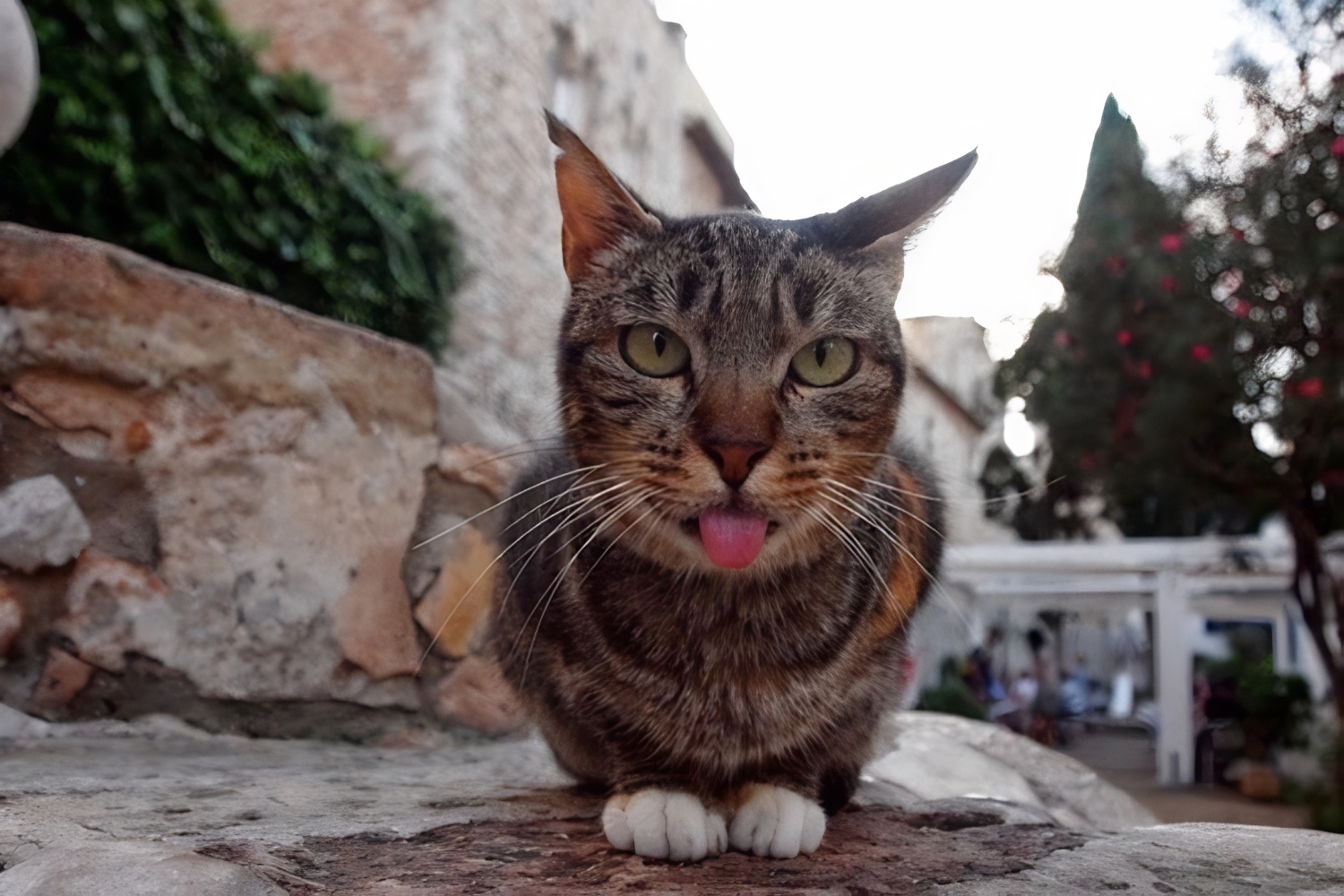
The little sweetie below was very anxious and ran away whenever someone was passing the alley where she was hanging out. After a few minutes, she realized she could trust me and offered a multitude of leg brushes and headbutts.
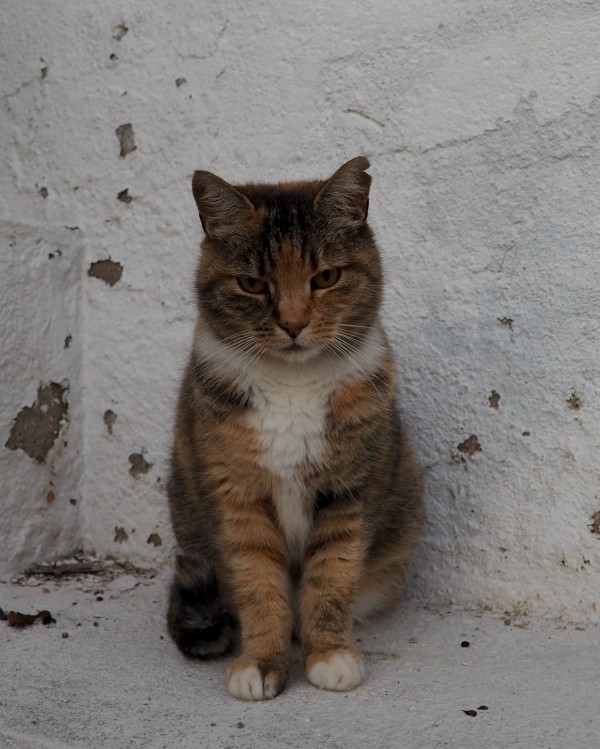
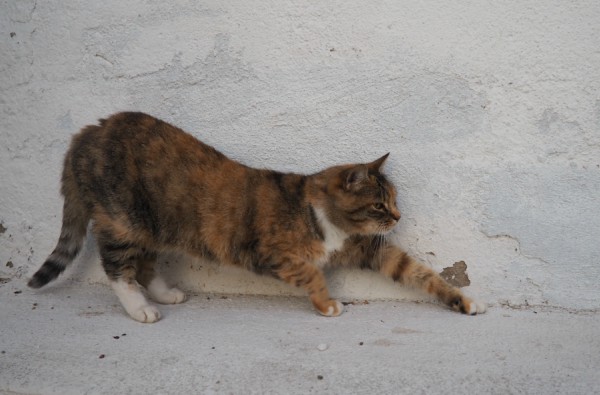
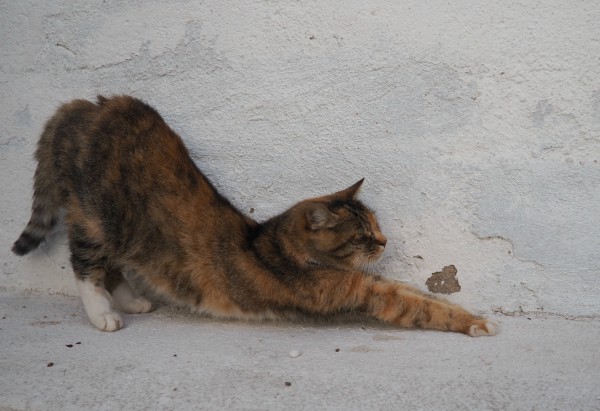
Once you know where to look, you’ll see dozens upon dozens of cats near the port of Sitges. Most of them will be in plain sight, but some will be sleeping in the shade, half hidden by the bushes.
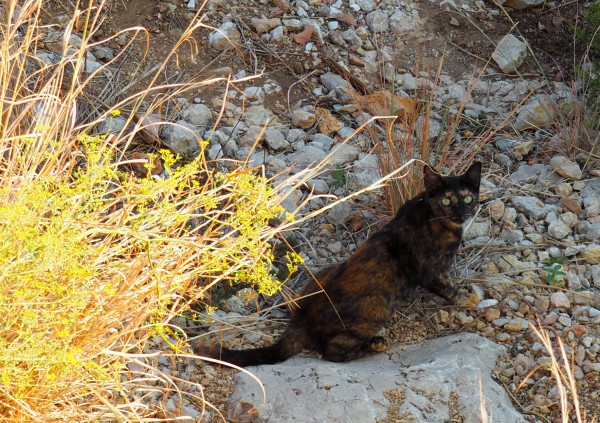
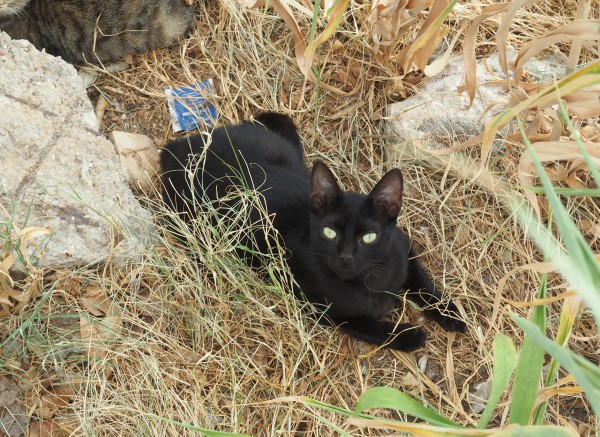
You can also find a lot of cats:
- around (and sometimes inside) the Cine El Retiro
- near the pier in front of the Sant Bartomeu Church
If you’re curious about the story behind Sitges’ stray cat colonies, how they’re managed, and how you can responsibly support them during your visit, you may want to read this detailed guide about the stray cats of Sitges.
Hike through Garraf Natural Park (Parc del Garraf)
With its limestone hills, caves, hiking trails, Garraf Natural park feels completely different from the beach vibe. Historically, this rugged terrain shaped trade routes and settlements along the coast.
It’s located within the municipality of Sitges (just a few kilometers from the town center), though it spans a much larger area across three different regions of Catalonia: Baix Llobregat, Alt Penedès, and Garraf. However, s significant portion of the park, including key landmarks like La Pleta and the Trinity Hermitage, falls within the borders of Sitges.
The most common way to access the park from Sitges is through the Polígono de Mas Alba industrial estate.
The park covers approximately 12,820 hectares and serves as a natural backdrop to the coastal town of Sitges.
Key features within the park:
- Natural landscape: Known for its unique karstic massif (limestone) terrain, featuring caves, deep valleys, and rocky walls.
- Palau Novella: A former “Americano” home located in the heart of the park that now houses a Tibetan Buddhist monastery.
- Outdoor activities: The park offers extensive networks for hiking, mountain biking, and bird watching, particularly for spotting Bonelli’s eagles.
- Garraf village: The small seaside village of Garraf, which is officially part of the town of Sitges, is entirely surrounded by the natural park.
Garraf National Park is free to visit.
Go on a kayaking and snorkeling adventure along the coves of Sitges
A kayaking tour along the coast between Sitges and Vilanova i la Geltrú gives you access to parts of the shoreline you can’t reach on foot. This stretch of coast sits at the edge of the Garraf Massif.
The route lies within the Els Colls i Miralpeix stretch of shoreline, which features limestone cliffs, small sea caves, and narrow coves carved into the rock.
During the roughly three hours on the water, the tour stops at sheltered spots where you can get out of the kayak to snorkel in crystal-clear water, swim, and explore small underwater features. Snorkel gear, life jackets, and instruction are all provided, and no prior kayaking experience is needed — guides are there to help throughout.
The full activity lasts about four hours including transport, and is suitable for most people ages 12 and up who can swim.
📍 You can check prices and availability for the kayaking and snorkeling tour here.
Enjoy an evening boat ride
If you want to experience Sitges from the water without the exercise, an evening sail with a glass of cava is one of the most memorable ways to do it. This tour takes you out from the marina in the late afternoon, just before sunset, for a peaceful sail along the coastline as the light changes over the Mediterranean. You’ll relax on deck with a chilled glass of cava in hand, watch the coastline drift by, and see Sitges, Vilanova, and the distant hills bathed in golden hour colors.
📍 Check prices and availability for this sunset sailing with cava.
Explore local and international art
Sitges has several smaller art galleries that mainly feature work from local artists. But there are regular exhibitions from international artists, especially in October when the film festival is on.
I was even lucky enough to see my books featured here in 2024 when Gilles Vranckx, the artist who designs by book covers, had an exhibition here.

Main events in Sitges
Sitges punches way above its weight when it comes to big, crowd-pulling events. Here are a few of the most famous:
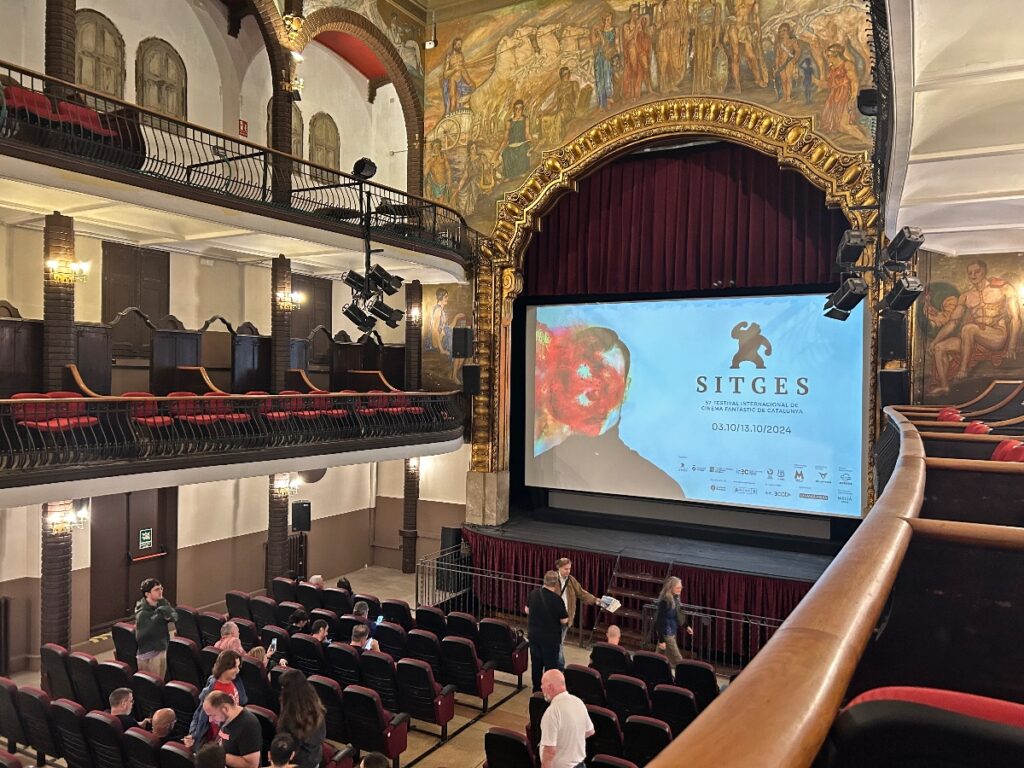
Sitges Film Festival
If you’re visiting in October, the Sitges Film Festival completely transforms the town.
This isn’t some niche event. It’s one of the world’s leading fantasy and horror film festivals, and it attracts filmmakers, actors, and film fans from around the globe.
Screenings start in the morning, continue throughout the day, and often run late into the night. During the festival, it’s also completely normal to see well-known actors or directors sitting in the café next to you or walking through the old town between premieres.
Even if horror isn’t usually your genre, go to at least one screening. The crowd energy alone is worth it.
📍 Read more: Meet Nosferatu, the feline mascot of the Sitges Film Festival.

Sitges Carnival (Carnaval de Sitges) is the biggest party of the year. It takes place in February, leading up to Ash Wednesday, and attracts hundreds of thousands of visitors.
The two main parades fill the streets with elaborate costumes, music trucks and nonstop dancing. It’s one of the largest and most famous carnivals in Catalonia.
Festa Major de Sant Bartomeu
Festa Major de Sant Bartomeu is the town’s main traditional festival, held around 23–24 August. This is when you see classic Catalan elements like castellers (human towers), giants, fire runs and large fireworks on the seafront. It draws huge summer crowds and is deeply rooted in local culture.
Sitges Pride
Sitges Pride takes place every June, usually over five days in the middle of the month, with the biggest events happening from Wednesday to Sunday. If you’re planning to visit, expect peak energy on Friday and Saturday, when the town is at its busiest.
The program centers around a large open-air stage near the seafront, where you’ll find live concerts, drag shows, and performances every evening. During the day, the beaches fill up with Pride visitors, and at night the bars and clubs host themed parties across town. The highlight is the Pride parade along the Passeig de la Ribera, drawing thousands of spectators along the beachfront.
In total, around 40,000 to 45,000 people attend across the week, with several thousand watching the parade alone. Hotels often sell out months in advance, and prices increase significantly for the weekend, so booking early is essential.
Christmas
December shows a completely different side of the town.
One of the highlights is the Winter Market at Port de Sitges – Aiguadolç. For two weekends in mid-December, wooden stalls line the marina, selling handmade gifts, local crafts, design pieces, and gourmet products.
Another long-standing tradition is the nativity diorama exhibition at the Palau del Rei Moro. This annual display has been running for more than three decades and features detailed, handcrafted biblical scenes created by local enthusiasts.
Christmas in Sitges also means classic Catalan performances. Els Pastorets is staged at the Casino Prado Suburense and retells the story of shepherds caught between good and evil, mixing religious themes with humor and satire.
On Christmas Eve, the Cant de la Sibil·la takes place at the Sant Bartomeu and Santa Tecla Parish Church just before midnight. This medieval chant dramatically announces the Last Judgment and remains one of the most atmospheric traditions of the season.
In practical terms, December also means lower hotel prices compared to peak summer, easier restaurant reservations, and fewer crowds at major sights.
Best restaurants in Sitges
Sitges may be small, but it’s one of the best towns I’ve visited for food. There’s plenty of choice for vegans and vegetarians, too. After more than ten trips here, these are six spots I find myself returning to again and again.
La Guineu
- Address: La Guineu, Carrer Barcelona, 20, 08870 Sitges, Barcelona, Spain.
If you try only one tapas bar in Sitges, make it this one. They serve traditional Spanish tapas in a simple setting.
The indoor area is a bit narrow and a dark, but the large, cozy patio is perfect for evenings.
It gets busy, so booking ahead is recommended.
📍 Read my review of the tapas bar La Guineu in Sitges (lots of photos).
Cinnamon
- Address: Cinnamon, Passeig de la Ribera, 16, 08870 Sitges, Barcelona, Spain.
A vegetarian restaurant with Indian influences, Cinnamon serves top-quality food at reasonable prices. There’s a wide variety of dishes, and you can sit outside on the front patio with views of the sea and the steps leading up to the Sant Bartomeu Church and the statue of La Sirena.
Veggie Garden Sitges
- Address: Veggie Garden Sitges, Carrer Primer de Maig, 3, 08870 Sitges, Barcelona, Spain.
This is my go-to for a quick vegan lunch. It’s less fancy than Cinnamon but offers more variety—salads, Indian dishes, and smoothies.
The street can be noisy at night because of nearby bars and clubs.
Cafeteria Montroig
- Address: Cafeteria Montroig, Carrer Marquès Montroig, 13, 08870 Sitges, Barcelona, Spain.
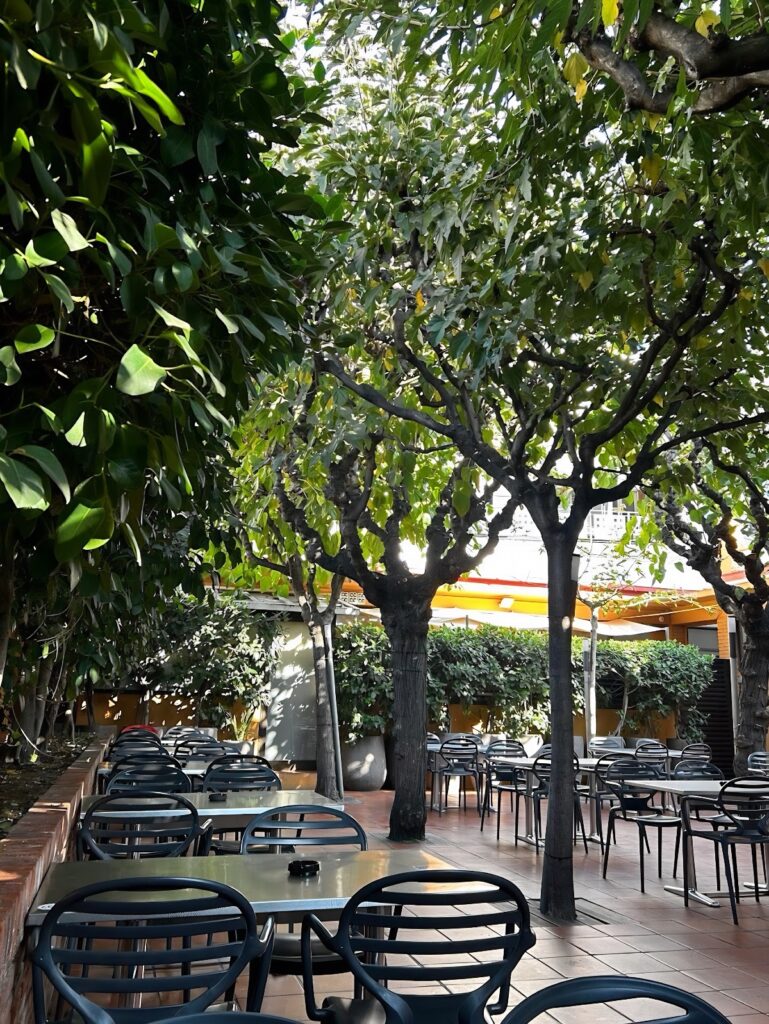
Cafeteria Montroig is perfect for a quiet morning. This is where I often grab breakfast and coffee while reading or working. The back patio is large and peaceful, making it easy to enjoy some quiet time.
Bar Port de N’Alegre
- Address: Bar Port de N’Alegre, Carrer de Port Alegre, 33, 08870 Sitges, Barcelona, Spain.
Another great breakfast spot, with healthy options like quinoa bowls and smoothies. The highlight here is the view—sit by the terrace and watch the Mediterranean as you eat.

Curry & Rice
- Address: Curry & Rice indian restaurant, Carrer Primer de Maig, 14, 08870 Sitges, Barcelona, Spain.
Straightforward Indian food done well and at very affordable prices. It’s not fancy, but the flavors keep me coming back on every visit.
For a deeper culinary experience, consider booking a Sitges Food Tour with a local guide. You’ll visit four different restaurants, taste the region’s best tapas and wine, and learn the history behind each dish.
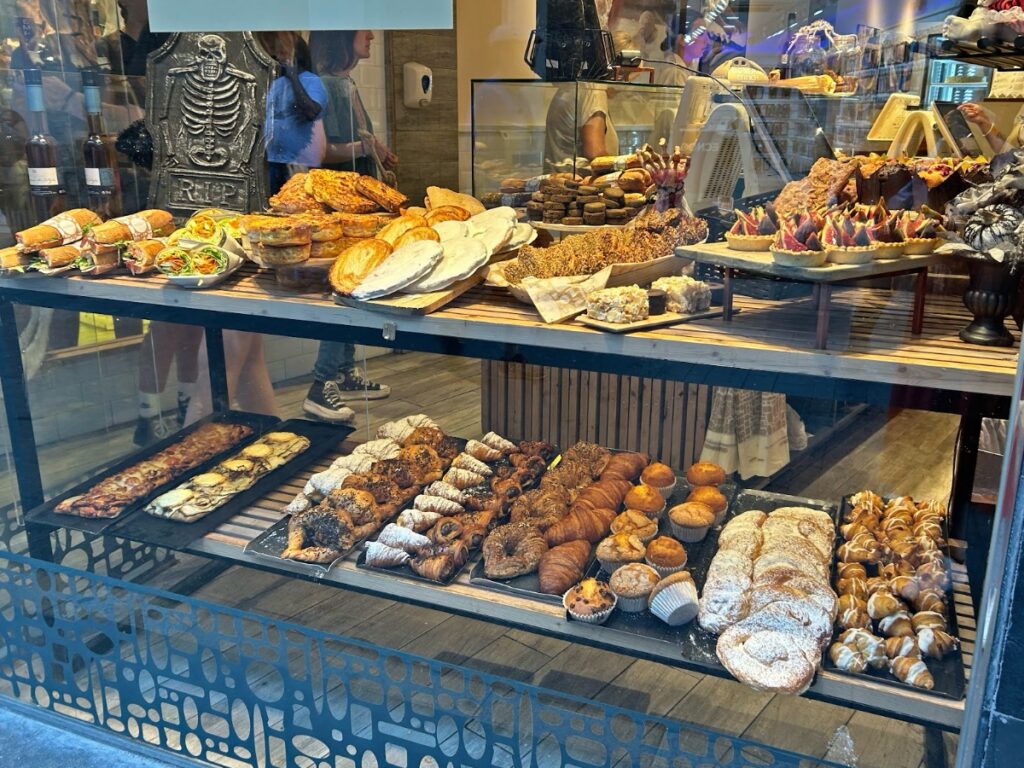
In a hurry? Head to Enrich bakery (Carrer Jesús 19). Their bread and croissants are outstanding; I would return to Sitges just for those alone.
Sitges nightlife: best bars and clubs
Suggestions by Patrick Van Laer from the BUT Film Festival in Breda.
Happy hour on Carrer de Joan Tarrida
The party already starts around 04:00 pm, when “Happy Hour” begins on Carrer de Joan Tarrida.
There are three bars (El Horno, La Villa, and Men’s Bar) that take turns hosting Happy Hour at scheduled times (04:00 pm–05:00 pm / 05:00 pm–06:00 pm / 06:00 pm–07:00 pm). Not that they’re really competitors; they all have the same owner.
If you want to get tipsy early, this street is the place to be, especially if you order something strong (like a whisky cola), because the pours are generous. And when you go back for your second free drink, they’re not stingy either. They don’t serve cava by the glass. Instead, you get small bottles equal to two glasses (so effectively four glasses of cava during Happy Hour).
This is also the perfect time to socialize: nobody sits inside. Everyone is outside on the terrace or standing in the middle of the narrow street chatting away.
Dance bars: Queenz, Moulin Rose, Bears Bar, XXL, and Bukkake Club
After Happy Hour, you can hang around or grab something to eat to line your stomach if you plan to keep partying, because from around 10:00 pm, the dance bars open.
Keep an eye on the flyer boys and girls. If you arrive early and go to the bar mentioned on the flyer, you’ll get a free shot of your choice.
The real party starts around midnight. Watch the posters outside the bars: live performances by “Lady Diamond” (a drag entertainer/singer), attractive strippers, themed nights, and other wild attractions draw people in.
Queenz on Carrer Bonaire is a highlight, with dance music for everyone and fun bartenders.
If you enjoy combining food and entertainment, Queenz also has a second venue on Carrer d’Espalter called Queenz Cabaret Restaurant. During dinner, there’s a drag show. There’s always a great atmosphere and delicious food..
The fairly new Moulin Rose (also on Carrer Bonaire) is also lively.
If you prefer a rougher vibe, upstairs from Queenz is Bears Bar, where rugged, larger men in leather caps, harnesses, and pants dominate the scene.
If you really want to let loose, head back to Carrer de Joan Tarrida (a side street of Carrer Bonaire), where more bars open, such as XXL (with a darkroom) and Bukkake Club (the name says it all). Both are cruising venues. Drinks flow freely and abundantly in all the bars.
People watching at Parrots
If you need a break, continue down Carrer de Joan Tarrida and sit on the terrace of “Parrots” on Plaça de la Industria. You’ll notice something unusual: instead of chairs facing the tables, they’re all turned toward the street. That’s because this is where the “people-watching” happens—everyone passing by gets an evaluating glance from those sitting there. If you walk along Carrer Primer de Maig (toward the beach from Plaça de la Industria), you’ll come across more “straight” bars.
Nightclubs on Carrer Bonaire
Keep an eye on the time, because all the bars close around 03:30 am.
Just ordered a drink and still holding a full glass? No worries—they’ll happily pour it into a plastic cup so you can finish it outside.
Is the party over then? Definitely not.
That’s when the nightclubs open, mainly on Carrer Bonaire, like “Mambo” and “Scandal Night Club.”
You’ll often get flyers offering free entry (normally €10), but this is a lure. With the flyer, you still pay €10, but you get a voucher for a free drink. Without a flyer, you also pay €10 and get… a voucher for a free drink.
Drinks in clubs are smaller than elsewhere, so it’s best to order something strong with your voucher.
They also host themed nights like “Find your other half,” where you choose between three options: 1) keep your clothes on and hope for the best, 2) take off your T-shirt, or 3) take off your pants and dance in your underwear—and then hope you find your match. Other themes like carnival, Mexico, jungle, and more also appear.
At 06:00 am, the clubs close and everyone heads back to their hotel—if they make it that far. There are stories of people staggering through Sitges’ narrow streets, barely able to say where their hotel is, and ending up placed on a bench along the beach promenade by fellow partygoers. I’ve never seen this myself, though, and I’m usually out and about around 08:00 am.
Despite the lively atmosphere and festive spirit, everything happens in an orderly manner with few incidents.
Also, Sitges is very LGBTQ+-friendly; there’s something for everyone. However, no-one will look at you strangely if you walk into a gay bar or club as a couple or straight person and vice versa.
Ultimately, which parties and clubs you’ll visit in Sitges, mainly depends on which parties you enjoy most,

Sitges Spain weather
The weather in Sitges is generally lovely and sunny throughout the year.
Winter is a bit cooler, of course, but it’s often still warm enough to sit outside at a café or enjoy a stroll along the beach. You’ll want a sweater or light jacket and maybe an umbrella, just in case, but most days are perfectly mild.
October is usually very pleasant for beach walks or a late swim. On my visits during this month, I’ve only encountered slightly chillier days once or twice, and rain is rare.
Summer can get very hot, though, with temperatures often reaching 30 to 35 °C (86–95 °F) in July and August, making early mornings and late afternoons the best times to enjoy the beaches or walk the promenade.
Spring and early autumn are ideal for sightseeing, with warm, comfortable temperatures and plenty of sunshine. Even in winter, Sitges rarely sees frost or snow, which makes it one of the more reliable coastal towns in Catalonia for year-round travel.
Best time of year to visit
If I had to pick one month, it’s definitely October. That’s when the Sitges Fantastic Film Festival of Catalonia takes over the town. The streets, cafés, and restaurants are buzzing, and it’s not unusual to have dinner or coffee next to your favorite actors and filmmakers without even trying.
Because it’s a horror-focused festival just before Halloween, the shops are full of spooky decorations, and the town even hosts a Zombie Walk where locals and visitors dress up and parade through the streets and along the promenade. It’s quite a sight.
The weather in October is ideal too. You can still eat outside, stroll the beaches, and enjoy warm sunshine without the intense heat of summer.
Honestly, I’ve never visited Sitges outside the festival period in October, and it’s hard to imagine it any other way. The energy during the festival is incredible, and without it, the town might feel a bit quiet.
That said, Sitges is still a beautiful beach destination with plenty to see and do in the other seasons.
Day trips and nearby attractions
Barcelona
Just 35 km northeast of Sitges, Barcelona makes a perfect day trip. You can explore iconic landmarks like Sagrada Família, Park Güell, and the Gothic Quarter, stroll along Las Ramblas and the beachfront, or enjoy a coffee break at one of Barcelona’s two cat cafés, Espai de Gats or Gatuari.
Direct trains from Sitges to Barcelona run frequently, taking around 30 minutes each way.
Tarragona
About 60 km southwest of Sitges, Tarragona is known for its Roman history and UNESCO World Heritage Sites. Highlights include the Roman amphitheater, the Tarragona Cathedral, and the ancient aqueduct of Les Ferreres.
The city’s old town is compact and walkable, making it easy to combine sightseeing with lunch at a local restaurant.
Trains from Sitges take roughly 45 minutes.
PortAventura
Located in Salou, about 90 km from Sitges, PortAventura is Spain’s largest theme park and a popular day trip for families and thrill-seekers. It features roller coasters, water rides, and themed areas like Polynesia, Mexico, and Far West.
Lines can get very long during peak season, so it’s worth purchasing tickets in advance here to skip the queues. The park is accessible by car.
Penedès wine region
The Penedès wine region surrounding Sitges has several wineries that offer guided tours and tastings, with hotel pickup available from Sitges. You’ll learn about traditional methods of making sparkling wine and have the chance to taste local varieties paired with tapas.
Vilafranca del Penedès
This inland town is the heart of Catalonia’s wine country and is about 30 minutes from Sitges. It’s less touristy than the wineries but offers charming streets, historic squares, and plenty of wine tasting opportunities.
Castelldefels
Just a 15-minute train ride northeast, Castelldefels is perfect for a quick beach day. Its long sandy beach is quieter than Sitges’ main beaches, and you can try windsurfing, paddleboarding, or just enjoy a seaside lunch.
Final thoughts
Are you planning a trip to Sitges? Or have you been there multiple times and have your own favorite spots to recommend? If so, leave a comment below with your questions and recommendations. I’d love to hear from you.

Pin this ultimate travel guide to Sitges, Spain!




4 responses
Sitges looks so lovely! I love the mix of beach vibes, charming streets, and culture — seems like the perfect getaway from Barcelona. Thanks for the inspiration!
Looks like an amazing place! And I love the picture of all the cute cats. Adds even more charm to the destination 🙂
We had only a quick visit to Sitges. I can see from your post we need to return and spend more time. Looks like a good spot to relax and just enjoy the local spots. And time on the beach!
The cats are all so cute! This looks like it could be a neat day trip from Barcelona if someone doesn’t have time to stay longer.