

Last Updated on 18 August 2026 by Vanessa
Are you planning a trip to Crete and wondering whether the Rethymno Fortezza is worth your time?
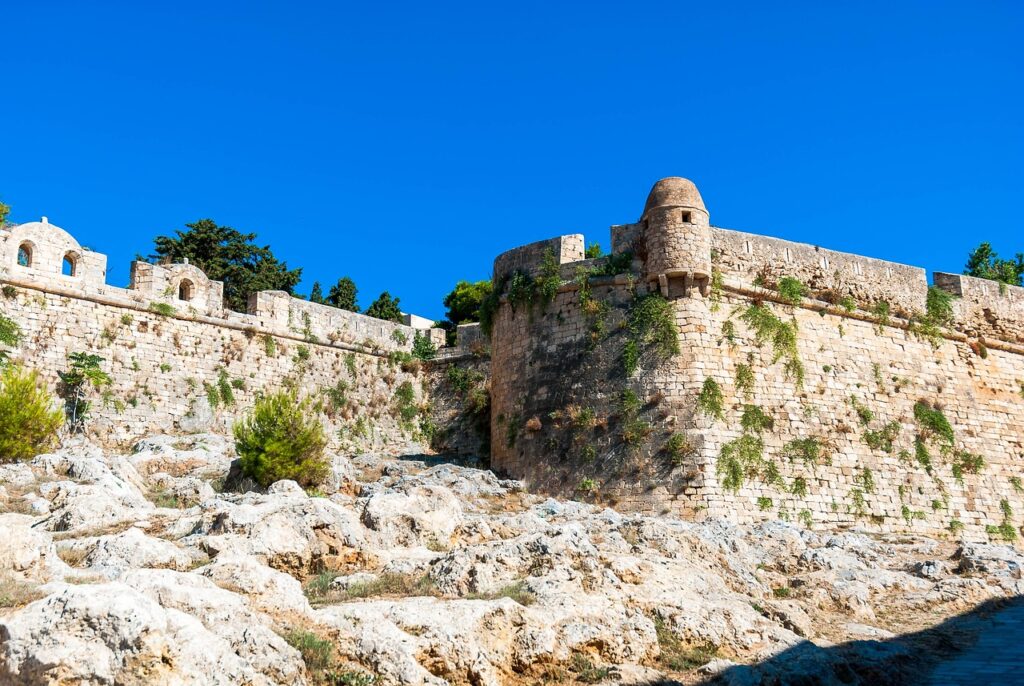
Perched on a hill above the old town, this massive Venetian fortress isn’t just another quick photo stop. It’s one of the best places to get panoramic views over the city and the sea, explore centuries of history, and experience one of the most iconic landmarks in Crete.
But before you go, there are a few things you’ll definitely want to know, from tickets and opening hours to how long to spend here and the best time of day to visit.
In this guide, I’ll walk you through exactly what to expect at the Rethymno castle, things to see inside, a bit of its history, and why it deserves a spot on your Crete itinerary. That way, you can plan your visit the smart way and make the most of your time in Rethymno.
Rethymno Fortezza: exploring Crete’s most impressive Venetian fortress
Practical info
- Opening hours: Open from Monday to Sunday from 08:00 am – 07:15 pm.
- Price: Tickets are just 4 € at the entrance. If you want a guided tour and to skip the line, you can book in advance here.
- Address: Leof. Emmanouil Kefalogianni 27, Rethymno 741 31, Greece.
- Time needed: 1.5 hours (the fortress covers roughly 13 hectares)

3 reasons why you should visit the Rethymno Fortezza?
Rethymno’s best viewpoint
From up here, you get the ultimate bird’s-eye view of Rethymno and the sparkling coastline, and it’s high enough to take in how the town spreads out toward the sea. The view is wide and uninterrupted—exactly why the fortress was built here in the first place.
Fortress layout and structure
The structure reflects different periods of use. You can clearly see the contrast between the more rigid defensive layout and later adjustments that changed how spaces were used. It’s not symmetrical or polished, but it makes sense once you’re inside it.
Beyond the scale of the walls, there are smaller elements that are easy to miss. Sections of stonework, worn carvings, and irregular surfaces show how the site has aged rather than been restored to look new.
Cats inside the fortress
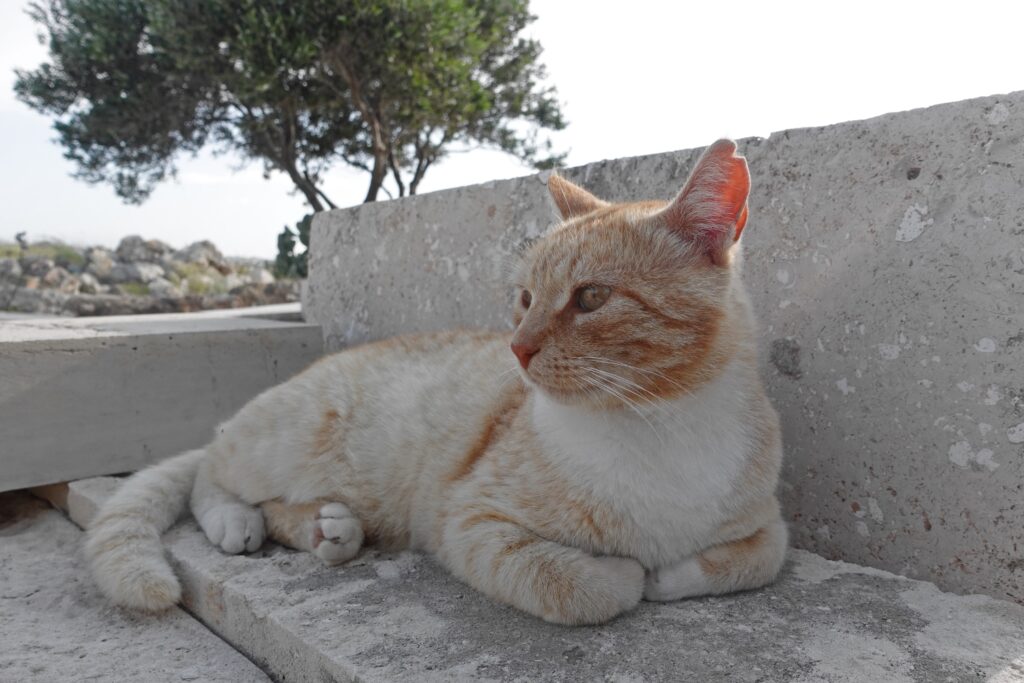
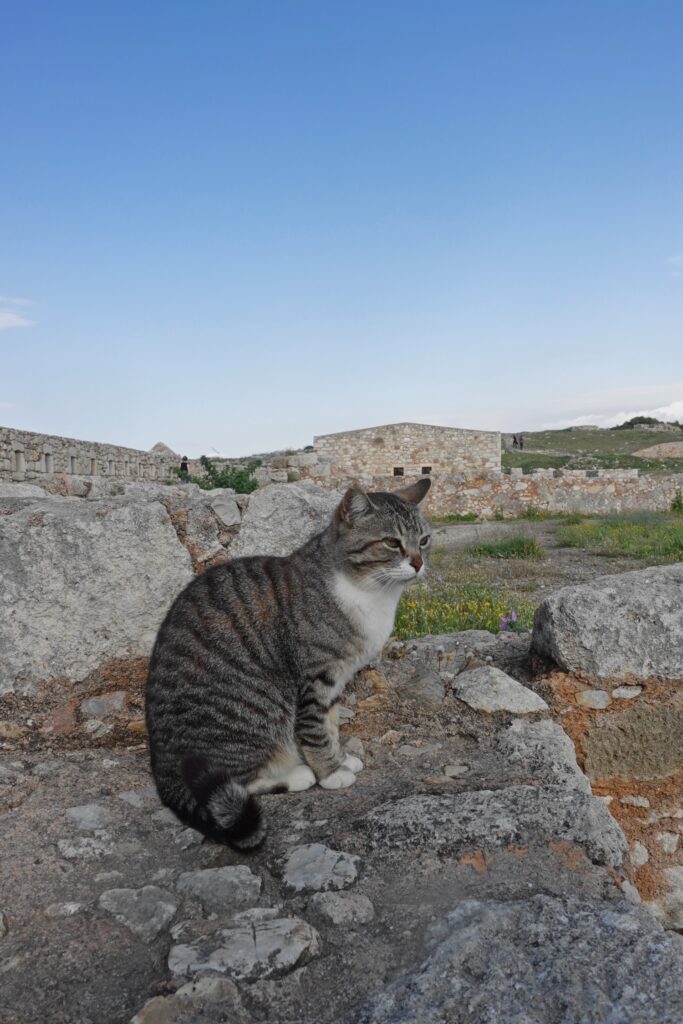
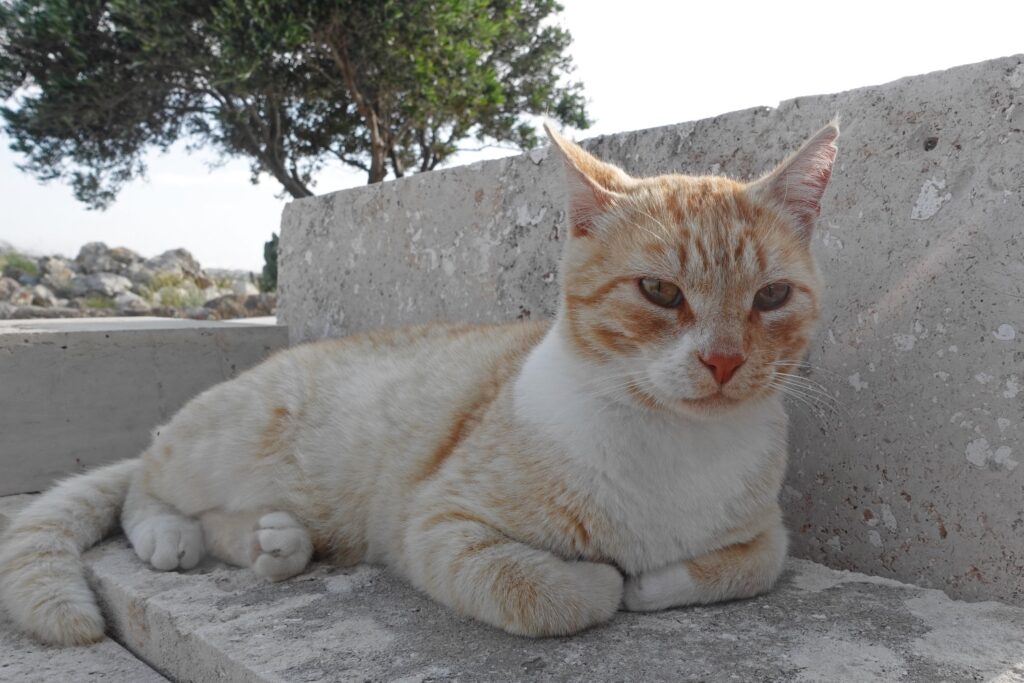
The fortress is basically a cat paradise, because a large number of strays use the shaded areas and quiet corners as shelter. Many are used to people, so you might even get a friendly head bump or two. The caretakers do a great job keeping them fed and healthy, so it’s all very chill and well looked-after. It adds this soft, playful vibe to a place that’s otherwise all stone and history.
And if you love learning about local animal care, I’ve written a bit about it in my guide to the Gouves Animal Shelter—definitely worth a peek.

How to get there?
On foot
From Rethymno old town, the fortress is about a 10–15 minute walk uphill.
Head toward the northern edge of the old town and follow signs for the Fortezza. The climb is a bit steep in places, but the streets are charming and shaded in parts, so it’s not unpleasant.
By car
If you’re driving, avoid trying to get too close to the entrance, because the streets around the fortress are narrow, busy, and often full. Likewise, you should also avoid to drive into the old town (restricted areas, tight alleys, and very limited parking)
Instead, aim for:
- Parking near the Old Port / Marina area (expect to pay around €2–€3 per hour in high season)
- Street parking along the seafront road (this is usually cheaper, depending on the spot and season)
From either option, expect a short uphill walk of 5–10 minutes.
By bus
If you’re arriving via public transport, get off at the main Rethymno bus station.
From there, it’s about a 15-minute walk toward the old town and then uphill to the Fortezza. Unfortunately, there aren’t dedicated bus stops right at the fortress, so walking is unavoidable for the final stretch.
Quick tip:
If you want the easiest walk, approach from the seafront side rather than going deep into the old town; it’s less confusing and more direct.
A short history of the fortress
Venetian origins
In the late 1500s, the Venetians built the Fortezza to protect Rethymno from Ottoman attacks. They designed massive walls, bastions, and gates to showcase their power and keep invaders at bay.
Ottoman era
In the early 17th century, the Ottomans conquered Crete, and the Fortezza passed into their hands. They made several modifications to the castle, adapting it to their own architectural style and reinforcing its defensive capabilities. Throughout the Ottoman period, the Fortezza remained an integral part of the island’s defense network.
Abandonment and restoration
Following the Ottoman retreat from Crete in the late 19th century, the castle fell into ruin.
By the 1960s, local historians and archaeologists launched restoration projects.
What to see inside Rethymno Fortezza
Entrance and central area
After entering, you’ll arrive in a large open space. This was once built up with administrative and residential buildings, but today most of it is gone, leaving mainly open ground and scattered remains.
From here, paths lead in different directions across the fortress.
Outer walls and bastions
The fortress is built around four main bastions, and walking along the walls is one of the most worthwhile things to do here. From these points, you get clear views over Rethymno, the coastline, and the sea. The layout also makes it easier to understand how the fortress was designed for defense.
Sultan Ibrahim Mosque
This is the most prominent building inside the Fortezza. It was originally a Venetian cathedral (dedicated to St. Nicholas) and later converted into a mosque during Ottoman rule. The large dome makes it stand out from the rest of the structures.
Smaller churches
There are a few smaller churches inside the fortress, including the Church of St. Catherine. These were built later, during Ottoman rule, and are much more modest in size compared to the mosque.
Remaining structures
Across the site, you’ll see remains of various constructions, including storage areas, cisterns, and parts of former administrative buildings. Most are not fully preserved, but their layout gives an idea of how the fortress once functioned as a self-contained settlement.
Sea-facing side
The side of the fortress facing the sea is one of the most open parts of the site. From here, you can clearly see how elevated and exposed the location is, as well as the direct line of sight along the coast.
After your visit
Instead of heading back the same way, walk down towards the old town. It’s a short, easy route and flows naturally into exploring the city without needing to reset your direction.

Best time to visit
The Fortezza is almost completely exposed, so shade is very limited. Apart from a few buildings like the mosque, you’ll be in direct sun most of the time. Early morning or late afternoon are the best times to visit—temperatures are lower, and the light is much better for photos.
Other things to do in Rethymno
1. Rethymnon Old Town
The streets of Rethymno’s old town are narrow, twisty, and lined with Venetian mansions with faded shutters and Ottoman arches. There are tiny shops tucked into corners selling hand-painted ceramics, local olive oils, and fragrant spices. The whole area is mostly pedestrian, so it’s super chill for strolling.
If you want to really bring the history to life, I’d recommend joining a guided walk through the old town. A local guide will point out hidden gems, secret courtyards, and stories you’d never notice on your own.
Also, make sure to have dinner at one of the mismatched tables spilling onto the cobbles.
2. Rethymno Lighthouse
The Rethymno Lighthouse is about a 10-minute walk from the harbor entrance, at the end of the breakwater. From the end, you get a clear view of the entire harbor curve, the Fortezza on the hill, and the open sea.
The path is narrow and uneven in places, so decent shoes help. Also, there’s no railing at the edge, so it’s not ideal in strong wind or with small children.
Sunset is the best time to go, as the light hits the old town directly.
3. Venetian Harbor
The harbor dates back to the Venetian period and still functions as a small fishing port.
Most restaurants here focus on seafood, but quality varies (places directly on the water tend to be more expensive without being better). Walking one or two streets back usually gets you better value.
It’s busiest in the evening, especially around sunset, when both locals and visitors come for dinner. Boats still come in during the day, so earlier visits feel more local and less crowded.
4. Museum of Contemporary Art of Crete
Located in the old town, the museum focuses on post-1950s art, with an emphasis on Greek artists. Exhibitions rotate regularly, so the content changes throughout the year.
The space is relatively small and spread across a few connected buildings, making it easy to visit in 45–60 minutes. It’s a good indoor option during peak heat hours, and signage is generally in both Greek and English.
5. Municipal Garden
Built during the Ottoman period, this is one of the few green spaces in central Rethymno. It has shaded paths, benches, and a small café nearby. The dense tree cover makes it noticeably cooler than the surrounding streets, which is useful in summer.
It’s mainly used by locals, so it tends to stay quiet even when the old town is busy.
6. Historical and Folklore Museum of Rethymno
Housed in a 17th-century Venetian mansion, the Historical and Folklore Museum focuses on everyday life in Crete. Exhibits include traditional clothing, weaving tools, ceramics, and household items. Many pieces are locally sourced, giving a more regional perspective.
Most visitors spend around 30–45 minutes here.
7. Fortezza Beach
This beach is within walking distance of the old town, right below the fortezza. The shoreline is a mix of sand and small pebbles, and the water is usually calm due to its position along the coast. It’s not as organized as larger beaches (limited facilities and shade) so bringing your own essentials is useful. Fortezza Beach is best suited for a short swim rather than a full beach day.
8. Archaeological Museum of Rethymno
The Archaeological Museum covers a wide timeline, from Minoan to Roman periods, with finds from across the region. Highlights include pottery, figurines, and burial artifacts. The collection is well-organized but not extensive, so it’s manageable in under an hour. Informational panels provide context without requiring a guide.
10. The Rimondi Fountain
The 17th-century Rimondi Fountain features three lion heads that still supply running water. It originally functioned as a public water source for the city.
Located in a small square in the old town, it’s a common meeting point due to its central position. The surrounding area has several cafés and shops, so it’s a quick stop while exploring the rest of Rethymno.

How to get to Rethymno from Heraklion?
- By bus: The most convenient and affordable option is to take a bus from the Heraklion bus station. The bus companies KTEL Heraklion-Lasithi and KTEL Rethymno operate regularly throughout the day, and the journey takes approximately 1 to 1.5 hours. The bus will drop you off at the Rethymno bus station, which is located near the city center and the Venetian Fortezza castle.
- By car: You can rent a car online or from Heraklion and follow the National Road (E75) westbound towards Rethymno. The distance between the two cities is around 80 kilometers (50 miles), and the journey takes about 1 hour.
How to get to Rethymno from Chania?
- By bus: Similar to Heraklion, you can take a bus from the Chania bus station to Rethymno. The buses KTEL Chania-Rethymnon and KTEL Rethymno operate regularly, and the journey takes around 1 to 1.5 hours. The Rethymno bus station is located near the city center and the Venetian Fortezza castle.
- By car: You can rent a car, and from Chania, take the National Road (E75) eastbound towards Rethymno. The distance between Chania and Rethymno is approximately 60 kilometers (37 miles), and the drive takes about 1 hour.

Keep planning your Crete trip
Rethymno is a great base for visiting Crete, but there’s a lot more to see across the island. These are easy additions if you’re planning a few extra days.
- Arkadi Monastery (near Rethymno): Just a 30-minute drive from Rethymno, this monastery is one of the most important historical sites in Crete. The complex is beautifully preserved, and it’s easy to walk around and get a feel for its past without needing a guide.
- Kritsa: A traditional mountain village near Agios Nikolaos with narrow, winding streets that are perfect for a slow wander. You’ll find small shops selling local crafts and plenty of spots with views over the surrounding hills.
- Sissi: A small coastal village built around a quiet harbor. It’s much calmer than nearby resort towns, with a handful of good restaurants right by the water—ideal for a relaxed meal.
- Gouves Animal Shelter: A volunteer-run shelter dedicated to rescuing and caring for stray dogs. You can visit, help walk the dogs, or simply support their work—it’s a meaningful stop if you have the time.
- Famous monasteries in Crete: Crete has several monasteries worth visiting, often set in quiet, scenic locations. Places like Arkadi, Preveli, and Toplou each have their own history and setting, and they’re easy to combine with a road trip.
- Santorini (bonus): An easy ferry trip from Crete, Santorini is known for its whitewashed villages and dramatic caldera views. Works well as a day trip, but staying overnight gives you more time to explore without rushing.

Conclusion
Is the Venetian Fortezza on your list of places to visit?
If you’ve already been to Rethymno, I’d love to hear your tips. Any favorite spots, restaurants, or places we should go to? Let us know in the comments.
Found this guide helpful? Feel free to share it with friends or on social media. It might just give someone the push to start planning their own trip to Crete.
Text by Vanessa Morgan
Photos by Vanessa Morgan & Yoann Bawin

English version / version française / versione italiana
Pin this article about the Rethymno Fortezza!


3 responses
For reasons I don’t even know…Crete and Sicily as well have always been on my bucket list!
Crete looks and sounds amazing, although I know I’d feel awful for the community cats.
The first picture made me yawn! It’s time I went back to Crete. Delightful.