

Last Updated on 7 April 2026 by Vanessa
Arkadi Monastery in Crete is one of the island’s most famous historic sites. In this guide, you’ll find everything you need to plan your visit: history, opening hours, ticket information, recommended tours, must-see highlights, and transport and accommodation options. Plus, you’ll get to meet the monastery’s resident cats and enjoy lots of photos.
📍 Arkadi is just one of many historic religious sites on the island. If you’d like to discover more of them, check out my guide to the most famous monasteries in Crete.
Arkadi Monastery in Crete: a complete guide to one of the island’s most historic sites
Who should visit Arkadi Monastery?
- History enthusiasts
- Cultural travelers
- Road trip explorers
- Cat lovers
Where is Arkadi Monastery?
Arkadi Monastery is located on the island of Crete, the largest island in Greece, in the southern part of the Aegean Sea.
It sits on a hill surrounded by olive groves, small villages, and winding country roads, about 23 km southeast of Rethymno. It’s easily accessible by car, making it a popular stop for travelers exploring central Crete.
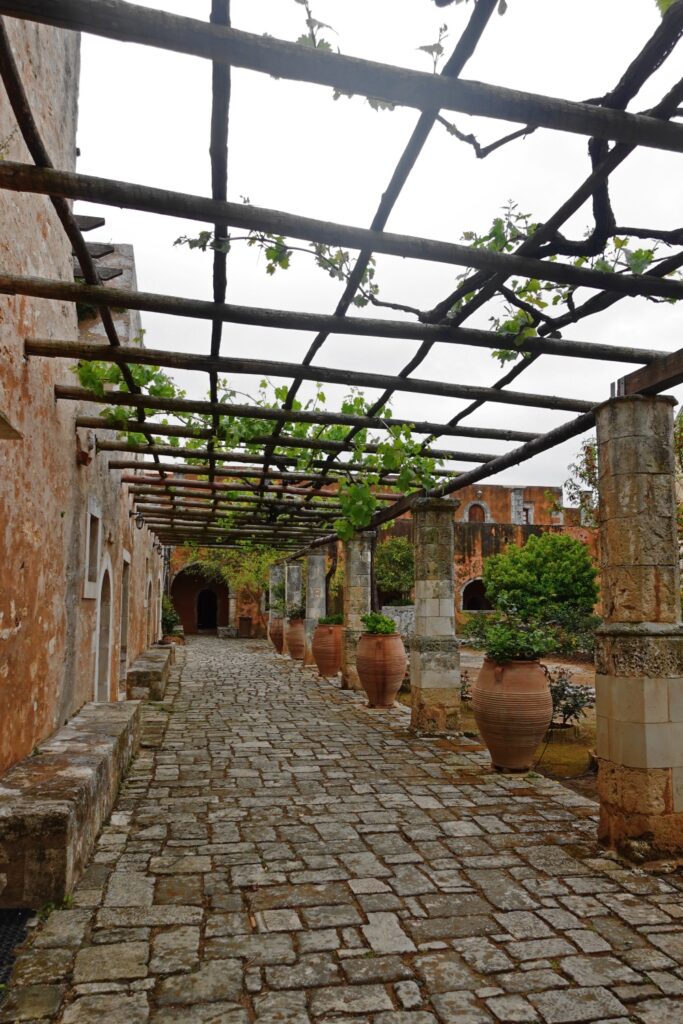
How to get to there?
From Rethymno
Car
Driving is the most convenient way to reach the monastery (we rented a car from Monza, which we found through DiscoverCars).
In Rethymno town, get on the Main National Road and head east in the direction of Heraklion. Drive for approximately 6 km until you reach the Tsesme-Platania (or Adelianos Kampos) exit. Take the exit and transition onto the Old National Road. Continue driving for another 16 km, and you will arrive at the monastery.
The entire drive takes between 30 to 45 minutes. Parking facilities are available near the monastery.
Bus
Public buses operate from Rethymno town to Arkadi Monastery. These buses depart from the main bus station in Rethymno and take approximately 40 minutes to reach the monastery.
From Heraklion
Car
Head east on the National Road (E75) from Heraklion towards Rethymno. Continue on the National Road for approximately 73 kilometers (45 miles) until you reach the exit for Arkadi Monastery. From here, follow the signs directing you to the monastery. The entire drive takes around 1 hour.
Bus
Buses depart from the central bus station in Heraklion, known as “KTEL.”
The bus journey takes around 1.5 to 2 hours. Once you arrive at the bus stop near the monastery, it’s only a short walk to the entrance.
From Chania
Car
Head east on the National Road (E75) from Chania towards Rethymno. Continue on the National Road for approximately 54 kilometers (34 miles) until you reach the exit for Arkadi Monastery. Take the exit and follow the signs guiding you to the monastery.
The entire drive typically takes around one hour and a half.
Bus
Buses depart from the central bus station in Chania. The bus journey takes around 1 to 1.5 hours.
Guided tours
Another easy option is to join a guided tour. Tours usually include transportation and a guide who explains the history of the monastery, so you can enjoy the visit without worrying about directions or planning. This is a good choice if you don’t want to rent a car or navigate the buses.
Here are some tours that include Arkadi Monastery along with other key destinations in Crete:
- Arkadi Monastery, Melidoni Cave, and Margarites
- Arkadi, Margarites, Sfendoni Cave, and Axos
- Arkadi, Rethymno, and Anogeia
Why is the monastery so famous?
Arkadi Monastery is one of the island’s most important historical sites and played a major role during the Cretan War of Independence.
Resistance during Ottoman rule
In 1866, during an uprising against Ottoman rule, hundreds of Cretan rebels and civilians took refuge inside the fortified walls of Arkadi Monastery.
Ottoman forces, aware of its importance, surrounded the complex.
Outnumbered, the defenders held out as long as they could. When it became clear they couldn’t win, they made a bold and tragic decision. Rather than surrender, they ignited the monastery’s gunpowder stores. The resulting explosion killed hundreds of rebels, civilians, and Ottoman soldiers and turned the monastery into a lasting symbol of sacrifice and freedom in Crete.
Why is it one of the most important monasteries in Greece?
The sacrifice at Arkadi Monastery shocked the world. It drew international attention to Crete’s struggle and sparked widespread support for the fight against Ottoman rule.
Today, the monastery stands as a powerful symbol of courage and resilience.
You can explore the church, the fortified walls, and the memorial honoring those who died in the explosion. The site continues to move, reminding us of the price paid for freedom—and the strength of the Cretan spirit.
Life at the monastery today
Today, Arkadi Monastery stays true to the traditions of the Orthodox Church. The monks follow a daily rhythm of prayer, reflection, and service. It’s both an active monastery and a popular destination for pilgrims and spiritual travelers.
Seven monks currently live and serve at the monastery. They carry out their duties in monastic cells named after Christ the Savior, St. Constantine, and St. Helen.
Their day begins early with communal prayers, known as the Divine Office. These prayers happen at set times throughout the day, creating a steady rhythm that shapes their spiritual life.
Beyond prayer, the monks spend time in quiet reflection and meditation, deepening their faith and inner peace. But their work doesn’t stop there—they also welcome visitors and offer support to those in need. Their lives reflect the core values of monasticism: simplicity, humility, and selfless service.
Thousands of people visit Arkadi each year. Their presence helps keep the monastery’s legacy alive. By opening its doors to the public, Arkadi continues to serve not just as a place of worship, but also as a living symbol of Crete’s history and faith.
What to see at Arkadi Monastery
Arkadi Monastery has a lot to explore. Here’s a quick overview of the main highlights—so you don’t miss a thing.
Venetian Church
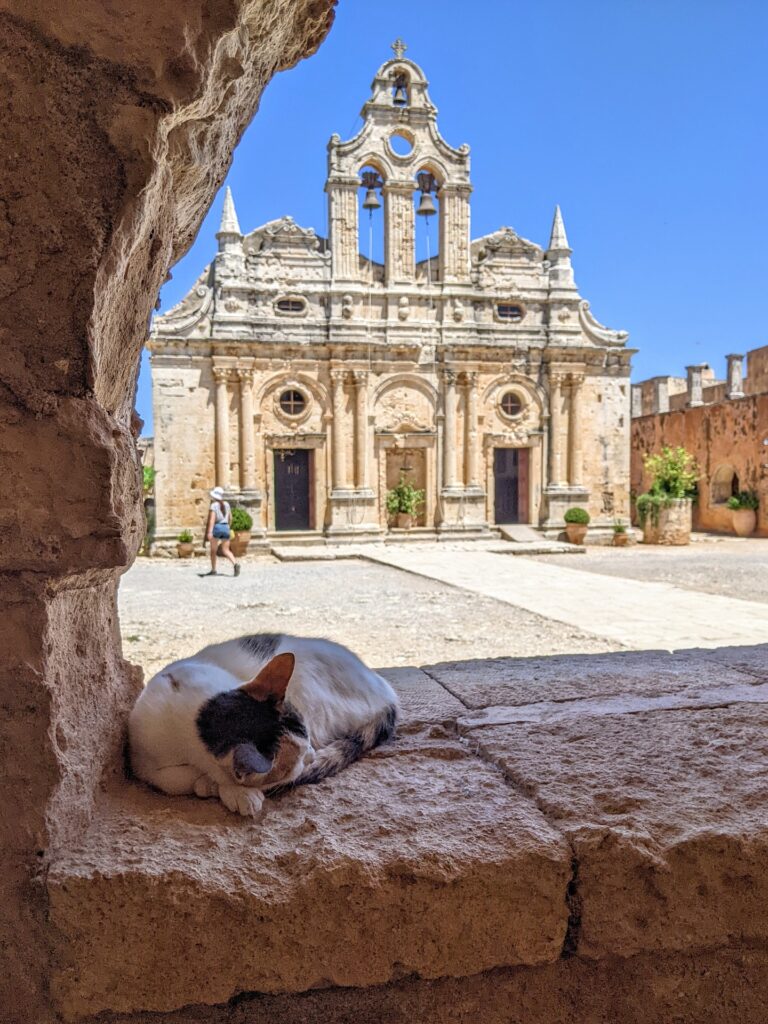
This is the heart of the monastery—and it’s stunning. The church blends Venetian Renaissance style with Byzantine touches. Don’t forget to look up. You’ll see soaring arches, ornate iconostasis, and vivid frescoes. These detailed paintings show scenes from the Bible and the lives of saints, and they reflect both deep faith and serious artistic skill.
Courtyards
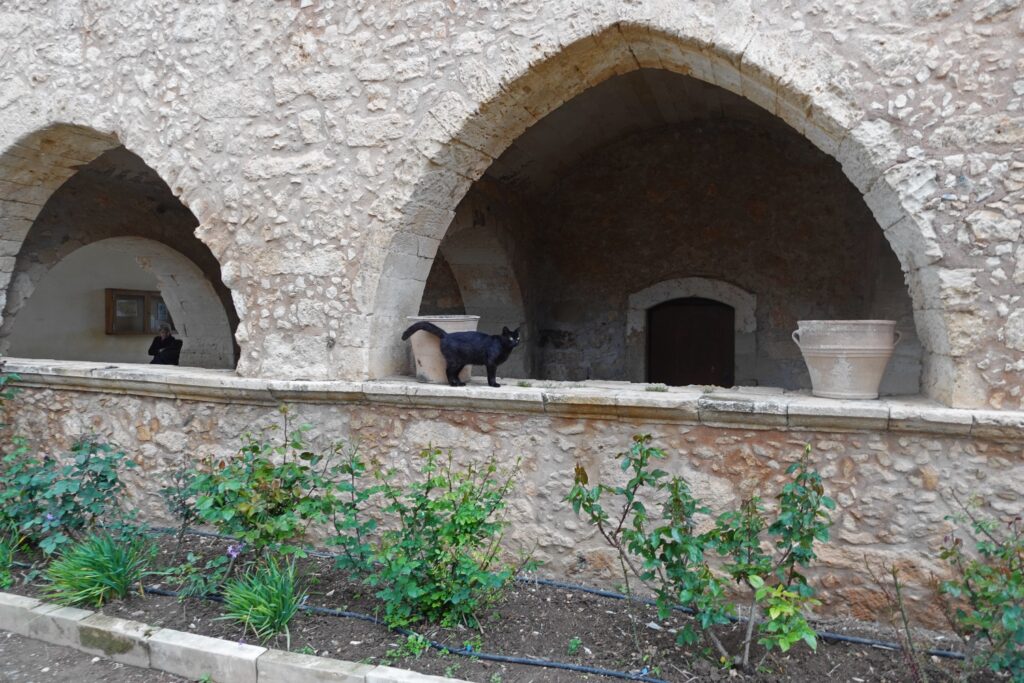
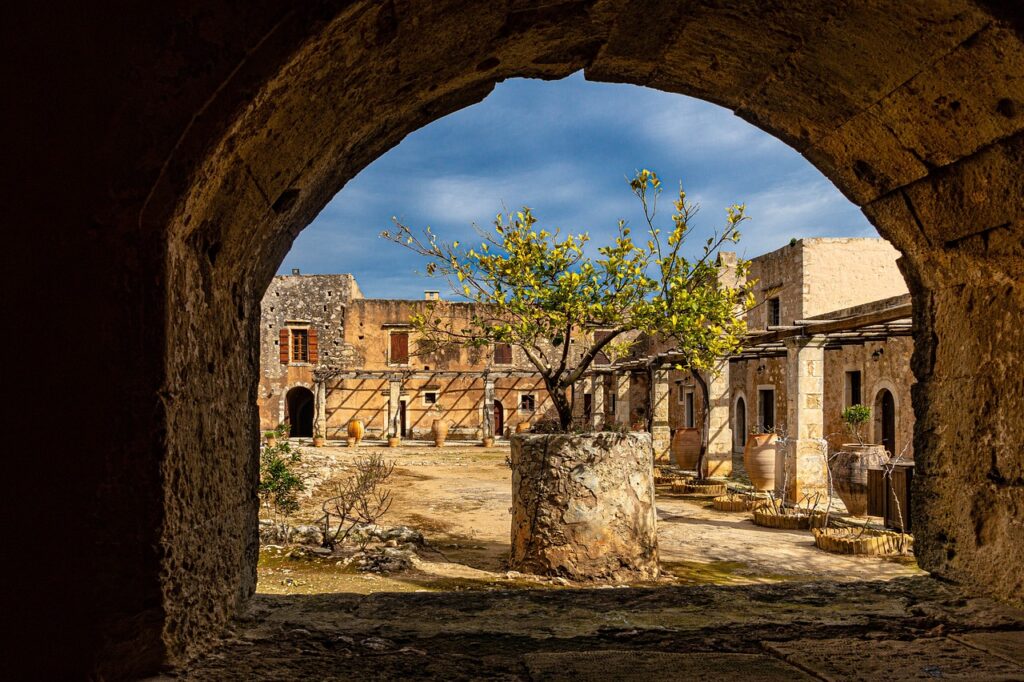
This is where most of the cats hang out. But you’ll also pass stone archways, colonnades, and traditional Cretan balconies. Flowers bloom, herbs scent the air, and everything feels calm and timeless. If you’re looking for a place to slow down and take it all in, this is it.
Defensive walls
These thick stone walls once protected the monastery from attack—and they still stand strong today. The walls remind you that Arkadi wasn’t just a spiritual center, but also a place of resistance in times of conflict. You’ll definitely feel the weight of history here.
Powder magazine
Near the entrance, you’ll find the Powder Magazine. This small stone building once stored gunpowder and ammunition. Here, you’ll learn how the monks defended the monastery during times of war. It’s a simple space—but with a powerful story.
Refectory and kitchen
This dining hall, built in 1687, still holds its original furniture—scarred by bullets and swords from Ottoman attacks. The vaulted ceiling adds to the dramatic effect.
From here, you can walk over to the old kitchen. You’ll see a massive oven and fireplace once used to feed the monks, along with pottery that offers a peek into daily life centuries ago.
Ossuary
Just outside the monastery walls, right by the parking lot, is the Ossuary. This small, octagonal building holds the remains of those who died during the 1866 siege. Inside, you’ll see skulls and bones—many still marked by battle. It’s a somber but powerful place.
An inscription on the wall reads:
“Nothing is more noble or glorious than dying for one’s country.”
It’s a moving tribute to the courage of those who gave their lives for Crete’s freedom.
Museum of Moni Arkadiou
The Monastery Museum holds a fascinating collection of icons, manuscripts, and historical items that tell the story of Arkadi’s spiritual and cultural legacy across the centuries.
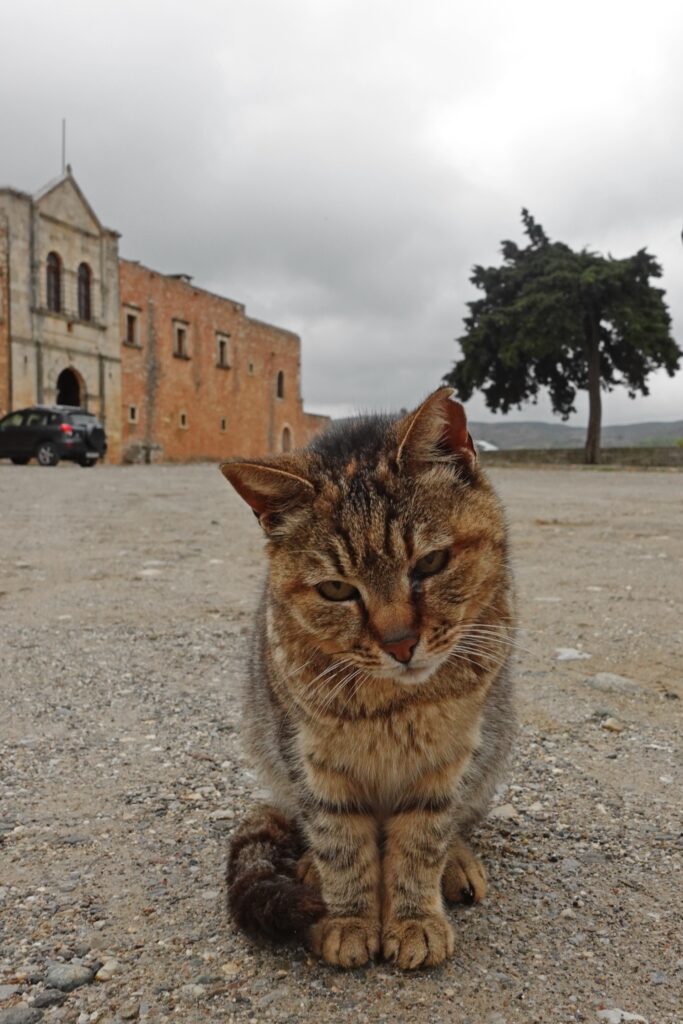
Cats of Arkadi Monastery
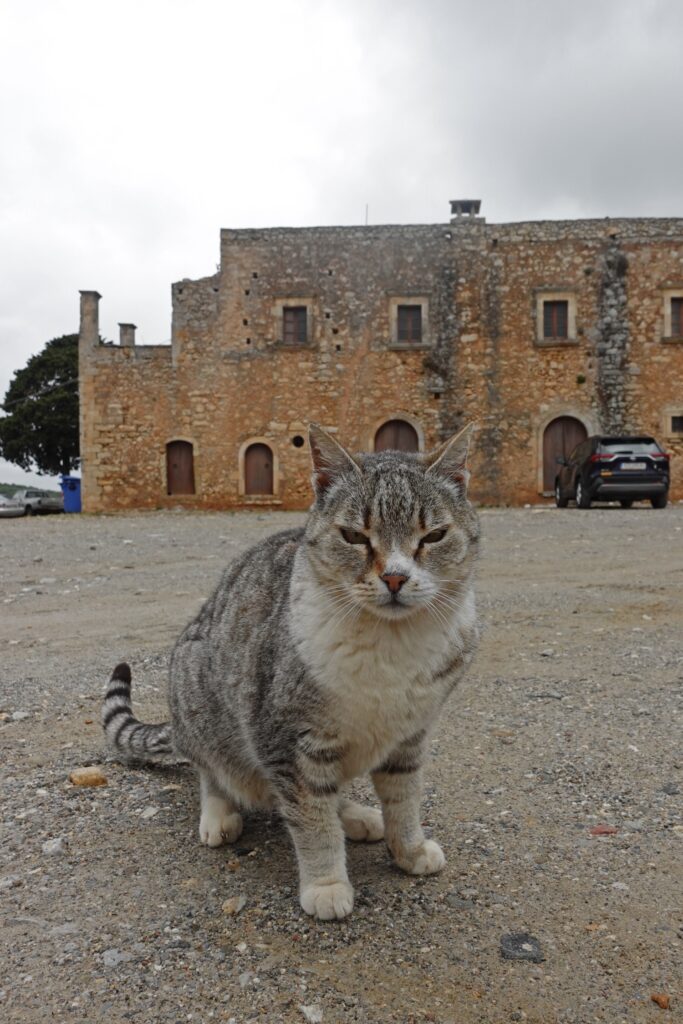
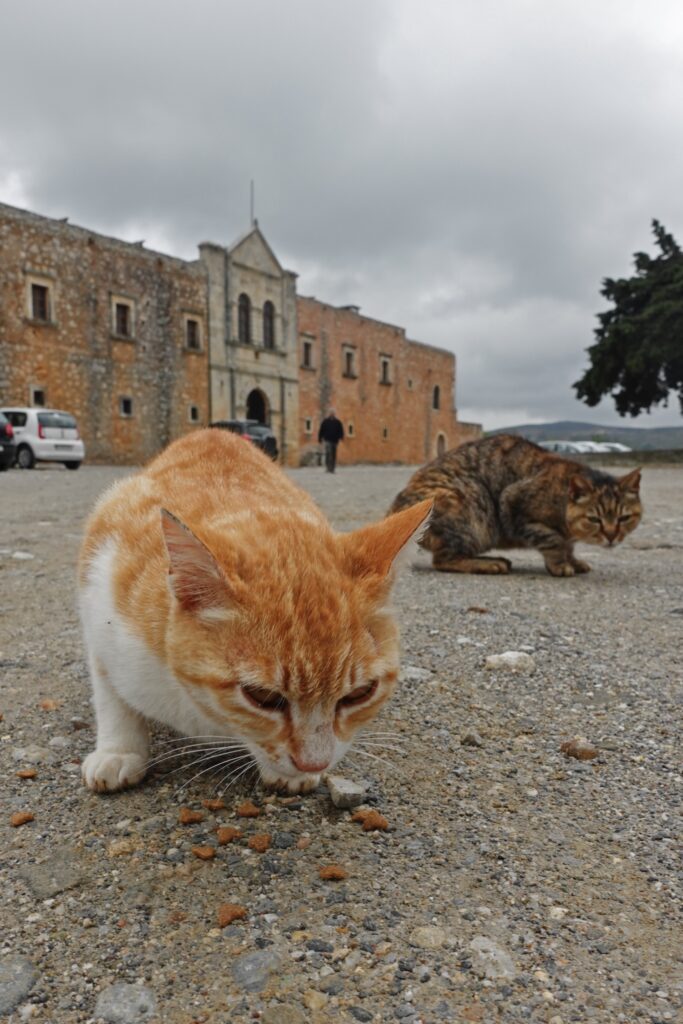
A large colony of cats have made this historic site their home.
For many visitors, these cats add a charming and peaceful touch to the monastery’s atmosphere, offering a sense of serenity and tranquility amidst the historical grandeur.
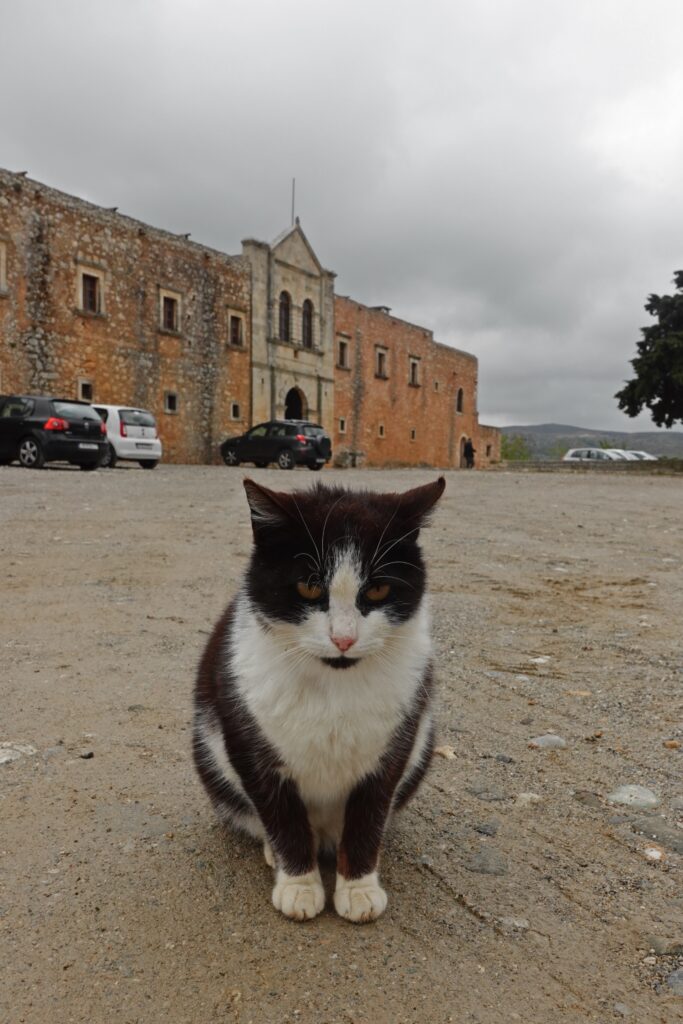
They roam freely through the courtyards, sunbathe on the ancient stones, seek shelter in quiet corners, and pose for photographs in front of the Venetian church.
These cats aren’t just for show. They play a practical role too, keeping the monastery rodent-free and helping maintain the site’s cleanliness and preservation.
Struggling stars
The monastery cats have become the subject of numerous travel photos and Instagram stories. Unfortunately, these cats are some of the hungriest I’ve seen on the entire island. They’re strays, and they live off scraps. Without the help of tourists, they don’t survive.
Stray cats in Crete
Sadly, this isn’t just a problem at Arkadi Monastery. Stray cats are a common sight across Crete and Greece in general.
Fortunately, Crete is home to several well-organized animal shelters. These organizations provide food, medical care, and even adoption opportunities to many strays across the island.
That’s not always the case on other Greek islands, where resources are limited or nonexistent.
I’m suspecting, however, that Arkadi Monastery is not the place cat carers go to every day.
Given the monastery’s remote location, this makes sense. It’s about a 30-minute drive from Rethymno, the nearest major town. That means animal shelter volunteers can’t easily stop by to check on the cats every day.
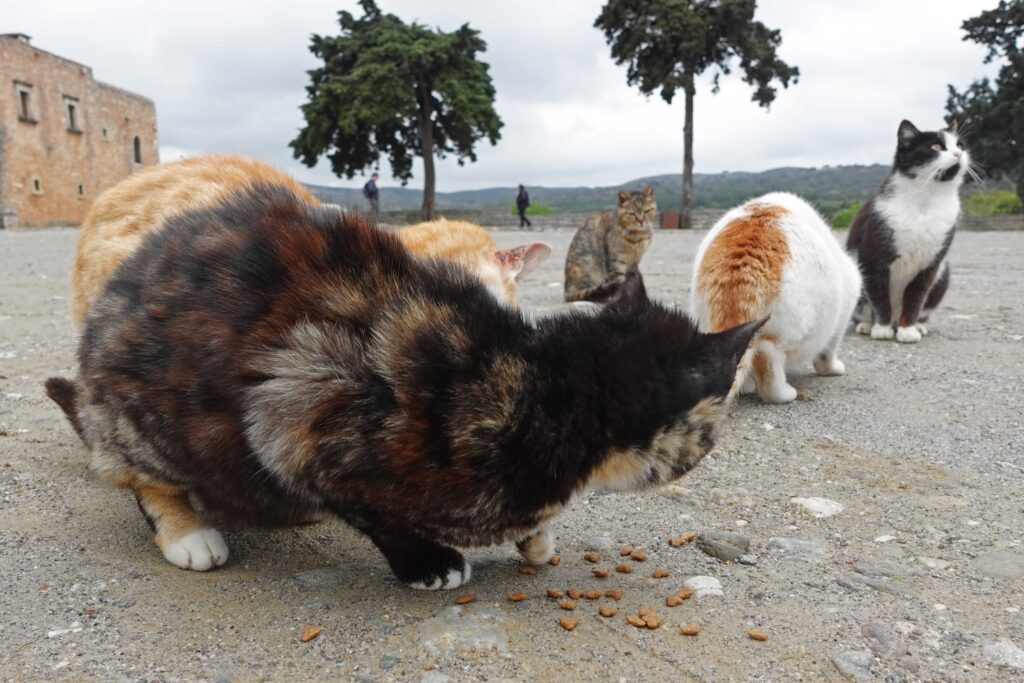
Even if monastery staff occasionally feed them, it’s likely not enough to support such a large clowder of stray cats. And with no nearby restaurants, shops, or tavernas, the cats can’t rely on food scraps or generous tourists—especially in winter, when the island is quiet and visitor numbers drop.
The competition for resources among the cat population in and around the monastery can further exacerbate their hunger.
Without regular food, the cats suffer. Hunger leads to weight loss, illness, and stress. The cats also compete with each other for whatever scraps they can find, which makes things even worse.
Their survival depends on consistent feeding, medical care, and a stable support system.
How you can help the cats of Arkadi Monastery
It’s important to remember that the well-being of these cats relies on ongoing efforts to improve their access to food, medical care, and a stable support system.
If you happen to live in or near Rethymno, please stop by once in a while to feed the cats of the monastery – even if just occasionally.
If you’re a one-time visitor, bring a bag of dry food with you. Every little bit helps.
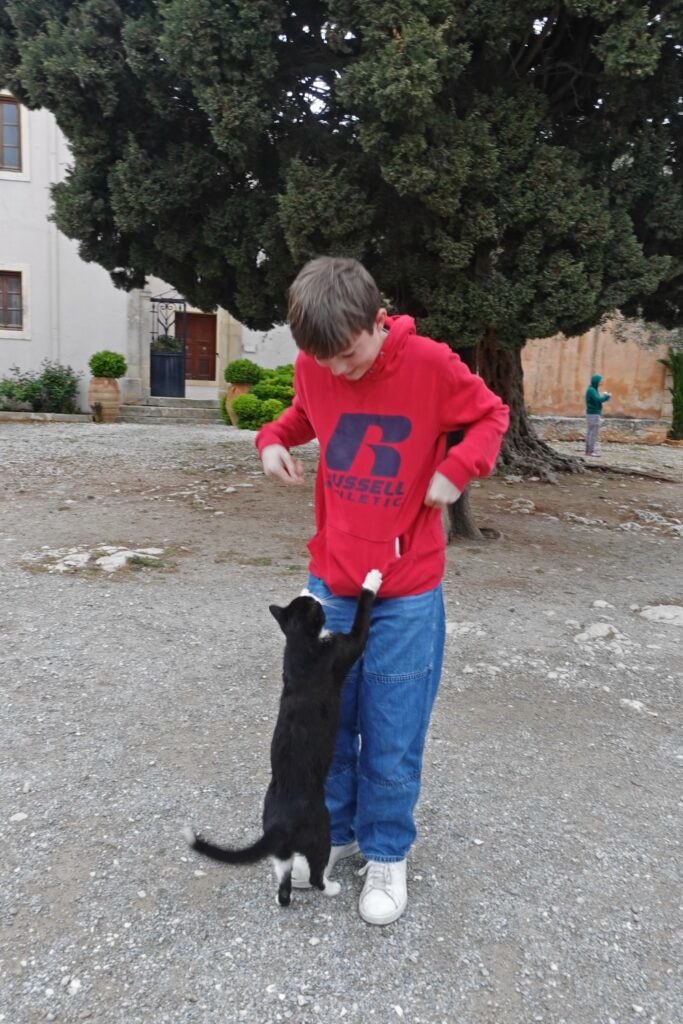
But be prepared: These cats are VERY hungry. They jumped on us and didn’t let go once they understood we had cat food with us. When that food was gone, they also began pestering other tourists.

I also contacted Gouves Animal Shelter to report several unsterilized cats living at the monastery. Hopefully, they can arrange to trap and spay them (and that they have enough funds to do so).
By the way, you can recognize a spayed cat by a small nick in the ear. As you can see from the pictures, some of the cats have indeed been spayed, which means that they have at least some support from local animal welfare groups. This is important to prevent more starving cats in this place.
Spread the word and make a difference
You can also play a role in supporting these stray cats by raising awareness of their plight. That way, you can encourage continued assistance and compassion for these feline residents who have become an integral part of Arkadi Monastery’s unique charm.
If more local animal welfare groups and individuals collaborate with the monastery to offer assistance in feeding the cats, organizing sterilization programs to control the population, and providing medical care when needed, we can help maintain a harmonious coexistence between the monastery and its adorable feline companions.
Is Arkadi Monastery worth visiting?
Absolutely. It brings together everything I love: history, spirituality, and cats. On top of that, the monastery’s role in Cretan history is so important that you simply can’t ignore it.
However, visiting the site also comes with a few limitations. Let’s break it down:
Pros:
-
Historical importance: The monastery played a key role in Crete’s fight for independence.
-
Beautiful setting: It sits on a hill with olive groves, small villages, and scenic country roads.
-
Easy half-day trip: You can explore the site and surrounding area without rushing.
- Friendly cats: Dozens of cats wander the grounds, adding charm and a unique touch to your visit.
Cons:
-
Smaller than some expect: The monastery is compact, so it won’t take all day to visit.
-
Limited access: Public transportation is limited, so renting a car or taking a tour is often easier.
Best times to visit
The best times to visit Arkadi Monastery are late May to late June and early September to early October. During these periods, the weather is mild and comfortable—ideal for exploring the monastery and enjoying the surrounding countryside.
In spring, the hills around Arkadi are alive with wildflowers and lush greenery. The scenery is stunning, temperatures are pleasant, and you’ll avoid the large summer crowds. Visiting during this season makes the experience feel calm and personal.
Autumn is just as inviting. Days stay warm, evenings are cooler, and the landscape may show hints of fall colors. Like spring, this season offers a quieter, more relaxed atmosphere once the peak summer tourist rush ends.
If you travel too early in spring or too late in autumn, temperatures can be a bit chilly, and some hotels and tavernas may not be open, so planning ahead is key.
Entrance fee, opening hours, and dress code
Opening hours
Arkadi Monastery is open daily, including Saturdays and Sundays. However, on Sundays, the museum opens only after the completion of Divine Liturgy.
- January: Closed
- February: Closed
- March: 09:00 am – 06:00 pm
- April – May: 09:00 am – 07:00 pm
- June – July – August: 09:00 am – 08:00 pm
- September: 09:00 am – 07:00 pm
- October: 09:00 am – 06:00 pm
- November: 09:00 am – 05:00 pm
- December: Closed
Entrance fee
The entrance fee is 8 euros. This contributes to the preservation and upkeep of the monastery.
Dress code
When visiting Arkadi Monastery, it’s important to observe respectful behavior. The site holds religious significance, so dress modestly, covering shoulders and knees. As you explore the monastery, maintain a quiet and peaceful demeanor, respecting the spiritual ambiance and the monks’ daily routines. Photography is permitted, but avoid using flash or intrusive equipment.
Best things to do near Arkadi Monastery
Visiting Arkadi Monastery gives you a chance to explore some of central Crete’s most interesting nearby destinations. These spots are easy to combine into a half-day or full-day itinerary and offer a mix of culture, history, and local charm.
Margarites (pottery village)
Margarites sits just a few kilometers from Arkadi Monastery and has earned a reputation for its traditional pottery workshops. Strolling through its narrow streets, you’ll see artisans shaping clay on spinning wheels, firing kilns, and selling handcrafted ceramics in small shops. The village also has cozy cafes and tavernas, making it a pleasant stop for lunch or a coffee break. Visiting Margarites gives you a hands-on look at a craft that has thrived in Crete for centuries.
📍 Many travelers choose a guided tour that combines Arkadi Monastery with Margarites Village, which makes exploring both sites simple and stress-free.
Eleutherna archaeological site
Eleutherna lies a short drive from Arkadi and offers a glimpse into ancient Cretan civilization. Archaeologists have uncovered ruins from the Geometric, Archaic, and Roman periods, including temples, houses, and burial sites. The on-site museum displays artifacts such as pottery, jewelry, and sculptures, providing context for the ruins. Walking the site, you can trace the layout of an ancient city and imagine life in Crete thousands of years ago. It’s a must-visit for history enthusiasts and anyone interested in archaeology.
Melidoni Cave
Melidoni Cave is a natural and historical landmark located near Arkadi. The cave contains evidence of human use dating back to the Neolithic period. Visitors can explore its chambers, which once served as a refuge during Ottoman invasions. A memorial inside commemorates those who died here during uprisings. The site also offers stunning views of the surrounding hills and countryside. Guided tours explain the cave’s history and geology, making it both educational and visually impressive.
📍 You can book a combined Arkadi Monastery and Melidoni Cave tour to see both sites in one convenient trip.
Rethymno old town
Rethymno Old Town lies about 23 km northwest of Arkadi Monastery and offers a mix of Venetian, Ottoman, and Greek influences. Its narrow streets wind past colorful buildings, small shops, and historic landmarks like the Fortezza and the Rimondi Fountain. Cafes and tavernas line the alleys, perfect for sampling Cretan cuisine. Exploring Old Town combines culture, history, and everyday life in Crete, making it a lively complement to the quieter monastery visit. Spend a few hours wandering and soaking up the local atmosphere.
📍 You can book a tour that combines Arkadi Monastery with Rethymno, making it easy to explore both highlights in a single day.
Where to stay nearby
Arkadi Monastery sits in the hills of central Crete, so choosing the right base makes your visit much easier.
Rethymno is the best place to stay because it’s about 30 minutes from Arkadi Monastery. The town also offers plenty to see and do, from the charming streets of Rethymno Old Town to the Venetian harbor, historic landmarks, and many restaurants and cafés.
Here are a few good accommodation options in Rethymno:
- Luxury hotel — Nautilux Rethymno by Mage Hotels: This modern beachfront resort offers stylish rooms, several swimming pools, spa facilities, and direct access to the beach. It consistently receives excellent guest reviews and is one of the highest-rated luxury hotels in the area. (Check prices and availability.)
- Boutique hotel — Casa Dei Delfini: This small boutique hotel sits in a restored Venetian building in the heart of Rethymno Old Town. The property combines historic architecture with elegant rooms and a quiet courtyard atmosphere. (Check prices and availability.)
- Budget option — Menta City Boutique Hotel: Located a short walk from the Old Town, this hotel offers modern rooms, a rooftop terrace with great views, and excellent value for money while still maintaining very high guest ratings. (Check prices and availability.)
Final thoughts
Is Arkadi Monastery now on your list of must-see places in Crete? Or have you been there already? I’d love to hear your thoughts in the comments.
And if you do visit, don’t forget to say hello to the monastery’s sweet cats, and take some time out of your day to give them some much needed food and love.
Other favorite destinations in Crete:
- Sissi (small seaside village on Crete’s north coast with a relaxed harbor, waterfront tavernas, and a quiet atmosphere)
- Kritsa (historic mountain village near Agios Nikolaos)
Explore more monasteries with cats:
- Panagia Tourliani Monastery in Ano Mera, Mykonos
- Monastery of Ypsilou, Lesbos Island
- Saint Nicholas of the Cats Monastery in Limassol, Cyprus
- Nga Phe Kyaung Monastery on Inle Lake, Myanmar
Text and photos by Vanessa Morgan (first photo by Lauren Palmucci)

Pin this article about Arkadi Monastery Crete!


4 responses
It looks like a beautiful place, although I am very sorry the cats are not well cared for.
Such lovely cats, and clearly need some more intervention than just kindly visitors. Maybe TNR by the monks would be more useful than prayer?
That’s a very useful article! I added the monastery to my bucket list
I’d love to explore Crete and especially this monastery! Thank you for this great guide!