Last Updated on 17 March 2026 by Vanessa
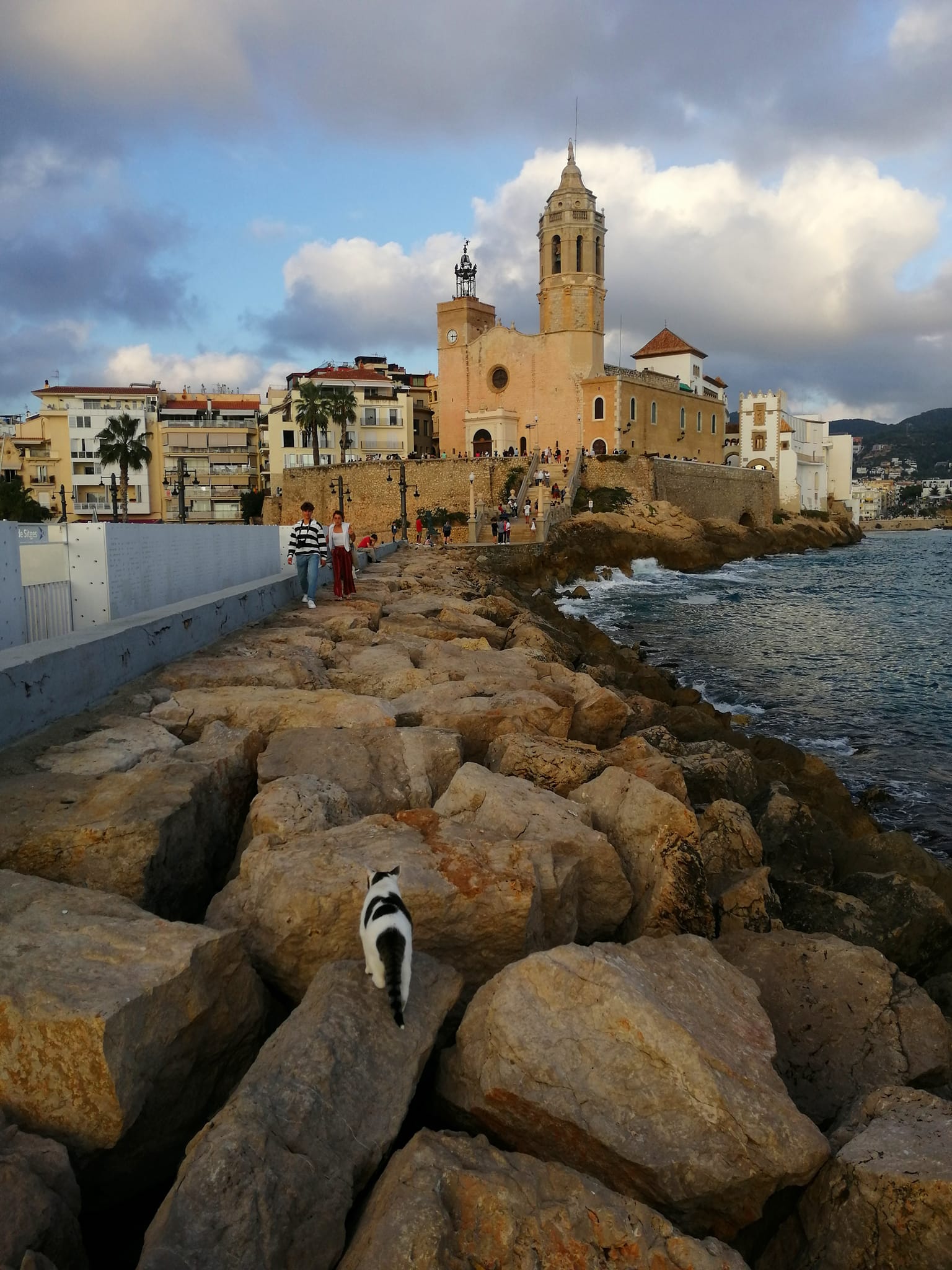
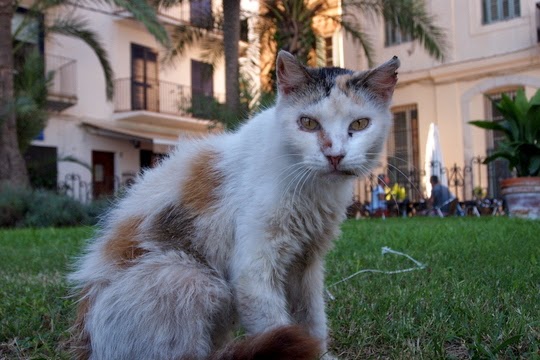
Monumento a Santiago Rusiñol is one of my favorite little spots in Sitges. Right at the seafront and at the edge of the old town, this small square brings together sea views, a row of cafés, and a quiet enclosed lawn where a well-cared-for colony of cats spends its days napping and playing.
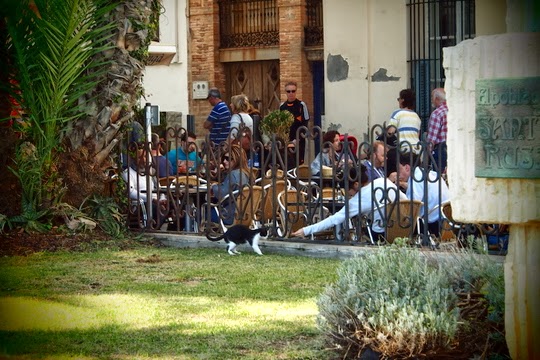
It’s tucked between lively bars and restaurants, so you can sit down with a coffee or a cold drink, take a break from the busier parts of Sitges, and watch the sea, promenade, and cats.
It’s peaceful, charming, and a sweet slice of Sitges life.
👉 Check out my complete Sitges guide covering the best things to do, restaurants, and where to stay.
Why Monumento a Santiago Rusiñol is one of the best seafront spots in Sitges to slow down
Where is Monumento a Santiago Rusiñol?
The Monumento a Santiago Rusiñol in Sitges is located on the Passeig de la Ribera, a scenic promenade along the waterfront.
For many visitors, the area is favorite spot to hang out, mainly because the beachfront setting provides a such a picturesque and relaxing backdrop.
The location is also conveniently within walking distance from the charming old town of Sitges, the historic monuments, and the quaint shops.
Why is this one of the best coffee spots in Sitges?
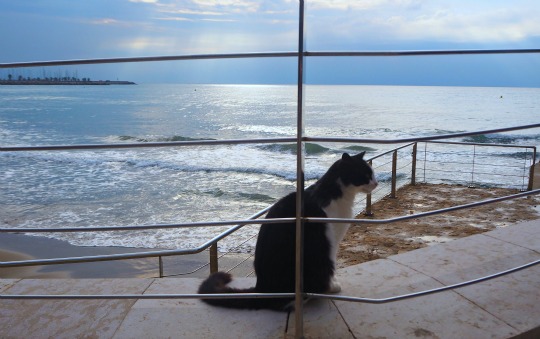
The area around Monumento a Santiago Rusiñol has some of the best unobstructed views along the promenade. You can sit down with a coffee or a drink and look straight out over the Mediterranean, with nothing but the beach in front of you.
The location is hard to beat. You’re right at the entrance to the old town, so it’s an easy place to pause before or after exploring, while still being directly on the seafront.
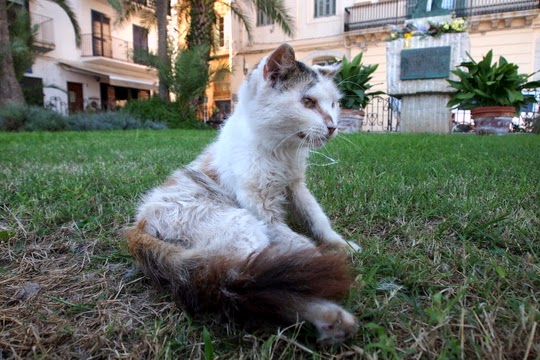
One of the things that makes this spot stand out is the small enclosed lawn. Green space like this is surprisingly rare in Sitges, and it creates a more open, relaxed feeling compared to the tighter, busier streets nearby. It also means there are plenty of shaded spots, especially useful in the middle of the day when much of the promenade is fully exposed to the sun.
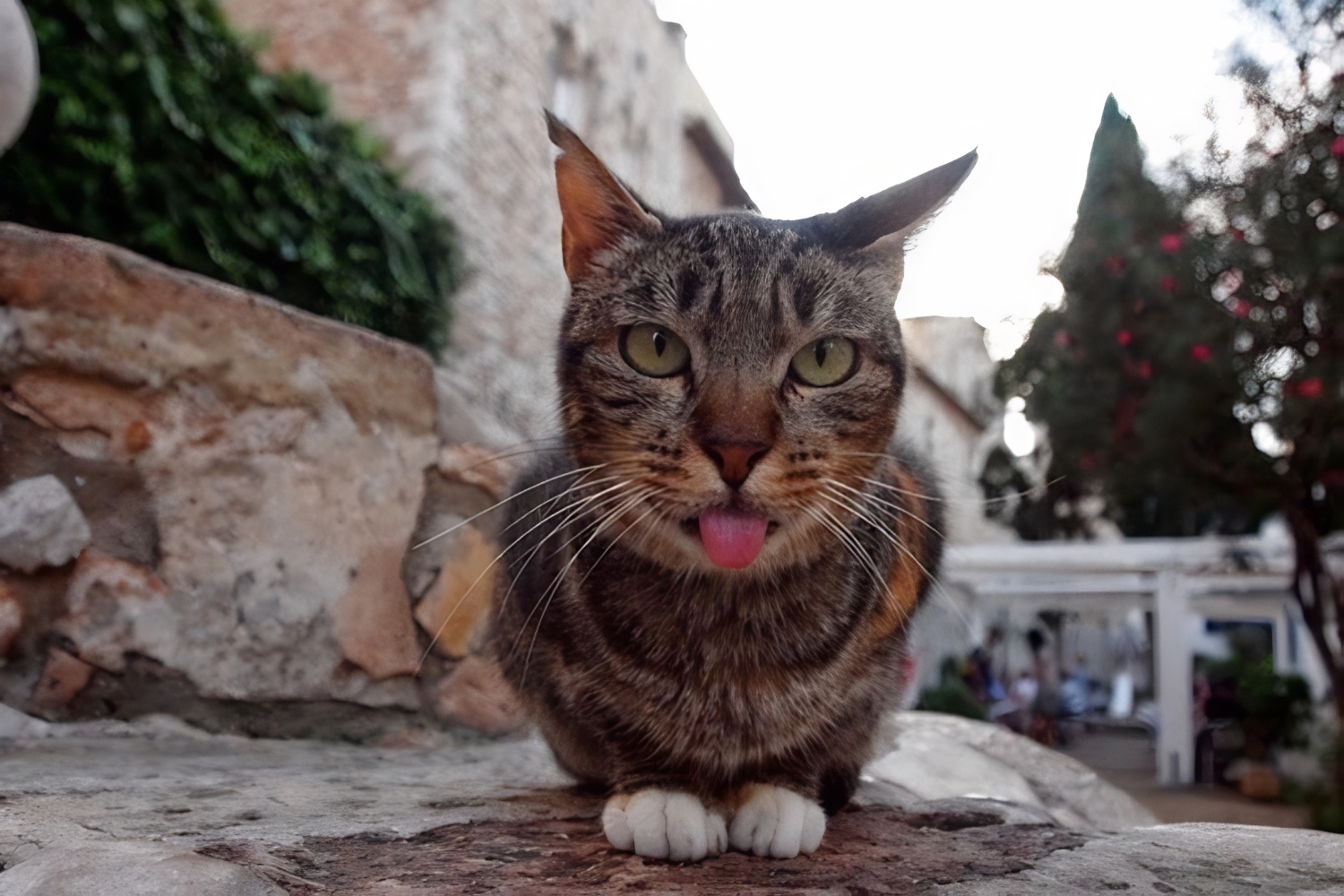
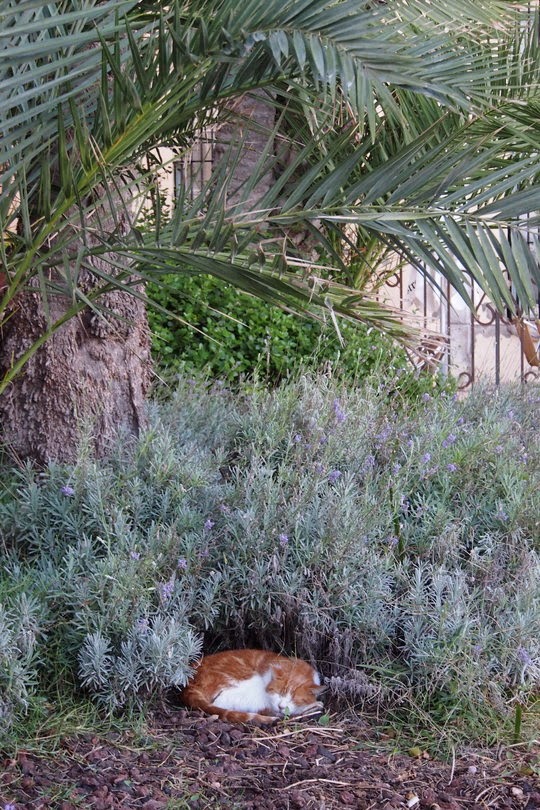
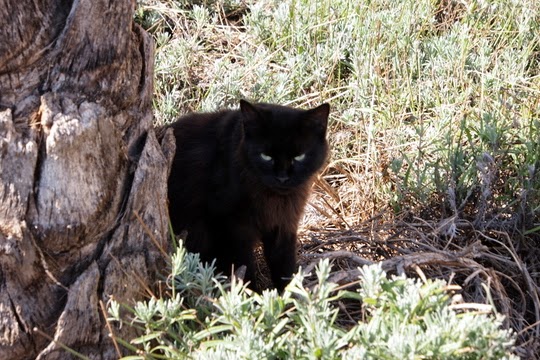
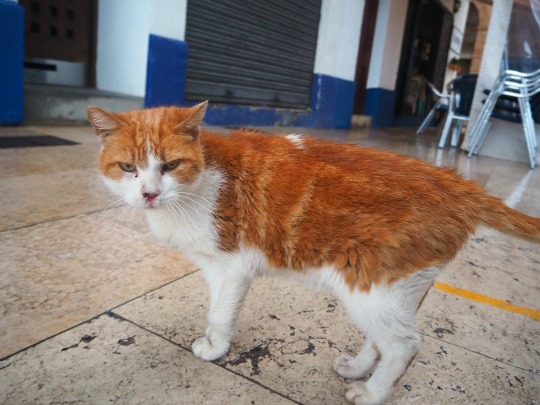
And then there are the cats. A small, well-cared-for colony lives on the lawn, often stretched out in the shade or wandering between the trees. They add a quiet, lived-in charm to the whole place without ever feeling intrusive.
Best time to visit
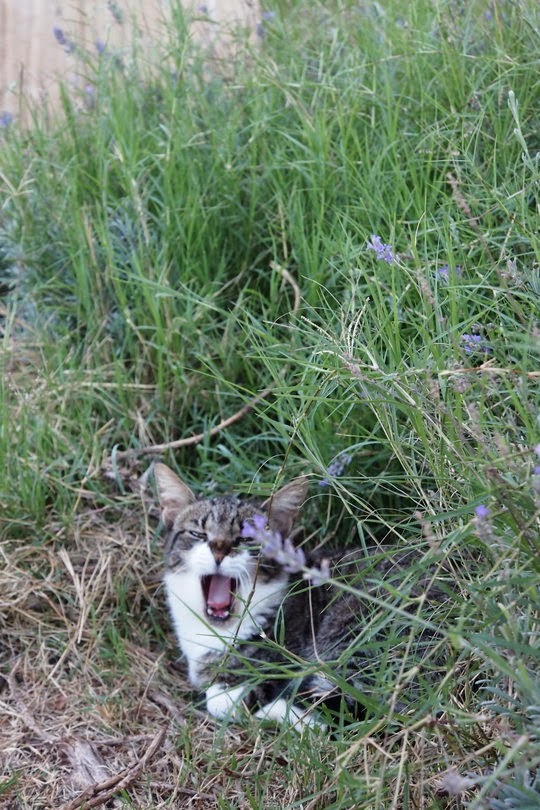
I really love the atmosphere here in the morning, when everything is still quiet and unhurried. The light is soft, only a few people are passing by, and you can actually hear the waves. The cooler temperatures also mean the cats are at their most active, which is always a joy to watch.
By late afternoon and into sunset, the whole area becomes much livelier.
In the evening, the restaurants and bars here close, and things calm down again. But if you’re staying in the old town, it’s a lovely spot to take in the sea views one last time before heading back to your hotel.
👉 Still looking for a place to stay? I’ve put together a full guide to the best hotels in Sitges, including the most convenient areas and standout options for every budget.
What to order?
In terms of food, the restaurants surrounding the monument haven’t quite won me over. After trying each one, none managed to make it onto my list of go-to spots. (You can find the best restaurants in Sitges here.)
That said, there is one little gem of an “eatery” I keep coming back to, even if it’s just for a quick coffee. Their smoothies and breakfast options are genuinely excellent.
Unfortunately, the name escapes me for now, but it’s very easy to spot. Just look for the place with the friendly dog usually hanging out front—unless he’s off chasing the cats. It’s on your left side even you’re facing the monument.
Overall, though, you’re much better off stopping by here for a coffee or a sangria rather than a full meal.
However, if you’re hungry, the best tapas in Sitges are just around the corner at a restaurant called La Guineu.
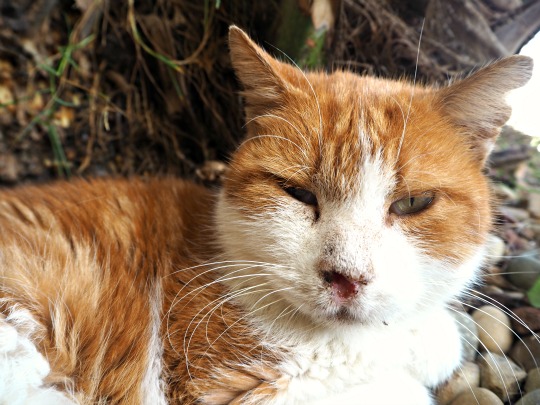
The cats of Monumento a Santiago Rusiñol
One of the reasons I love the Monumento a Santiago Rusiñol so much is because it’s teeming with cats. You can even spot them on Google Maps!
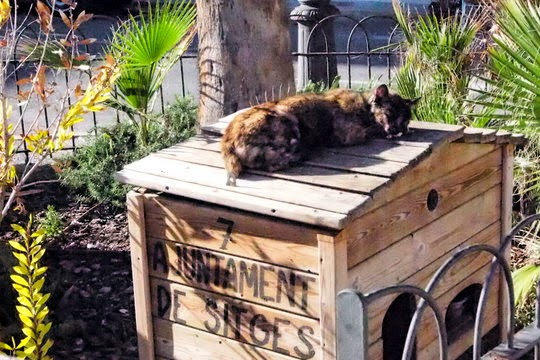
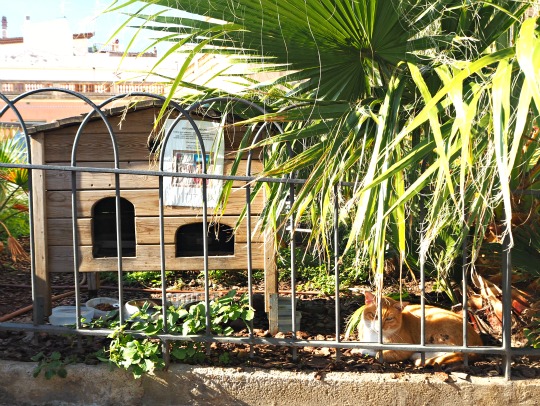
Right in front of the monument, adjacent to the beach, there’s also a small enclosed area with cat houses and food bowls.
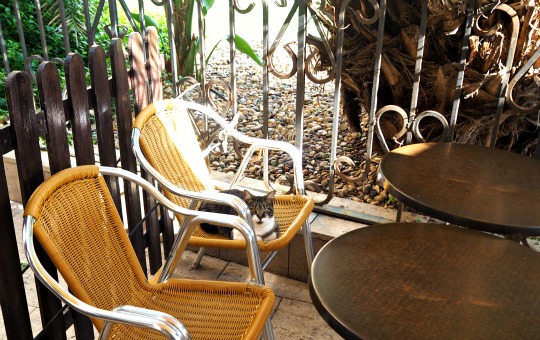
It’s nearly impossible to enjoy a coffee or a snack here without seeing a cat—or two—popping up for attention. They’re everywhere and always eager for a little love.
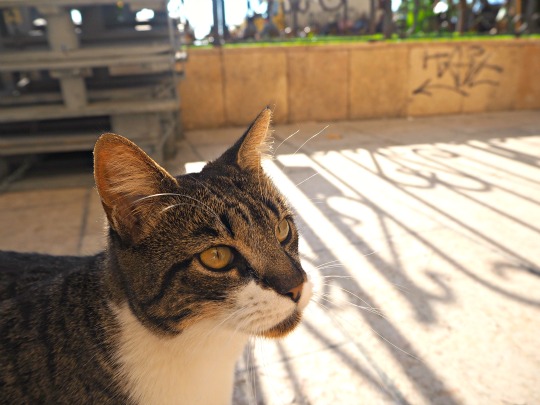
Sitges has a very structured approach to cat care, overseen by the town council. Volunteers provide food and water daily, and all the cats I’ve seen around the monument are spayed or neutered. This system helps keep the population healthy and manageable, while also ensuring the cats have a safe space in the town.
That said, some of these homeless cats still face challenges. During my visits over the years—for my other job as a film writer and festival programmer—I’ve noticed that I rarely see the same cats two years in a row. This shows that, despite careful care, life remains difficult for many of them. It’s a reminder that ongoing community efforts and support are still essential to keep Sitges’ cat population safe and healthy.
👉 The most famous cat in Sitges is Nosferatu, the unofficial mascot of the Sitges Film Festival. You can find out more about Nosferatu here.
Who was Santiago Rusiñol?
Santiago Rusiñol (1861–1931) wasn’t just a painter—he was a creative force. Born in Barcelona, he became one of the most important voices in the Catalan Modernisme movement, making waves not just with his art, but also with his words. You’ll often see his paintings filled with dreamy landscapes and everyday life, influenced by Symbolism and Art Nouveau.
Many of these works can still be seen in Sitges at the Museu Cau Ferrat, Rusiñol’s former home and studio, which now houses a large collection of his paintings, sculptures, and personal objects.
But his impact went beyond the canvas. He co-founded Els Quatre Gats (which charmingly means “The Four Cats”), a café in Barcelona that turned into a buzzing hub for artists, writers, and free-thinkers—including a young Picasso.
Rusiñol also left his mark on Catalan literature. His works, like L’auca del Senyor Esteve (The Story of Mr. Esteve) and Cigales y hormigas (Cicadas and Ants), tackled love, nature, and what it means to be human—stories that still resonate today. He was also a playwright and music enthusiast, and his work often blended art with literature, social commentary, and the rhythms of everyday life.
The Monumento a Santiago Rusiñol shows just how much he meant to Catalonia’s cultural soul.
By the way, beyond the monument, you can spot plaques, sculptures, and reproductions of his work around Sitges, and during certain festivals and exhibitions, the town celebrates his legacy with special displays of his paintings and those of his contemporaries.
Final thoughts
Have you been to any of the bars or restaurants near the Monumento a Santiago Rusiñol? Which are your favorites? Did you spot the cats?
Should you choose to visit Sitges, don’t forget to shower these strays with some extra love. And if you happen to capture their adorable antics in photos, feel free to share the feline love with us on Facebook and Twitter!
Update
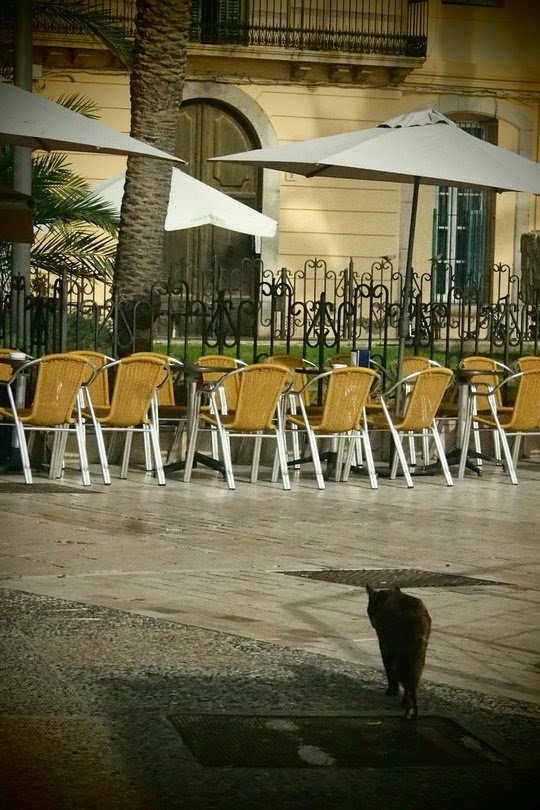
Times have changed a lot. If you walk by the Monumento a Santiago Rusiñol, you won’t see as many cats as before. Now, your best chance to spot some whiskers is at the small cat enclosure right in front of the monument.
The cat numbers have gone down significantly in Sitges. That’s actually a good thing, because the town council has stepped up, doing more spaying and neutering with regular campaigns every year.
Want to know more? Check out my article about the cats of Sitges.
What to visit next in Sitges?
- Bar La Guineu (1 minute)
- Cine Retiro (6 minutes)
- Sant Sebastià Cemetery (7 minutes)
Pin this article about Monumento a Santiago Rusiñol in Sitges!