Last Updated on 9 November 2025 by Vanessa
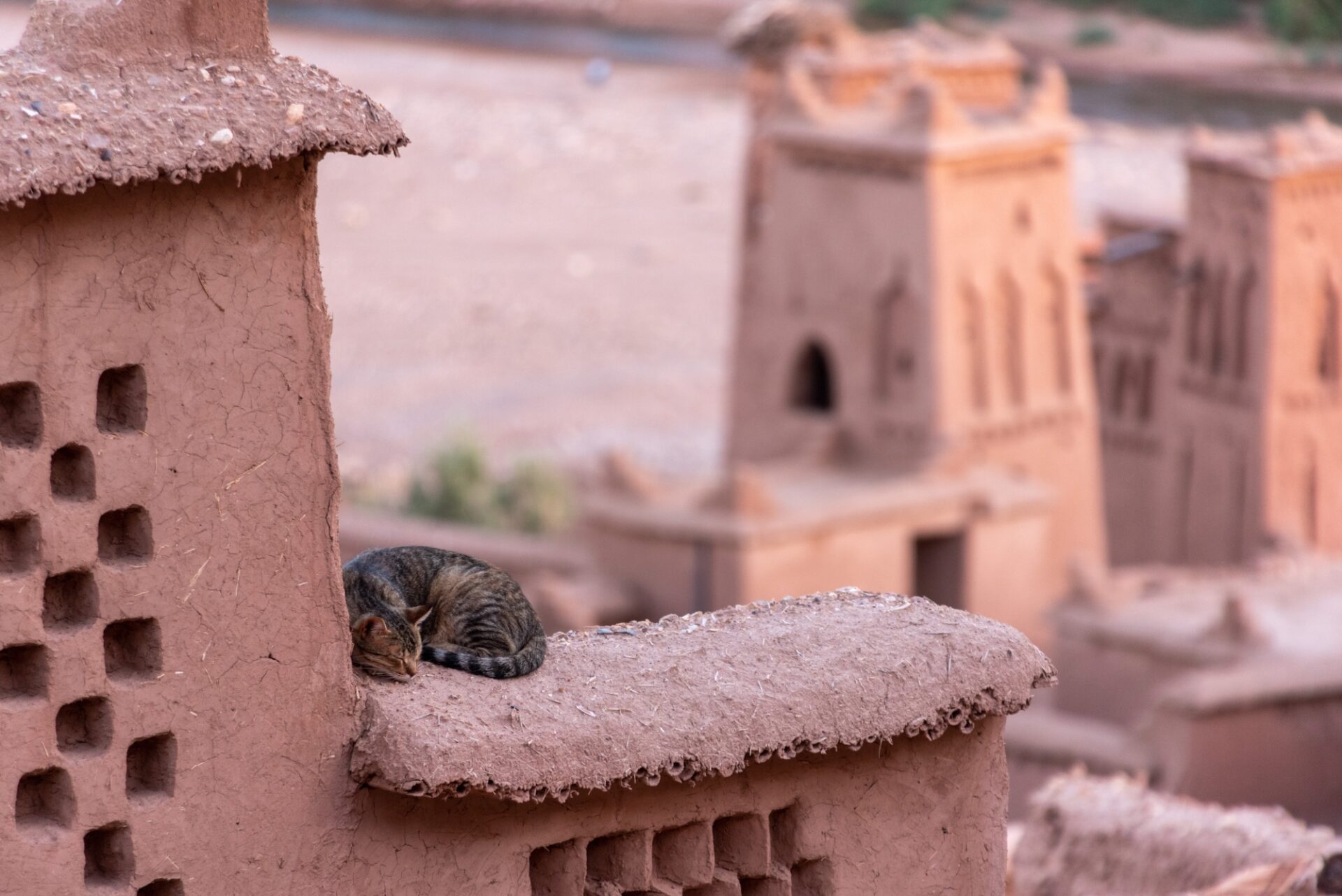
If you ever find yourself at the edge of Morocco’s Atlas Mountains, don’t be surprised if the first locals to greet you in Aït-Ben-Haddou have fur.
This ancient fortified village, famous for its towering clay walls and maze-like streets, isn’t just a UNESCO World Heritage Site. It’s also a playground for dozens of cats.
Sure, Gladiator, Lawrence of Arabia, and even Game of Thrones were filmed here, but these cats have been stealing scenes long before the cameras showed up.
Wander with me through the sun-drenched ruins and meet the real stars of Aït-Ben-Haddou.
Meet Aït-Ben-Haddou’s real stars: the cats that roam the legendary filming locations
About Aït-Ben-Haddou
Aït-Ben-Haddou is one of Morocco’s most iconic sights — a real-life movie set tucked into the foothills of the Atlas Mountains.
This ancient ksar or fortified village is built of local red clay and mud, and it has stood the test of time for over a thousand years.
Berbers constructed it in the 17th century, and it went on to become a key stop for caravans crossing the Sahara desert, trading salt, gold, and silk.
In 1987, the labyrinthine alleys and towering kasbahs have become a UNESCO World Heritage Site.
Some families continue to live in the original buildings, maintaining the traditional way of life and preserving the heritage of the ksar.
However, the number of permanent residents has decreased over time, with some moving to nearby towns for better access to modern amenities.
Aït-Ben-Haddou’s filming locations
You’ve likely already caught a glimpse of Aït-Ben-Haddou thanks to its numerous appearances in some movies and TV shows.
Here are some of the legendary sets that turned this ksar into a Hollywood hotspot.
- Game of Thrones: Aït-Ben-Haddou served as the filming location for the fictional city of Yunkai, one of the three great Slaver Cities located in the continent of Essos.
- Gladiator: Ridley Scott’s epic historical drama is one of the greatest cinematic masterpieces of its time, and Aït-Ben-Haddou played a pivotal role in bringing its grandeur to life. The village’s unique scenery made it an ideal location to depict both ancient Rome and the North African city of Zucchabar.
- Babel: Released in 2006, Alejandro González Iñárritu’s Babel weaves interconnected stories set in different countries, including Morocco. Aït-Ben-Haddou was one of the filming locations used to depict the rural Moroccan landscape.
- Lawrence of Arabia: David Lean used Aït-Ben-Haddou for scenes depicting the Turkish military garrison and the city of Akaba.
- Jesus of Nazareth: In Franco Zefferelli’s television mini-series, the ksar represented several biblical locations.
- Prince of Persia: The Sands of Time: Mike Newell used the desert locations surrounding Aït-Ben-Haddou to bring to life the fantastical world of Persia.
- The Man Who Would Be King: The main gate and surrounding walls featured as the entrance to the fictional city of Rudyarda, whereas the open area within the ksar served as the market square of Rudyarda and the kasbahs and towers as the Royal Palace.
- The Message: Aït-Ben-Haddou was the backdrop for scenes set in the Arabian Peninsula,

Let’s meet the cats of Aït-Ben-Haddou
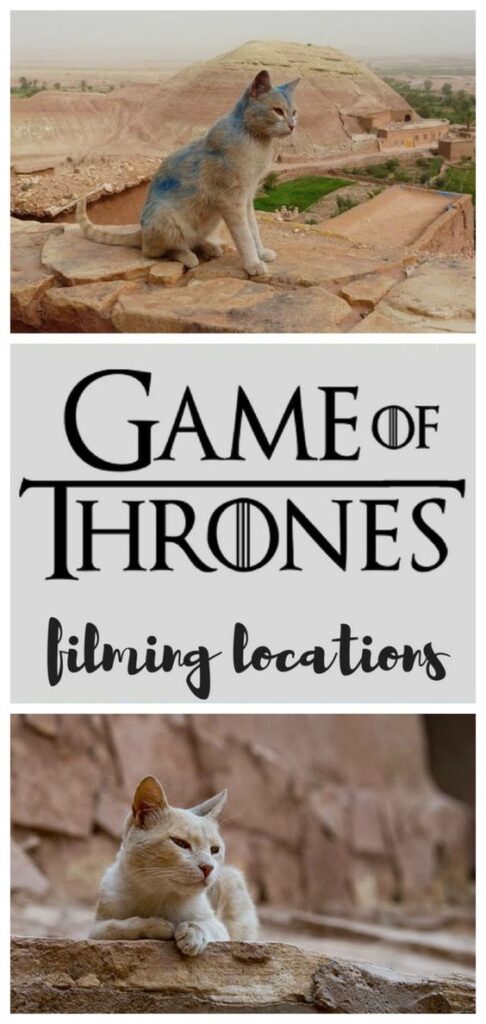
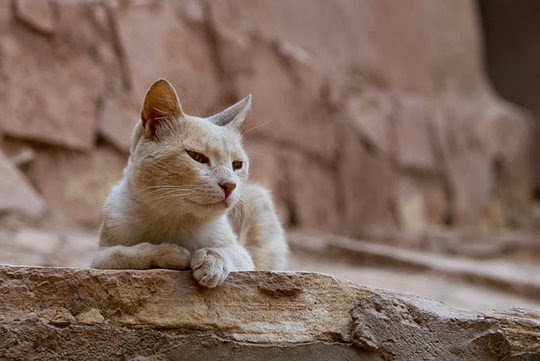
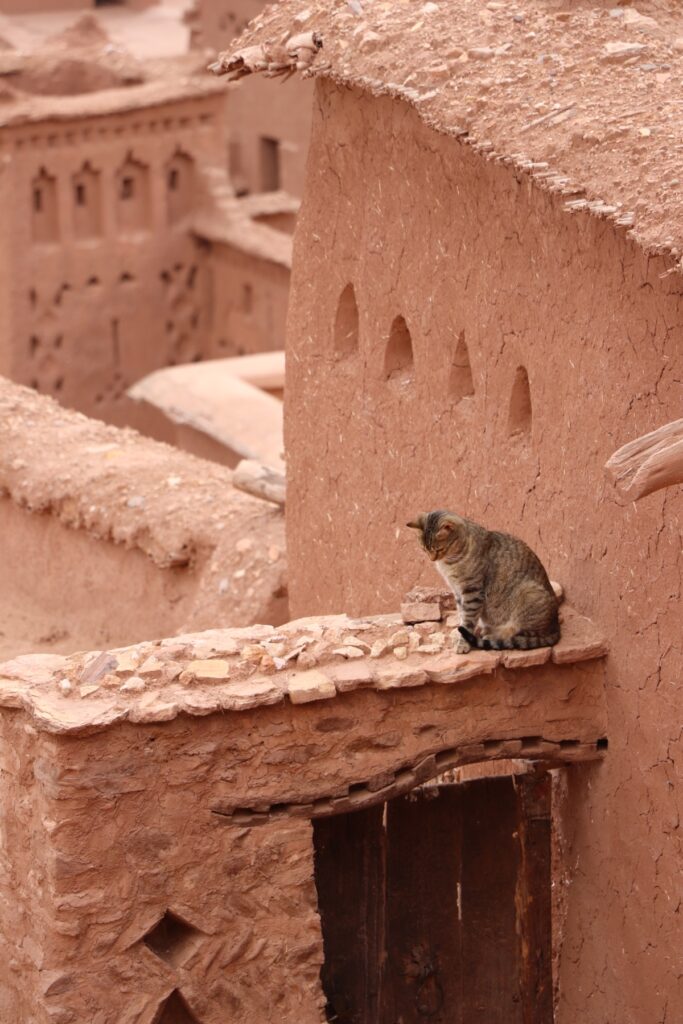
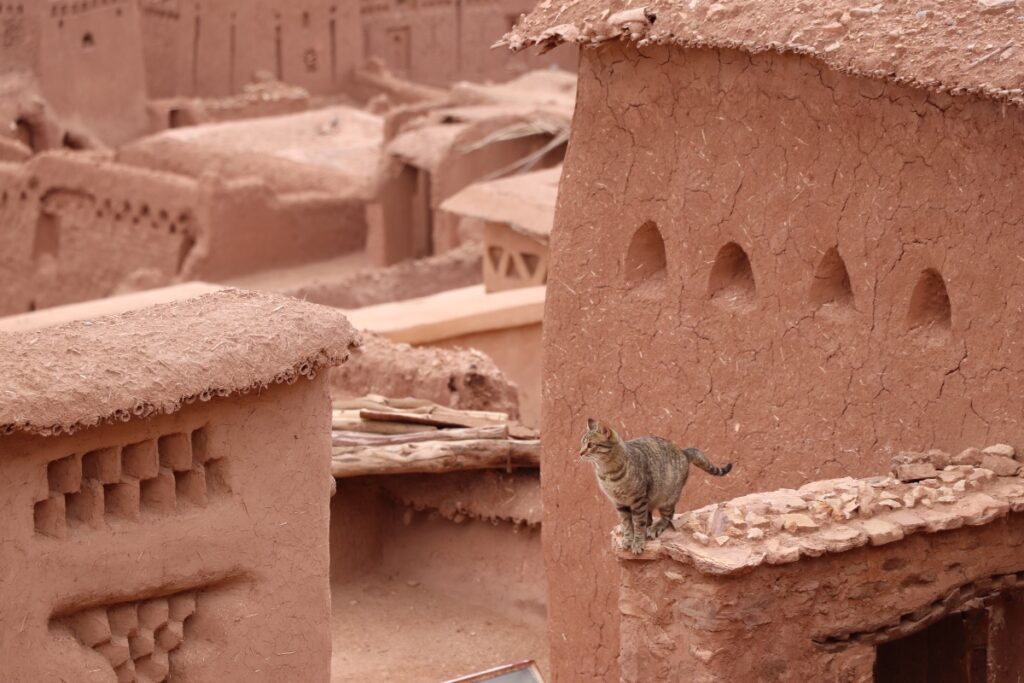
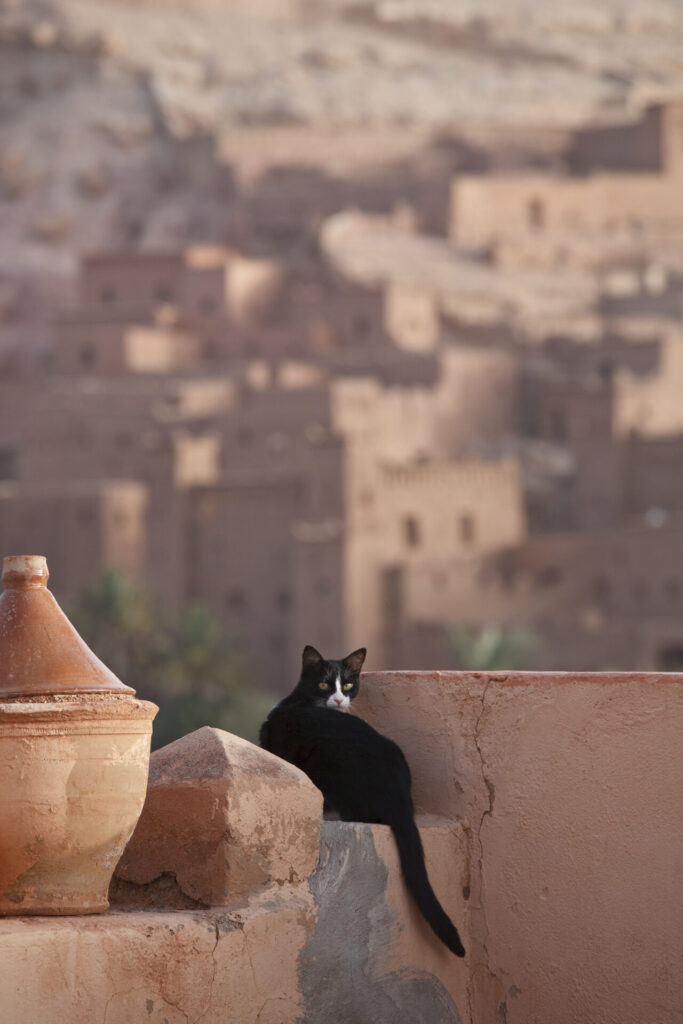
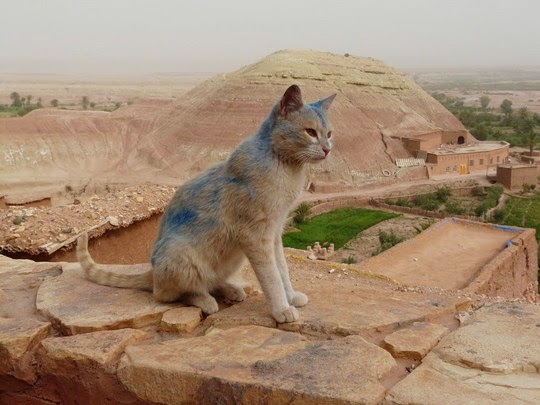
If you’ve ever wandered through the ancient alleys of Aït-Ben-Haddou, you’ve likely crossed paths with a cat. They are as much a part of the landscape as the red mud walls and towering kasbahs.
In fact, it’s the cats that give this place a sense of warmth and life.
They offer endless opportunities for photos. Whether perched atop a clay wall or peeking through an ancient window, these feline residents add a touch of life and personality to the timeless architecture.
The cats’ role in the village
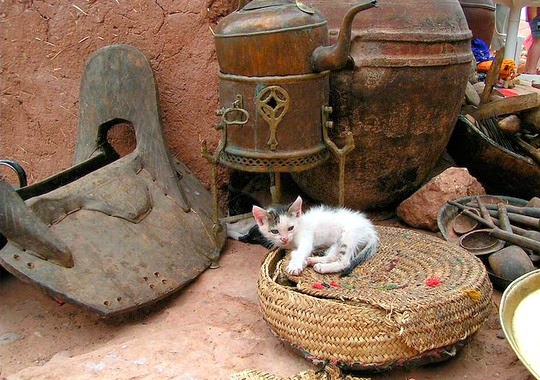
While the village’s human residents maintain the ruins and keep the kasbahs alive, the cats have their own vital role.
They help keep the village free of rodents, particularly in a place where food can be scarce and pests can thrive.
Cats are nature’s perfect pest controllers. And in Morocco, they’ve earned their keep by helping local communities maintain a healthier, more balanced environment.
In Morocco, cats aren’t just pets either.
They symbolize good luck, protection, and purity. Islamic tradition considers cats clean animals, and many believe them to ward off jinn (spirits or supernatural beings).
Even the Prophet Muhammad had a cat named Muezza. Stories say he treated her with great care and respect, even allowing her to drink from his own cup.
This reverence for cats persists today, with many Moroccans viewing them as spiritual guardians of their homes and businesses.
In Aït Ben-Haddou, you can see this in the way people interact with the cats. Although many are strays, locals care for them by offering them water or a snack, while shopkeepers pause to pet one lounging outside their stores.
The cats roam freely but are respected and fed. This creates a peaceful atmosphere where humans and animals coexist as equals.
Life in the ksar
Living in Aït-Ben-Haddou comes with its challenges, though.
The climate can be extremely hot in the summer, with temperatures often exceeding 40°C (104°F). The winds can whip through the narrow streets, and the sun can scorch the walls.
However, the local cats have adapted to this harsh environment.
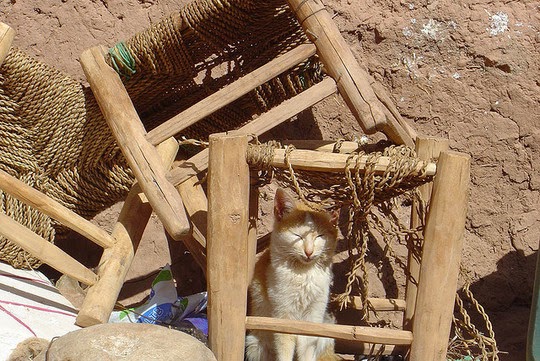
In a place where the desert can be unforgiving, they find shelter in the shadows and make their home among the ruins.
The stone walls of the kasbahs offer them plenty of places to curl up and find shade. Meanwhile, the narrow alleys and hidden courtyards provide plenty of quiet nooks to explore.
They’re also incredibly self-sufficient.
While they may enjoy the occasional snack or pat from a friendly local or visitor, the cats of Aït-Ben-Haddou are skilled hunters. They roam the ruins, chasing after mice, lizards, and birds, helping to keep the local ecosystem in balance.
Conclusion
Which real-life film set are you most interested in visiting in Aït-Ben-Haddou?
Did this article spark your wanderlust? Why not share it with your globe-trotting friends on social media? They might be enticed to join you in exploring the cats and filming locations of Aït-Ben-Haddou.
More iconic filming locations with feline charm
Check out even more iconic filming locations, each with their unique feline charm!
- Game of Thrones filming locations in Dubrovnik, Croatia
- Monemvasia’s spooky horror movie locations
- Hobbiton: New Zealand’s real-life locations of The Lord of the Rings and The Hobbit
- Matera’s James Bond filming locations
- The rock op Calpe
- Aoyama Cemetery
Our other articles about the cats of Morocco
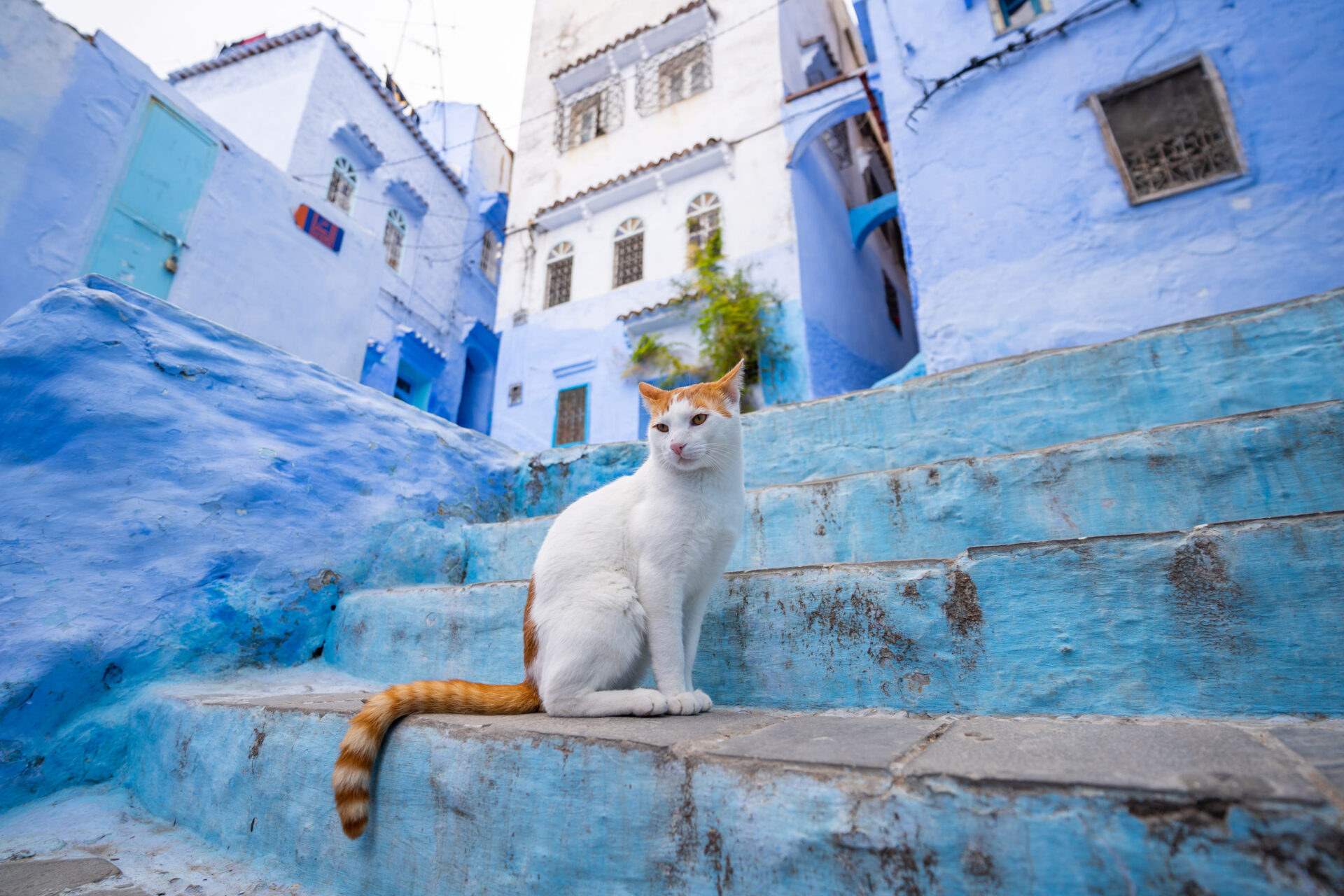
- Chefchaouen: The Purr-fect Cat Tourist Destination of Morocco: Explore the blue-washed paradise of Chefchaouen, where feline charm and breathtaking beauty meet. Uncover the secrets behind the city’s irresistible appeal to cat lovers from around the globe.
- Marrakech Cats: A Glimpse into Morocco’s Rich Feline Heritage: Delve into the ancient streets of Marrakech, where a vibrant feline culture weaves through the city’s history. Discover the profound connection between the people of Morocco and their beloved feline companions.
- Why does Tangier, Morocco, have so many cats? Unravel the enigmatic allure of this coastal city, where the feline population takes center stage. Dive into the heartwarming tales that make Tangier a paradise for our whiskered friends.
- The Cats of Morocco Calendar: A Purr-fect Gift for Cat Lovers: This might just be the purr-fect gift for cat enthusiasts!
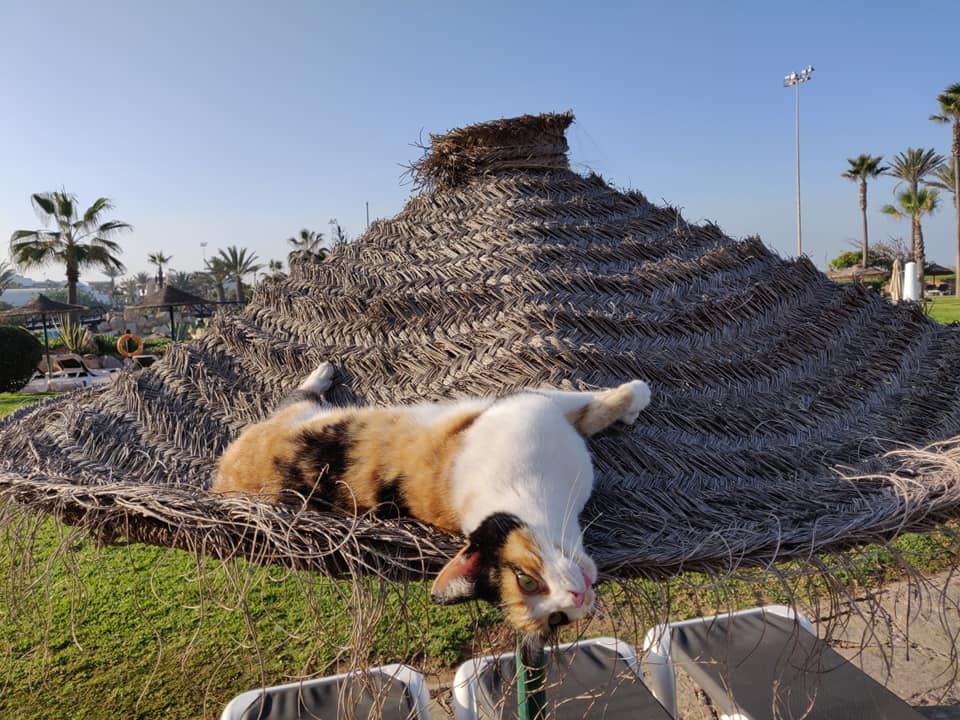
- Riu Tikida Dunas: A Heartwarming Tale of Feral Cat Compassion in Agadir, Morocco: In a heartening act of compassion, the Riu Tikida Dunas hotel in Agadir took a different approach to feral cats. Explore the inspiring story of how the hotel embraced its feline guests, providing care, sterilization, and a loving home for these precious creatures.
When Animals Attack: The 70 Best Horror Movies With Killer Animals
Pin this!