Last Updated on 22 May 2025 by Vanessa
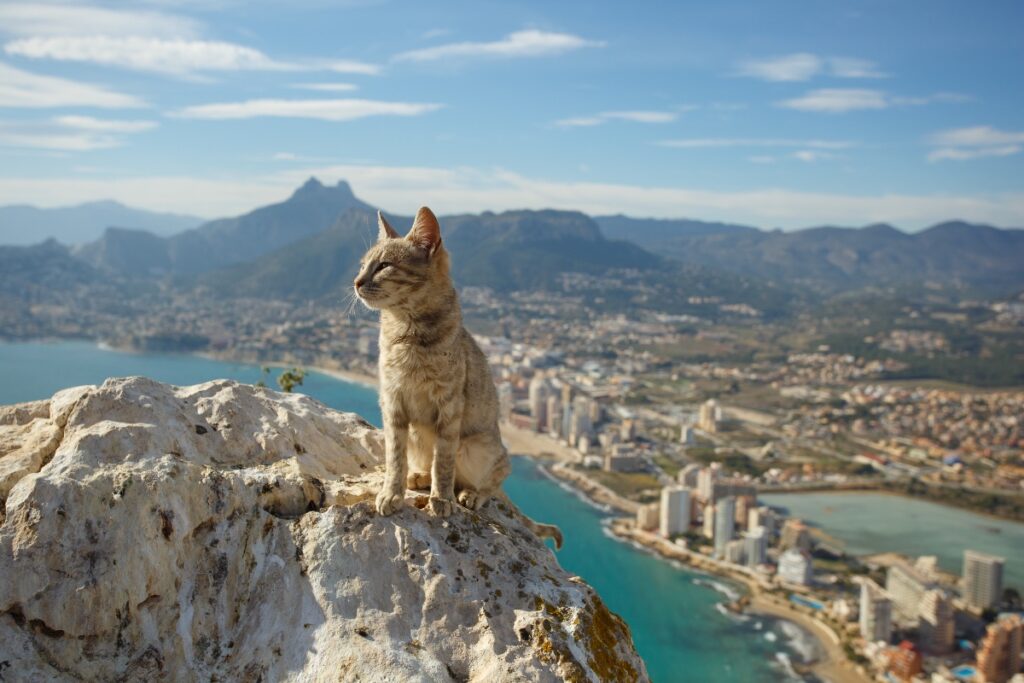
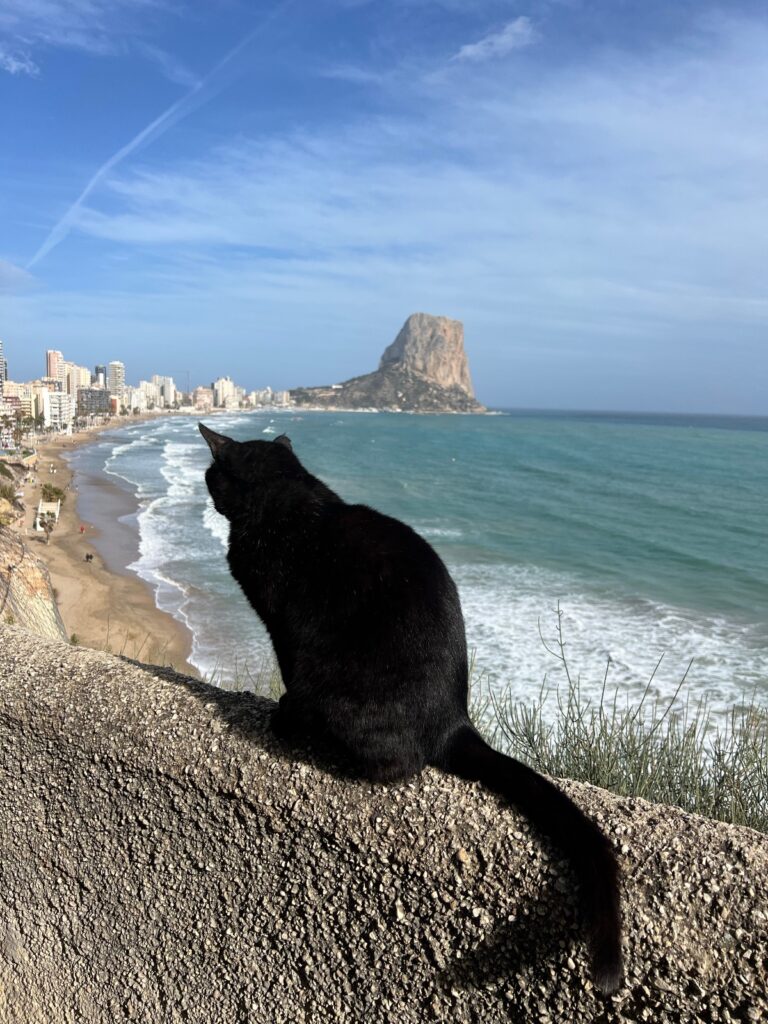
The Rock of Calpe, also known as Peñón de Ifach, is a massive limestone formation that rises 332 meters above the Mediterranean Sea in Alicante, Spain. It’s famous for its stunning views, unique plants and animals, and striking landscape—making it a favorite spot for hikers, tourists, and nature lovers.
But what many visitors don’t know is that the rock is also home to a thriving population of… cats.
Let’s take a closer look at the history and ecology of the Rock of Calpe, and the cats who have made it their home.
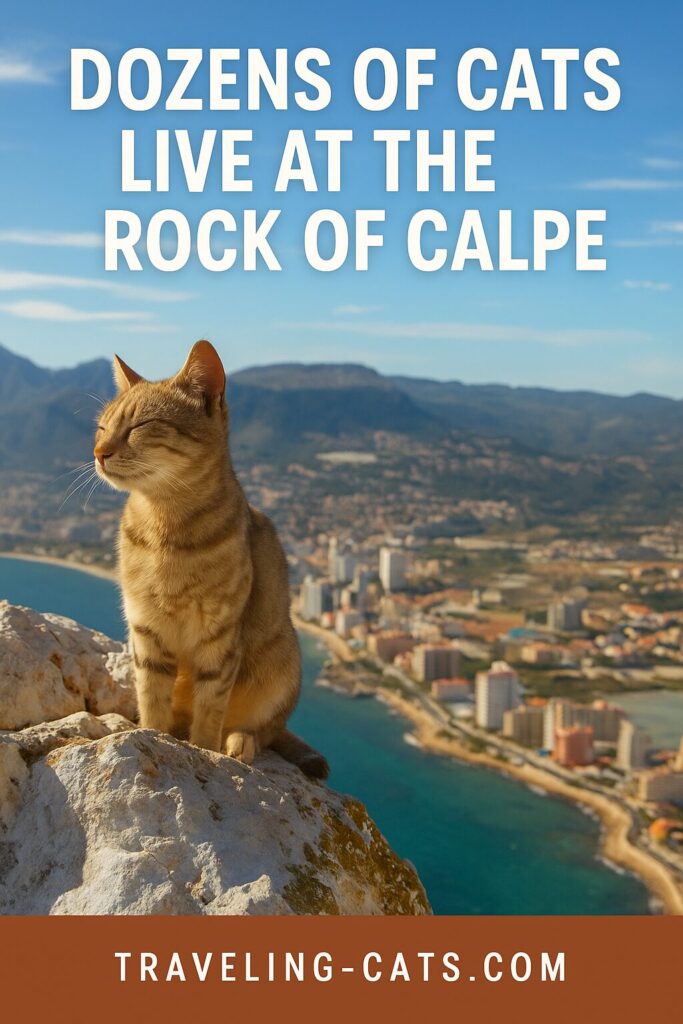
Dozens of cats live at one of Spain’s most iconic landmarks: the Rock of Calpe (Peñón de Ifach)
Rock of Calpe facts
Filming hotspot
Did you know that Calpe has been a popular filming location for movies and TV shows?
One director who was particularly drawn to this town was Jess Franco — a Spanish filmmaker known for his cult horror and exploitation films. Franco shot several movies in Calpe, including The Blood of Fu Manchu (1968), The Girl from Rio (1969), and Eugenie de Sade (1970). In these films, the striking Peñón de Ifach appears in the background. It definitely added to the films’ surreal and otherworldly atmosphere.
Natural park status
The Peñón de Ifach was declared a Natural Park in 1987. It’s one of the smallest natural parks in Europe, covering only about 50 hectares. However, it’s a thriving ecosystem packed with bio-diversity. You’ll find a wide variety of plant and animal life here, including rare and endangered plants that grow only in this region. The rock is also a nesting site for birds like kestrels, peregrine falcons, and eagle owls.
Rock of Calpe height
The Rock of Calpe is made of Jurassic limestone, and it was once part of the mainland before tectonic shifts isolated it. Today, it rises to a height of 332 meters (1,089 feet) above sea level, which makes it the tallest coastal promontory on Spain’s Mediterranean coast. By the way, “Ifach” is derived from the Arabic word “Yifah”, meaning “steep” or “prominent.”
History
This iconic rock has played a major role in the area’s history. Ancient Phoenician and Roman sailors used it as a key landmark to guide their ships along the coast. At the base of the rock, you can visit the ruins of a Phoenician fish salting factory, showing the area’s ancient trading past.
In the Middle Ages, a fortress stood atop the rock to defend Calpe from pirate raids.
Mini Gibraltar
It is often referred to as the “Gibraltar of the Costa Blanca” because of its resemblance to the Rock of Gibraltar.
The Cats of the Rock of Calpe
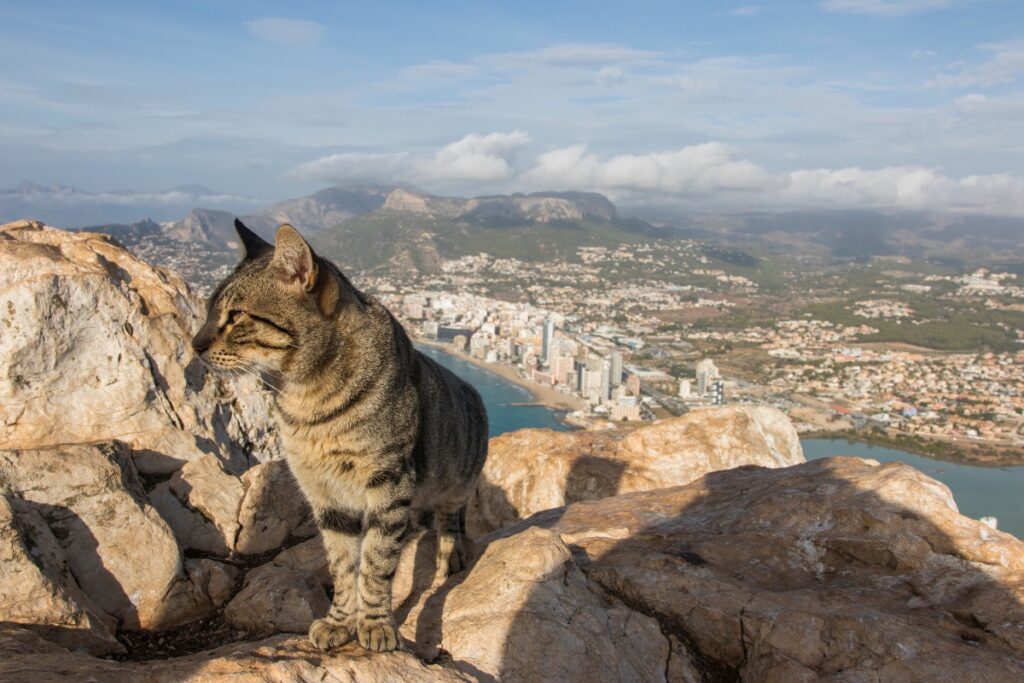
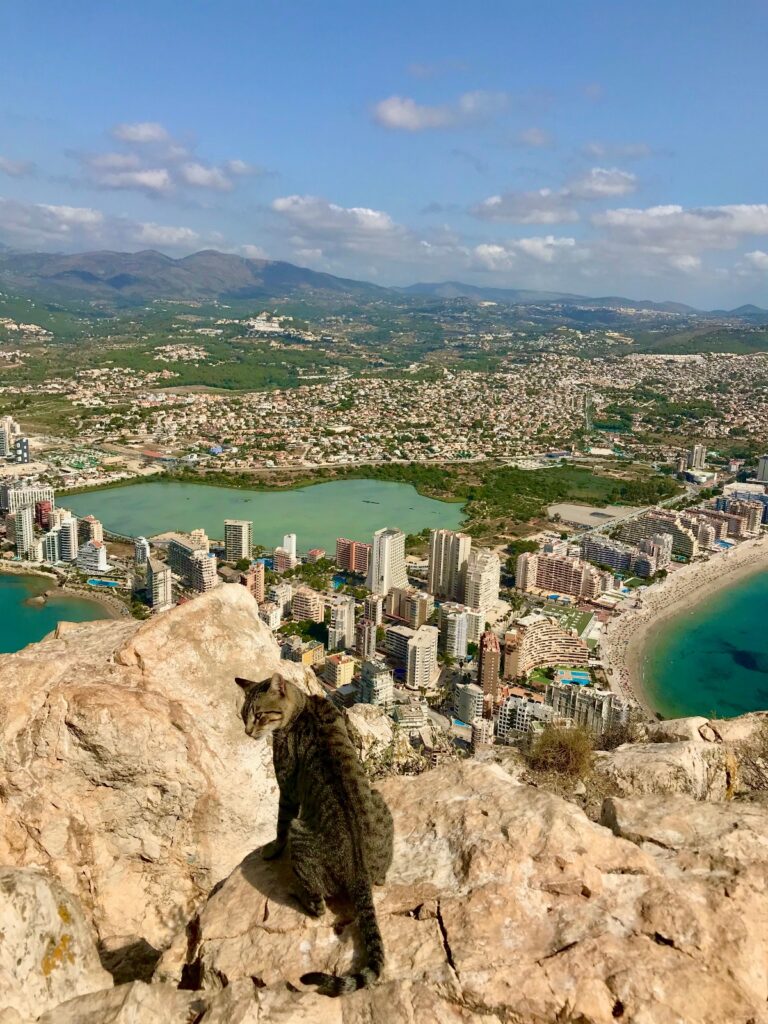
Many believe sailors or fishermen first brought the cats to Calpe while using the rock as a temporary shelter. Over time, the cats settled in and adapted to their surroundings, eventually becoming a unique part of the rock’s natural ecosystem.
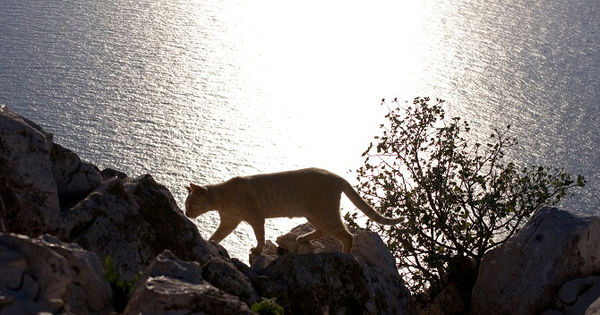
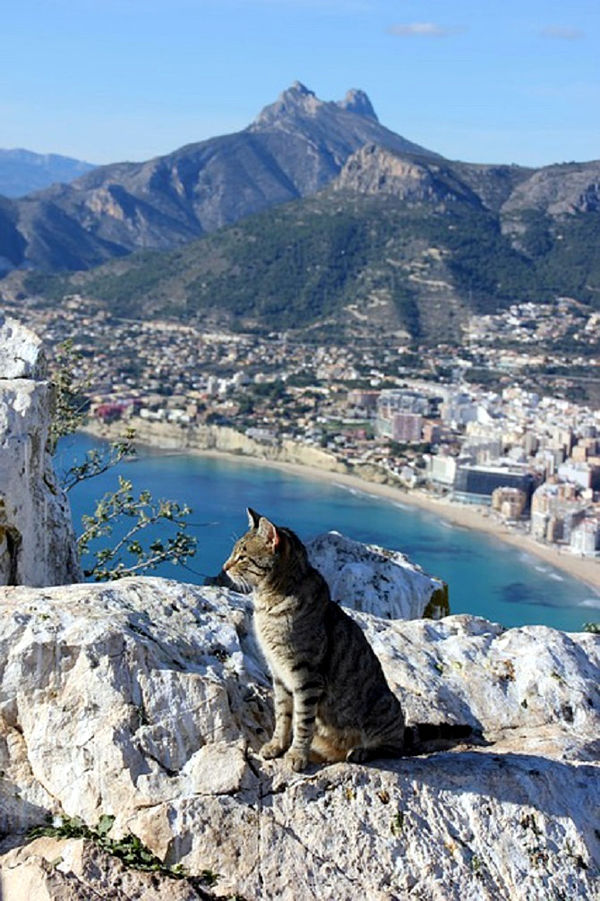
Today, you’ll find small colonies of cats living among the cliffs and crevices of the Peñón de Ifach. They’ve learned to thrive in the rugged terrain, developing sharp hunting and climbing skills to survive. You might spot them sunbathing on rocky ledges or grooming one another in quiet corners — perfectly at home in one of Spain’s most dramatic landscapes.
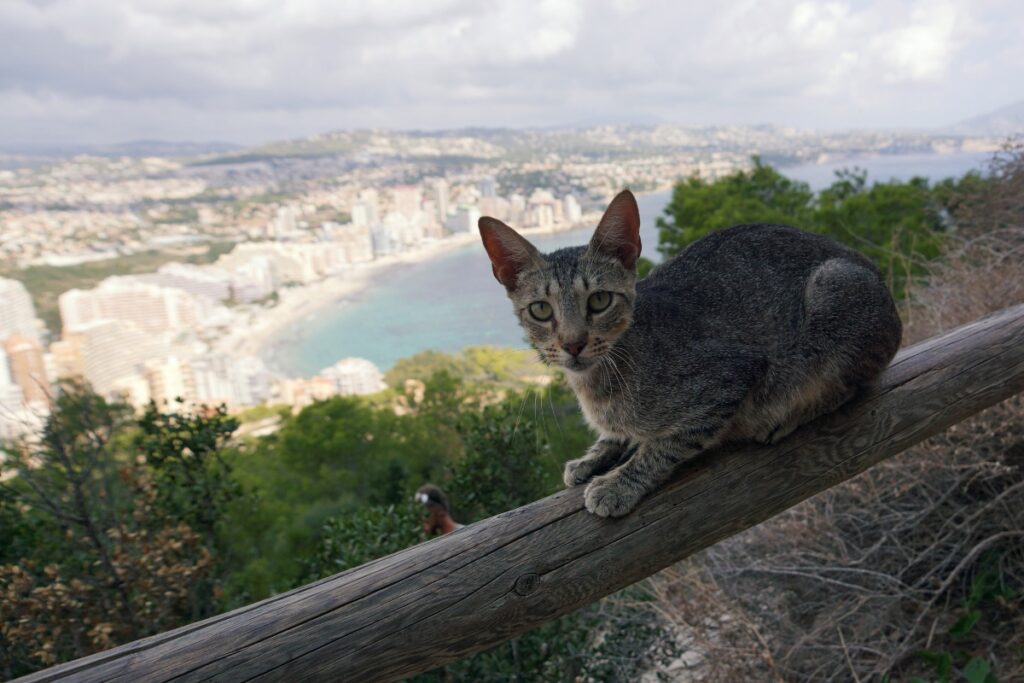
However, life on the Rock of Calpe isn’t always easy for its feline residents.
These cats deal with threats from birds of prey and the impact of human activity, including tourism and development.
At the same time, the cats themselves can upset the fragile ecosystem. They sometimes prey on rare and endangered species that grow on the rock, putting native plants at risk.
To help both the cats and the environment, local groups and volunteers have stepped in. Their efforts focus on reducing pollution, promoting responsible tourism, protecting native wildlife, and keeping development under control to preserve this unique habitat.
Practical information
How to get there?
The nearest airport to Calpe and the iconic Peñón de Ifach (Rock of Calpe) is Alicante–Elche Miguel Hernández Airport (ALC), located 76 kilometers (47 miles) southwest of Calpe.
From there, you can take a taxi or private transfer to Calpe. The journey takes approximately 50 minutes, with fares typically ranging from €80 to €100.
The ALSA bus service also offers direct routes from Alicante Airport to Calpe, with a travel time of approximately one hour and 55 minutes. Tickets cost €11.11 per person.
Calpe Rock tickets & booking
Visiting the Rock of Calpe (Peñón de Ifach) is free. However, since 2020, there’s a daily limit of 300 visitors to protect the environment. That means you’ll need to book your spot in advance, even if you’re only planning to hike up to the tunnel. Each person must reserve individually, and you can do it up to 10 days ahead of your visit.
Prefer a more in-depth experience? Join a guided tour and learn about the park’s wildlife, history, and natural features as you explore.
You can also enjoy the Peñón de Ifach from a different angle by taking a boat tour with local companies like Mundo Marino — a great way to admire the rock from the sea.
Age restrictions
Keep in mind that children under 18 can’t go beyond the tunnel due to safety concerns and the difficulty of the trail.
Hours
- Monday to Friday: 08:30 am – 02:30 pm
- Weekends and holidays: 09:00 am – 02:00 pm
Closing thoughts
The Peñón de Ifach is definitely worth visiting, whether you are a cat lover or not. The hike to the top can be challenging, though, but it is a rewarding experience that offers panoramic views of the area. On a clear day, you can even see as far as Ibiza, which is over 100 km away.
While you’re exploring, take a moment to appreciate its courageous felines, and maybe even snap a few pictures of them to remember your trip by.
Recommended Travel Read: Avalon: a Heartwarming True Cat Story is a touching memoir about an extraordinary cat who brings joy, mischief, and meaning to everyday life while also enjoying life as a feline movie star. Available in English and French.

Pin this article about the cats of the Rock of Calpe (Peñón de Ifach)