 Skip to content

Last Updated on 12 May 2026 by Vanessa
If you’ve ever dreamed of visiting a place where cats outnumber people, Tashirojima Cat Island should absolutely be on your radar. This tiny fishing island off the coast of Japan has hundreds of free-roaming cats and consistently ranks as one of the world’s most unique destinations.
I’ve visited Tashirojima three times—and after exploring 17 different cat islands across Japan, I can tell you this: it’s absolutely worth doing.
In this complete guide, I’ll walk you through exactly how to get to Tashirojima, ferry schedules, accommodation options, costs, where to eat, what to expect, and why it’s worth it. You’ll find everything you need to plan your trip smoothly and avoid common mistakes.
👉👉 Check out my guide to the best cat islands in Japan to see which ones are actually worth visiting.
Tashirojima Cat Island: the ultimate travel guide (ferries, accommodation, restaurants, and more)

This is a guest post by @chiekoshiraishi
What is Tashirojima?
Tashirojima, also called Tashiro Island, is commonly known as a “cat island,” because there are more cats than people. These animals are considered guardians of good fortune, especially for fishing, and are treated with great care.
In the 1950s, more than a thousand people lived on Tashirojima, but the population has been declining over the years. Today, less than 50 people remain, most of them older residents. The number of cats, however, is estimated to be between 130 and 200.
In Japan, when people talk about “cat islands,” Tashirojima is usually the first one that comes to mind. Other famous cat islands that are often mentioned are Aoshima, Ainoshima, and Enoshima.
The island covers approximately 3 square kilometers (about 1.2 square miles).

A short history of Tashirojima
How did Tashirojima become “Cat Island”?
The story of cats on Tashirojima dates back to the Edo period (1603–1868). At that time, islanders raised silkworms for silk production. However, mice—natural predators of silkworms—posed a serious threat.
To solve this problem, cats were brought to the island to hunt the mice. They proved to be excellent hunters and quickly became an essential part of the island’s ecosystem.
Fishing was also an important industry, and it is said that fishermen would observe the behavior of cats to predict weather conditions and that they would prevent rodents from destroying their fishing nets.
Over time, cats became more than just practical helpers. The islanders developed a deep bond with them, and this relationship eventually shaped the identity of the island. Cats came to be regarded as guardians of good fortune, and they are still cherished today.
Today, visitors from all over the world come to explore the island’s cat-related spots, learn about its history, and meet its many feline residents, many of which are Japanese bobtails, so many of them have short tails.

The 2011 earthquake
However, on March 11, 2011, the Great East Japan Earthquake, a magnitude 9.0 disaster, struck Japan and triggered a massive tsunami that devastated much of the northeastern coast. Tashirojima was also affected.
While a nearby peninsula helped shield the island’s higher ground, the tsunami still flooded lower areas, damaging buildings and disrupting daily life.
In the aftermath, residents worked hard to rebuild their community. Throughout this difficult period, the cats remained a constant presence. Many locals believe they brought good luck and even helped protect the island, while at the very least offering comfort, lifting spirits, and attracting visitors whose tourism supported the recovery.
Where is Tashirojima?
Tashirojima is located about 450 kilometers from Tokyo, in Miyagi Prefecture in the Tohoku region of northeastern Japan.
The nearest station is JR Ishinomaki Station. From Sendai (the capital of Miyagi Prefecture), it is about 48 kilometers to Ishinomaki, and from there, about 17 kilometers offshore by ferry.

Why I have visited Tashirojima Cat Island three times
Easy access from Tokyo
For me, living in Tokyo, it is easy to access without booking a flight. The first time I traveled by Shinkansen both ways, but the other two times I took an overnight bus on the way there and returned by Shinkansen.
Of course, I prefer staying overnight because I can spend both dusk and dawn on the island. However, there is something very appealing about finishing dinner and a shower, sleeping on a night bus, spending the next day on the island, and being back home that same night.
Cat density
As a “cat island,” it is not only the number of cats but also their density that makes it so special. On some cat islands, you may not necessarily encounter many cats, but on Tashirojima, it is actually quite difficult not to come across a lot of them.
Moreover, they tend to gather in specific areas, such as around the port and near the island station, so there is no need to search for them. I can confidently say that you will not be disappointed by not seeing enough cats after making the trip.
Lots of kittens
Different islands have different approaches, and some have carried out neutering for all cats so that no more kittens are born. I respect that approach, but I personally love seeing kittens very much.
Meeting the local fishermen
There are people I want to see again on Tashirojima. The fishermen at the port were incredibly kind to me. One of them told me about how he was caught in the tsunami during the disaster. I really enjoyed talking with him and spent hours at the port. Since then, I always look forward to seeing him again whenever I visit the island.
I was born and raised in Niigata, which is close to the Tohoku region, so I also feel a sense of nostalgia in the character of the people and the sound of the local dialect. That may be another reason why I love Tashirojima.

How to get to Tashirojima Cat Island?
My first visit to Tashirojima was in 2023, when I stayed overnight at a minshuku (traditional guesthouse) on the island. The other two visits were in April and December 2025.
On those occasions, I took an overnight bus from Shinjuku, arrived in Ishinomaki early in the morning, took the first ferry to the island, and returned on the last ferry the same day.
How to get to Tashirojima from Tokyo?
To reach Tashirojima from Tokyo, you need to combine several modes of transportation.
Tokyo → Ishinomaki
By train:
Take the shinkansen (bullet train) from Tokyo Station to Sendai Station (about 80–120 minutes). You can buy your Shinkansen train tickets here.
From Sendai, take the JR Senseki Line or Senseki-Tohoku Line to Ishinomaki Station (about 60–80 minutes).
📍 Tip: For travelers visiting Japan, the Japan Rail Pass can be very useful, as it allows seat reservations on Shinkansen trains. You can buy your Japan Rail Pass online here.
By highway bus:
If you prefer traveling overnight, there is also a direct overnight highway bus from Tokyo to Ishinomaki:
Shinjuku 23:30 → Shibuya 23:55 → Ishinomaki 6:40
This is a convenient option because you can arrive early enough to catch the first ferry.
👉 Bus tickets can be purchased in advance here.
After arriving at Ishinomaki Station, you can use the clean public restroom in front of the station to freshen up, buy breakfast and supplies at a convenience store, and then walk to the ferry terminal.
Ishinomaki Station → Ferry Terminal
Walking is recommended. It takes about 15 minutes.
Near the terminal, there is a facility called “Ishinomaki Genki Ichiba,” a market where you can shop for local products. It also has a restaurant on the second floor. It opens at 10:00 am, so it’s a good place to visit on your way back.

Ishinomaki → Tashirojima
Ferry:
From Ishinomaki Central Terminal to Tashirojima
Travel time: about 45 minutes
Cost: 1,250 JPY
Route:
Ishinomaki Central → Kadonowaki → Odomari Port→ Nitoda Portt→ Aji Island
The highest concentration of cats is around Nitoda Port, which sits at the northern end of the island. The distance between the two ports is about 2 km (around 30 minutes on foot).
You can also walk from Odomari to Nitoda via the Cat Shrine and “Shima no Eki,” a popular stop with many cats and a café.

Ferry timetable (subject to change)
If everything goes well, there are only three ferries in each direction daily. These are:
- Ishinomaki → Nitoda: 9:00 / 12:30 / 15:30
- Nitoda → Ishinomaki: 7:55 / 13:55 / 15:30
You can find the most up-to-date ferry time table on www.ajishimaline.com (only available in Japanese). Or you can call 0225 – 93.61.25.
Important tips:
- Tickets are first-come, first-served (no reservations).
- Arrive early, especially on weekends and holidays.
- The ferry has limited capacity (about 220–230 passengers). Residents have priority.
- Tickets must be purchased at the terminal (cash only, 1,250 yen one way).
If you miss the last ferry, it can cause serious inconvenience, so make sure to arrive at the port well in advance.

Best time to visit Tashirojima
-
Spring (March–May): spring is a popular time to visit Tasohirojima thanks to the mild weather and cherry blossoms. Possibly kittens.
-
Summer (June–August): Summer tends to be hot and humid on Tashirojima. Cats tend to stay in the shade.
- Autumn (September–November): Autumn is another excellent time to visit. The temperatures are cool and comfortable, and the foliage is beautiful.
-
Winter (December–February): Winter on Tashirojima can be cold, and the island becomes quiet and less crowded. There is also a higher risk of ferry cancellations.
📍 Tip: Every day around noon, the restaurant Nyanko Kyowakoku Shimanoeki will be feeding all the cats. It’s a joy to watch all the cats come running in one direction and then enjoying their meals from long bamboo trails.

How much time do you need on the island
The time you need to visit Tashirojima depends on your interests, the activities you want to do, and whether you’re planning a day trip or staying overnight. Here’s a general guideline for different types of visits:
Day trip
If you’re planning a day trip to Tashirojima, you can generally cover the island’s main attractions in 4 to 6 hours. This is enough to see the island’s main spots (such as the cat shrine), its unique cat-themed art, and its scenic beauty.
However, taking the first ferry allows a much more relaxed experience.
Overnight stay
However, staying overnight allows you to experience early morning and evening, when the cats are most active. It also gives you more time to fully absorb the island’s atmosphere, discover hidden spots, and join activities that are hard to fit into a day trip.
Keep in mind, though, that Tashirojima is small; is charm comes from its unique vibe and the cats.
Getting around the island
You can explore the island on foot or by bicycle.
The island is relatively small and has limited vehicular traffic, making it a cyclist-friendly destination.
You can take your bikes with you, but if Manga Island is open, bicycle rentals may be available between 10:00 am and 08:00 pm.
Because there are many hills, an electric bike is recommended, but the island is small enough to explore on foot.

Tashirojima map
This map of Tashirojima (Cat Island) will help you get your bearings before you explore. Use it to spot the main villages, walking paths, and key cat-friendly areas so you can plan a relaxed route around the island without missing its most charming corners.

Things to do on Tashirojima Cat Island
Miyori cat shrine
In the middle of the island, you’ll find the famous Miyori cat shrine, a small and peaceful spot built in memory of a cat that tragically died during a rock-moving incident connected to fishing work. The fishermen were so affected by the loss that they created this shrine as a tribute and as a sign of respect for the cats, which they consider symbols of good fortune.
Today, the area is filled with cat figurines, photos of cats, and offerings. There are also several real-life cats resting and wandering around.
Nitoda port and village
My favorite place on Tashirojima Cat Island is Nitoda Port, because it’s one of the best areas to see many cats up close. There is a lot of fishing activity here, so cats tend to gather here in larger numbers, making it a great place to observe them in a natural setting.
You can also meet the fishermen there and see cats running off with fish given to them by the fishermen.
The village itself is small with not much to do.
Shima no Eki
Shima no Eki is a former school that has been transformed into a café and cat shelter. It’s a relaxed place to take a break, enjoy a drink, and spend time around cats in a more sheltered environment.

Nyanko Kyowakoku Shimanoeki
Make sure to be here around noon, since this is the restaurant where the cat feeding takes place.
Tashiro Shokudo
Tashiro Shokudo is a small local restaurant where you can try simple seafood dishes. While options on the island are limited, it offers a chance to enjoy a meal made with local ingredients.
Manga Island
Manga Island is best known as the island’s main accommodation area, featuring unique cabins designed by manga artists. Even if you’re not staying overnight, it’s worth visiting, and you may also spot cats wandering around the area.
Hiking and biking trails
Tashirojima also offers breathtaking landscapes that are a treat for nature enthusiasts.
You can either walk or ride your bike around the island. On the southern tip, the view of the Pacific Ocean is absolutely stunning.

Accommodation options and where to stay on Tashirojima
You have only two accommodation options on Tashirojima:
- Manga Island lodges (seasonal)
- Minshuku Fujiya: traditional Japanese guesthouse, cash only
How to book accommodation on Manga Island?
Manga Island is a collection of camp sites and 5 cabins you can choose from.
Two-story cabins
- Shima Lodge: The cat-shaped cabin was designed by manga artist Machiko Satonaka. From its large windows, it offers a stunning view of the ocean.
- Shiro Lodge: Shiro Lodge was designed by manga artist Tetsuya Chiba. It has a distinctive appearance with a surprised cat face.
Small cabins with 1 story
- Chibi Lodge: Painted by manga artist Kimie Shiga. The cat face has blue eyes and whiskers.
- Dora Lodge: Painted by manga artist Naomi Kimura.
- Mike Lodge: Painted by manga artist Ochazukenori.

Campsites
Manga Island also has 8 campsites. Camping gear sets are also available for rental.
Amenities
At the cabins: TV, kitchen, kitchenware (knife, cutting board, pots, pans, tableware, chopsticks, spoons, rice cooker, microwave, refrigerator with freezer, electric kettle, gas stove), laundry detergent, restroom, shampoo, body soap, hairdryer, and shower. A bath is available at the Shima and Shiro lodges only.
Two burner portable gas stoves for cooking outside can be rented for 1,500 yen per night. Gas canisters can be purchased.
At the campsites: A camping set can be rented for 1,500 yen per night. This includes a tent for up to 4 people, 2 burner portable gas stoves, a small table, sleeping bags, a rice cooking pot, a cooking set (fry pan, knife, tongs, etc), and a lantern. This camping set rental fee is separate from the campsite fee of 1,520 yen.

Important tips
Booking availability
From what I’ve found, the official reservation page for Manga Island is not always available, and it’s not on official booking platforms either.
It seems that bookings typically open sometime in April each year. The information page does include a phone number and email address for inquiries, so that might be the best way to confirm details.
It’s good to know that reservations are not locked in immediately after filling out the form. You will be contacted by email after you confirm availability of campsites and cabins on your chosen dates.
Cancellation policy
Contact moshimoshicierge@umimachi-sanpo.com as soon as possible if you wish to cancel your reservation. Cancellation is free at least 7 days before the check-in date. Otherwise, it’s 50% of the total fee 3 days before check-in, or 100% 2 days before or later.
If the ferry service are halted due to rough weather conditions (such as a typhoon), there will be no cancellation fee.
Facility hours
- Check-in after 02:00 pm.
- Check-out before 11:00 am.
Management building bath hours are between 04:00 pm and 08:00 pm, which means you must be out of the building by 08:00 pm.
Please let the staff know ahead of time if you wish to use the bath, because the water must be wzrmed up.
Management building showers are open between 10:00 am and 03:00 pm.
Smoking
Smoking is prohited throughout the entire facility.
Charcoal fires, open fires for barbecues, and fireworks (except for handheld sprinkler fireworks) are also prohibited.
Manga Island management contact information
For questions or concerns, you may contact 0225 – 21 – 4141, or mailto:moshimoshicierge@umimachi-sanpo.com (for reservations) or mailto:issightsee@city.ishinomaki.lg.jp (tourism division).

How to book Minshuku Fujiya?
Minshuku Fujiya is a very simple, no-meal guesthouse located right by the sea, close to Kuronekodou. Guests need to prepare their own meals. It is run by a kind and friendly owner, and there are also cats around the property. The building itself is quite old, but it is kept very clean.
Reservations can only be made by phone. I actually contacted them myself and was told that simple English communication is possible, which might be helpful for international visitors.
When I stayed there in 2023, the price was around 6,000 yen per night. However, it’s best to confirm the current rate directly when booking.
Important tips about staying in a minshuku
I also want to say a few things about staying in a traditional Japanese minshuku to help avoid misunderstandings due to cultural differences.
How minshuku are different from hotels and ryokan
You have to know that minshuku are different from both hotels and ryokan (traditional inns). While details vary depending on the property, here is a general explanation to help international visitors understand what to expect.
A minshuku is a traditional Japanese-style house, often very similar to a typical private home. You stay in a part of the host’s residence. There are guest rooms, but instead of standard doors, they often have sliding doors and usually cannot be locked. In Japan, this is generally not considered a problem in terms of security.
The host’s living space is separate, and dining areas are also usually separate, but you are still staying under the same roof. Bathrooms, toilets, and sinks are typically shared.
A helpful way to imagine the experience is staying at the home of a friend’s parents whom you have never met before. The hosts are usually very welcoming and kind, but it is important to remember that you are a guest in someone’s home.

Check-in and check-out times
Check-in is usually around 03:00 pm, and check-out around 10:00 am. In many cases, you can ask the host to store your luggage before check-in.
Payments and meals
Payment is typically made in cash upon arrival. For a room without meals, prices are usually around 4,000–9,000 yen per night, which is generally more affordable than a ryokan.
If meals are included, dinner is usually served at a fixed time, often between 06:00 and 07:00 pm. If you need a different time, you can ask, but large changes may be inconvenient for the host. It’s best to arrive at the dining area on time.
Alcohol such as beer is often available for an additional fee.
House rules and etiquette
After dinner, you are expected to use the bath relatively early, as the host will use it afterward. Most places provide shampoo, conditioner, body soap, towels, and a hair dryer.
Hosts typically go to bed and wake up early, so you should avoid making noise late at night.
In some cases, the host prepares the futon bedding for you; in others, you will need to set it up yourself.
Please keep your room tidy. Put trash in the bin, and leave bottles or cans neatly in a designated area. Avoid leaving wet towels on tatami mats.
You do not need to fold your futon, but it is polite to leave it in a reasonably neat condition.
If you have any problems or questions, don’t hesitate to ask the host.

This may sound like a lot of rules, but there’s no need to feel intimidated. As long as you show basic respect, you will be fine. Staying in a minshuku is actually a wonderful opportunity to experience everyday Japanese home life, and you may also enjoy warm interactions with your hosts. And if meals are included, you can enjoy delicious homemade Japanese food.
Minshuku offer a unique cultural experience, so if you have the chance, they are definitely worth trying.
What to bring
Tashirojima is a remote island with very limited facilities, so packing smart makes a huge difference to your experience. Here’s exactly what you should bring:
- Cash: Bring enough cash for the entire day (or overnight stay). The island has no ATMs or card-friendly infrastructure, so you’ll need cash for ferries, food, and accommodation.
- Snacks: Pack snacks to avoid going hungry. Food options on the island are limited and can close early, especially outside peak season.
- Water: Carry enough drinking water for the day. You won’t find many places to buy drinks, and walking around the island can take longer than expected.
- Motion sickness tablets or patches: Take motion sickness tablets before the ferry if you’re sensitive to waves. The boat ride can get rough, and feeling sick will ruin the experience before you even arrive. Motion sickness patches also exist.
- Portable Wi-Fi or Japan SIM card: Buy your Japan SIM card or portable Wi-Fi to stay connected. Coverage can be spotty, but having data helps with maps, ferry updates, and emergency info.
- Power bank: Keep a fully charged power bank with you. You’ll take lots of photos of the cats, and there are very few (if any) places to charge your phone on the island.
- Weather protection: Pack for the conditions: sunscreen and a hat in summer, or a rain jacket and warm layers in colder months. You’ll spend most of your time outdoors with little shelter available.

Rules and tips for visiting Tashirojima Cat Island
Tashirojima isn’t just a tourist spot — it’s a small community where cats are carefully looked after. To keep both the cats and the island safe, follow these simple guidelines:
Respect the cats’ safety
- Don’t feed the cats randomly: Locals follow a feeding schedule to check the cats’ health. Feeding them at random times makes it harder to monitor injuries, illness, or behavior.
- Never leave food on the road: Cats may stay in place while eating, which increases the risk of traffic accidents.
- Avoid bringing toys or catnip: Cats can accidentally swallow them, which can harm their health. Playing with toys on roads can also create dangerous situations.
Ferry and weather tips
Ferries can be canceled — even on sunny days. Strong winds, especially from the south, can create high waves and stop ferry operations. Check conditions before you go.
If the morning ferry runs but the return ferry isn’t guaranteed, operators may advise you not to travel. Don’t risk getting stranded, because there are almost no last-minute accommodation options on the island.
Safety and local rules
- No swimming: There are no designated swimming areas, and it’s considered unsafe.
- No camping: Overnight stays are only allowed in official accommodations.
- No poaching: Catching sea life like sea urchins or abalone is strictly prohibited.
Practical things to know
- No convenience stores or banks
- Bring everything you need, including cash
- Take your trash with you to help keep the island clean and protect the environment
By following these rules, you help ensure that Tashirojima remains a safe place where cats are healthy, well cared for, and a joy to visit.

Restaurants and cafés on Tashirojima Cat Island
Dining options on Tashirojima are limited, so it’s a good idea to bring your own food, snacks, and ingredients for cooking, especially if you have dietary restrictions or specific preferences. I also recommend you bring trash bags and towels.
That said, the island does have a few local shops and small cafés offering simple meals, snacks, and drinks. While the menus are limited, they give you a chance to try local flavors and traditional Japanese dishes.
If you’re staying overnight, check the accommodation regarding meal options. Minshuku provide meals for guests, which can make your stay more convenient. On the other hand, if you’re staying at Manga Island, you are responsible for your own food.
- Tashiro Shokudo: A local restaurant near Nitoda Port serving fresh seafood dishes.
- Kuronekodou: A café and small shop located in a former post office building.
- Shima no Eki: A café and cat shelter built on the site of a former school. This is where the daily cat feeding takes place. They also sell cat-themed gifts and have a lot of cats hanging out on the premises.
- Shima no Chaya Donguri: A small café near Omari Port (limited information available).

Medical care on Tashirojima
Tashirojima has one clinic, but medical examinations are only available twice a week (usually Mondays and Tuesdays, but sometimes Tuesdays and Wednesdays, based on the doctor’s availability.
If you are ill or injure yourself, it may take some time to transport you off the island.
FAQ
What does Tashirojima mean?
The name “Tashirojima” can be broken down into two individual components:
- “Tashiro” (田代): This part of the name is likely derived from the Japanese word “tashiro,” which refers to a rice paddy. “Tashiro” can also mean “field,” and it’s a fairly common element in Japanese place names.
- “jima” (島): This is a common suffix in Japanese that means “island.” It’s used to indicate that the word before it refers to an island.
So, “Tashirojima” can be roughly translated to “Tashiro Island” or “Rice Paddy Island.”
How to pronounce “Tashirojima”?
“Tashirojima” is pronounced as “Tah-shee-roh-jee-mah.” Here’s a breakdown of the pronunciation:
- “Tah” rhymes with “car.”
- “shee” sounds like the word “she” followed by a long “e” sound.
- “roh” is pronounced like the word “row.”
- “jee” rhymes with “tree.”
- “mah” sounds like “ma” followed by a short “ah” sound.
Put it all together, and you have “Tashirojima.”

Can I take a cat from Tashirojima? Can they be adopted?
The cats of Tashirojima are primarily feral and are not domesticated pets. These cats have lived on the island for generations and are accustomed to the local environment. They are taken care of by the residents and visitors who provide food and attention.
If you really fall in love with one of the cats, consider talking to the locals to check if that specific cat is available for adoption. Keep in mind that arranging the necessary documents, vaccinations, and other prerequisites is crucial if you intend to bring a cat from Tashirojima back to your home country. Failure to meet these requirements could result in the cat being detained at the airport, potentially placing the animal’s fate in jeopardy.
Can I touch the Tashirojima cats?
Yes, you can generally interact with and touch the cats on Tashirojima. The cats on Tashirojima are known to be relatively friendly and accustomed to human presence due to the attention they receive from both locals and visitors. Many of the cats are used to being approached and petted by tourists.
However, as with any animals, it’s important to be respectful and considerate of their comfort and personal space.
- Approach slowly: Approach the cats slowly and calmly. Sudden movements or loud noises might startle them.
- Offer your hand: Extend your hand slowly and let the cat sniff it before attempting to pet them. This helps the cat become familiar with your scent.
- Let the cat initiate: Some cats might approach you, while others might be more reserved. Allow the cat to come to you rather than pursuing them.
- Gentle petting: When petting the cats, use gentle and slow motions. Avoid grabbing or petting too aggressively, as this could make the cat uncomfortable.
- Respect personal space: Just like humans, cats have personal boundaries. If a cat seems disinterested or moves away, respect their space and don’t force interaction.
How many cat islands are there in Japan?
There are many so-calle “cat islands” in Japan, though many are now disappearing because spaying and neutering have become more common.
You’ll find a list of the most famous Japanese cat islands here.
Is Tashirojima Cat Island worth visiting?
Absolutely—especially for cat lovers.
- You are almost guaranteed to see many cats.
- The cats are friendly and used to people.
- There are several areas where cats gather.
- The island is welcoming to visitors.
- You can enjoy traditional Japanese island scenery.
Are you planning a visit to Tashirojima Cat Island? Or have you already been? Share your thoughts with us in the comments below.
And if this article helped you plan your visit of Tashirojima, feel free to share it with your cat-loving friends and on social media.

Want to know more about Tashirojima Cat Island?
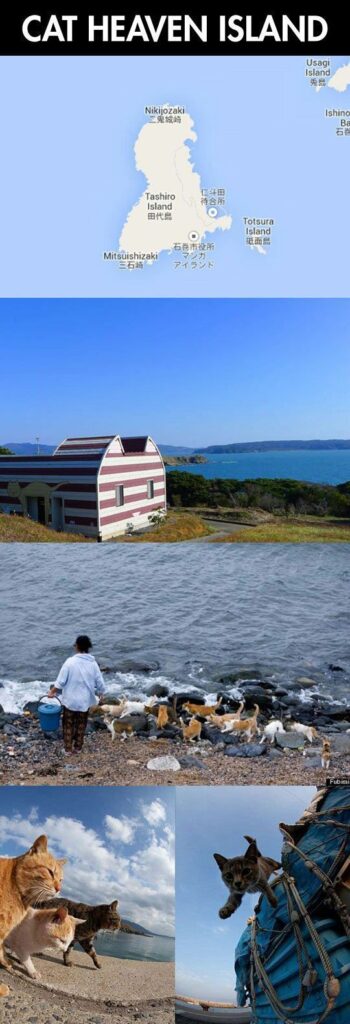
If you’re curious to see the soul of Tashirojima, you may want to check out the documentary Cat Heaven Island (2016). It offers a touching glimpse into a way of life that’s slowly disappearing—but still deeply cherished.

About the contributor
Born in 1974, Chieko Shiraishi is originally from Niigata and has lived in Tokyo since the age of 18. She works in an administrative role and lives with her husband and their two sons, one in high school and the other in university. Her travels are almost always centered around cats. She particularly loves photographing cat islands and places known for having large cat populations.
The camera she uses most often is the OM SYSTEM OM-5. She also recently bought the OM-1 Mark II, but she hasn’t quite mastered it yet. She finds it useful to have both a telephoto lens and a wide-angle lens. The telephoto lens allows her to capture cats from a distance so she can photograph them in natural, unguarded moments, while the wide-angle lens helps when she wants to include more of the surrounding environment or photograph friendly animals up close.
You can find Chieko on Instagram @chiekoshiraishi.
Tashirojima Cat Island information and photos courtesy of Chieko Shiraishi. Photos 1, 18, 21, 23, and 25 from Shutterstock.
Want something a little darker after all that cuteness? Try Clowders — a chilling novel set in a town inspired by Cat Island. But here, the cats aren’t just watching. They’re part of a curse.

Pin this article on Tashirojima Cat Island!




4 responses
I follow an Instagram account highlighting these cats, so some of them I recognize from those videos! So, great to learn a little more about the island and the cats here. I would love to visit!
Wonderful to learn more about this island that is such a sanctuary for the resident cats.
Wow, this is definitely somewhere I’d want to visit in Japan! On another note, I’m glad you provided tips about feeding etc, I feel it’s so easy for people to over feed them, coming from a good place.
This is such a fun and detailed guide! Visiting a place where cats outnumber people sounds like a dream. The fact that you’ve been there three times really says a lot about how special it is. I love that you included so many practical tips too — super helpful for planning. Definitely adding this to my Japan bucket list!