

Last Updated on 29 March 2026 by Vanessa
Are you planning a Sitges day trip? This self-guided itinerary is the perfect way to explore the town’s historic streets, seaside promenades, and picturesque corners while encountering some of the 52 registered cat colonies that add a unique local charm.
Along the walk, you’ll visit must-see landmarks like St. Bartomeu Church, the Monumento a Santiago Rusiñol, and the Jardins del Cine Retiro, with plenty of opportunities to stop for coffee, tapas, or a scenic pause overlooking the Mediterranean. The cats appear naturally along the route, making this a one-of-a-kind sightseeing experience.
At the end of this article, you’ll also learn why there are so many cats in Sitges, who manages them, and how you can help support the colonies.
This itinerary is ideal if you want to plan a half to full day in Sitges, see the main attractions, and enjoy a leisurely walk without missing the hidden corners where the cats live.
📍 Make sure to also check out my Ultimate Sitges Travel Guide for the best things to do, where to stay, and how to make the most of your visit.
Sitges day trip itinerary: self-guided cat colony walking tour
How to best go on a day trip to sitges
Sitges is one of the most popular day-trip destinations from Barcelona, and planning ahead makes all the difference.
Many travelers visit through a guided tour from Barcelona, which combines Sitges with Montserrat and Tarragona. (Check prices and availability here.) This tour won’t stop by every single sightseeing spot on our cat colony walking tour, of course, but there is some overlap.
If you’re renting a car, keep in mind that Sitges itself is not very car-friendly. Narrow streets, pedestrian zones, and limited parking make driving in the center tricky.
The easiest approach is to park near the start of your walking route—for example, near Port de Sitges – Aiguadolç, where your self-guided walk begins. Recommended options include:
- Parking Aiguadolç – right at the port and promenade, perfect if you want quick access to restaurants, cafés, and the marina.
- Carrer de la Fragata parking – a short walk uphill from the port, usually a bit quieter.
- Street parking along Passeig Marítim – limited, so check signs carefully.
Sitges is very easy to reach by train, which is often the most relaxing option.
If you’re coming from central Barcelona, take the R2 Sud Rodalies train from Sants, Passeig de Gràcia, or França station directly to Sitges station. This journey takes about 35 minutes.
Once you arrive, Sitges is best explored on foot, which makes this self-guided walking tour through its main sights—and its hidden cat colonies—the perfect way to spend your day.
Where to stay in Sitges
If you decide to prolong your day trip and stay overnight, Sitges has a wide range of accommodation options, from boutique hotels near the beach to quiet stays in the historic old town.
I’ve put together a complete guide to the best hotels and areas to stay in Sitges, including recommendations for luxury, mid-range, and budget travelers. You’ll also find tips on which neighborhoods to stay in.
Sitges walking tour itinerary
This self-guided cat colony walk is the perfect combination of sightseeing, seaside strolls, and local culture. You’ll wander through charming old town streets, gardens, and promenades while spotting some of the town’s iconic landmarks and cat colonies along the way.
However, do note that even though Sitges officially has 52 cat colonies, most of them are “small” (5–20 cats) and spread across different neighborhoods, rather than concentrated in tourist areas. We’ll only focus on those areas that let you combine sightseeing with some decent cat spotting.
Stop #1: Port de Sitges – Aiguadolç
Your self-guided walking tour begins at the lively Port de Sitges – Aiguadolç. Built in the 1970s, this was the first marina on the Catalan coast, and it remains one of the most vibrant parts of town today. Fishing boats, sailing yachts, and pleasure boats fill the harbor, while the surrounding promenade is lined with restaurants, bars, and small shops.
Lunch with a view
Even if you weren’t here for the cats, this would still be a great place to start your walk. The port is one of the best places in Sitges to grab lunch with a sea view, watch boats coming and going, or stroll along the marina at sunset. The small beaches nearby and the coastal path toward the old town also make it a popular stop for visitors exploring the area on foot.

Sitges’ largest cat colony
This area also hosts the largest cat colony in Sitges, but you’ll want to look a little beyond the busy waterfront.
You might occasionally spot a stray cat wandering near the restaurants or boats along the marina, but the port itself is often too busy and noisy for many of the more timid cats.
Instead, head up the stairs that lead to the hotels and apartment buildings above the marina and look down toward the greenery and planted areas. Hidden under bushes and between the plants, you’ll see rows of feeding and drinking bowls, along with small shelters and cat houses carefully tucked away out of sight.
From here, you can often spot many cats resting and moving between hiding spots.
The combination of sheltered corners, planted areas, and relatively quiet spaces above the marina makes it an ideal place for the cats to live. The cats often stay hidden under the vegetation or near the shelters during the busiest hours of the day. When the paths become crowded with tourists, they retreat to these safe spots.
But don’t worry—you’ll certainly see them. There are a lot of cats in this colony, and it’s genuinely difficult to spend time here without spotting several of them.
Stop #2: Hotel Meliá Sitges and residential hillside
If you continue walking up from the marina, the stairs eventually lead you into a quieter residential area above the port.
Here you’ll notice a mix of apartment buildings, gardens, and small streets where both pet cats and colony cats live side by side.
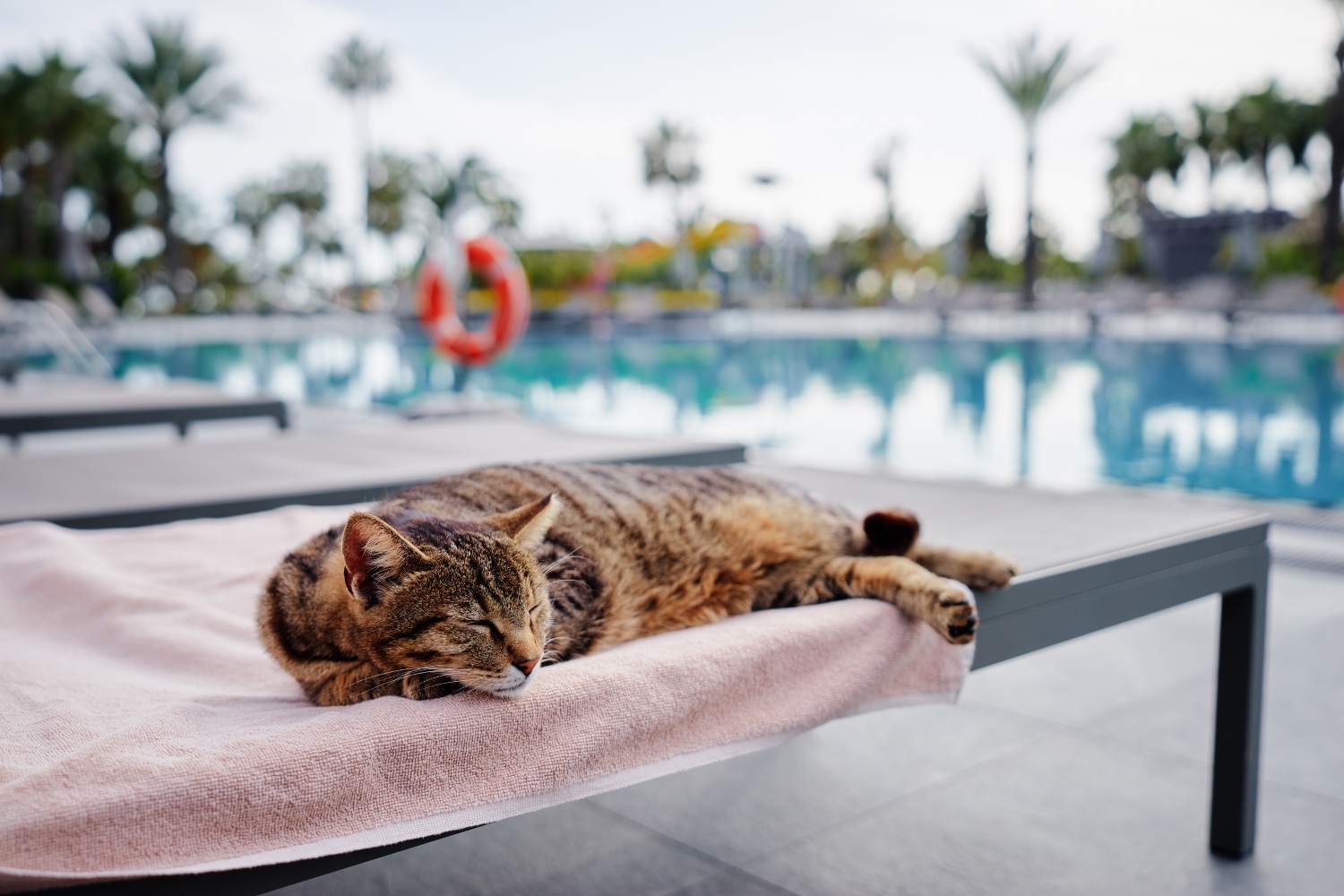
It feels very different from the busy waterfront below—calmer, greener, and much more appealing for the shy cats that prefer to stay out of the crowds. Take a slow walk around, and you’ll spot plenty of cats sleeping on window sills or strolling along the swimming pools.
Hotel Meliá Sitges
This is also where you’ll find Hotel Meliá Sitges, one of the largest and most recognizable hotels in town.
The hotel opened in the early 1990s as part of the development of the Aiguadolç marina area and has since become a major venue for conferences and events. Most notably, it serves as the main headquarters of the famous Sitges International Fantastic Film Festival of Catalonia, one of the world’s most important film festivals dedicated to fantasy and horror cinema.
If you happen to visit Sitges in October during the festival, this area suddenly becomes much busier. Filmmakers, actors, and film fans gather here for premieres, screenings, and red-carpet events. But even outside festival season, the area remains lively thanks to the hotel’s restaurants, terraces, and panoramic views over the marina.

Nosferatu
While you’re walking around the hotel and the surrounding streets, keep an eye out for one particular cat: Nosferatu.
This ginger cat has become something of a local legend. He’s widely considered the unofficial mascot of the Sitges Film Festival, and he’s often photographed lounging around the festival venue—or even confidently strolling across the festival’s red carpet.
Yes, you read that right: Nosferatu has walked the red carpet more than once, and some locals joke that he’s been photographed here more often than the movie stars themselves.
🐱 Read more: Nosferatu, the feline mascot of the Sitges Film Festival.
🏨 If you consider staying at the Meliá Sitges Hotel, you can check current rates and availability here. Since this is the hotel where all the movie stars reside, you’re bound to get value for your money.
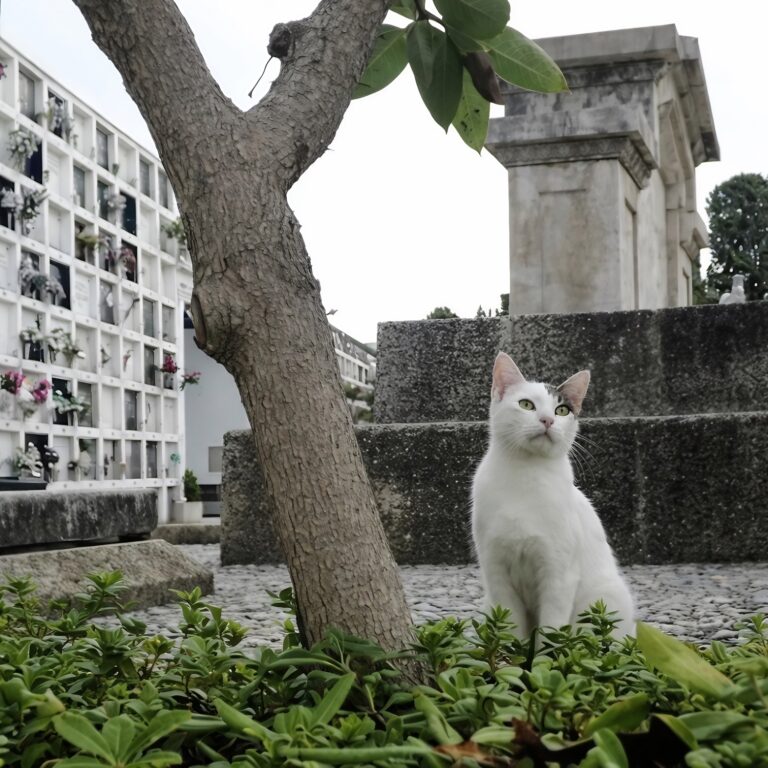
Stop #3: Sitges cemetery
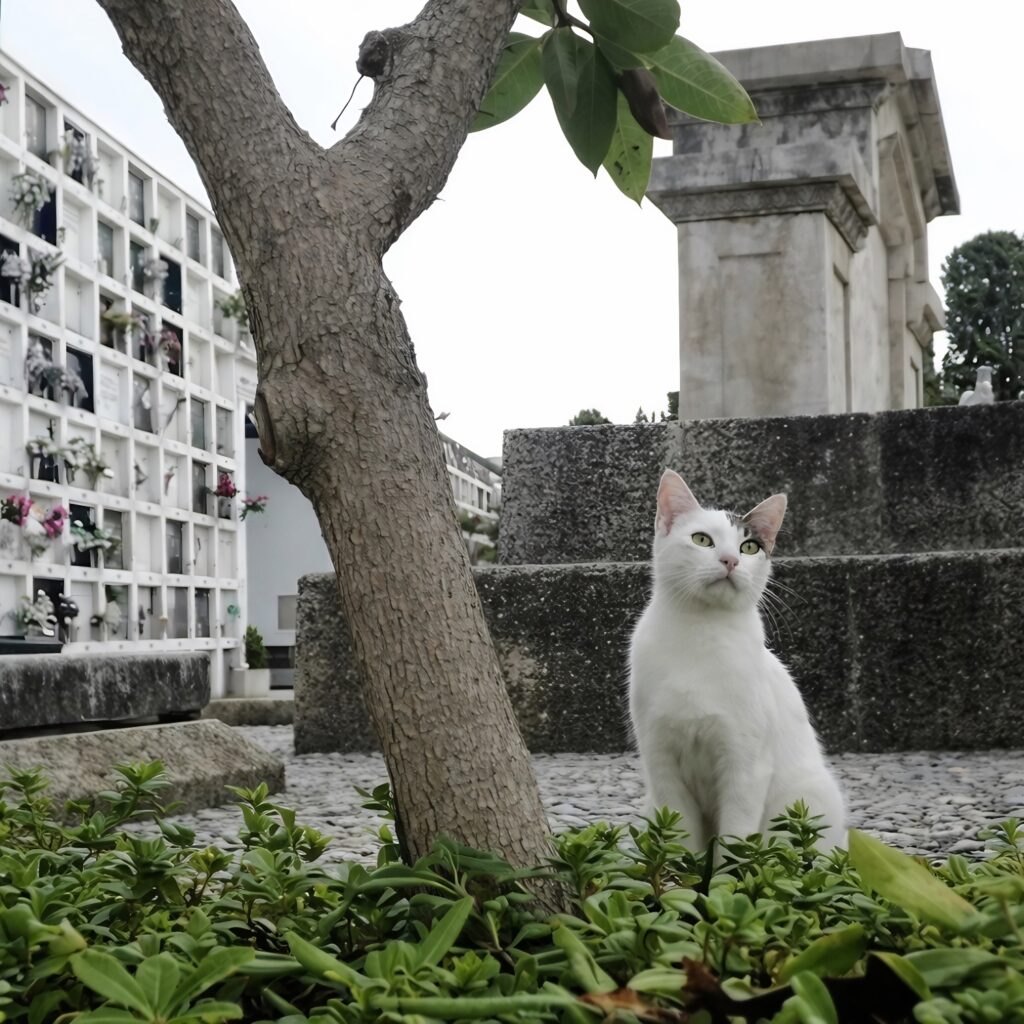
As you continue walking toward the historic center of Sitges, it’s worth making a short five-minute detour to the nearby Cementiri de Sant Sebastià.
This small cemetery sits just above the coast and can easily be explored in a few minutes. Only one cat lives here, so there’s a good chance you won’t spot him, but since you’ll be walking right past the cemetery anyway, it’s still a pleasant stop before continuing toward the old town.
Even if you don’t see the resident cat, the cemetery itself is worth a quick visit. It’s one of the most beautiful cemeteries in Catalonia, thanks to its peaceful seaside setting and its collection of striking modernist tombs and mausoleums created by artists connected to Sitges’ artistic past.
If you’re curious about the history, architecture, and famous figures buried here, you can read this full guide to the Sitges cemetery before continuing your walk toward the next cat colony stop in town.
Stop #4: Monumento a Santiago Rusiñol
From the cemetery, continue walking downhill toward the seafront and take the exit that leads to the beach promenade. Once you reach the waterfront, simply follow the promenade for a few minutes until you arrive at the Monumento a Santiago Rusiñol.
The monument stands on a small enclosed lawn overlooking both the promenade and the beach, making it a lovely place to pause during your walk. Cafés, shade, and sea views make this a perfect spot for a quick coffee break before continuing your exploration of Sitges.
This quiet patch of greenery also used to be one of the main cat colony areas in town. In the past, the lawn was absolutely teeming with cats. Today, the numbers have dropped significantly as part of Sitges’ humane population control program, but if you look closely you’ll still notice feeding spots and small cat houses tucked into the greenery.
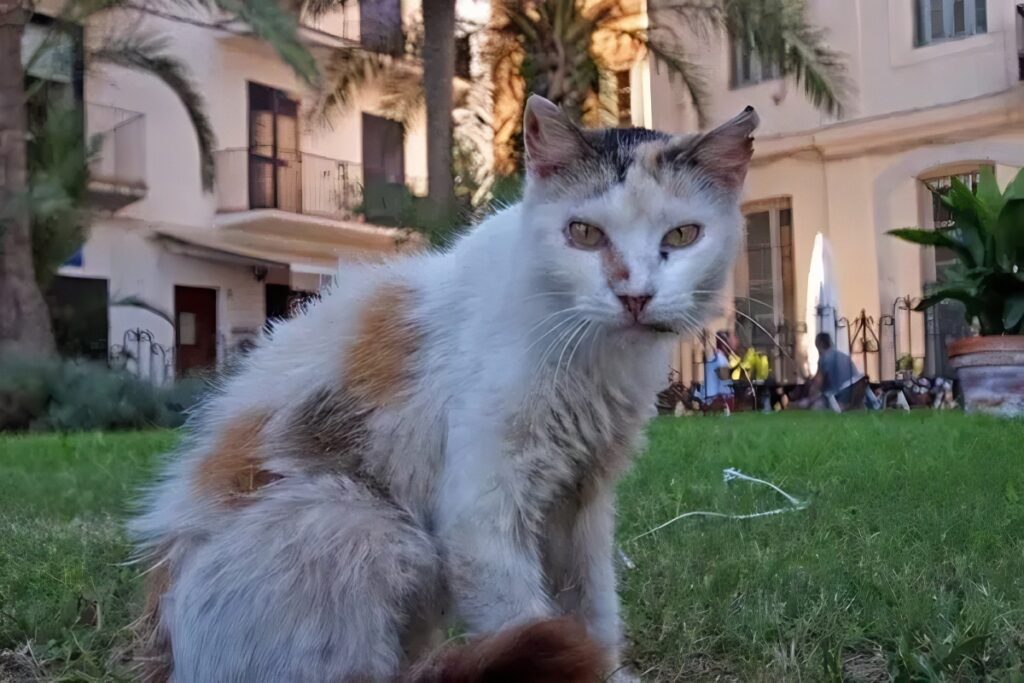
The space works well for the cats because it’s sheltered, relatively quiet, and well protected from the sun, so it remains a comfortable resting place for the few colony cats that still spend time here.
This stop also happens to sit right on the edge of Sitges’ historic center. From here, you can easily start exploring the old town, with its narrow streets and whitewashed buildings. It’s one of the most beautiful parts of Sitges and an absolute must-see while you’re visiting—although there are far fewer cats here than in other parts of town.
If you’re starting to feel hungry, just around the corner—less than a minute away—you’ll find La Guineu, my favorite tapas bar in Sitges and a perfect place to stop for a bite before continuing your walk.
Stop #5: Els Jardins del Retiro
Els Jardins del Retiro is a peaceful spot tucked behind the historic streets. The gardens are connected to the Cine Retiro, a historic cinema that has been a part of Sitges’ cultural scene for decades.
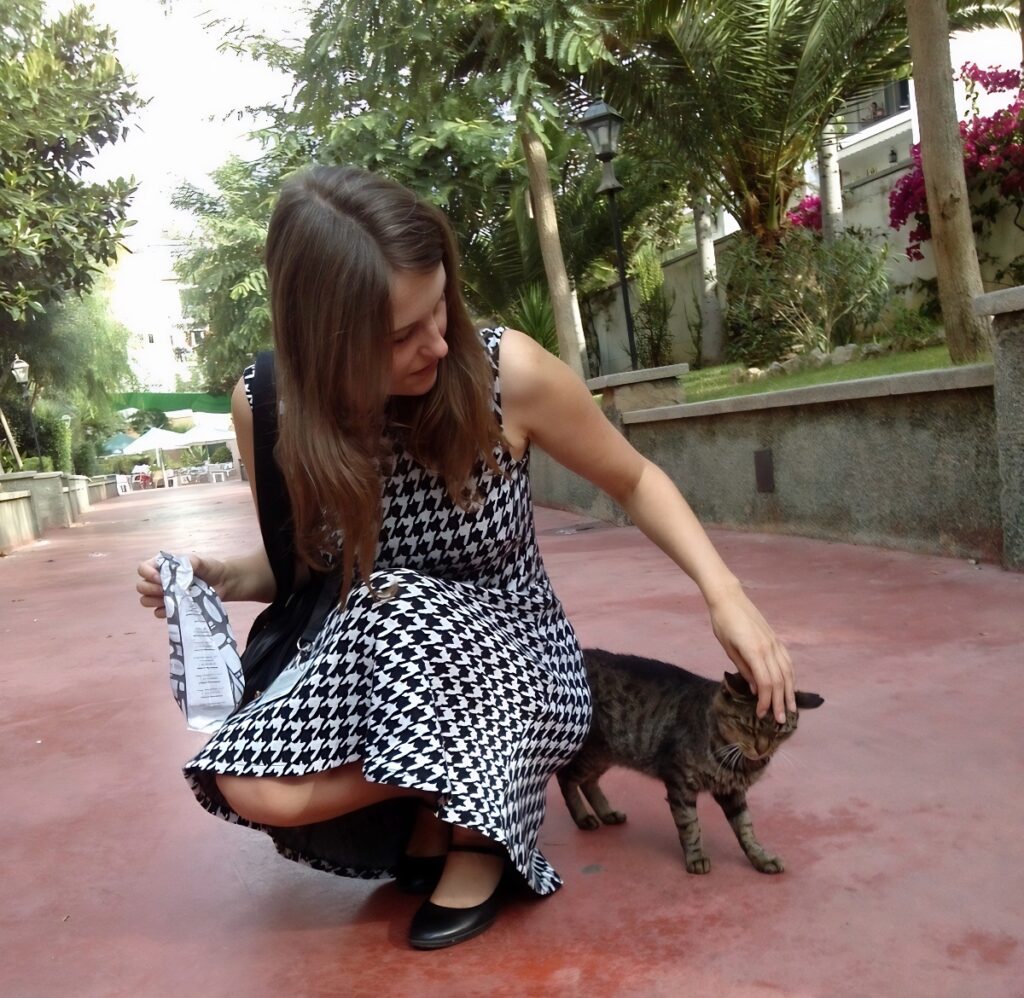
This spot is also home to one of Sitges’ happiest cat colonies, and you’ll often find several cats lounging in the sun, especially near (and sometimes inside) the cinema.
Take your time here to relax and watch the cats interact with locals and passers-by.
Read more: 7 reasons why you should visit Cine El Retiro while in Sitges (lots of cat photos!)
Stop #6: St. Bartomeu Church and the piers
After wandering through the winding streets of Sitges’ old town, make your way to the town’s most iconic landmark: the Church of Sant Bartomeu i Santa Tecla. Perched dramatically on a hill overlooking the sea, this baroque-style church dominates the skyline and is instantly recognizable from postcards and photos of Sitges.
Construction of the church began in the late 17th century and continued into the 18th century, giving it its distinctive combination of medieval and baroque architecture. The bell tower, façade, and picturesque location overlooking the beach make it a must-visit for any traveler. From here, you’ll also enjoy sweeping views of the Mediterranean and the town below, perfect for a few memorable photos.
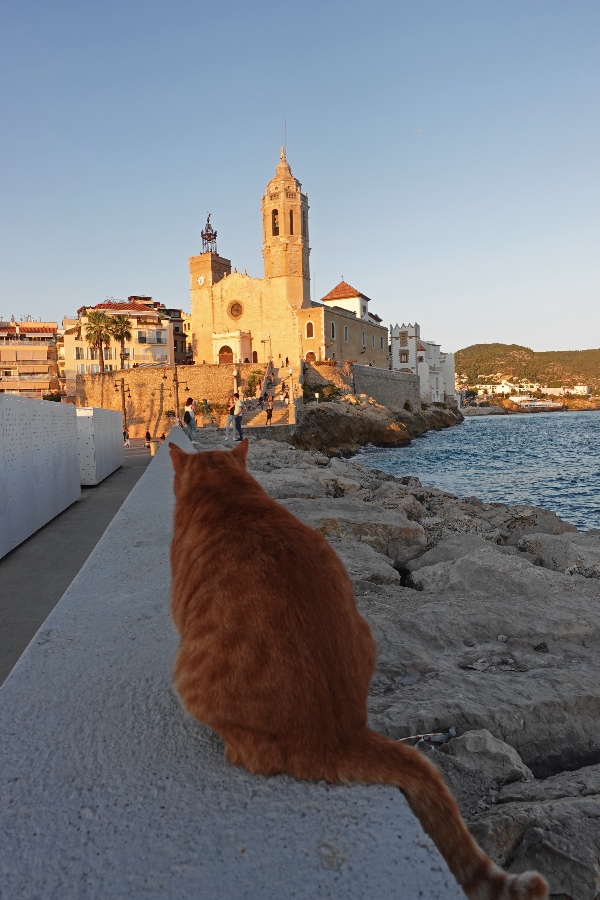
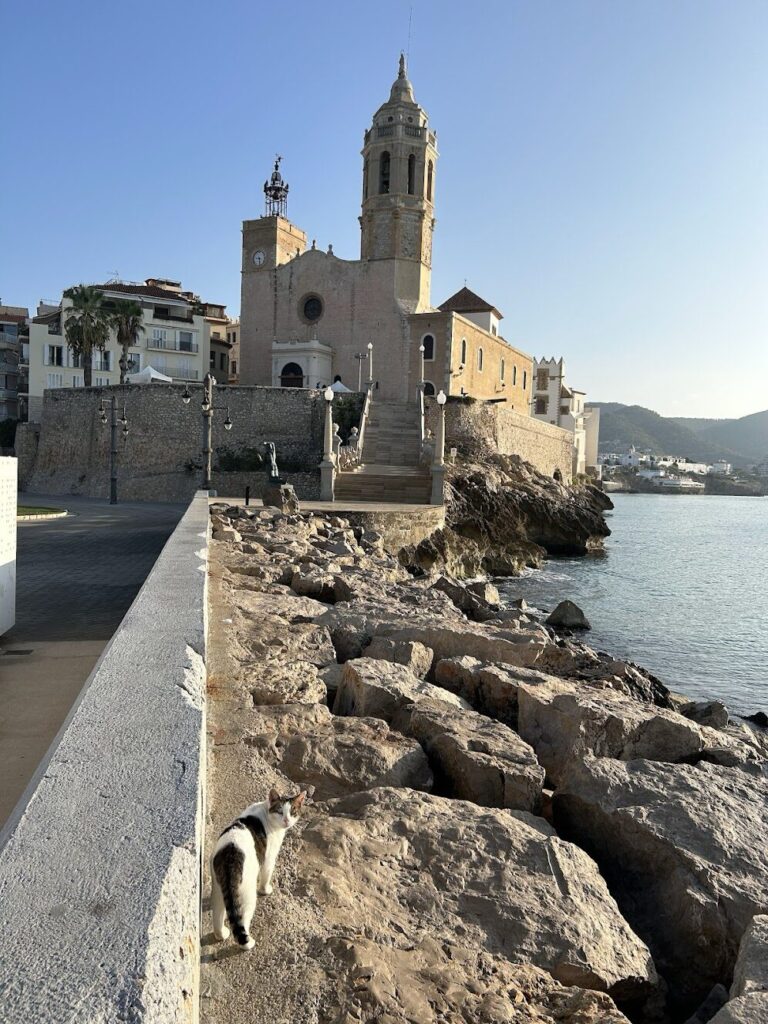
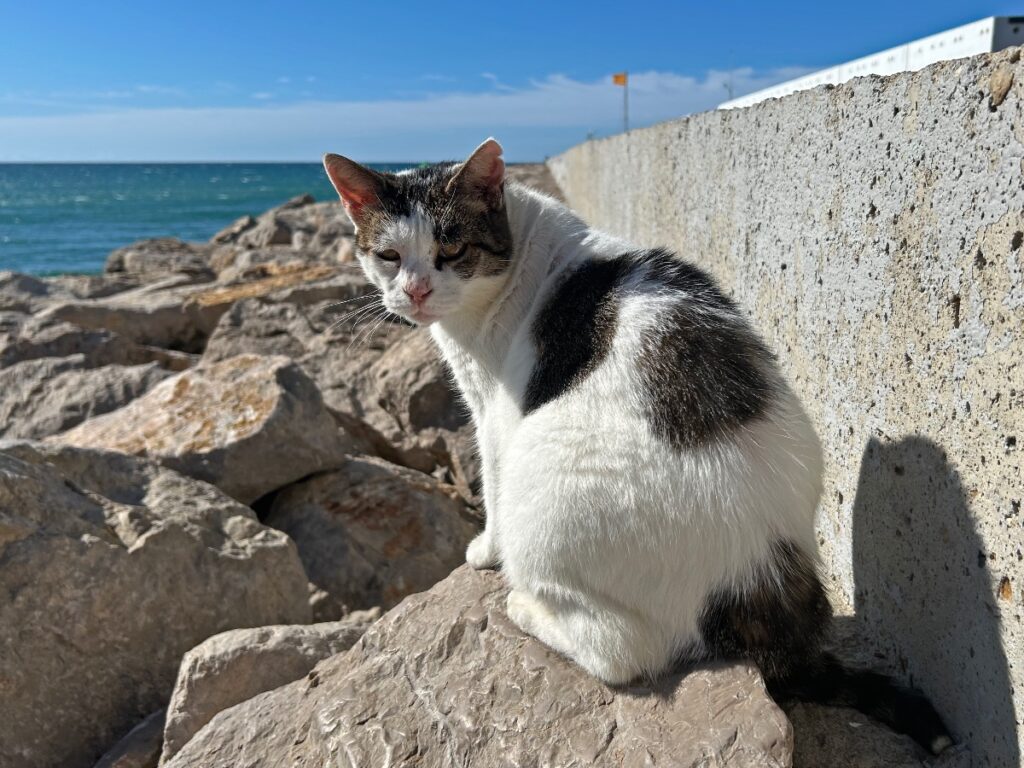
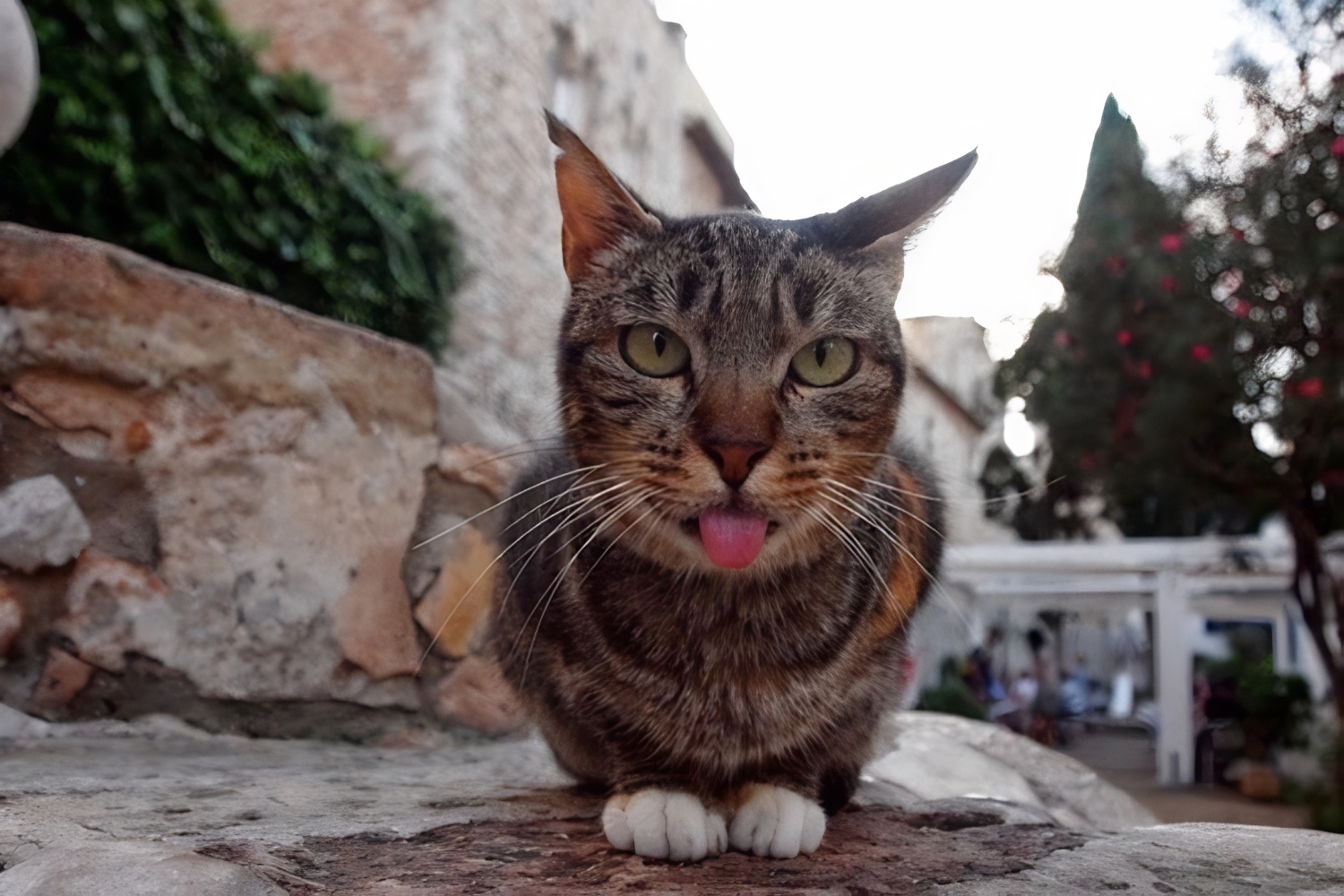
Once you’ve visited the church, descend the stairs back toward the beach promenade. This area is home to one of my favorite spots to meet the Sitges cats. Several strays gather here, particularly around the pier behind the famous La Sirena statue.
Many of the cats here are friendly and love to cuddle. They are also healthy, happy, and well-fed, thanks to the ongoing volunteer care. That just shows how well the colony is looked after.
Keep your camera ready, because this is a great spot for photographs of the cats against the beautiful church backdrop.
Vinyet area
You can end your self-guided walking tour here if you like, but for those who want to continue, the Vinyet area offers a quieter, more residential side of Sitges.
This part of town begins roughly at Playa de la Bassa Rodona and stretches south toward the Terramar neighborhood. It is approximately a 15–20 minute walk from the Sitges town center and only a 3-minute walk from the beachfront promenade.
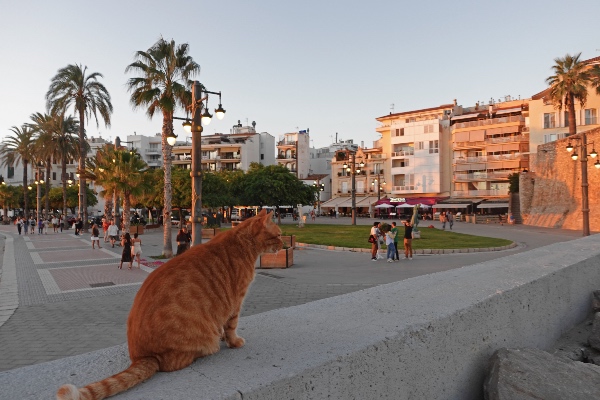
The area is also known for its luxury hotels, elegant residential homes, and tree-lined streets, making it one of the more upscale parts of Sitges. Many properties here were built in the early 20th century and reflect a mix of modernist and Mediterranean architectural styles, giving the neighborhood a unique historic charm. Vinyet is much quieter than the old town or the Aiguadolç marina area.
At the heart of the neighborhood sits the Santuari de Vinyet, a small religious sanctuary with origins dating back to the 17th century. The site has been renovated over the centuries but retains its simple, tranquil architecture. The sanctuary is surrounded by gardens and small green spaces, which provide natural shelter for the colony cats that live in this area.
The Vinyet cat colony is less visible than those in the port or old town, but it is still active.
Best time of the day to see cats
To get the most out of your Sitges cat colony walking tour, timing matters. The cats are most active around feeding times, which occur early in the morning and just before sunset. Visiting during these periods increases your chances of seeing them wandering, playing, or interacting with each other, rather than hiding away.
If you plan your walk around midday or in the afternoon, especially in the warmer months or even in autumn when the sun can still be strong, you’ll notice that many cats seek shelter in the shade. They’ll often curl up in gardens, under plants, or inside their little shelters to escape the heat. This makes spotting them more difficult.
For the best experience, try to start your walk early in the morning, enjoy a leisurely route while the cats are more visible, and plan other sightseeing stops around the hottest part of the day when the cats are resting anyway. This way, you’ll get plenty of photo opportunities and a more relaxed, enjoyable walk.
Why Sitges has so many cats (and why the numbers are quickly decreasing)
Stray cats are part of the town’s everyday life. Like many Mediterranean towns, Sitges has long had a population of free-roaming cats. The mild climate, small urban gardens, and plenty of sheltered corners create an environment where stray cats can survive year-round, and over time, groups naturally formed in different neighbourhoods.
52 cat colonies and over 900 cats
But what makes Sitges different from many other places in Spain is that the town now actively manages its stray cat population. The municipality officially recognizes 52 cat colonies with around 956 cats, which are monitored by registered volunteers and supported by the local government. These caretakers feed the cats, monitor their health, and make sure they are sterilized as part of an organized population-control program.
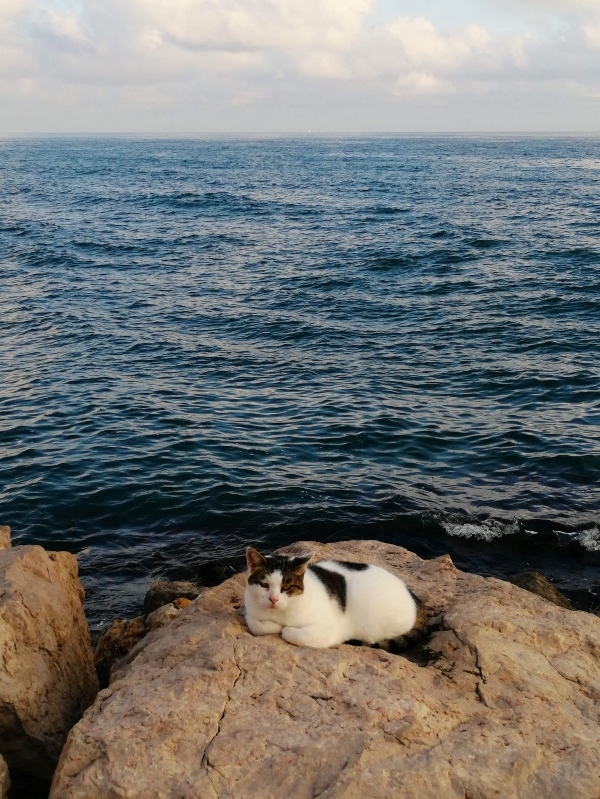
Over the years, this system has significantly reduced the number of stray cats living on the streets.
At first glance, this might sound a sad. In reality, this is a good thing. Many of the cats that once lived on the streets were in poor health. They struggled with disease, injuries, or the challenges of life outdoors. This is much better now.
Getting cats off the streets and into homes
Thanks to the organized colony management program supported by the town, volunteers now work to humanely reduce the stray population by trapping cats, spaying and neutering them, providing veterinary care, and returning healthy cats to their colonies. Whenever possible, socialized cats and kittens are rescued and placed in permanent homes.
This approach—often known as the Trap-Neuter-Return method—helps stabilize and gradually reduce cat populations while ensuring the animals are happy. As a result, the cats that remain in Sitges are generally healthier and part of a managed system.
How Sitges manages its colonies
Sitges runs a structured program that monitors and manages the town’s feline population. It’s called the Municipal Plan for the Ethical Control and Management of Urban Feline Colonies.
The goal is simple: protect animal welfare, safeguard public health, and prevent uncontrolled population growth—all while treating the cats humanely.
A municipal plan that protects both cats and residents
Sitges created the Feline Colony Management Plan to regulate and monitor the town’s cat colonies. This plan aligns with Spain’s national animal welfare legislation and sets clear rules on how to:
- monitor existing colonies
- inspect colony sites when needed
- organize volunteers and collaborators
- resolve conflicts between residents and colony sites
- support adoption campaigns for socialized cats
The long-term goal focuses on gradually reducing the number of cats living on the streets, while ensuring that the cats already living in colonies remain healthy and protected.
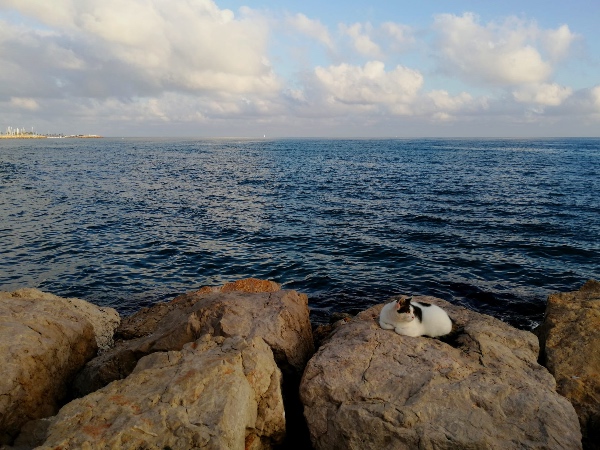
Volunteers care for the cats
Behind every colony stands a small network of dedicated volunteers. These registered caregivers feed the cats, monitor their health, and keep their environment clean.
One of the main groups involved is Associació d’Amics dels Animals i la Natura de Sitges (AANS), a local organization founded in 2003. The group helps manage colonies across town, including those around Port de Sitges Aiguadolç, the Vinyet area, and near the Local Police facilities.
Volunteers handle much of the day-to-day care. Their work includes:
- providing regular feeding for colony cats
- monitoring health issues and arranging veterinary care
- transporting cats to clinics when necessary
- maintaining feeding areas and nearby green spaces
- raising awareness about animal welfare
Most of this work happens quietly in the background, but it plays a huge role in keeping the colonies stable.
Caregivers must register with the town council
Sitges requires all colony caregivers to register officially with the municipality. Volunteers must apply for caregiver status and receive a municipal caregiver ID card, which must be renewed annually.
Registered caregivers must also:
- attend training sessions on colony management
- keep records of the cats in their colony
- submit periodic updates to the town council
This system ensures that every colony has responsible supervision and that the town can track the health and size of each group of cats.
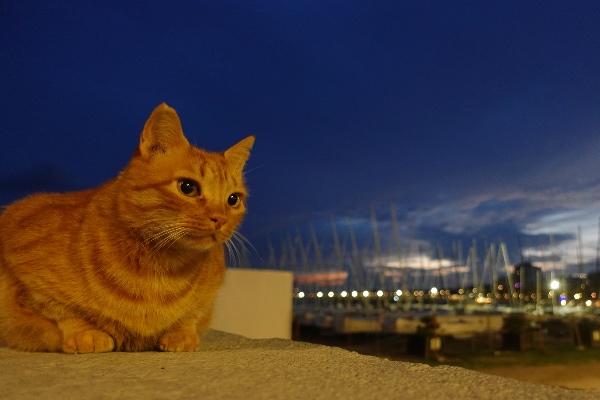
Strict feeding rules to keep colonies clean and safe
Only registered caregivers may feed colony cats. The town enforces these rules to prevent health risks, messy feeding areas, and uncontrolled food sources. Caregivers must follow specific guidelines, including:
- provide fresh water daily
- feed cats dry cat food only
- keep feeding areas clean
- avoid feeding near schools, playgrounds, restaurants, or busy roads
Unauthorized feeding can result in fines, since random feeding often leads to overcrowding and hygiene issues.
The C.N.R. method: capture, neuter, return
Sitges manages its cat population using the Capture–Neuter–Return (C.N.R.) method, one of the most widely used humane approaches for controlling stray cat populations. This means that volunteers humanely capture the cats, veterinarians sterilize them and provide basic health checks, and the cats then return to their original colony once they recover.
Sterilization prevents new litters and reduces fighting, roaming, and loud mating calls. Over time, the population gradually decreases while the remaining cats live healthier lives.
Cats sterilized through the program also receive microchips and registration under the town council.
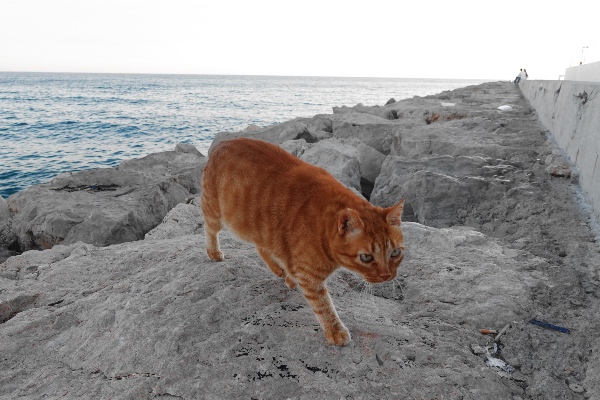
Finding potential adopters
When volunteers find kittens or friendly adult cats, they try to place them in permanent homes instead of returning them to the colony. The town council supports these adoption campaigns.
Monitoring the health of every colony
Registered caregivers keep a close eye on their colonies. If they notice illness or injury, they report the problem to the municipality so the cat can receive veterinary care.
Caregivers also track the colony population and submit updates to the town council every six months. This monitoring allows Sitges to detect problems early and maintain stable colonies.
Responsible tourism: local laws regarding interacting with stray cats
When exploring Sitges’ cat colonies, it’s important to respect both the animals and the local regulations. The town has established clear rules to ensure that the colonies remain healthy, stable, and stress-free.
Feeding
Only registered caregivers are legally allowed to feed the colony cats. These volunteers have been trained to provide the right type and amount of food, maintain clean feeding areas, and monitor the cats’ health.
Unauthorized feeding is prohibited. The Local Police issues fines to anyone who places food near the colonies, especially in busy areas like the port or promenades. This helps prevent overcrowding, aggressive behavior, and hygiene issues that could arise from uncontrolled feeding.
Protection
Sitges’ cats are generally used to human presence, but they are still sensitive to noise, crowds, and sudden movements. Too many visitors can stress the animals or disrupt their routine, including feeding and veterinary care schedules maintained by volunteers. Avoid touching or cornering cats, respect their space, and take photos from a distance to minimize stress.
Adoption
Tourists are not allowed to take cats from their colonies in Sitges. The cats belong to registered feline colonies managed under the municipal Feline Colony Management Plan, which follows Spain’s animal welfare law.
Removing a colony cat is generally prohibited. Exceptions are possible if done through an official rescue and adoption process coordinated by the Sitges Town Council or local animal welfare organizations. They are the ones who will assess whether a cat is sociable and suitable for adoption.
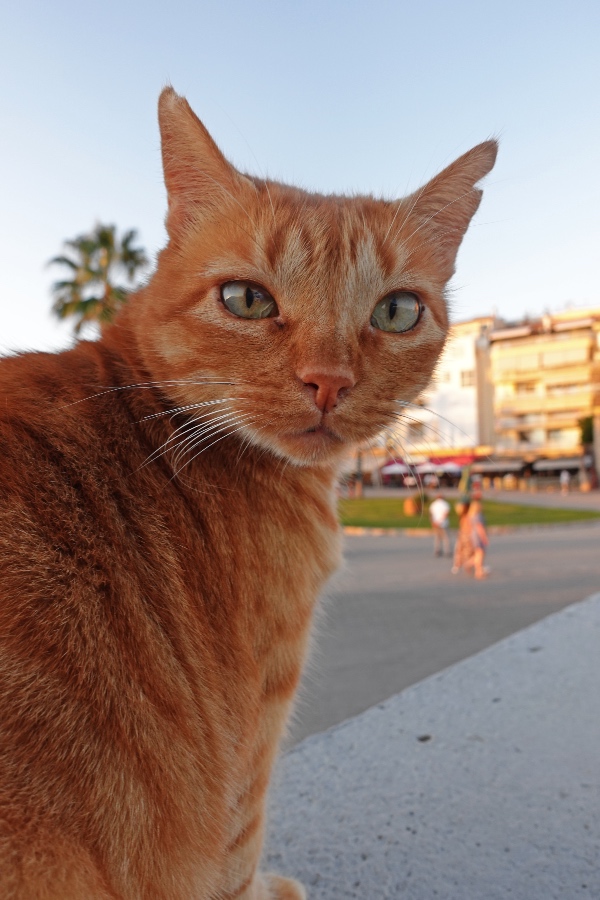
How you can help the stray cats of Sitges
Did you enjoy your cat colony walking tour? Do you want to give back? There are several ways to support Sitges’ managed cat colonies.
Because the town’s colonies are carefully monitored, it’s best to focus on supporting the volunteers and contributing to the health and welfare of the cats.
Donate
Most of the work in Sitges is run by volunteers who maintain feeding stations, monitor health, and care for shelters. Donations go directly toward:
- Cat food and clean water
- Veterinary care, including sterilization programs
- Maintenance of shelters and feeding areas
- Adoption campaigns for socialized cats
Spread the word
Talk to friends or family about the ethical way Sitges manages its cats or share it on social media. Educating others ensures the colonies stay healthy, safe, and minimally disturbed.
Foster
Do you happen to live in Sitges? You can help by fostering a former stray cat until a permanent home is found. Animal welfare groups occasionally rescue friendly or vulnerable cats from the colonies and place them in temporary foster homes while they recover from medical treatment, get used to indoor life, or wait for adoption.
Fostering gives these cats a safe environment and greatly increases their chances of finding a loving home. Interested? Contact one of the local animal protection organizations in Sitges to learn about their foster programs and current needs.
Final thoughts
That’s your complete walking tour of Sitges. It lets you explore the town’s most iconic neighborhoods and landmarks while also spotting its cat colonies along the way. It’s the perfect route if you’re short on time—especially if you’re visiting Sitges on a day trip.
Planning a trip to Sitges? Or are you already in town and looking for ways to help the stray cats? Feel free to leave a comment with your thoughts or questions.
Photos by Vanessa Morgan & Gilles Vranckx

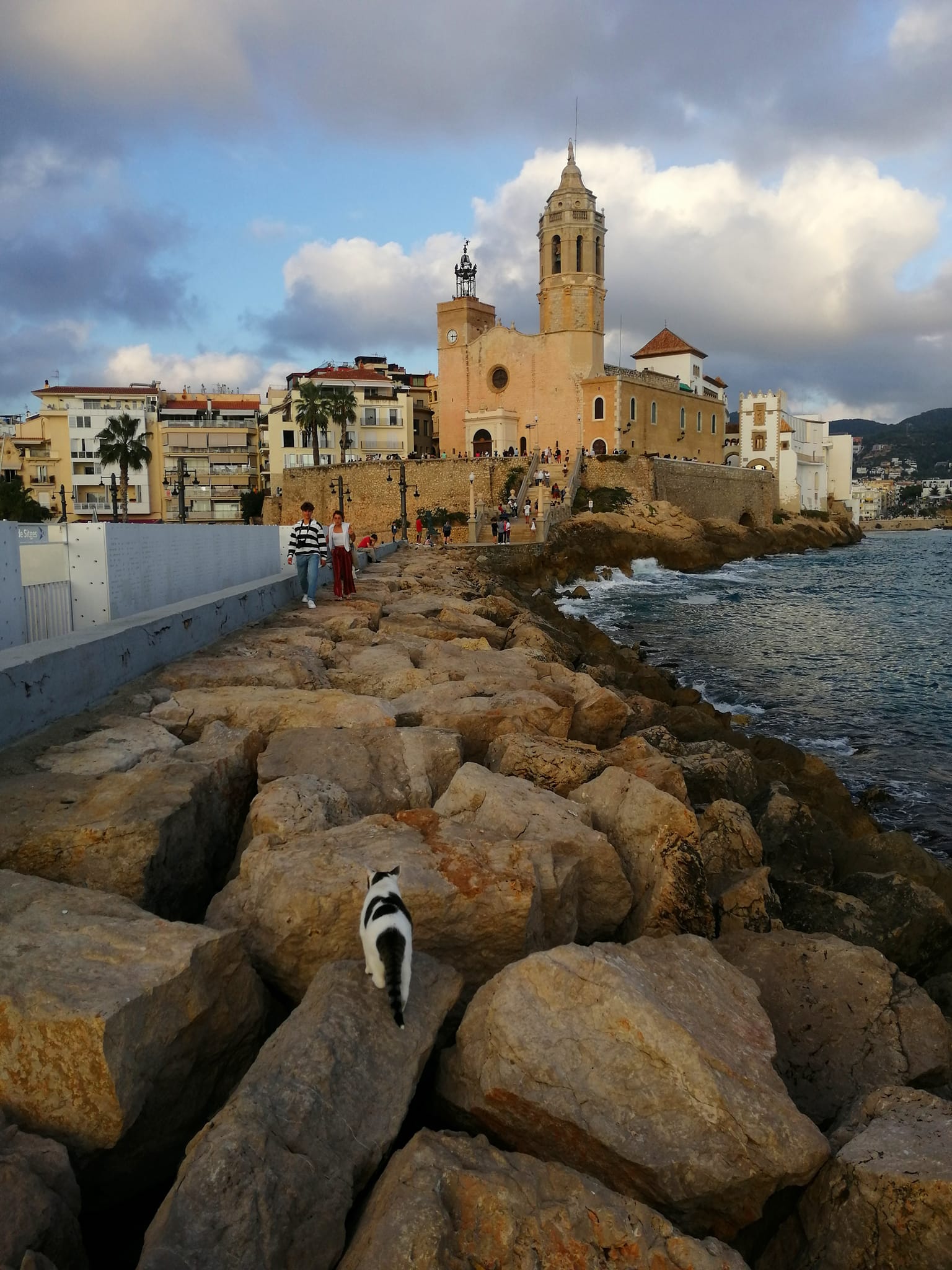
Pin this Sitges day trip itinerary!


5 responses
Wow, what a beautiful looking place. I’m very happy to hear their focus is TNR, and the cats are healthy and well looked after.
Such an interesting read. I hadn’t even heard of the cats of Sitges. What a great history of these famous kitties.
Wow, just an amazing Wow! I had no idea there were cat colonies in Spain and look at those beauties. They sure do have a great handle on keeping the cats healthy and safe. Bravo. I had a coworker who often visits Spain and I had never heard of the before. Thank you for sharing! It’s so fascinating to me, the arm-chair traveler! I’m Pinning this to my Mews News board to share with others! Fabulous post!
What a fantastic place to visit, and with it’s own mascot cat too.It is so nice to find the spotlight on other places than Cannes!
I’d love to0 meet Nosferatu!!
I have never heard of this place but it looks like heaven and having the healthy cats roaming around just makes it more awesome, I would love to visit and see for myself.