Last Updated on 10 April 2023 by Vanessa
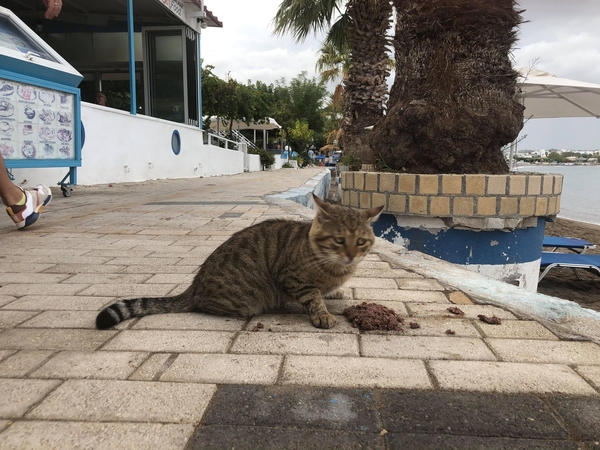
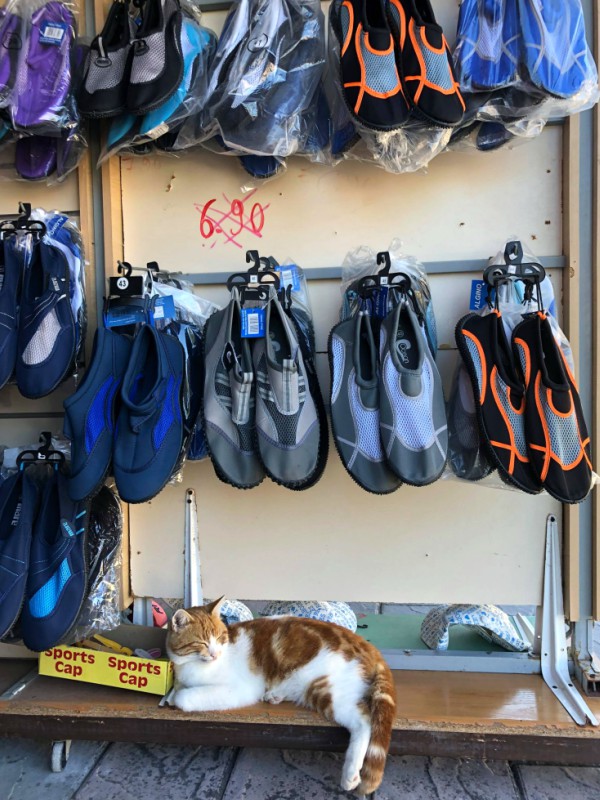
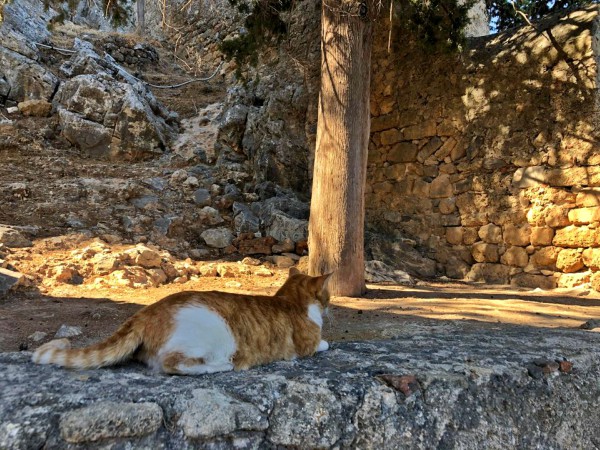
The seaside resort town Faliraki is a tourist hotspot on the east coast of the Greek island Rhodes. It’s brimming with hotels, bars, nightclubs, restaurants, shops, and… cats. The animals serve as tableside companions, happy to dine on scraps, and as adorable photo accessories reclining on white stone walls.
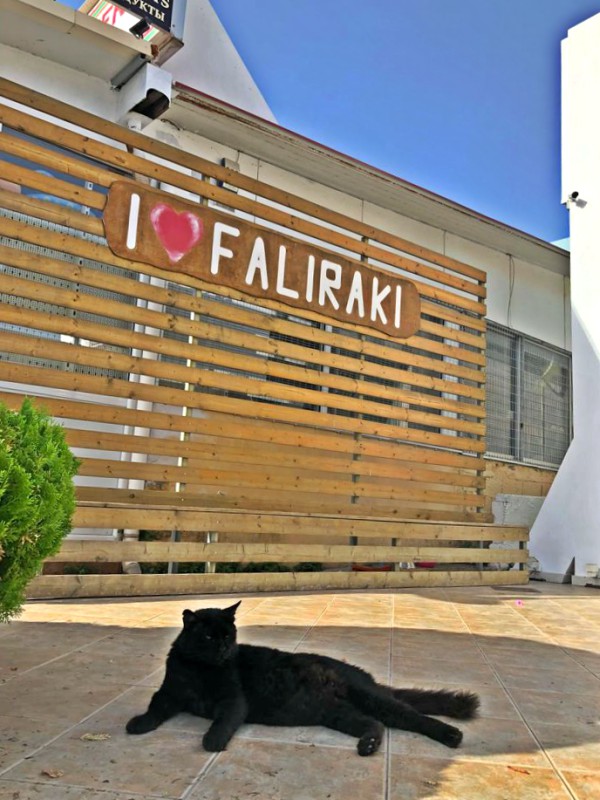
Stray cats… the true purr-sonalities of Faliraki
Stray cats are the true “purr-sonalities” of Faliraki, Rhodes, as on most other Greek islands and towns. (Be sure to also check out our articles on the cat colonies of Mykonos, Naxos, Santorini, Lesbos, and Delos)
That’s because, unlike most of the western world, cats and dogs in Greece are rarely spayed and neutered and often run wild.
Trap-neuter-return (TNR) is a crucial practice in Rhodes and serves as an effective means of population control for stray cats. By humanely trapping them, neutering or spaying them to prevent further breeding, and then returning them to their original location, TNR helps reduce the number of stray cats over time, addressing the issue of cat overpopulation.
TNR also promotes the health and well-being of stray cats. Neutering or spaying cats through TNR programs can improve their physical health by reducing the risk of reproductive cancers and infections, and also minimize undesirable behaviors associated with mating, such as fighting and spraying. This helps enhance the overall welfare of stray cats, ensuring they lead healthier lives.
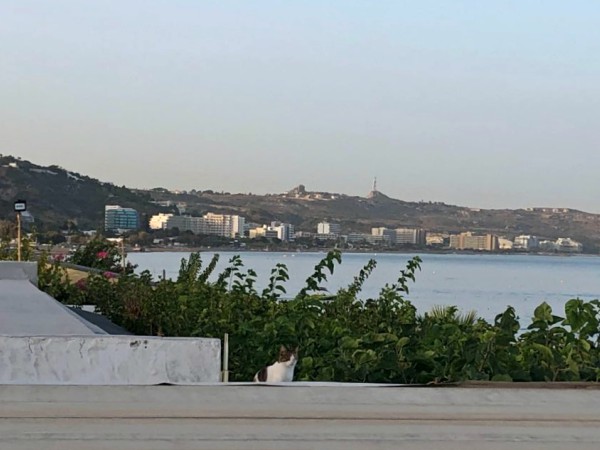
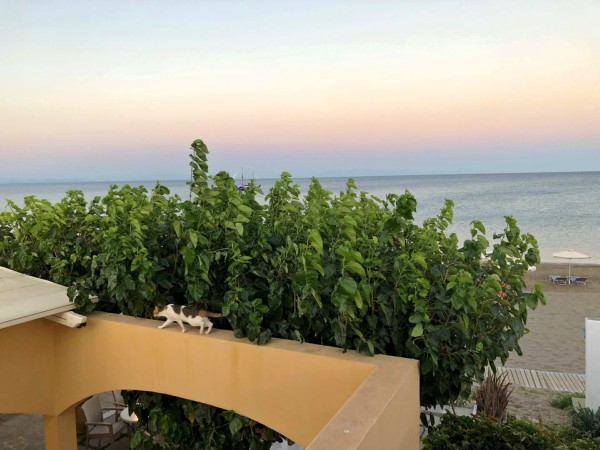
Cat care in Faliraki
Many tourists (and some locals) offer food, water, and love to these stray cats. They share their meal with them or buy local cat food and distribute some kibble whenever they encounter a hungry animal.
You might even find a cozy cat house or a designated feeding station in a quiet corner of a square or a hidden alley, lovingly maintained by both residents and tourists alike.
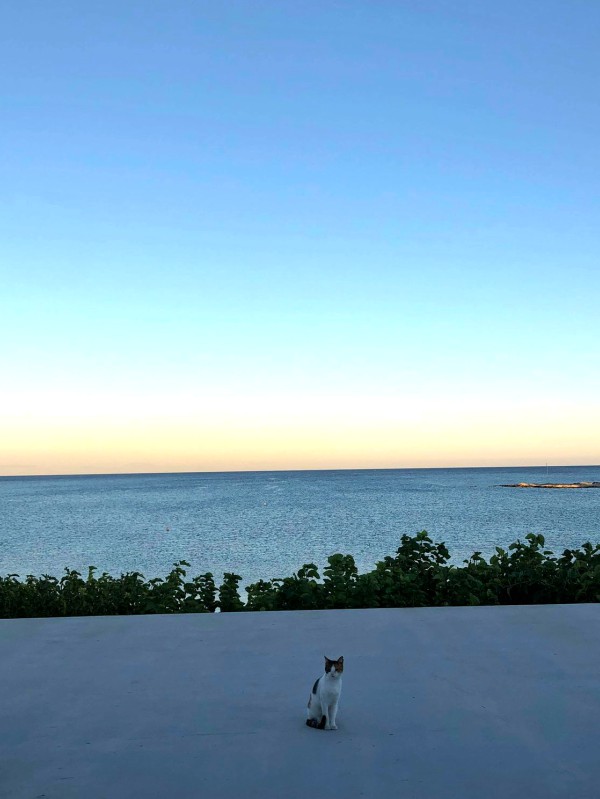
Stray cats in winter
Once the tourist season is over, many stray cats in Greece are left to fend for themselves.
With colder temperatures and increased precipitation, stray cats may struggle to find adequate shelter to protect them from the cold, rain, and wind. They may not have access to warm and dry spaces, which can result in discomfort, hypothermia, or other health issues.
Reduced food availability can also be a challenge for stray cats during winter, as food sources may be scarce. With fewer tourists or visitors, who normally feed or care for stray cats, there may be reduced availability of food scraps or fewer people feeding them, making it harder for them to find sufficient food. This can lead to malnutrition, weakened immune systems, and other health problems.
The colder weather can also weaken the immune systems of stray cats, making them more susceptible to illness and diseases, such as respiratory infections or feline colds. Reduced access to food, clean water, and shelter can further exacerbate their vulnerability to health issues.
It’s important for local animal welfare organizations and volunteers to continue efforts to provide support and care for stray cats of Rhodes during the winter months to help ensure their well-being. Two of the most active organizations are Kalithea Cats and Flying Cats.
Kalithea Cats
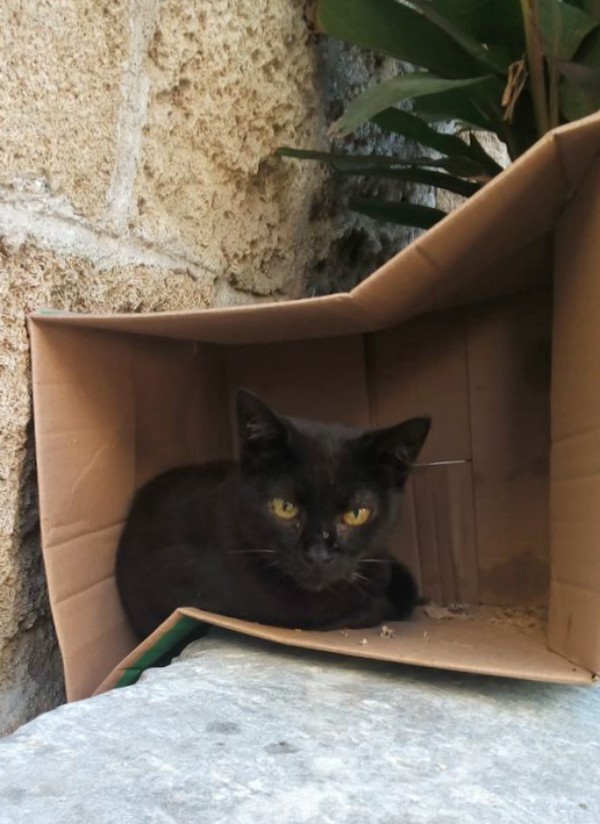
Luckily, there is a charity that takes care of the stray cats of Rhodes: Kalithea Cats (operating from the popular tourist destination Kalithea).
The volunteers of Kalithea Cats mostly feed the strays that are brought to them from all over the island, but they also provide shelter, care for sick and abused animals, promote responsible cat ownership through education and awareness programs, and try to spay and neuter as many homeless cats as possible.
If you ever find a sick or injured animal on Rhodes, the most responsible thing to do is to contact Kalithea Cats or bring the animal directly to them.
Adopt a cat of Rhodes with Flying Cats
Flying Cats is an animal welfare organization that works to provide medical care, shelter, and rehabilitation to cats in need, with the ultimate goal of finding them permanent homes through adoption programs.
The cats that are most at ease with humans go to Germany to be adopted. Flying Cats comes to Rhodes twice a year in order to collect the animals and fly them over.
Final thoughts on the stray cats of Faliraki
Despite the efforts of both tourists and such organizations as Kalithea Cats and Flying Cats, the number of strays is still immense in Faliraki and on the island of Rhodes in general. Many of these cats are not surviving the winter months.
Consider visiting Rhodes off-season to feed and take care of the cats. Yes, the temperatures will be milder and several hotels and restaurants will be closed, but you’ll have the place to yourself and won’t have to wait in line for anything.
Donating to or volunteering with reputable local organizations can also contribute to long-term solutions for stray cat welfare in the area.
Thank you for helping the stray cats in Faliraki, Rhodes. 😽
Text by Vanessa Morgan
Photos by Eric Valette