Last Updated on 10 July 2025 by Vanessa
Gucheng Park, also known as Ancient City Park, may not be on your list of must-see spots in Shanghai, but it absolutely should be if you’re a fan of cats.
Welcome to Shanghai’s Gucheng Park (aka Ancient City Park)

In the heart of Shanghai’s historic Huangpu District, right between the postcard-worthy Yu Garden and the flashy Bund, sits Gucheng Park—a relatively small but incredibly charming public park. It’s located at 333 Renmin Road, just steps from the City God Temple and all the buzz of Yuyuan Bazaar.
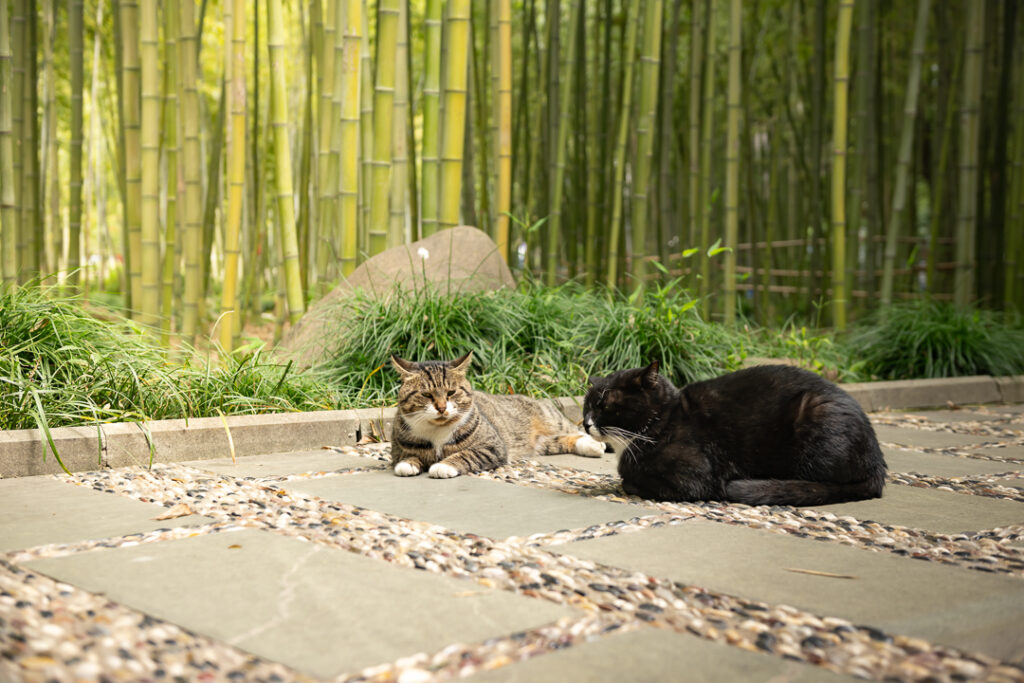
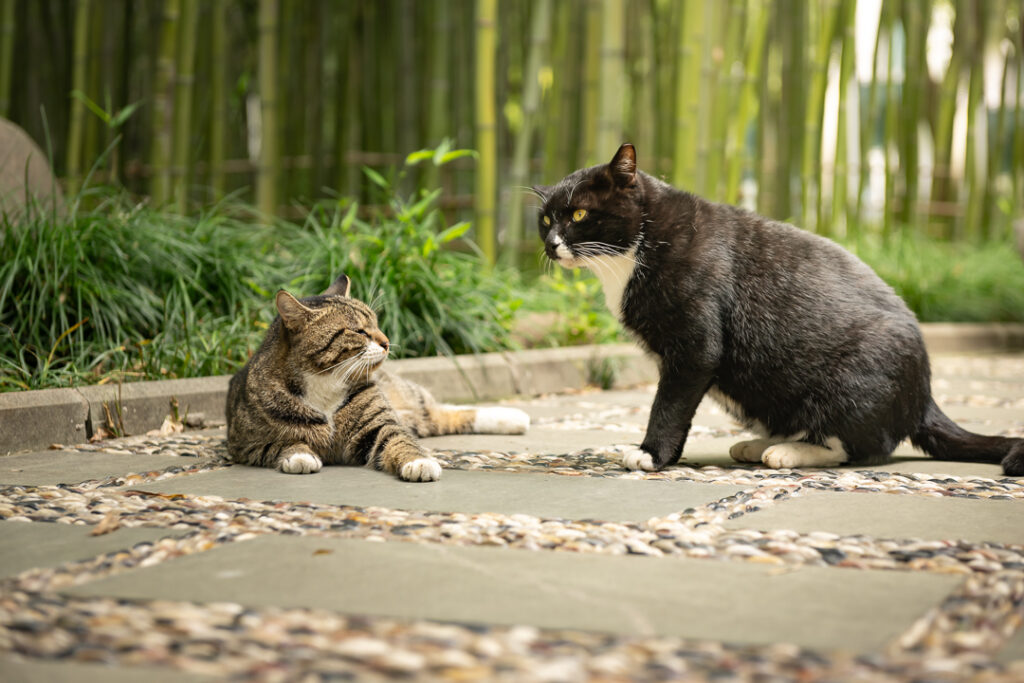
What makes Gucheng Park special isn’t just its cultural nuggets but its soft-pawed community of stray cats that have claimed this little slice of green as their own kingdom.
Meeting the stray cats of Gucheng Park
Shanghai has about 300,000+ stray cats roaming its alleys, parks, and rooftops. Some sources even say the number could be closer to 1.5 million. In a city of 25 million people, that’s a lot of whiskers. And it turns out Gucheng Park is one of their favorite hangouts.
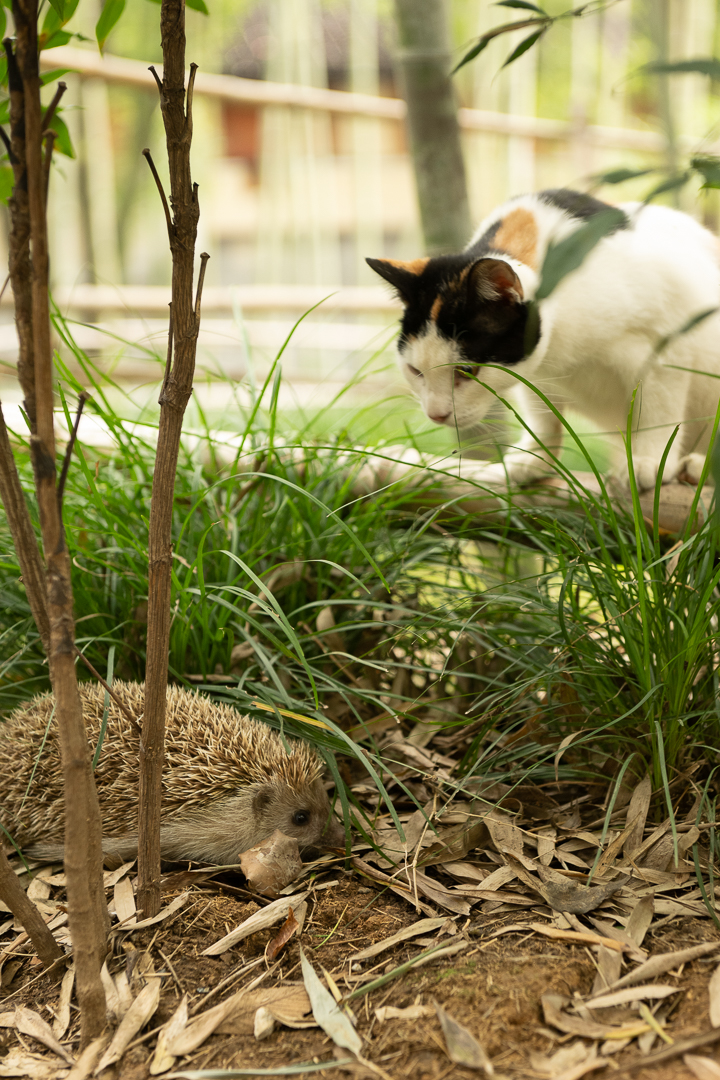
Visitors often report that these furballs follow them around in the park. They’re friendly, fearless, and surprisingly clean for cats living outdoors.
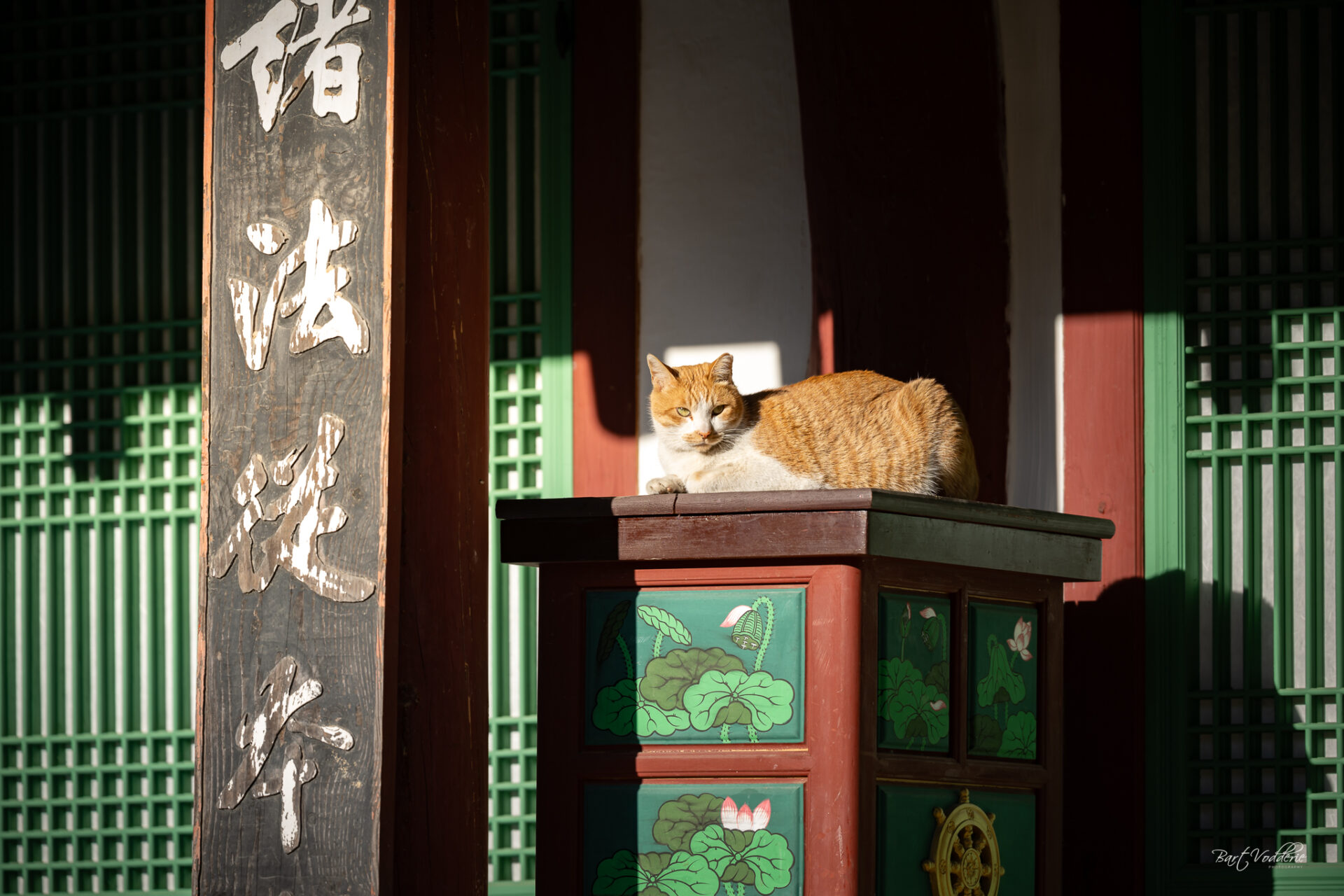
Many of them were once scrappy strays roaming the streets of Shanghai, but they’ve since found their safe haven here. Now, they lounge in the sun, get sneak treats from park-goers, and photo-bomb tourists.

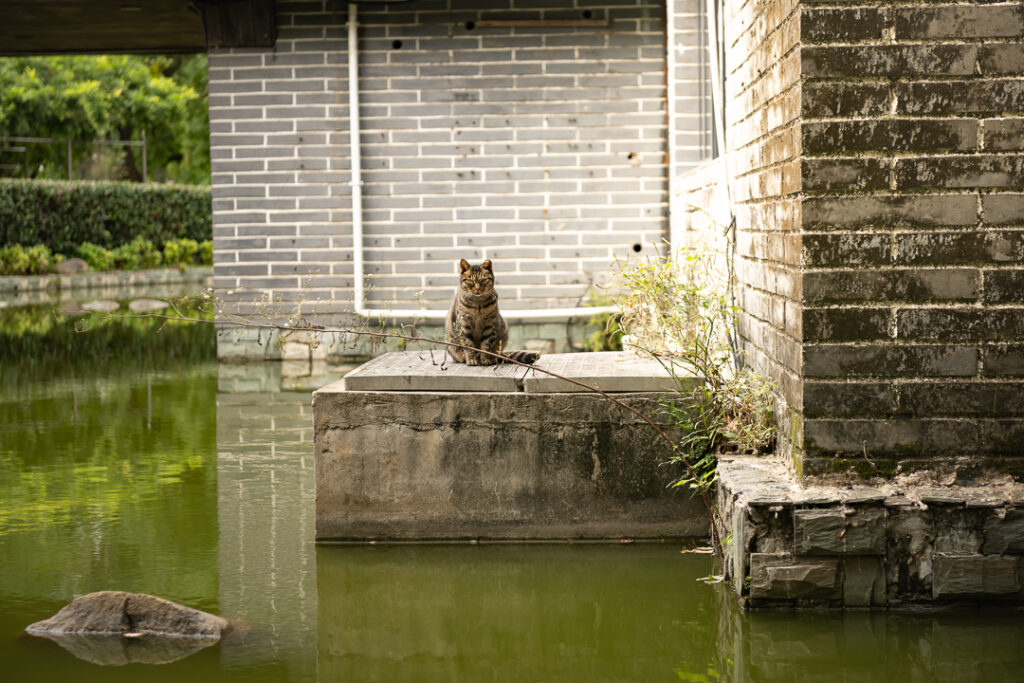
Gucheng Park isn’t officially known as a “cat park,” not like Beijing’s Forbidden City or Madrid’s El Retiro park. However, its feline residents are a definite feature.
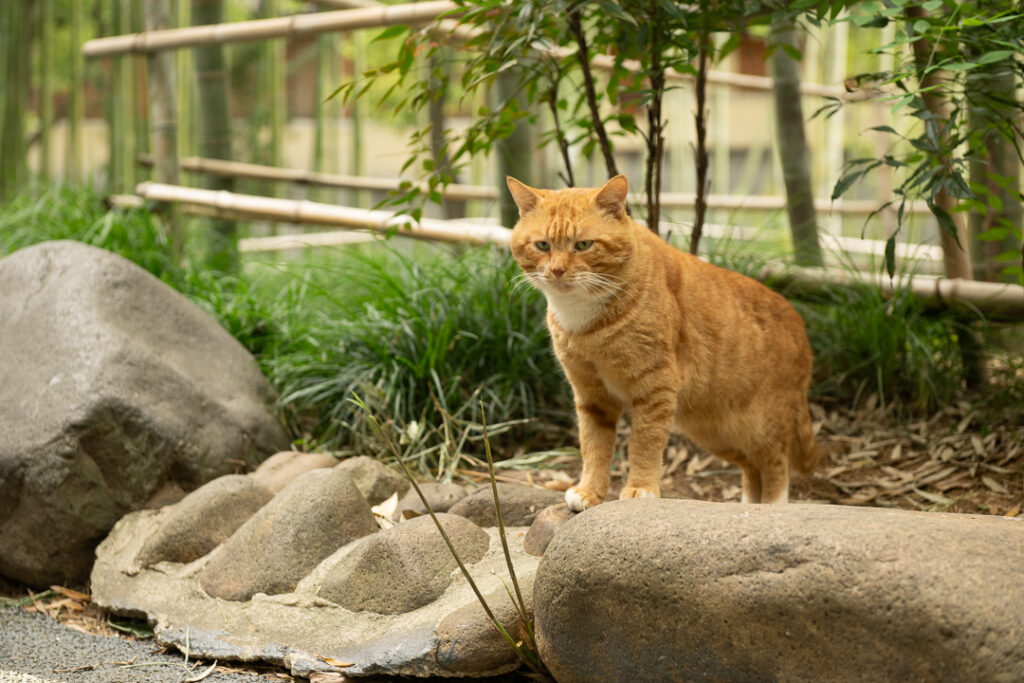
These cats aren’t hiding. On the contrary, they strut around like they own the place.
Their story is a slice of a much bigger one playing out all over Shanghai—a city grappling with how to care for its massive stray population.

Stray cats in China
Unlike countries with strong centralized animal protection groups (think ASPCA in America), China relies mostly on grassroots efforts to help stray animals.
In Shanghai, you have groups like More Meow Garden, Nekoshelter, and Shanghai Adoption Day. They are run by passionate volunteers, young animal lovers, and elderly residents working with whatever resources they have.
Their main strategies include:
- Trap-Neuter-Return (TNR): Catching stray cats, spaying or neutering them, then returning them to where they were found.
- Feeding and medical care: Often coordinated by volunteers who work in shifts.
- Adoption events in malls and online “cat dating apps.”
One of the city’s most iconic “cat catchers” is Yin Xiaojun, better known as Stone—a local legend in the rescue community. He’s part of a growing movement trying to stabilize the stray population through desexing.

The not-so-cute side of the story
Despite the warm and fuzzy parts of this tale, caring for stray cats in Shanghai is an uphill battle.
- Overpopulation: Cats breed fast—like, really fast. Without neutering, one female cat and her offspring can produce thousands of descendants in just a few years.
- Mixed public opinion: While younger people often see cats as companions, some older residents still view them as pests or leftover “livestock.”
- Social media influence: Many prefer to adopt photogenic purebreds, leaving local street cats behind.
- Zero national protection laws: China still doesn’t have a law against animal cruelty. That means abusers can go unpunished, and tragic events—like the infamous killing of Zorro the cat in Jing’an Sculpture Park—spark temporary outrage but little lasting change.
A small park, a big message
At Gucheng Park, though, there’s hope. The cats here are relatively safe, and they are part of informal feeding programs. It’s clear they’ve carved out a calm little corner of the city for themselves.
If you visit, you’ll likely spot one stretching in the sun on a stone bench, another perched in a tree, or maybe one weaving between your legs in search of a cuddle. These cats aren’t just surviving. They’re a quiet symbol of how much Shanghai is changing.

Other reasons to visit Gucheng Park
While Gucheng Park may be small, it offers a surprisingly rich and diverse experience—cats or no cats.
At the heart of the park is a sunken plaza, which serves as a popular gathering spot for locals. It’s an excellent place to observe community life, from tai chi practice to casual conversations among retirees.
A nearby bamboo-shaded teahouse provides a tranquil space to rest and enjoy traditional Chinese tea, while a small fishpond contributes to the peaceful atmosphere.
Topiary and garden art add an ornamental touch to the surroundings and enhance the park’s visual appeal.
You should also make time for the Danfeng Deck, built on the site of a Taoist temple dating back to the 13th century. While the original tower no longer stands, it was once the tallest structure in Shanghai and remains a significant historical reference point.

Practical info: How to visit Gucheng Park (and meet the cats)
If you’re ready to meet the furry residents of Gucheng Park, here’s everything you need to know before you go:
Address
333 Renmin Road (人民路333号), Huangpu District, Shanghai
It’s right near the intersection of Renmin Road and Fuyou Road and between the iconic Yu Garden and the scenic Bund—a perfect pit stop during a historic Shanghai walking tour.
Opening hours
Gucheng Park is opne daily from 06:00 am to 09:00 pm.
(Like many parks in China, it opens early for morning exercisers and closes just after dark.)
Getting there
- By metro: Take Line 10 or Line 14, and get off at Yuyuan Garden Station (豫园站). Use Exit 1 or 4. The park is about a five-minute walk from the station
- By bus: Busses 11, 66, 64, 304, and 736 stop nearby. Get off at the Fuyou Road / Renmin Road (福佑路人民路) stop.

Tips for cat spotting
- Go early or just before sunset. Cats tend to be more active when it’s cooler.
- Bring thealthy reats. Some of the cats are social and might come say hi. However, avoid giving them human food as many ingredients may be harmful to them.
- Respect their space. These cats may be friendly, but they’re still free-roaming animals. Watch, enjoy, photograph, but don’t chase or grab them.
- Look near quiet corners, under benches, or by the fishpond. That’s where they like to chill.

Final thoughts
Have you ever been to Gucheng Park? Or has it just landed on your must-visit list? I’d love to hear what you think—drop a comment below and share your thoughts.
And if you know of any other destinations that would be a dream for cat lovers, let me know. I’m always on the lookout for the next feline-friendly adventure.
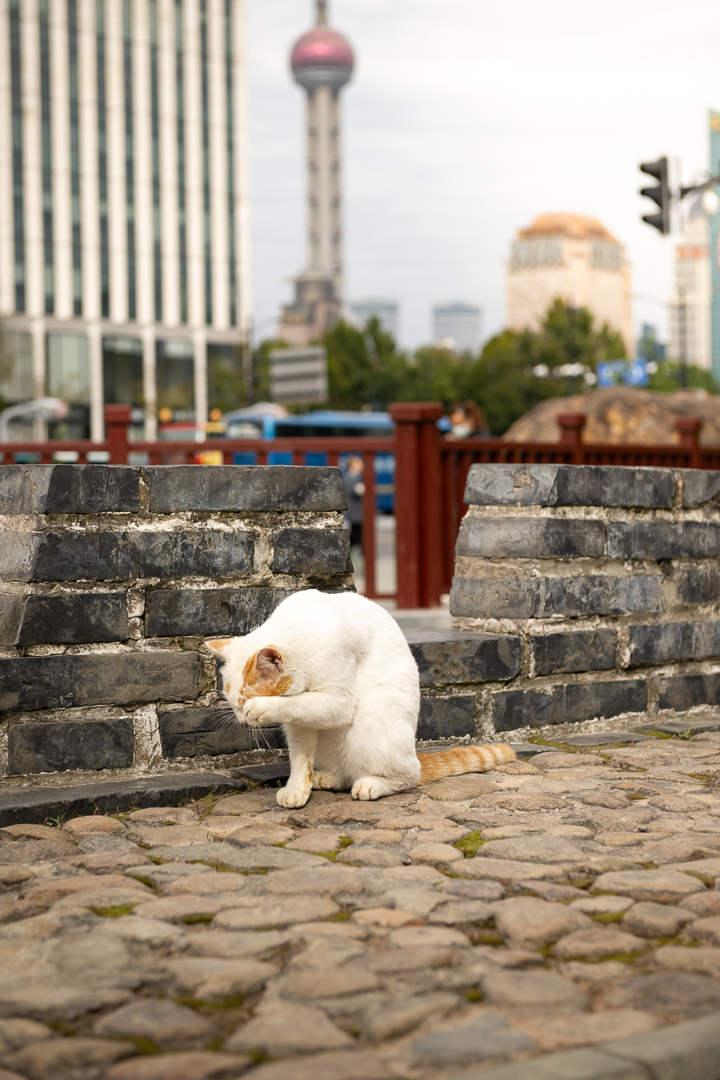
Photos by Bart Vodderie.
All cats photographed in Gucheng Park Shanghai with their permission. (Or at least, they didn’t argue.)

About the photographer
Bart Vodderie is a self-taught photographer from Belgium. Over the years, he has lived in multiple countries and currently resides in China.
His interest in photography began when his father gave him a reflex camera, which he used extensively until it broke down during a trip to the Salt Flats in Uyuni in Bolivia.
In April 2011, he decided to invest in a Nikon D90, marking a turning point in his photographic journey. Since then, he has continued to experiment with different techniques and has taught himself the craft through hands-on experience.
Today, Bart works with a Nikon D810 and a selection of lenses, including a 24–70mm f/2.8, a 105mm f/2.8, and a 150–600mm f/5.6–6.3. His work spans a range of subjects, often influenced by his international experiences and the diverse environments he has explored.
You can follow Bart Vodderie on Instagram @vodderie for more of his visual storytelling from around the world.
Be sure to check out his other contributions on Traveling Cats, including his visit to Kitty Cat Café in Pyeongtaek in South Korea, Cat’s Attic in Seoul, and his photo series on the cats of Heungryunsa Temple (Seoknamsa Temple) in Anseong and Gubei Water Town in China.
Read next => Clowders
Set in a small town in Luxembourg, Clowders follows a family who moves there, only to discover that the town’s unusually large number of cats comes with disturbing consequences. As strange events unfold and people start dying, the newcomers realize the town’s obsession with cats might not be as innocent as it seems.

Pin this article about Gucheng Park in Shanghai!