Last Updated on 14 August 2025 by Vanessa
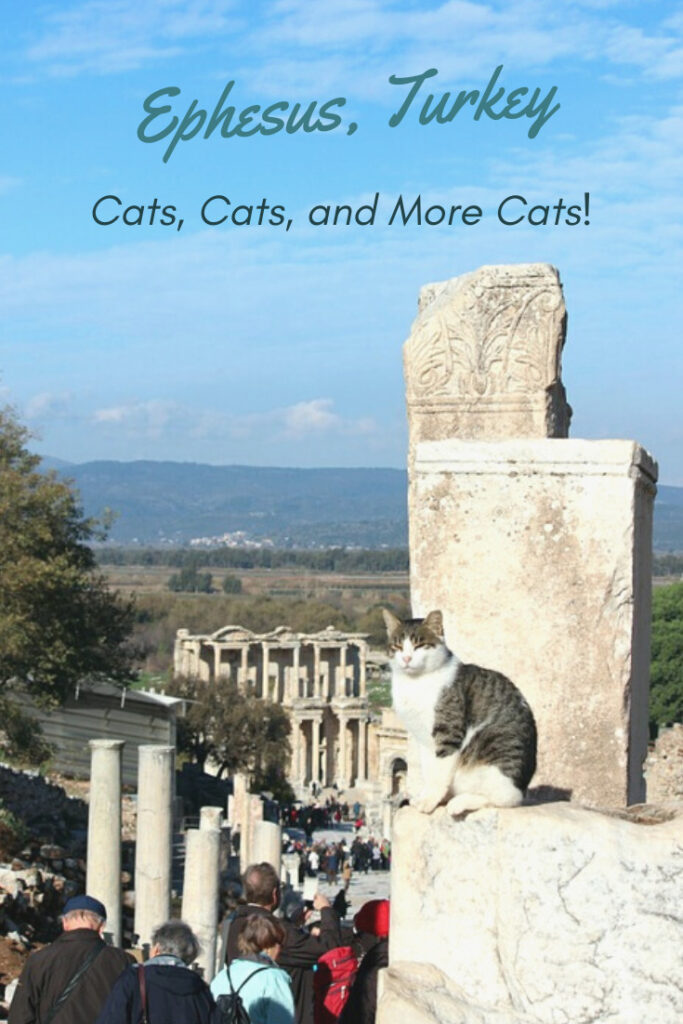
Did you know that the ancient city of Ephesus in Turkey is teeming with cats? Hundreds of cats! Here’s my ultimate guide to visiting one of the world’s most exciting archaeological sites and its impressive feline population.
Your ultimate guide to the ancient city of Ephesus and its adorable cats
A short history to Ephesus
No guide to Ephesus would ever be complete without a short history.
Ancient Beginnings
Ephesus was founded around 3000 BCE, making it one of the oldest cities in the Mediterranean region. It was initially established as an Aeolian Greek settlement and eventually evolved into one of the prominent cities of Ionia.
Hellenistic Era
Ephesus thrived during the Hellenistic period, especially under the rule of the Seleucid Empire. The city became known for its spectacular Temple of Artemis, one of the Seven Wonders of the Ancient World.
Roman Influence
In 133 BCE, Ephesus came under Roman control when it was incorporated into the Roman Republic. The Romans made substantial contributions to the city’s architecture and infrastructure, including the renowned Library of Celsus.
The Rise of Christianity
Ephesus played a pivotal role in the early spread of Christianity. The city is mentioned in the New Testament, and St. Paul is believed to have lived and preached in Ephesus. It was home to the Basilica of St. John and the House of the Virgin Mary.
Decline and Abandonment
Over the centuries, Ephesus faced various challenges, including a declining harbor due to sedimentation and the shifting of trade routes. The city gradually declined and was eventually abandoned in the 15th century.
Archaeological Rediscovery
Ephesus began to reemerge in the 19th century when British archaeologist John Turtle Wood rediscovered its ancient ruins. Excavations and restoration work continue to this day, offering invaluable insights into the city’s history.
UNESCO World Heritage Site
In 2015, Ephesus was designated a UNESCO World Heritage Site due to its outstanding universal value, historical significance, and remarkable archaeological remains. The site has become a major tourist attraction, drawing visitors from around the world.
Modern-Day Selçuk
Today, the modern town of Selçuk, located near the ancient city, serves as a gateway for tourists visiting Ephesus. It is home to various museums and historical sites that provide further context and understanding of the region’s history.
Where is Ephesus?
Ephesus is situated in the western part of Turkey, within the Izmir Province, near the Aegean coast.
The town of Selçuk serves as a base for tourists visiting Ephesus.
It is approximately 60 kilometers (37 miles) southwest of the city of Izmir and approximately 550 kilometers (342 miles) northeast of Istanbul.
Cats of Ephesus
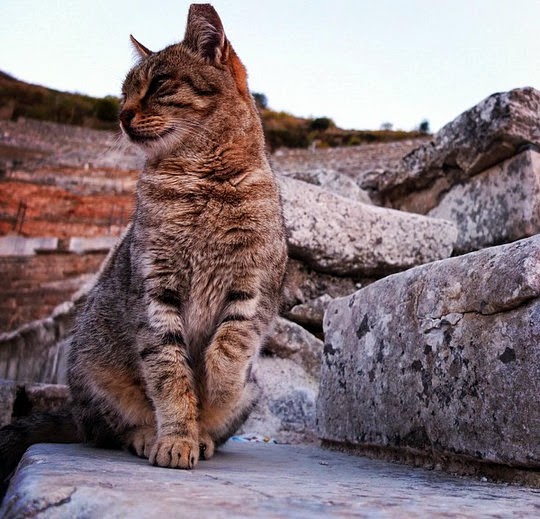
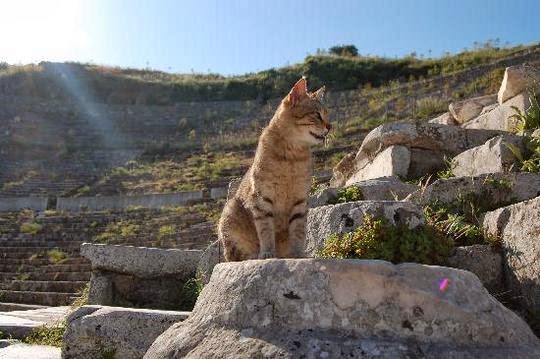
Cats are to be found almost anywhere around Ephesus, but especially near the lower and upper entrance gates of the ancient city.
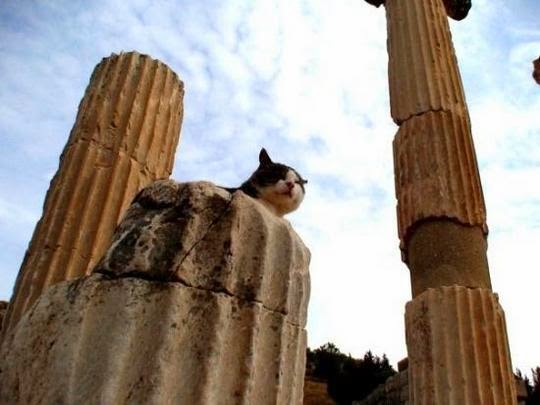
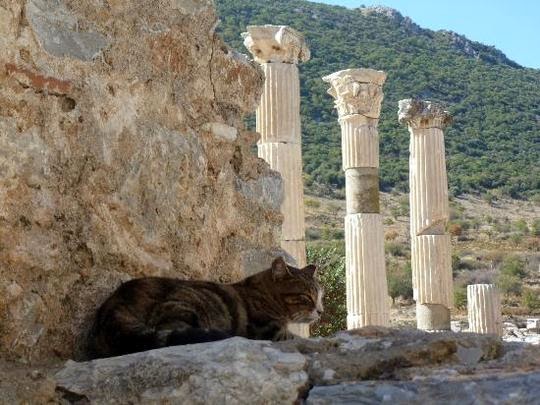
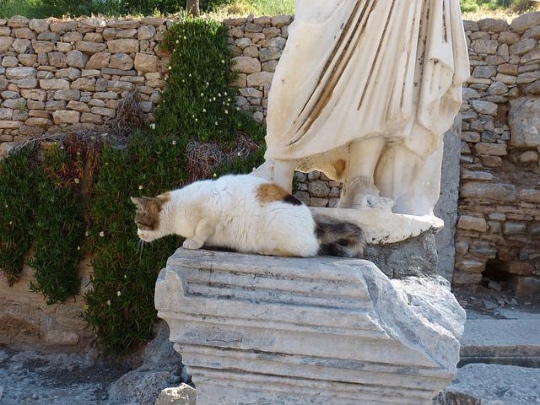
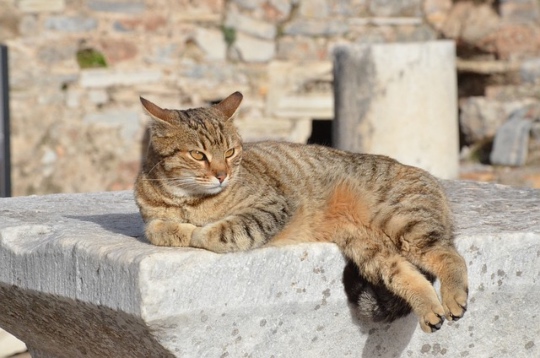
As you stroll amidst the weathered marble columns, you will find feline companions at every turn. They nap on Corinthian capitals, delicately groom their paws atop millennia-old mosaics, and cozy up on the ancient public toilets of this Greco-Roman city.
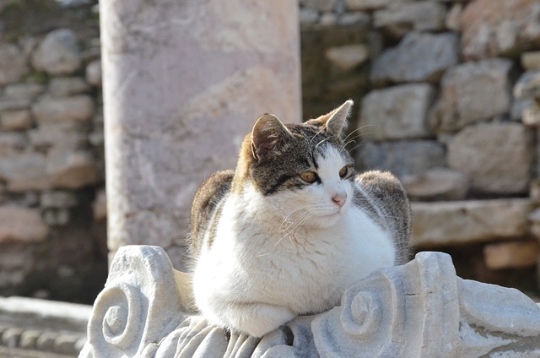
Around the Celsus Library and Hadrian’s Temple, you’ll find these cats striking poses like supermodels.
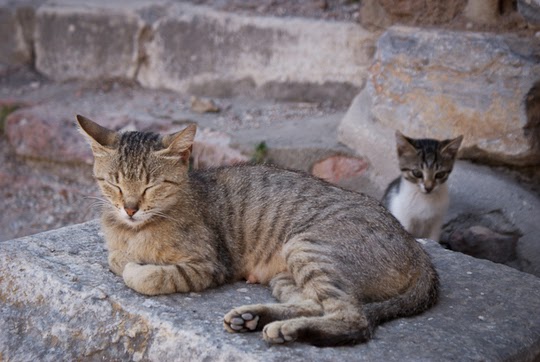
The mothers and kittens, in particular, seem to consider themselves the guardians of the ancient city, following the security guards who provide food and affection.

History of cats in Ephesus
The history of cats in Ephesus, as in many ancient cities, is not precisely documented, but it’s likely that cats have been present in the region for centuries. Cats have a long history of coexisting with humans, particularly in urban environments, where they have been valued for their role in controlling rodent populations.
Cats in Ephesus likely arrived in antiquity, potentially as a result of their utility in controlling pests, such as rats and mice, which were common in ancient cities. These cats would have helped keep these populations in check, protecting stored food and structures from damage. The cats’ presence may have been encouraged and tolerated for their practical benefits.
Today, the abundance of cats in Ephesus (as well as in many other Turkish cities) can be attributed to a combination of key factors.
Islamic culture holds cats in high regard, with stories of Prophet Muhammad’s affection for these animals, underpinned by Islamic teachings that emphasize kindness and tolerance toward all creatures. These cultural and religious attitudes have likely contributed to the cats’ presence and well-being in Turkish cities such as Ephesus.
Turkish people, in general, have a deep affection for cats and view them as integral members of their communities. Many individuals and entire neighborhoods take it upon themselves to care for stray and feral cats, offering these feline residents sustenance, shelter, and necessary medical attention. It’s a collective effort that reflects the local fondness for these creatures. (Check out the documentary film Kedi if you want to dive deeper into the subject.)
Also, various local superstitions and beliefs are intertwined with cats. One such belief includes the saying that if someone has harmed a cat, they must build a mosque to seek forgiveness from God. These cultural beliefs further strengthen the resolve to protect and ensure the welfare of cats.
Who cares for the Ephesus cats?
As a result of the interconnected factors mentioned above, the Ephesus cats are well taken care of.
The staff at this ancient city ensure the cats have a constant supply of fresh food and water, and they conduct regular health checks.
Additionally, animal care foundations’ volunteers contribute food, particularly during the winter. Tourists, too, offer sustenance to the cats, often leaving cat food amidst ancient artifacts.
Famous Ephesus cats
One of the Ephesus cats, Garfield of Ephesus, has garnered quite the following on social media, with his very own Instagram account. Garfield’s Instagram, accessible at @garfield_of_ephesus, features a delightful collection of snapshots showcasing his charming interactions with tourists.
A book about the cats of Ephesus
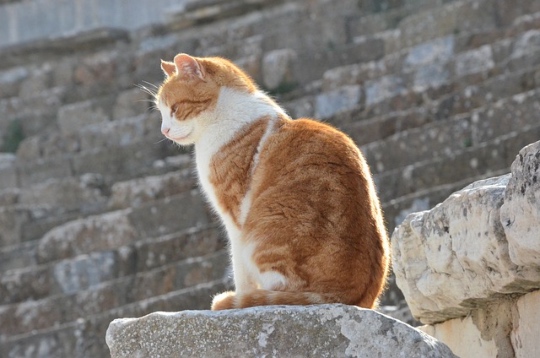
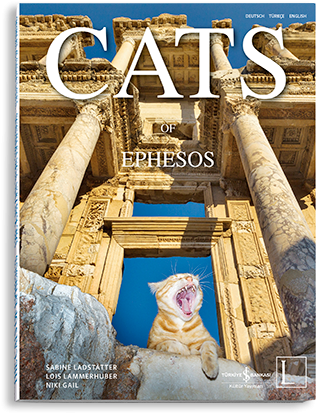
If you want to know even more about the subject, there is a book dedicated to these charismatic felines, titled Cats of Ephesos. The book was created in 2013 by Austrian scientist Sabine Ladstätter, who led the Ephesus excavations, and photographer Lois Lammerhuber. It is available in Turkish, German, and English.
What to see in Ephesus?
Ephesus is a vast archaeological site with numerous sections, and while every part of it holds historical significance, there are some key areas that no tourist should miss (and they are all teeming with cats). Here are the different sections of Ephesus, along with the must-visit highlights:
- Celsus Library (Library of Celsus): This iconic structure is one of the most recognizable in Ephesus. It was built in honor of Tiberius Julius Celsus Polemaeanus and houses a stunning facade. The interior once held a collection of ancient scrolls. It’s a must-visit for its architectural beauty.
- Great Theatre: This enormous theater is one of the largest in the ancient world, capable of holding around 25,000 spectators. It’s a remarkable example of Roman theater architecture and was used for various performances and events.
- Terrace Houses (Houses of Ephesus): These well-preserved ancient Roman residential complexes offer a glimpse into the daily lives of the city’s wealthy inhabitants. The houses are adorned with intricate mosaics, frescoes, and impressive architectural features.
- Temple of Artemis: While only a few fragments remain, the Temple of Artemis was one of the Seven Wonders of the Ancient World. It was dedicated to the Greek goddess Artemis and played a significant role in the city’s religious life.
- Agora: The Agora was the central marketplace of Ephesus, where people gathered for trade and various activities. It includes the State Agora, which was the administrative center, and the Commercial Agora, where goods were bought and sold.
- Hadrian’s Temple: This temple was built to honor the Roman Emperor Hadrian. It features Corinthian columns and intricate relief work.
- Theater Gymnasium: This complex is a combination of a gymnasium and a bathhouse, where athletes would have trained and relaxed.
- The Odeon: This small theater-like structure was used for musical performances and city council meetings.
- The Fountain of Pollio: This monumental fountain once provided the city with water and served as a meeting point for the public.
- The Ephesus Museum: While not a part of the archaeological site, the museum houses many artifacts and statues from Ephesus, providing a deeper understanding of the city’s history.
For a comprehensive Ephesus experience, it’s recommended to explore the Celsus Library, the Great Theatre, the Terrace Houses, and the Temple of Artemis. These areas offer a rich tapestry of the city’s history, from its architectural grandeur to daily life in ancient times. However, Ephesus is best enjoyed by wandering through its various streets, alleys, and structures, allowing you to discover the historical treasures at your own pace.
How much time is needed in Ephesus?
On average, most visitors spend between two to three hours touring the main highlights of Ephesus. This typically covers the Celsus Library, the Great Theatre, the Terrace Houses, and the Temple of Artemis.
Personally, however, I don’t think this is enough. At all.
If you are a history enthusiast and wish to explore Ephesus more thoroughly, including lesser-visited areas and taking the time to appreciate the details, you need four to six hours or more. The archaeological site is extensive, and there are many structures, streets, and ruins to explore.
While you could easily wander around Ephesus for an entire day, you have to keep in mind that this will probably be too tiring for many. Of course, you can always take a little pause (I should I say paws) to cuddle the cats of Ephesus.
Ultimately, the time needed to visit Ephesus is a matter of personal preference and how deeply you want to immerse yourself in its historical wonders. Plan your visit based on your interests and the specific areas you wish to explore within the ancient city.
What is the best time to visit Ephesus and its cats?
The best time to visit Ephesus is during the spring and autumn months, specifically from April to June and September to October. During these periods, the weather is pleasant, with mild temperatures and less intense sunlight, making it ideal for exploring the archaeological site without the discomfort of extreme heat or cold.
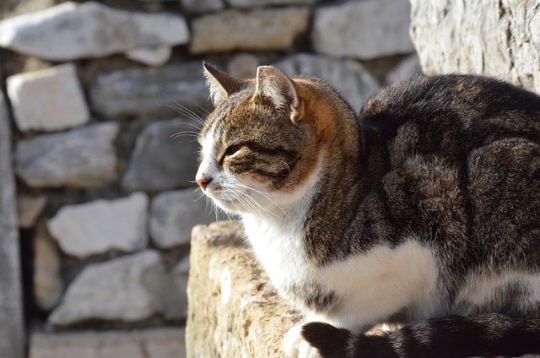
The best moment of the day to visit Ephesus is early in the morning. This allows you to avoid the crowds that tend to arrive with tour groups mid-morning, and it’ll give you plenty of time to explore if you wish to do so. Additionally, the lighting during these hours can enhance your experience, creating a more picturesque and atmospheric setting for your exploration. Early morning visits also provide cooler temperatures in the warmer months, which means the cats come out of their hiding places more often.
Keep in mind that Ephesus can become quite crowded (and hot!) during peak tourist seasons, so it’s essential to factor in additional time for waiting in lines and navigating through the crowds if you wish to visit at that time. Make sure to bring enough water to keep hydrated.
How to get to Ephesus?
By public transport
To get to Ephesus by public transport, you typically need to reach the town of Selçuk, which is the modern settlement closest to the ancient city. Here are the steps to reach Ephesus from Izmir, a major nearby city, using public transport:
- Travel to Izmir: If you’re not already in Izmir, you can reach the city by air or bus. Izmir Adnan Menderes Airport (ADB) is the nearest airport.
- From Izmir to Selçuk: Head to the main bus terminal in Izmir, known as “İzmir Otogar” (Izmir Intercity Bus Terminal), and look for buses heading to Selçuk. These buses typically depart regularly from the main bus terminal. The journey from Izmir to Selçuk typically takes around one to one and a half hours.
- From Selçuk to Ephesus: Once you arrive in Selçuk, you will be dropped off at the Selçuk Bus Terminal, which is close to the town center. Ephesus is situated within walking distance from the center of Selçuk. It’s about three kilometers (approximately two miles) southwest of the town center. Just follow the signs to Ephesus.
Alternatively, you can take a taxi or use a local dolmuş (shared minibus) from Selçuk to Ephesus if you prefer not to walk the distance.
By car
To get to Ephesus by car, you can follow these directions from Izmir, which is the starting point for most travelers:
From Izmir to Ephesus:
- Begin your journey in Izmir, either from the city center or Izmir Adnan Menderes Airport, depending on your location.
- Head south on the D550 highway, also known as the Izmir-Aydin Highway.
- Continue on D550 for approximately 62 kilometers (about 38 miles), following the signs for Selçuk.
- As you approach Selçuk, you’ll see signs directing you to the town center and, subsequently, to Ephesus.
- Once you reach Selçuk, you’ll find clear signs pointing you towards Ephesus, which is located just a few kilometers southwest of Selçuk’s center.
- There are designated parking areas at the entrance to Ephesus, where you can leave your car. Be prepared to pay a parking fee.
It’s worth noting that the roads in this region are well-maintained and relatively easy to navigate. Following the highway (D550) south from Izmir to Selçuk and then following the signs to Ephesus should lead you directly to the ancient city. Remember to consider traffic and road conditions when planning your trip, especially during peak tourist seasons.
Practical information
Address (main entrance)
Ephesus, Atatürk Mahallesi, 35920 Selçuk/İzmir, Turkey.
Opening hours
Summer Season (April 1 – October 1):
- During the summer season, Ephesus is open from 08:00 am to 07:00 pm.
Winter Season (October 2 – March 31):
- Ephesus has shorter opening hours during the winter season, from 08:00 am to 05:00 pm.
Tickets
An entrance ticket to Ephesus costs 23,50 euro per person (2023 update).
For some parts – such as the Terrace Houses and the Ephesus Museum – you will have to pay extra.
When you arrive at Ephesus, there will be two lines: one for people with tickets and one for people without tickets. Unless you’re visiting in the winter, make sure to book a skip-the-line ticket in advance.
Be sure to grab a map when you enter.
Guided tours
Unless you’re a history and archaeology buff with extensive knowledge about Ephesus and Turkey in general, I recommend buying an audio guide or booking a guided tour with an expert. Ephesus is a huge site, and there’s a lot to see and know.

Conclusion: Is Ephesus worth visiting?
Whether you love cats or not, Ephesus is undeniably worth visiting. It stands as one of the most remarkable archaeological sites in the world. With its vast historical and cultural significance, it beckons to history enthusiasts, archaeology aficionados, and those with a fascination for ancient civilizations.
The reasons for Ephesus’s worthiness as a destination are manifold. It boasts a history that stretches back through the ages, establishing its place in antiquity as a major Greek and Roman city of profound influence.
The archaeological treasures within Ephesus are a testament to its grandeur. The Library of Celsus, the Grand Theater, the Temple of Artemis, and the Terrace Houses are among the mesmerizing ruins that offer glimpses into the architecture and daily life of bygone eras.
Ephesus has earned its status as a UNESCO World Heritage Site, a recognition of its profound cultural and historical importance. It serves as a meeting ground for numerous civilizations and cultures, each of which has left its indelible mark.
For those with an interest in early Christianity, Ephesus holds a special place. The city is associated with St. Paul and is home to the House of the Virgin Mary, making it a site of religious significance for Christians.
Adding to its charm is the endearing presence of cats in Ephesus. These feline residents have become a beloved part of the site’s character and are a delight for cat lovers.
In sum, Ephesus promises a captivating journey through the annals of time, inviting visitors to explore the remnants of an ancient city, traverse its marble-lined streets, and deeply immerse themselves in the rich tapestry of history and culture. For anyone with an interest in the world’s heritage, Ephesus is an invaluable and worthwhile destination that leaves an indelible mark on those who explore its wonders.
I hope you’ve enjoyed my guide to visiting Ephesus and its feline residents. You may also love these other travel guides to cat-centric destinations:
- Chefchouen (Morocco), the ultimate cat tourist destination
- Delos island, where Greek mythology and cats meet
- Cats of Amsterdam, must-see attractions for a feline-inspired adventure
- What to see in Malta in 2 days: the ultimate cat lover’s sightseeing itinerary!
- Why Skala Sykaminia on Lesbos island is a must-see destination for cat lovers
Available at Amazon
Pin this article about the cats of Ephesus in Turkey!