Last Updated on 15 November 2024 by Vanessa
Have you ever wondered about the lives of cats in other parts of the world? In Sri Lanka, for example? During my Hiriwadunna Village Trek tour, I discovered several curious aspects of everyday life in a small gam (another name for a Sri Lankan village). The lives of both the villagers and the cats in Hiriwadunna differ significantly from any other place I’ve explored. Let’s have a look.
A glimpse into everyday feline life in Hiriwadunna, Sri Lanka
This is a guest post by travel blogger Laurel Robbins.
I believe that to truly grasp the essence of a place, one must venture beyond the confines of the city and connect with the rural communities. That’s exactly what I experienced when I visited the village of Hiriwadunna near Habarana in Sri Lanka. Being a country girl at heart, despite currently residing in Munich, I felt an immediate kinship with the village and its inhabitants.
Growing up in a small farming community south of Calgary, Alberta, I understood the unique bond that rural communities share with the land, nature, and each other.
Hiriwadunna, with its approximately 2.500 residents, struck a chord with me, reminding me of the place I once called home.
The cats at the onion farm
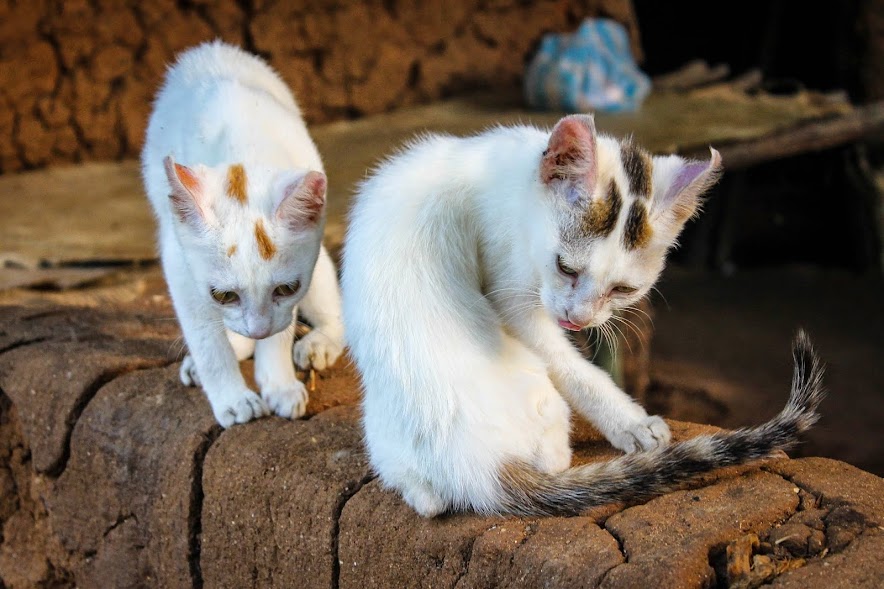
During my Hiriwadunna Village Trek, I discovered the delightful aspects of everyday life in the village, including that of the local cats.
The first cat I encountered during my Hiriwadunna Village Trek tour was at an onion farm.
This onion farm was the dwelling place for a family of five dedicated to cultivating onions. Their entire patio was filled with onions, and even a glimpse into their house revealed a floor covered with them. While I can’t say that cats outnumber people in Hiriwadunna, I can say that onions do. And if you happen to be one of the cats living there, you have the added bonus of always having toys to play with;
The locals lead a self-sufficient lifestyle. They barter their bountiful crops and store enough onions and rice to last them for years.
However, such abundant onion yields are not always the norm due to the challenging soil conditions in the area. To overcome this obstacle, Hiriwadunna’s farmers employ the slash and burn cultivation method. This involves cutting down and burning natural vegetation to prepare the land for farming. Approximately every two years, the soil’s fertility diminishes, compelling the farmers to shift to new locations and restart the process from scratch.
The cats of the coconut farmers
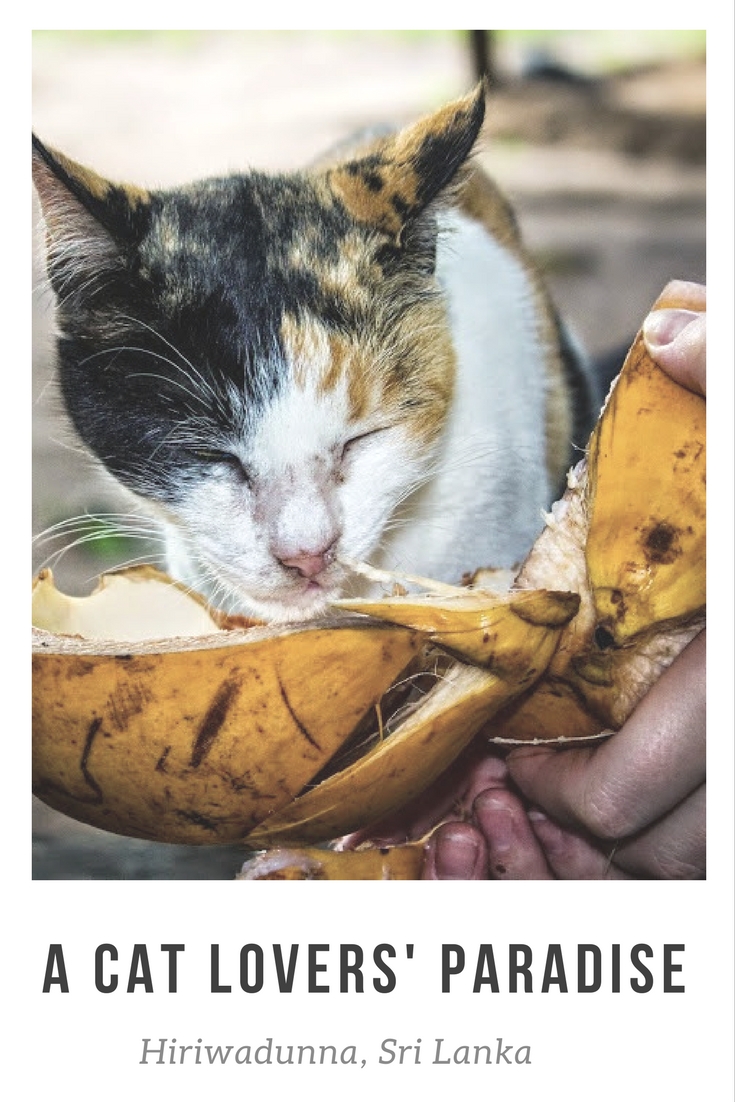
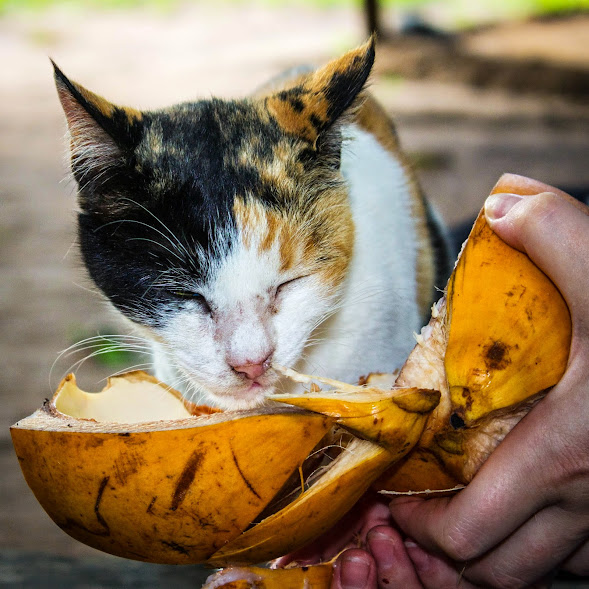
One of the highlights of my journey was witnessing the impressive art of coconut tree climbing, a skill inherent to the villagers. I watched in awe as my guide, TK, scaled a towering coconut tree with remarkable ease. As we relished the sweet coconut milk straight from the source, I discovered that cats shared our love for this tropical delight. It was a heartwarming sight to see one of the village cats eagerly lapping up the coconut milk alongside us.
The cats of the elephant scarer
During my Hiriwadunna Village Trek tour, I also climbed a tree house next to the field where a 55-year-old farmer sleeps at night. This farmer was the most intriguing character—he was what I would call an “elephant scarer.” These dedicated individuals protect their crops from hungry elephants by spending nights in the watchtowers, and then yelling “alea” (which means “elephant”) to alert the community if one approaches. His days are mostly spent tending to the crops.
Several of the cats of Hiriwadunna found companionship with the elephant scarer, creating a bond that spoke volumes about the harmony between humans and animals in Hiriwadunna.
Conclusion
While Hiriwadunna may not boast the grandeur of nearby attractions such as Kaudulla National Park or Sigiriya, its tranquil ambiance and profound connection with nature, the villagers, and the local cats touched my soul. Time seemed to slow down as I breathed in the fresh air, felt my shoulders relax, and reconnected with the natural surroundings. Furthermore, Hiriwadunna proves to be an absolute haven for feline enthusiasts like myself. Their lives are quite curious compared to those of cats in other parts of the world.
The Hiriwadunna Village Trek Tour, organized by Cinnamon Nature Trails, not only provided insights into village life but also benefits the surrounding communities by providing self-employment and partnership opportunities. Therefore, if you’re interested in visiting Hiriwadunna and the Habarana region, I highly recommend booking the village trek through Cinnamon Nature Trails.
Accommodation options like Chaaya Village Habarana or the luxurious Cinnamon Lodge Habarana ensure a comfortable stay. Don’t forget to pack bug spray, or you can always ask your knowledgeable guide for a natural remedy.
Additionally, the area offers other captivating attractions, including Kaudulla National Park, Sigiriya, and the ancient city of Polonnarowa, providing a well-rounded Sri Lankan adventure.
Check out more fun things to do in the area with this Ultimate Sri Lanka Travel Guide.
Laurel Robbins, a passionate advocate for the outdoors and its transformative effects, is the founder of the travel blog Monkeys and Mountains. With over 20 years of experience, she has crafted her travel destinations around thrilling outdoor activities and wildlife encounters, prioritizing the connection with nature. Laurel’s expertise has been recognized by prestigious media outlets such as BBC Travel, BBC Earth, National Geographic, and Forbes, solidifying her status as a trusted authority in adventure travel. Through Monkeys and Mountains, Laurel aims to inspire and guide travelers to make the most of their time outside, believing that the impact of these experiences extends far beyond the adventure itself.