

Last Updated on 2 September 2025 by Vanessa
In The Cats of France: True Stories, Forgotten History, and Curious Trivia About French Cats, author Séamus Mullarkey brings the fourth installment of his Cats of the World series to life. Following his previous deep dives into the cats of Ireland, Britain, and America, Mullarkey turns his sharp eye and playful tone to French history, culture, and the many quirky cat stories tucked between.
The Cats of France: True Stories, Forgotten History, and Curious Trivia About French Cats by Séamus Mullarkey
Book giveaway!
Do you want to win a free copy of The Cats of France? You’re in luck! We are giving away 10 (!) ebooks. To enter, fill in the Rafflecopter below! The giveaway is open worldwide and ends September 29. Good luck!
Inside The Cats of France
The Cats of France offers a light and entertaining look at the many ways cats have pawed their way into French culture, history, and daily life. The book is organized into short chapters, each built around a specific theme, delivering bite-sized stories that are perfect for dipping in and out of.
Here’s a closer look at what each chapter covers.
Cats in French fashion and luxury
This chapter highlights how cats have made their mark in the world of high fashion. It features Louis Vuitton Catogram collection and Karl Lagerfeld’s famous cat, Choupette (also featered in Cats Who Changed the World), who not just inspired campaigns, but also hats, suitcases, and more.
Cats in French history
This section dives into stories of cats at the Royal French Court and shows how felines found their way into the halls of power throughout history.
Michelin star kitties
Several Michelin-starred restaurants are home to resident cats. These pampered pets enjoy life among France’s culinary elite.
Trench cats
Another chapter focuses on wartime cats, who helped soldiers by keeping vermin away and boosting morale.
One standout story is about a French cat known as Felix to the Allies and Nestor to the Germans. During the famous Christmas Truce of 1914, he became an informal messenger, carrying friendly notes across no man’s land between the opposing trenches.

Landscapes and landmarks
Here, Mullarkey showcases three cat-related sites across France, including the Ruelle des Chats in Troyes, the cat population at Père Lachaise Cemetery, and the capital’s “Mr. Cat” street art.
French cat breeds
This is a short chapter dedicated to the native French cat breeds Chartreux, Serrade Petit, and Birman (often linked to temples in Myanmar).
Cats in French institutions
This section touches on felines in public service: cats in nursing homes, hospitals, and political offices.
Famous French cat lovers
This chapter profiles cultural icons like Alexandre Dumas, Victor Hugo, and Charles Baudelaire, all known for their love of cats.
Cat haters
Napoleon Bonaparte gets a brief mention as a famous ailurophobe. Legend says he once screamed for help upon finding a kitten in his room.
Cats in French folklore
This chapter explores French legends and superstitions involving cats. It includes the mythical matagot, a spirit creature that can take the form of a black cat or other animals.
Cats in the French language
Here, Mullarkey presents French proverbs, idioms, expressions, and nursery rhymes that feature cats.
Common French cat names
A quick chapter listing the most popular cat names in France. For a more extensive list, check out our list of 100+ French cat names (with meanings).
Cats and French café culture
Mullarkey introduces France’s first cat café, Le Café des Chats, and the whimsical Le Chat Mallows in Paris. No other cat cafés in France are mentioned.
Philosophers and intellectuals
Philosophers like Jean-Jacques Rousseau and Jacques Derrida appear in this chapter as notable cat admirers with thoughtful reflections on feline behavior.
Music and the purr-forming arts
This chapter looks at the connection between cats and the French music scene. When French novelist George Sand and Polish composer Frédéric Chopin weren’t staying in Valldemossa, Mallorca, the two lived in Nohant, about 240 km south of Paris, where cats were a beloved part of their household. The chapter also highlights other feline-loving composers, such as Claude Debussy and Maurice Ravel.
Cats in French cinema
Mullarkey highlights some cat movies set in France such as Gay Purr-ee, Le Chat, and Une vie de chat.
Cats in science
The book includes Marc-Antoine Fardin’s playful scientific question: “Can a cat be both a solid and a liquid?” that earned him an Ig Nobel Prize. It also covers a 2023 study by Charlotte de Mouzon and Gérard Leboucher, who observed how cats in the cat café of Toulouse and elsewhere respond to human interaction.
Feline explorers and adventurers
This chapter introduces adventurous cats like Félicette, the first cat in space (also mentioned in Cats Who Changed the World), and Misele, who traveled nine miles to reunite with her hospitalized owner.
Cats in the visual arts
This chapter features French paintings with cats by artists such as Marguerite Gérard, Jean-Jacques Bachelier, Octavie Rossignon, and others.
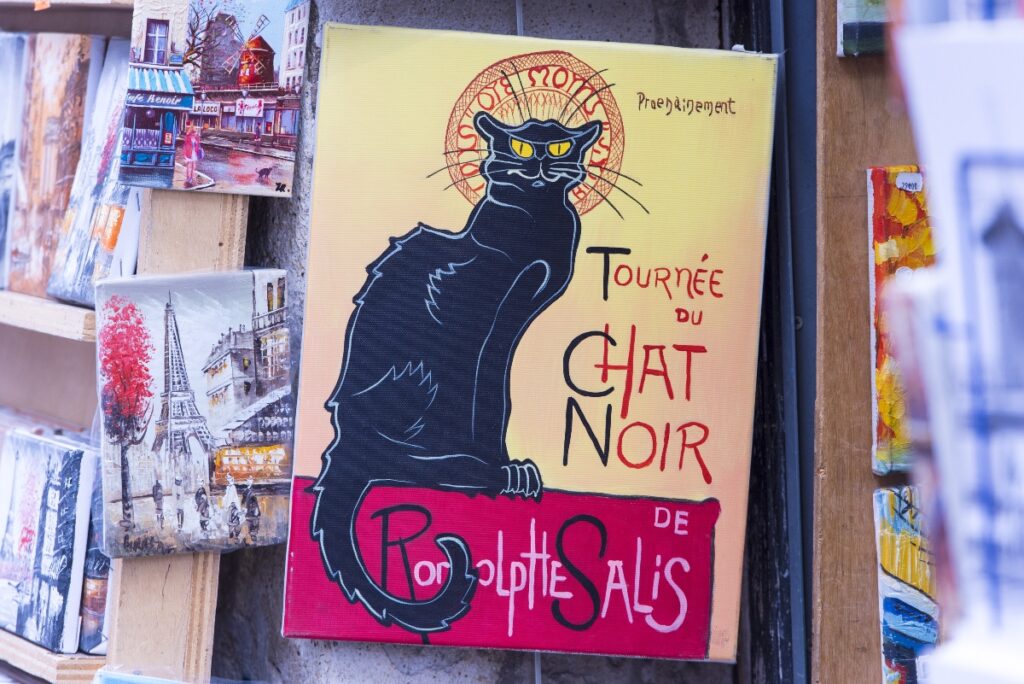
Cats in advertising
Feline-themed advertising takes the spotlight here, particularly the iconic posters of Théophile Steinlen, whose work helped define the visual identity of early 20th-century Paris. Many of his works are now on display at the cat museum of Amsterdam.
Très bizarre! Very strange!
This quirky chapter gathers unusual stories, such as the man with a 20-inch beard that became a nesting ground for kittens.
More fun facts
This chapter gathers fun facts that don’t quite fit anywhere else. It includes the discovery of the “cat-fox,” a new subspecies native to Corsica, and the fact that cats outnumber dogs in France (15.1 million vs. 7.5 million in 2021).
Moving to France with your cat
And if this book has made you fall in love with France, there’s even a chapter on how to move there with your cat.
The Cats of France book review
In The Cats of France: True Stories, Forgotten History, and Curious Trivia About French Cats, Mullarkey delivers the fourth entry in his Cats of the World series, following The Cats of Ireland, The Cats of America, and The Cats of Britain. (You can find my reviews of those books by clicking the linked titles.)
Of the four, this is arguably his strongest work to date, largely due to his integration of AI in the writing process. The Cats of France is a more polished and focused book, free from the distracting and often annoying humor that dominated his earlier titles, particularly The Cats of Ireland.
However, The Cats of France is far from flawless. One of its major shortcomings lies in the use of generic, low-quality AI-generated images. The book would have been stronger without them.
Also, each chapter barely scratches the surface; there’s so much more that could be included.

Famous bookstores like Shakespeare & Company and Mon Chat Pitre, both known for their resident cats, definitely deserved a mention. The same goes for the many cat-friendly hotels across France, especially the iconic cat at the luxurious Le Bristol Hotel in Paris. There’s so much more to say about cats in France. More examples, more stories, more depth. Of course, a book like this can’t be comprehensive, but it’s still frustrating when it feels like it only covers a tiny fraction of what it could explore.
I do wonder where the author got his information, since there are no sources listed. I fact-checked a few random claims from the book, and while most seemed accurate, some had no evidence, which makes me think that the AI may have contributed fictionalized details presented as fact.
That said, I really like the concept behind this series. (If a book is truly bad, I don’t bother reviewing it.) The Cats of France is more light entertainment than academic exploration, though, and it succeeds best as novelty gift for cat-loving francophiles. It’s great for passing the time or flipping through now and then. Just don’t rely on it for in-depth cultural or historical insight.
Final thoughts
Have you read The Cats of France: True Stories, Forgotten History, and Curious Trivia About French Cats? Do you agree with my thoughts? I’d love to hear your perspective, so feel free to share them in the comments below.
The book is currently free on Kindle if you’d like to read it.
And if you enjoyed this review or like the idea behind the book, don’t forget to pin the cover for later or share this post with fellow cat lovers and friends on social media.
This post contains affiliate links. If you make a purchase after clicking on the Amazon links, Traveling Cats will get a small commission at no extra cost to you.
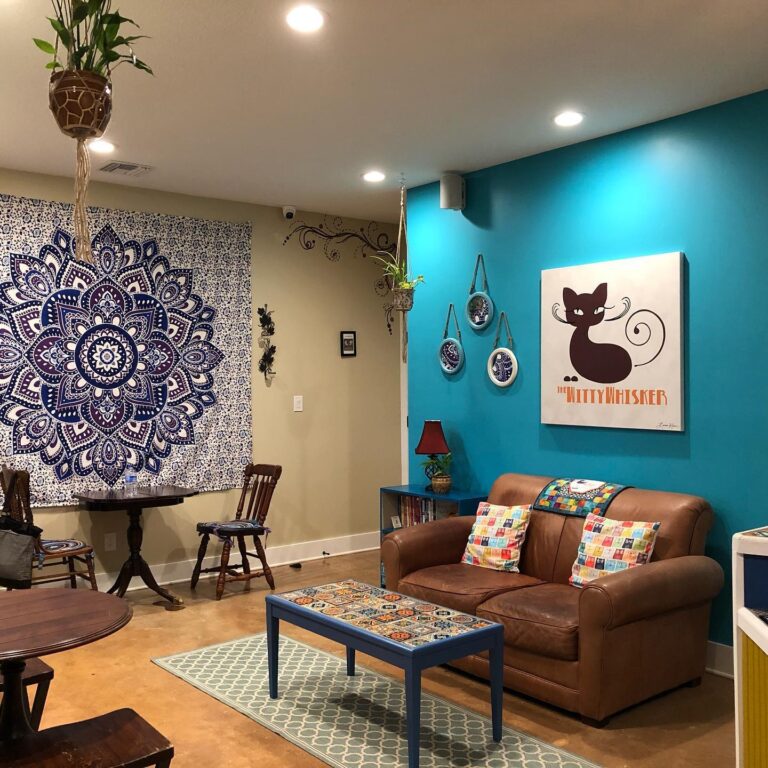
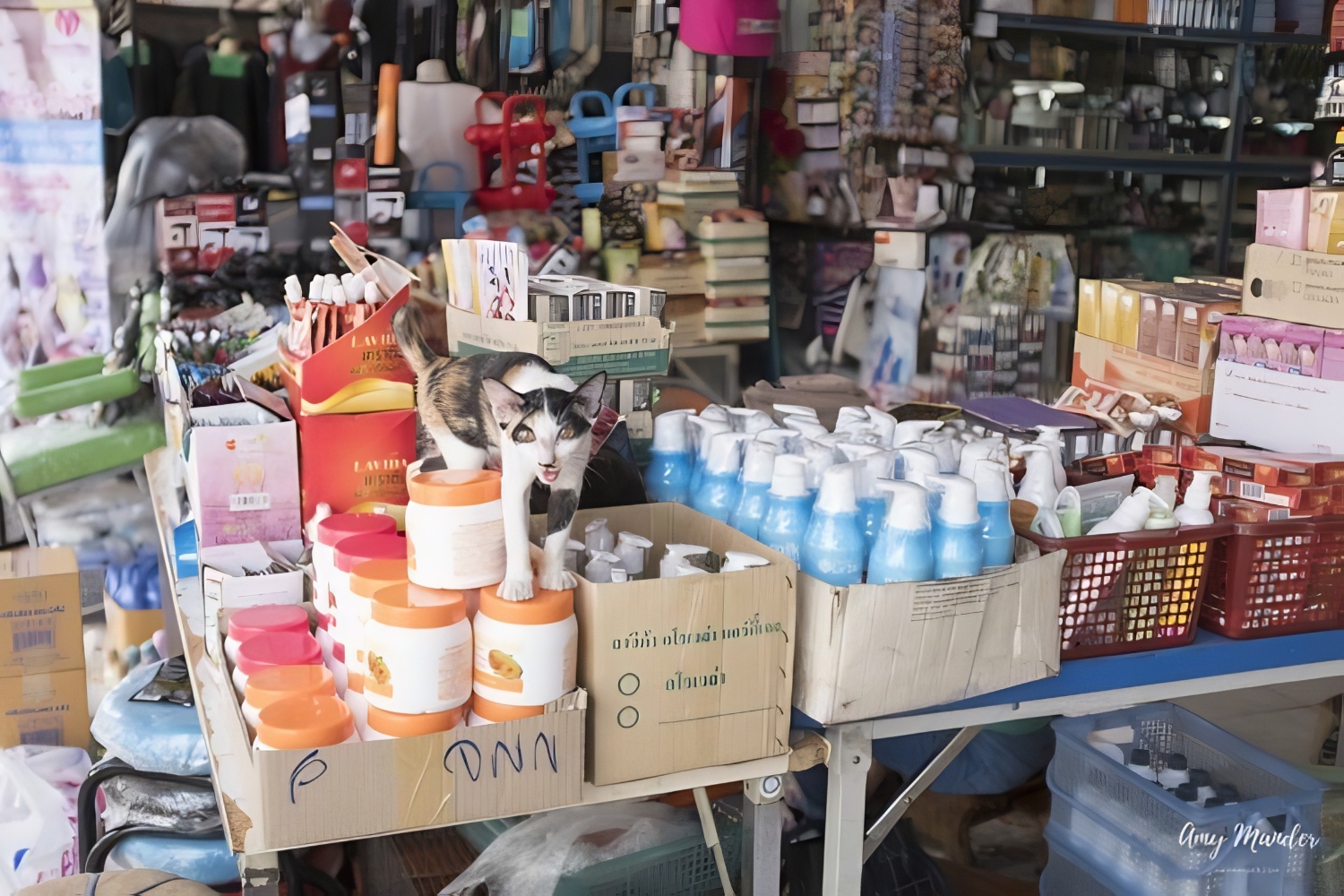
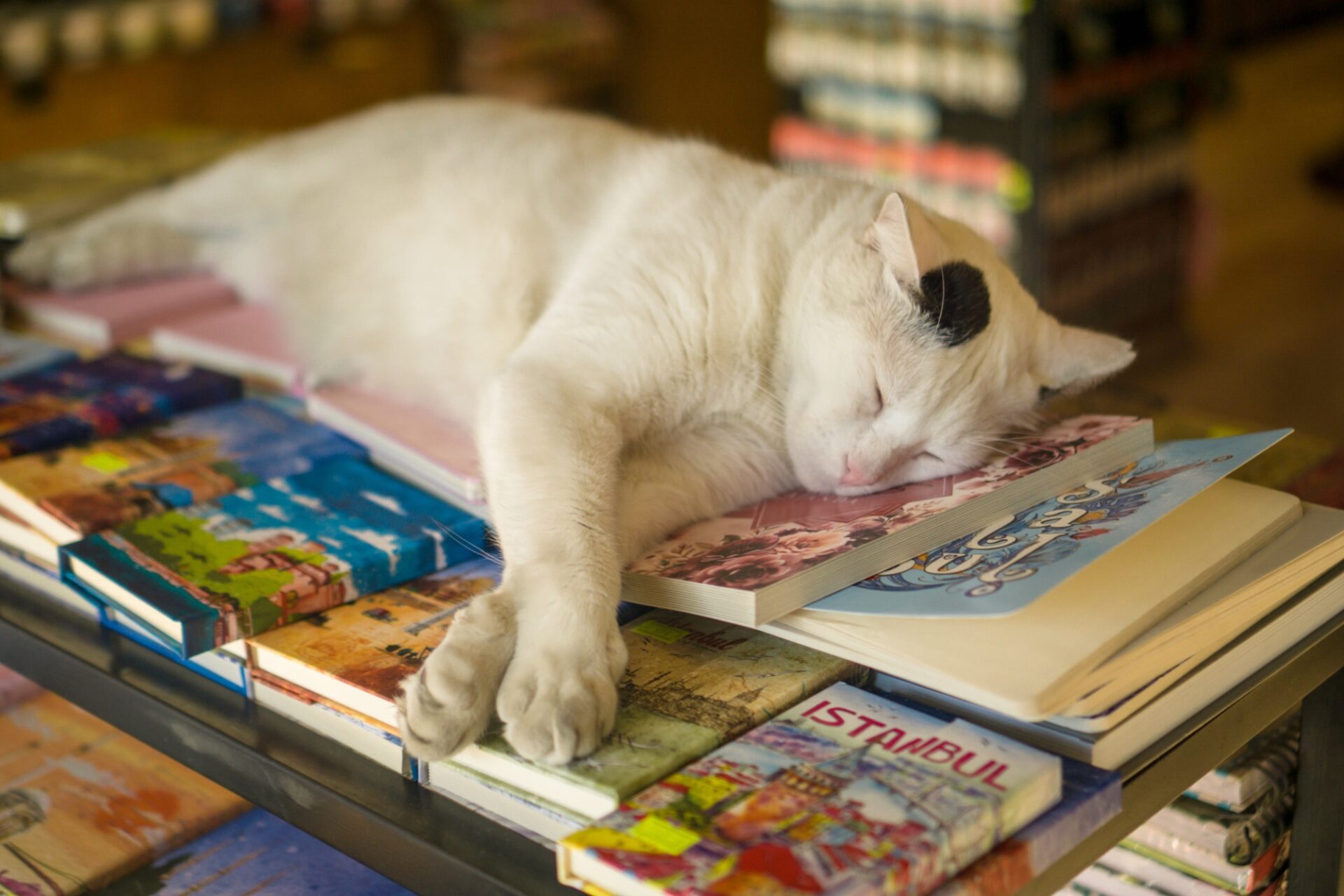
Photos are by Sobi & Shutterstock. They were not featured in The Cats of France.


One Response
Looks cute!