

Last Updated on 29 April 2025 by Vanessa
Hagia Sophia (Ayasofya in Turkish) is a must-visit destination if you’re planning a trip to Istanbul. This historic monument in the heart of the city is a former Eastern Orthodox cathedral, later converted into a mosque and now functioning as a museum. But what makes The Hagia Sophia truly unique is the presence of a very special cat called Gli.
Meet Gli, the famous cat of Hagia Sophia
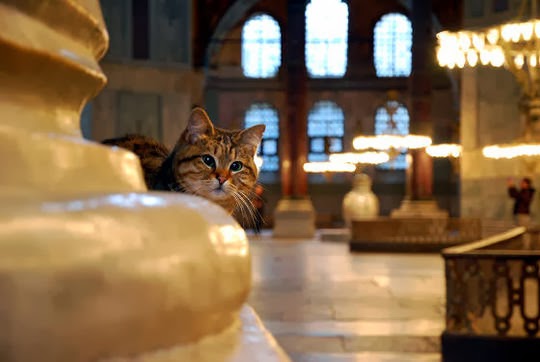
Who is the famous Hagia Sophia cat?
Gli is a calico cat with striking green eyes. She was born as a kitten in Hagia Sophia and subsequently raised there. She has since become a permanent resident of the museum.
She’s often napping in a corner or simply strolling through the halls. She’s friendly and curious, and she loves the attention from visitors.
Gli’s unique appearance likely contributed to her fame. Calico cats are known for their distinctive coat patterns, and Gli’s coloring, along with her eyes and charming personality, made her stand out among other cats.
But timing and subsequent media coverage also played a significant role in the reason why this cat gained fame.
When Gli was born, social media platforms were on the rise, and visitors began sharing photos and stories of Gli on social media. It was mainly when a photo of Barak Obama and Gli went viral in 2009 that she became truly famous. It caught the attention of news outlets and online communities, and this led to her increased popularity. Before long, Gli had her own social media accounts with over a 100.000 followers.

Why is the cat of Hagia Sophia named Gli?
“Gli“ means “grey” in Turkish. The museum staff gave the cat this Turkish name when they discovered her and decided to make her a resident of Hagia Sophia. The name is fitting as Gli has a predominantly grey-colored coat, although she is also a calico cat with patches of black, white, and orange.
Is Gli the cat still alive?
Sadly, Gli passed away on November 7, 2020, due to old age. She had been receiving treatment in a veterinary clinic in Levent, Istanbul, since September 24. She is buried in the garden of the Hagia Sophia.

Other feline residents of Hagia Sophia
Hagia Sophia is actually home to several cats who roam the halls and courtyards freely. They are just as adorable and deserving of love and attention as Gli.
Their care is a collective effort. The responsibility for the cats is shared among the staff of the Hagia Sophia Museum and local animal welfare groups.
The staff often provides basic care, such as food and water.
Animal welfare organizations and cat advocacy groups, on the other hand, provide veterinary care, spaying/neutering services, and support for the overall well-being of the feline residents.
All these cats have become a beloved part of the Hagia Sophia experience, and they are very much cherished by visitors. However, none are as famous as Gli.

What is the history of Hagia Sophia?
Even without the cats, Hagia Sophia is absolutely worth a visit. Here’s a quick look at its incredible history and why it matters so much.
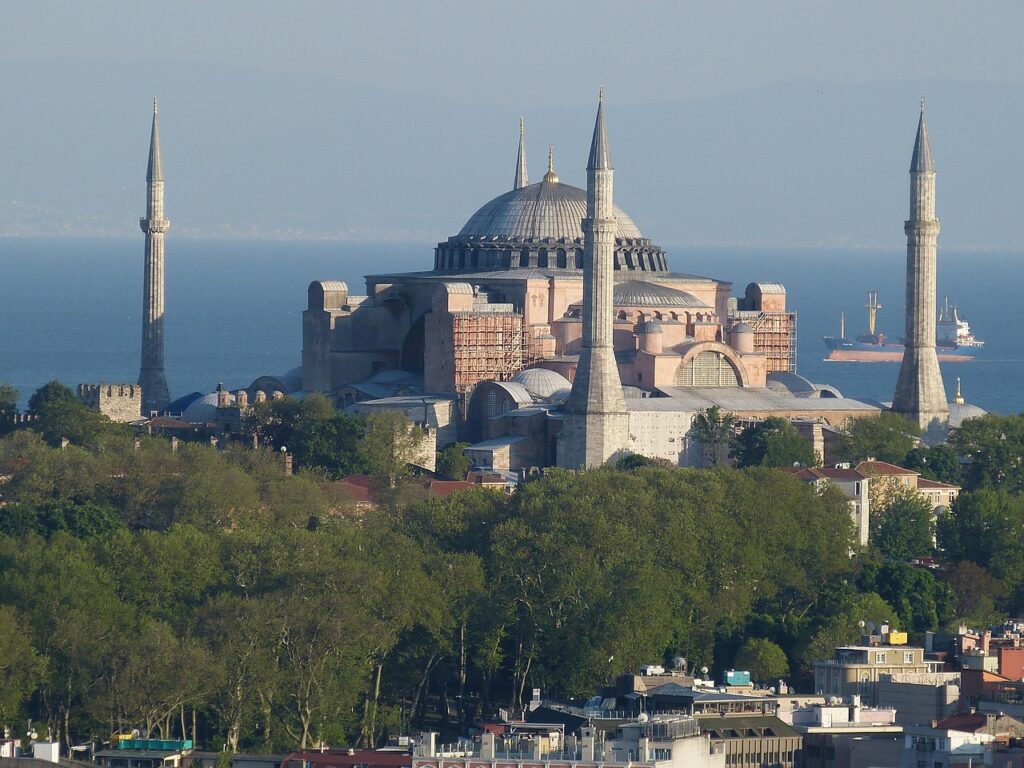
Hagia Sophia—also called Ayasofya—is a landmark that has served as a church, a mosque, and a museum. Its name means “Holy Wisdom.”
Construction began in 532 AD during the reign of Byzantine Emperor Justinian I. Designed by architects Anthemius of Tralles and Isidore of Miletus, the building was completed in 537 and became the main cathedral of Constantinople, the capital of the Byzantine Empire.
Hagia Sophia is famous for its massive dome, a groundbreaking feat of architecture at the time. This dome spans 31 meters (102 feet) and rises 56 meters (182 feet) high. It was the largest cathedral in the world for nearly a thousand years.
Inside are mosaics, marble columns, and decorations portraying religious scenes and figures of the Byzantine era.
In 1453, after conquering Constantinople, Sultan Mehmed the Conqueror turned Hagia Sophia into a mosque. He added minarets and other Islamic features, and it remained a mosque for nearly 500 years.
Then in 1935, under the leadership of Mustafa Kemal Atatürk—the founder of modern Turkey—Hagia Sophia became a museum, showcasing both its Christian and Islamic heritage.
In July 2020, it was reconverted into a mosque, a move that sparked international debate about its cultural and religious role.
Today, Hagia Sophia is a UNESCO World Heritage Site and continues to draw millions of visitors from around the globe.
Practical information
Address
Hagia Sophia Grand Mosque, Sultan Ahmet, Ayasofya Meydanı No:1, 34122 Fatih/İstanbul, Turkey.
Opening times
April 1st to October 31st:
- Monday to Sunday: 09:00 am to 07:00 pm
November 1st to March 31st:
- Monday to Sunday: 09:00 am to 05:00 pm
Tickets
How to get to Hagia Sophia?
Getting to Hagia Sophia aka Ayasofya Meydanı in Sultanahmet, Istanbul, is relatively easy due to its central location. Here are a few common methods of transportation to reach the monument:
- By metro: Take the Istanbul Metro and get off at the Sultanahmet Station. From there, it’s a short walk to Hagia Sophia.
- By tram: If you’re staying in the Sultanahmet area, you can take the T1 tram line and get off at the Sultanahmet stop, which is within walking distance of Hagia Sophia.
- By bus: Public buses are available throughout Istanbul. Several bus lines pass through the Sultanahmet area. Look for buses that go to Sultanahmet Square or nearby landmarks, such as the Blue Mosque or Topkapi Palace.
It’s worth noting that Istanbul is a bustling city with heavy traffic at times, so it’s a good idea to go during less congested hours.
Also, keep in mind that during peak tourist seasons, there may be long queues to enter Hagia Sophia. Consider arriving early to avoid waiting for an extended period.

If you decide to visit the Hagia Sophia in Istanbul, be sure to give the friendly felines a gentle pet.
Also, don’t forget to snap a few selfies with them to remember your trip by. And if you do, share them with us on Facebook, Instagram, and Twitter.
Delve into the fascinating world of Istanbul’s feline companions
Did you know Hagia Sophia isn’t the only historic spot in Istanbul with resident cats? Yes—furry friends are lounging all over the city’s landmarks.
We’ve rounded up 30 must-see historical sites in Istanbul where you’re likely to spot cats. Trust us, it’s the cutest history tour you’ll ever take.
Want to understand why cats are such a big deal in Istanbul? The documentary Kedi is a great place to start It’s a heartwarming look at the city’s deep love for its street cats.
For more feline-friendly reads, check out our articles:
- Cats of Istanbul: Exploring Turkey’s Cat-Friendly Culture
- 20 Fun Facts About Cats in Istanbul
- Cats in Literature and Cinema: Istanbul’s Literary and Cinematic Purr-sonalities

Pin this!




One Response
Gli looks like she was an entertaining tourist attraction and certainly liked the limelight. She looks very much like our South African cat.